Abstract
Ensuring the long-term safety and reliability of plugs, socket-outlets, and switches requires rigorous electrical durability testing mandated by international standards. This article provides a comprehensive technical analysis of automated test solutions for verifying the breaking capacity and mechanical endurance of these critical components. Focusing on the requirements of IEC 60884-1 and related standards, we detail the methodologies for simulating electrical fatigue failure over thousands of operational cycles. The discussion centers on the application of specialized test equipment, such as the LISUN CZKS-3 series, which automates complex plug and socket-outlet test procedures with precision. This technical overview is designed for engineers and laboratories seeking to validate product compliance, enhance quality control protocols, and understand the underlying principles of electrical contact durability verification.
1.1 The Critical Role of Durability in Electrical Safety
Electrical durability testing simulates the mechanical wear and electrical stress a plug, socket-outlet, or switch endures throughout its operational life. Components that fail prematurely can lead to hazardous conditions, including overheating, arcing, and contact adhesion. The primary objective is to verify that a device can withstand a specified number of make-and-break cycles under load without compromising its safety or functionality. This form of electrical durability testing is a cornerstone of product certification, providing empirical evidence that a design meets the stringent reliability expectations set forth by global safety standards.
1.2 Core Standards Governing Plug and Socket-Outlet Testing
Compliance is defined by a suite of international and national standards. IEC 60884-1, which applies to household and similar plugs and socket-outlets, contains the fundamental clauses for breaking capacity and normal operation tests. For switches, IEC 60669-1 outlines the mechanical and electrical endurance requirements. IEC 61058-1 covers the durability of appliance switches. Furthermore, regional adaptations like GB/T 2099.1 in China align closely with the IEC framework but include specific national deviations. These documents collectively specify test parameters such as voltage, current, power factor, cycle count, and duty cycle, forming the definitive blueprint for any compliant testing regimen.
2.1 Test Objectives and Failure Mechanisms
Clause 20 of IEC 60884-1 defines the breaking capacity test, designed to verify that a socket-outlet can safely interrupt a specified overload current. This test evaluates the component’s ability to withstand the thermal and arcing stresses of breaking a fault current without creating a safety hazard, such as welded contacts or insulation damage. Subsequently, Clause 19 details the normal operation test, which assesses mechanical and electrical wear over thousands of insertion and withdrawal cycles at rated current. The combined sequence ensures the product remains safe both under abnormal and prolonged normal use, addressing key failure modes like contact erosion and loss of contact pressure.
2.2 Key Test Parameters and Operational Sequences
The test regimen is highly parameterized. A standard breaking capacity test for a 16A socket may require 50 operations at 1.5 times the rated current (24A) with a specific power factor, followed by thousands of normal operation cycles at the rated 16A load. The duty cycle—comprising the “on” time under load and the “off” time—is precisely controlled. The entire plug and socket-outlet test procedure must be automated to ensure consistency, repeatability, and to eliminate operator variability, which is critical for generating auditable compliance data for certification bodies.
3.1 System Overview and Core Design Philosophy
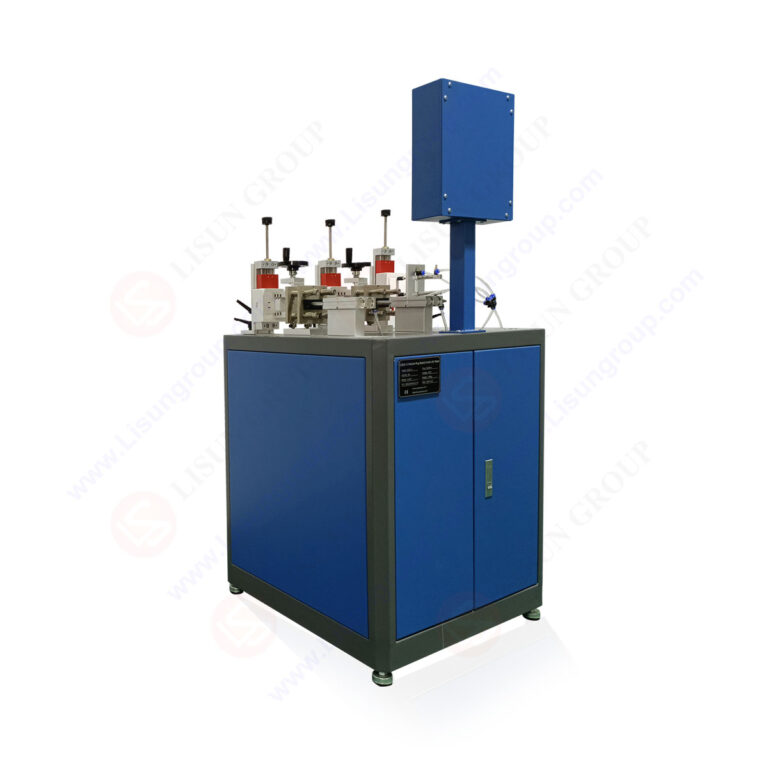
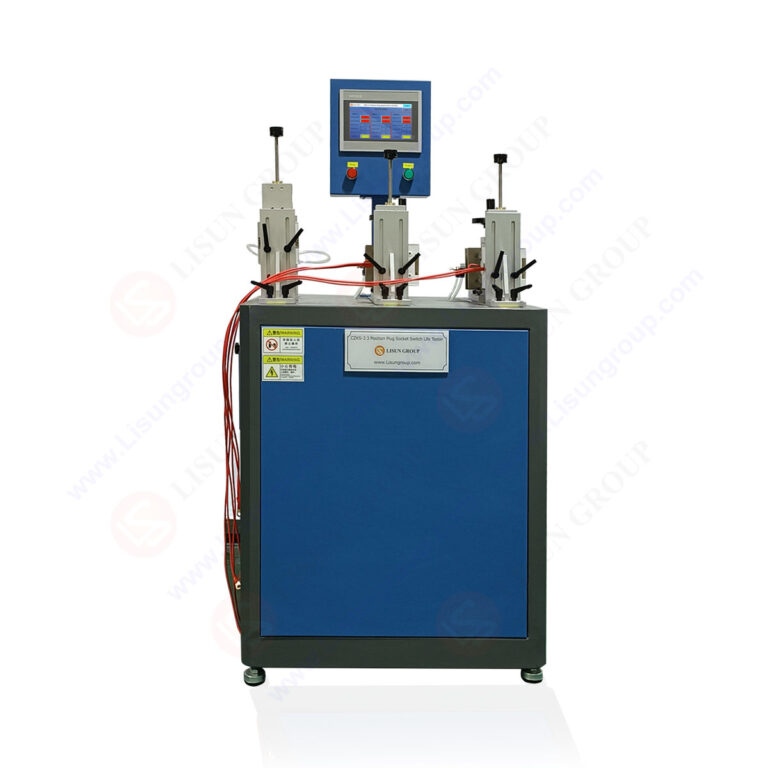
The LISUN CZKS-3 series represents a fully integrated, programmable solution for executing the complex sequences mandated by durability standards. Its design philosophy centers on automation, precision, and flexibility. By utilizing a Programmable Logic Controller (PLC) for core sequencing and servo or cylinder-driven actuators for mechanical movement, the system replicates human plug insertion/withdrawal or switch toggling with high repeatability. This automation is essential for conducting unattended, multi-day endurance tests, thereby maximizing laboratory efficiency and ensuring test result integrity.
3.2 Model Variants and Their Specialized Applications
The LISUN CZKS-3 platform is available in several configurations to address specific testing needs. The base CZKS-3 model is a versatile system for standard plug and socket-outlet tests. The CZKS-3P variant is optimized for testing power couplers and connectors with different geometries. The CZKS-3S is specifically engineered for switch durability testing per IEC 60669-1 and IEC 61058-1. The CZKS-3A model incorporates advanced features for automotive connector testing, accommodating unique vibration or environmental stress factors. This modularity allows laboratories to select a LISUN CZKS-3 series system tailored to their exact product portfolio.
4.1 Mechanical Actuation and Motion Control
The mechanical subsystem is critical for accurate simulation. The LISUN CZKS-3 series employs high-precision linear guides and actuators to control the insertion force, withdrawal force, speed, and travel distance of the test plug. For switch testing, rotary or linear actuators simulate the toggle or push-button action. Force sensors can be integrated to monitor contact engagement pressure throughout the test, providing valuable diagnostic data on spring fatigue. This level of control ensures the mechanical aspect of the electrical durability testing is both standardized and measurable.
4.2 Electrical Load Generation and Monitoring
The electrical subsystem must generate and switch stable AC or DC loads according to the standard’s requirements. Key capabilities include:
- Programmable Power Supply: Sources precise voltage (e.g., 250V AC) and current (up to 75A or more for breaking capacity tests).
- Load Banks: Provide resistive, inductive, or capacitive loads to achieve specified power factors (e.g., cos φ = 0.6 ± 0.05).
- Synchronous Switching: The load is applied and removed at precisely the correct point in the mechanical cycle (e.g., “make” before “break”).
- Continuous Monitoring: Voltage, current, and continuity are monitored in real-time to detect failures such as contact welding, excessive voltage drop, or unintended arcing.
The following table provides a technical comparison of key parameters across the primary models in the LISUN CZKS-3 series, illustrating their specialized capabilities for different plug and socket-outlet test scenarios.
| Parameter | CZKS-3 (Standard) | CZKS-3P (Power Coupler) | CZKS-3S (Switch Durability) | CZKS-3A (Automotive) |
|---|---|---|---|---|
| Max Test Current | 75A AC | 100A AC | 32A AC | 50A DC/AC |
| Test Voltage Range | 0-300V AC | 0-300V AC/DC | 0-300V AC | 0-60V DC / 0-300V AC |
| Mechanical Strokes | 1-3 (Plug) | 1-4 (Custom) | 1-2 (Toggle/Push) | 1-3 with optional vibration |
| Max Cycle Speed | 15 cycles/min | 12 cycles/min | 30 cycles/min | 20 cycles/min |
| Compliance Focus | IEC 60884-1, GB/T 2099.1 | IEC 60320, IEC 60309 | IEC 60669-1, IEC 61058-1 | USCAR, LV214, ISO 8820 |
6.1 Sample Preparation and Fixturing
Prior to testing, samples must be mounted in a fixture that replicates their end-use installation conditions, as required by the standard. For a socket-outlet, this means mounting it on a standardized test panel with specified wall thickness and material. The test plug must be a standardized “guaging plug” with specified pin dimensions and spring forces. The LISUN CZKS-3 series includes adaptable mounting plates and fixture kits to securely hold a wide range of device form factors, ensuring the applied mechanical forces are correctly transmitted to the unit under test.
6.2 Test Programming, Execution, and Failure Detection
Operators program the test sequence into the PLC-based controller, defining the number of cycles, electrical parameters, duty cycle, and motion profile. During execution, the system logs all key data. Crucially, it implements real-time failure detection algorithms. If the system detects a sustained arc, a loss of electrical continuity (indicating a welded contact), or an out-of-specification voltage drop, it will halt the test automatically and log the failure cycle number. This capability is essential for determining the exact point of failure and for conducting “first fault” analysis.
7.1 Research & Development and Quality Benchmarking
While essential for certification, the value of the LISUN CZKS-3 series extends into R&D. Engineers use it to compare different contact materials (e.g., silver-cadmium vs. silver-nickel), spring designs, or housing plastics. By conducting comparative electrical durability testing on prototype batches, manufacturers can identify superior designs early, reduce time-to-market, and establish internal quality benchmarks that exceed the minimum regulatory requirements, leading to more robust products.
7.2 Failure Analysis and Production Batch Sampling
The detailed data logs from a LISUN CZKS-3 system are invaluable for failure analysis. By examining the electrical signatures (voltage, current traces) leading up to a failure, engineers can diagnose the root cause—whether it is gradual contact erosion, sudden material transfer, or plastic deformation. Furthermore, manufacturers use these systems for ongoing quality assurance, performing periodic endurance tests on samples from production batches to monitor process consistency and ensure long-term product reliability.
Electrical durability testing, as codified in standards like IEC 60884-1, is a non-negotiable pillar of product safety and reliability for plugs, socket-outlets, and switches. Moving from manual, error-prone methods to automated testing is critical for obtaining accurate, repeatable, and certifiable results. The LISUN CZKS-3 series provides a comprehensive, flexible platform that encapsulates the technical requirements of these complex tests. By automating mechanical actuation, electrical load cycling, and intelligent failure detection, it enables testing laboratories and manufacturers to execute full compliance workflows with high efficiency. The system’s modular design, evidenced by the CZKS-3, CZKS-3P, CZKS-3S, and CZKS-3A variants, ensures it can be precisely tailored to specific component types and standards. Ultimately, integrating such a system into the quality and development process not only secures regulatory compliance but also drives tangible improvements in product design, manufacturing consistency, and market confidence.
Q1: How does the LISUN CZKS-3 series ensure synchronization between the mechanical insertion and electrical load application during a test cycle?
A: The system uses a programmable logic controller (PLC) as its central timing and sequencing brain. The PLC receives positional feedback from the mechanical actuators. It is programmed to trigger the closure of a high-capacity, synchronous electrical contactor at the exact moment the test plug pins are fully seated within the socket-outlet contacts (the “make” point). Conversely, the load is disconnected just before the mechanical withdrawal begins (the “break” point). This precise electromechanical synchronization is critical for simulating real-world arcing conditions and is a mandatory requirement of standards like Clause 19 of IEC 60884-1 for normal operation tests.
Q2: Can the LISUN CZKS-3S model test both rocker switches and push-button switches, and how does it adapt to different actuation forces?
A: Yes, the LISUN CZKS-3S is designed for this versatility. It typically employs interchangeable actuator heads—a rotary actuator for the rocking motion of a rocker switch and a linear actuator for the in-out travel of a push-button. The system’s servo-driven actuators are programmable for stroke length, speed, and, importantly, force. The actuator can be set to apply a specific force profile during the toggle, and integrated force sensors provide feedback to ensure consistency. This allows the CZKS-3S to comply with standards such as IEC 60669-1, which specify the use of standardized probes and defined forces for switch actuation during endurance testing.
Q3: What constitutes a “failure” during an automated endurance test, and how does the system identify and record it?
A: The system is programmed to monitor for specific failure modes as defined by the applicable standard. Primary failures include: Contact Welding: Detected by a continuity check during the “off” phase of the cycle; if continuity exists when it should not, the test stops. Excessive Voltage Drop: The voltage across the closed contacts is monitored; a drop exceeding a set threshold indicates high resistance due to erosion or poor contact. Failure to Make/Break Circuit: The system verifies current flow during the “on” time and absence during the “off” time. Upon detecting any failure, the LISUN CZKS-3 series immediately halts, logs the cycle number, the type of fault, and relevant electrical parameters, providing a clear record for the test report.
Q4: For testing to GB/T 2099.1, are there specific adaptations needed compared to testing for IEC 60884-1?
A: While GB/T 2099.1 is largely harmonized with IEC 60884-1, there are national deviations that the test equipment must accommodate. These can include different rated current values (e.g., 10A vs. 16A profiles), slightly altered pin dimensions for the Chinese plug standard, and specific marking requirements. The core functionality of the LISUN CZKS-3 series, such as its programmable electrical parameters and adaptable mechanical fixtures, allows it to be configured for these variations. The key is ensuring the test plugs, socket-outlet fixtures, and programmed electrical loads (current, voltage, power factor) align precisely with the clauses of the GB standard being verified.
Q5: How does automated testing with the CZKS-3 series improve data integrity over manual testing methods?
A: Manual testing introduces significant variables: inconsistent insertion/withdrawal speed and angle, irregular timing of load application, and potential for operator error in recording results. The LISUN CZKS-3 series eliminates these variables. Every cycle is identical, and all parameters (force, position, voltage, current) are controlled and recorded digitally. This creates a complete, time-stamped data trail that is essential for audit purposes and certification submissions. It also enables the detection of intermittent faults that might be missed by a human operator, leading to a more accurate assessment of the product’s true endurance limit.