


Abstract
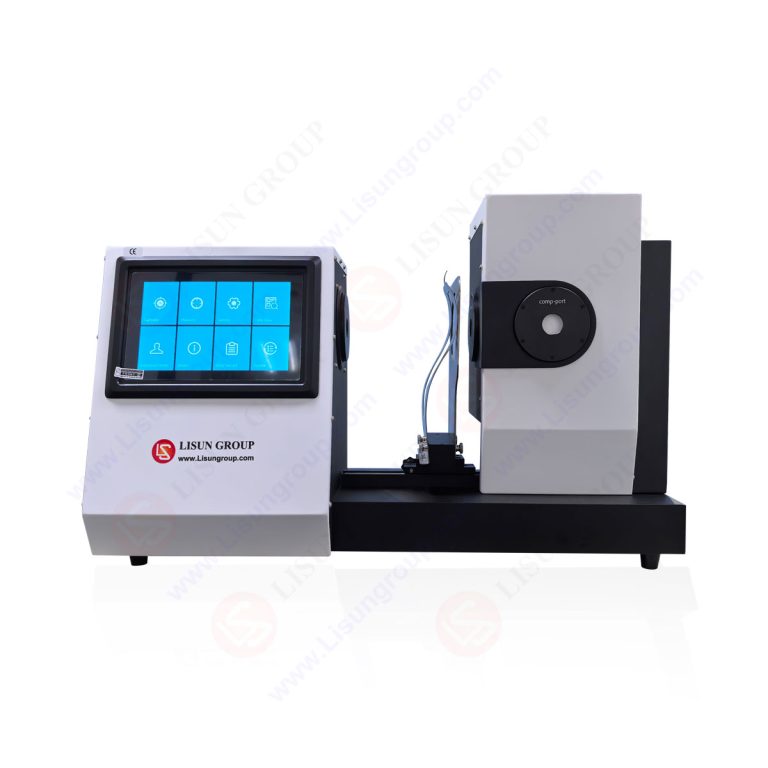
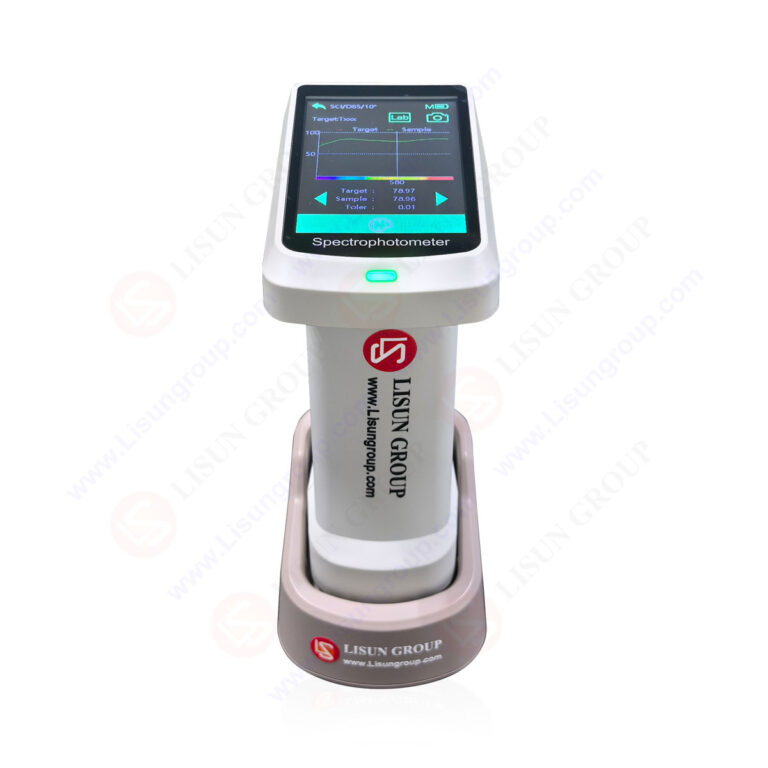
In modern manufacturing, precise color control is a critical determinant of product quality and brand consistency. The LISUN HSCD-800 Spectrophotometer addresses this need as a robust, portable instrument engineered for accurate color difference and whiteness evaluation across diverse industrial environments. This durable QC tool integrates advanced grating spectroscopy and a stable dual-beam optical system to deliver laboratory-grade performance on the production floor. It empowers quality control managers, lab technicians, and R&D engineers with reliable data for objective color decisions, reducing waste and ensuring compliance with international standards. Its application spans from plastics and coatings to textiles and automotive interiors, making it an indispensable asset for rigorous quality assurance protocols.
1.1 The Imperative for Objective Color Measurement
Subjective visual assessment of color is inherently variable, influenced by lighting conditions, observer physiology, and fatigue. In industrial quality control, this subjectivity leads to inconsistencies, product rejections, and costly disputes. Objective color measurement using spectrophotometers translates color into unambiguous numerical data, enabling precise specification, communication, and replication. Portable instruments like the LISUN HSCD series bring this capability directly to the sample—whether on a production line, in a warehouse, or at a supplier’s facility—facilitating real-time decision-making and closed-loop process control.
1.2 Evolution of the Portable Spectrophotometer
The development of portable spectrophotometers has been driven by the need for field-deployable accuracy. Early devices sacrificed optical performance for portability. Modern advancements, including nano-integrated optical devices, stable LED light sources, and robust calibration methodologies, have closed this gap. Today’s high-performance portable spectrophotometers, such as the HSCD-800, offer measurement repeatability and inter-instrument agreement that rival benchtop models. This evolution has fundamentally shifted color QC from a lab-centric, offline activity to an integrated, inline component of modern manufacturing workflows.
2.1 Grating Spectroscopy and Dual-Beam Optical Architecture
At the heart of the HSCD-800’s accuracy is its diffraction grating spectroscopy system. This technology disperses light from the sample into its constituent wavelengths, allowing for high-resolution spectral reflectance measurement across the visible spectrum (typically 400-700nm). Coupled with this is a precision dual-beam optical design. One beam measures the light reflected from the sample, while a simultaneous reference beam monitors the stability of the light source. This configuration automatically compensates for fluctuations in LED intensity or environmental drift, ensuring data stability and repeatability over time and across measurement conditions.
2.2 Nano-Integrated Optical Devices and Zirconium Calibration
The instrument employs nano-integrated optical devices to miniaturize and stabilize the optical path. This integration reduces internal stray light and improves signal-to-noise ratio, contributing to superior measurement precision. For calibration, the HSCD-800 utilizes a zirconium ceramic calibration whiteboard. Zirconium offers exceptional long-term stability, high reflectance, and resistance to yellowing or contamination compared to traditional materials like barium sulfate or PTFE. This provides a durable and reliable baseline for both instrument calibration and daily verification, which is crucial for maintaining measurement accuracy as mandated by standards such as ASTM E1164 on instrument calibration procedures.
3.1 Key Performance Parameters
The performance of a portable spectrophotometer is defined by several critical parameters. Measurement repeatability, expressed as the mean deviation (ΔE*ab) on a white calibration tile, is a primary indicator of instrument stability; the HSCD series achieves exceptionally low values. Inter-instrument agreement (IIA) ensures different units produce matching data, vital for multi-location operations. The selection of measurement apertures (e.g., MAV 8mm, SAV 4mm) allows adaptation to sample size and texture. Furthermore, support for both Specular Component Included (SCI) and Excluded (SCE) modes provides flexibility for evaluating color on both glossy and matte surfaces.
3.2 LISUN HSCD Series Comparative Analysis
The HSCD series offers models tailored to specific application needs, from foundational QC to advanced research. The following table provides a technical comparison of key models.
| Feature / Model | HSCD-780 | HSCD-800 | HSCD-860 |
|---|---|---|---|
| Measurement Repeatability | ΔE*ab ≤ 0.04 (MAV/SCI) | *ΔEab ≤ 0.03 (MAV/SCI)** | ΔE*ab ≤ 0.02 (MAV/SCI) |
| Inter-instrument Agreement | ΔE*ab ≤ 0.25 (Avg. on BCRA II) | *ΔEab ≤ 0.20 (Avg. on BCRA II)** | ΔE*ab ≤ 0.15 (Avg. on BCRA II) |
| Standard Aperture | MAV 8mm | MAV 8mm | MAV 8mm |
| Optional Aperture | SAV 4mm | SAV 4mm, LAV 15mm | SAV 4mm, LAV 15mm |
| Light Source | LED | LED | Pulsed Xenon |
| Connectivity | USB, Bluetooth | USB, Bluetooth | USB, Bluetooth, Wi-Fi |
| Primary Application | Basic QC & Color Difference | Advanced QC & Whiteness/Yellowness | High-Precision R&D & Lab |
4.1 Color Difference and Tolerance Management
The fundamental application of the HSCD-800 is calculating color difference (ΔE) between a standard and a sample. It supports all major color difference formulae, including ΔEab (CIELAB), ΔE94, ΔEcmc(l:c), and the latest CIEDE2000 (ΔE00). These formulae weight lightness (L), chroma (C), and hue (h°) differences differently to better correlate with visual perception. The instrument allows users to set numerical tolerances for each formula, enabling rapid pass/fail assessment. This capability is essential for compliance with color standards defined in ISO 7724-1 (paints and varnishes) and GB/T 3978 (standard illuminants and observer functions for colorimetry).
4.2 Whiteness, Yellowness, and Tint Indices
Beyond simple color, the HSCD-800 provides specialized indices for evaluating white and near-white materials. It calculates Whiteness Index (WI) per ISO 2470 (Blue Reflectance Method) and ASTM E313, which are critical for paper, plastics, and textiles. Yellowness Index (YI) per ASTM D1925 and ASTM E313 quantifies the deviation from colorless in products like polymers and coatings. Tint indices (Tw for white, T for amber) further describe the reddish or greenish hue bias. These metrics are vital for quality control in industries where brightness and the absence of yellowing are key selling points, such as appliances and packaging.
5.1 Conformance to CIE, ISO, and ASTM Frameworks
The design and performance of the LISUN HSCD-800 are grounded in conformance to internationally recognized standards. Its colorimetric engine is built upon the principles defined in CIE No.15: Colorimetry, which establishes the foundational color matching functions and calculation methods. This ensures that its Lab* values are scientifically valid and internationally comparable. Furthermore, its measurement geometry (typically d/8° diffuse illumination, 8° viewing) complies with conditions specified in DIN5033 Teil7, making it suitable for a wide range of material types, from opaque to translucent.
5.2 Application in Regulatory and Safety Color Testing
The portability and accuracy of the HSCD-800 make it an effective tool for verifying colors mandated by regulatory and safety standards. For instance, it can be used to assess the chromaticity coordinates of safety colors as defined in GB 2893 (Safety Colors) to ensure they fall within the specified boundaries for visual recognition. Similarly, in the transportation sector, it can measure the retroreflective color of traffic signs and markings as per GB/T 18833, helping authorities maintain road safety compliance. This standards-based approach provides auditors and quality professionals with defensible, quantitative evidence of conformity.
6.1 Manufacturing and Process Industries
In plastics and polymer manufacturing, the HSCD-800 is used to batch-match color masterbatches, control extrusion processes, and ensure consistency across final products like automotive interior trim, appliance housings, and consumer packaging. Within coatings and paints, it facilitates color development, batch approval, and application quality checks on substrates ranging from metal and wood to plastic. The textile industry employs it for dye lot approval, fabric inspection, and ensuring color fastness consistency, preventing costly mismatches between different garment components.
6.2 Quality Assurance and Third-Party Laboratories
For third-party testing labs and corporate quality assurance departments, the HSCD-800 serves as a versatile tool for supplier qualification and incoming material inspection. Its portability allows auditors to perform on-site checks at a supplier’s facility, comparing production samples directly against approved standards. In the food industry, it can objectively measure the color of products or packaging, which often correlates with perceived freshness and quality. The instrument’s robust data logging and reporting functions provide an auditable trail for ISO 9001 and other quality management system requirements.
7.1 PC Software for Advanced Analysis
The spectrophotometer is paired with powerful PC software that extends its functionality beyond simple measurement. This software enables the creation and management of extensive color libraries, sophisticated pass/fail tolerance setting with graphical displays, and trend analysis for statistical process control (SPC). Users can generate comprehensive test reports, calculate metamerism indices to evaluate color matches under different light sources (e.g., D65 vs. A), and perform strength/depth calculations for dyed materials. This transforms raw measurement data into actionable intelligence for process improvement.
7.2 Connectivity and Workflow Integration
Modern QC workflows demand seamless data integration. The HSCD-800 supports USB and Bluetooth connectivity for real-time data transfer to a PC or mobile device. This eliminates manual transcription errors and speeds up the reporting process. Measurement data can be exported in common formats (.csv, .txt) for import into Enterprise Resource Planning (ERP) or Manufacturing Execution Systems (MES). This connectivity enables the spectrophotometer to act as a node in a digital quality ecosystem, supporting Industry 4.0 initiatives where color data is automatically collected, analyzed, and used to adjust production parameters.
The LISUN HSCD-800 portable spectrophotometer represents a convergence of precision engineering and practical design, delivering laboratory-grade color analysis in a field-deployable format. Its core advantages—the stable dual-beam optical system, high-resolution grating spectrometer, and durable zirconium calibration—translate into exceptional measurement repeatability and inter-instrument agreement. This technical rigor ensures reliable compliance with key international standards, from CIE and ISO to ASTM and GB, across diverse sectors including plastics, coatings, textiles, and automotive manufacturing.
By providing objective, numerical data for color difference, whiteness, and yellowness, the HSCD-800 empowers quality professionals to make fast, accurate, and defensible decisions. It reduces material waste, minimizes production delays from color disputes, and safeguards brand integrity through consistent color reproduction. As a durable and versatile QC tool, it effectively bridges the gap between the controlled laboratory environment and the dynamic demands of the modern factory floor, making it an essential investment for any organization where color quality is non-negotiable.
Q1: What is the practical difference between SCI and SCE measurement modes, and when should each be used?
A: SCI (Specular Component Included) measures total reflectance, including the mirror-like specular reflection. It is best for evaluating the intrinsic color of a material, independent of surface gloss, and is ideal for color formulation and quality control where surface finish may vary. SCE (Specular Component Excluded) excludes the specular reflection, measuring only the diffuse color. This mode correlates more closely with how the human eye perceives color on textured or matte surfaces under typical lighting, as we rarely see the direct specular highlight. It is used for visual color matching tasks. The HSCD-800 offers both modes, allowing users to select the most appropriate one for their specific application, as recommended in standards like ASTM E1164.
Q2: How does the HSCD-800 ensure measurement consistency between multiple units used across different factory sites?
A: Consistency is achieved through a combination of high-precision manufacturing, stable optical design, and rigorous calibration protocols. The dual-beam architecture compensates for internal drift. Each instrument is factory-calibrated against master standards traceable to national metrology institutes. Furthermore, the use of a durable zirconium calibration tile provides a stable reference for daily user calibration. To quantify and guarantee consistency, LISUN specifies a tight Inter-Instrument Agreement (IIA) value (e.g., ΔE*ab ≤ 0.20 average on BCRA Series II tiles). Regular performance verification using certified ceramic tiles, as per quality procedures aligned with ISO 7724-1, ensures all units in a network remain in agreement over time.
Q3: Can the HSCD-800 accurately measure the color of textured, curved, or wet surfaces commonly found in production?
A: The instrument is designed for such practical challenges. For textured or uneven surfaces, the larger LAV 15mm aperture option can be used to average color over a broader area, providing a more representative measurement. For curved surfaces, a specially designed curved sample holder attachment ensures consistent positioning and contact, minimizing measurement gaps. While not submersible, the device can measure wet surfaces; however, the user must account for the specular reflection from the water layer, often making SCE mode more appropriate. It is crucial to establish a consistent measurement protocol (e.g., fixed drying time, specific aperture) for these non-ideal samples to ensure comparable data, a practice underscored in general measurement guidelines like those in CIE No.15.