









Abstract
In the rigorous world of LED product validation, predicting long-term lumen maintenance and chromaticity stability is paramount for reliability and compliance. This technical article provides an in-depth analysis of LED Accelerated Aging Test Chambers, specifically examining the methodologies and equipment required for precise lifetime projection. We focus on the engineering principles behind accelerated testing, the critical role of industry standards like IES LM-80 and TM-21, and the implementation of dual-system architectures for comprehensive validation. The discussion centers on practical solutions, such as LISUN‘s Environmental Test Equipment, which integrates Arrhenius Model-based software with customizable hardware to streamline the 6000-hour test process, support L70/L50 metric calculation, and deliver actionable data for engineers and compliance specialists.
1.1 From Field Failure to Predictive Analytics
The transition from incandescent to solid-state lighting has shifted reliability concerns from catastrophic failure to gradual performance degradation. LED lumen depreciation and chromaticity shift are time-dependent processes, making real-time life testing—potentially spanning 50,000 hours or more—impractical for product development cycles. Accelerated aging testing provides a scientifically grounded method to compress this timeline, applying controlled stress factors to extrapolate long-term performance. This predictive approach is essential for manufacturers to guarantee product lifetime claims, meet warranty obligations, and comply with stringent industry and regulatory requirements.
1.2 Core Metrics: Lumen Maintenance and Chromaticity Shift
The primary outputs of LED accelerated aging are lumen maintenance (Φ) and chromaticity shift (Δu’v’). Lumen maintenance, expressed as a percentage of initial light output, defines the useful life of an LED system through metrics like L70 (time to 70% of initial lumens) and L50. Chromaticity shift determines color consistency over time, a critical parameter for applications in retail, museums, and automotive lighting. Accurate, traceable measurement of these parameters under elevated stress conditions forms the foundation of all reliable lifetime projection models.
2.1 The Benchmark: IES LM-80 and LM-84
IES LM-80-20, “Approved Method: Measuring Lumen Maintenance of LED Light Sources,” is the cornerstone standard. It prescribes the methods for measuring lumen depreciation of LED packages, arrays, and modules at controlled case temperatures (e.g., 55°C, 85°C, and a third temperature as specified) over a minimum of 6000 hours. IES LM-84-21, “Measuring Luminous Flux and Color Maintenance of LED Lamps, Light Engines, and Luminaires,” extends these principles to complete, integrated systems. Compliance with these standards is non-negotiable for ENERGY STAR, DesignLights Consortium (DLC), and other certification programs.
2.2 From Data to Prediction: TM-21 and TM-28
Raw LM-80/LM-84 data alone does not yield a lifetime projection. IES TM-21-11, “Projecting Long-Term Lumen Maintenance of LED Light Sources,” provides the mathematical methodology for extrapolating LM-80 data to estimate Lp (e.g., L70, L90). Similarly, IES TM-28-21, “Projecting Long-Term Chromaticity Shift of LED Packages, Arrays, and Modules,” offers guidance for projecting color shift. These technical memoranda transform thousands of hours of test data into actionable lifetime claims, making them integral to the validation workflow.
3.1 Dual-System Design Philosophy
A complete accelerated aging validation suite requires synchronized environmental stress and optical measurement. LISUN’s approach employs a dual-system architecture: the LEDLM-80PL system for LM-80/TM-21 compliance on components, and the LEDLM-84PL system for LM-84/TM-28 compliance on full systems. This bifurcation ensures that the measurement geometry, thermal management, and data processing are optimized for the specific Device Under Test (DUT), whether it’s a bare LED package on a test board or a fully enclosed luminaire.
3.2 Integrated Hardware Configuration
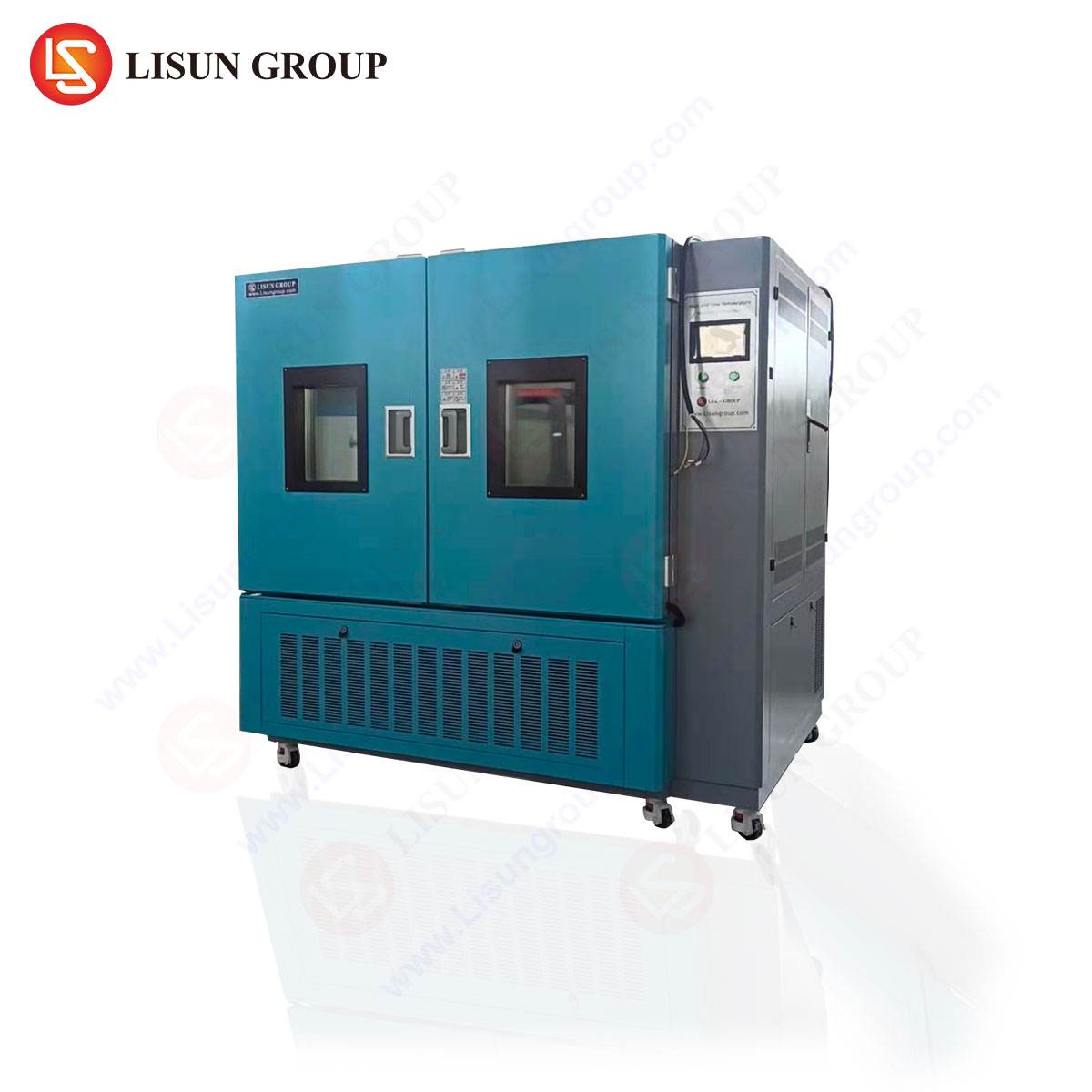
The system’s hardware is designed for flexibility and precision. It typically consists of a high-stability LED Optical Aging Test Instrument connected to one or more temperature/humidity chambers. The system can support up to 3 connected chambers simultaneously, allowing parallel testing at different stress levels (e.g., 55°C, 85°C, 105°C). DUTs are mounted inside the chambers, with their light output channeled via optical fibers to a central spectroradiometer or photometer housed within the main instrument. This configuration isolates sensitive optical equipment from the harsh chamber environment while enabling continuous, automated measurement.
Table 1: LISUN LED Accelerated Aging System Configuration Comparison
| Feature | LEDLM-80PL System (LM-80/TM-21) | LEDLM-84PL System (LM-84/TM-28) |
| :— | :— | :— |
| Primary Standard | IES LM-80-20 | IES LM-84-21 |
| Target DUT | LED Packages, Arrays, Modules | LED Lamps, Light Engines, Luminaires |
| Projection Standard | IES TM-21-11 | IES TM-28-21 |
| Test Duration | Minimum 6000 hours per condition | Minimum 6000 hours per condition |
| Key Metrics | Lumen Maintenance (L70, L50) | Lumen & Color Maintenance (L70, Δu’v’) |
| Typical Chamber Link | 1-3 Temperature Chambers | 1-3 Temperature/Humidity Chambers |
| Measurement Basis | Direct fiber coupling from DUT | Integrating sphere for total luminous flux |
4.1 Automating the Extrapolation Workflow
The true value of an accelerated test is unlocked in data analysis. The system’s proprietary software automates the entire TM-21/TM-28 extrapolation process. It continuously logs optical and thermal data, applies the Arrhenius Model—which describes the temperature dependence of the LED degradation rate—and generates real-time lumen maintenance curves. The software automatically calculates the thermal acceleration factor between test temperatures, allowing for the projection of lifetime at a specified use temperature, a critical step for generating meaningful Lp estimates.
4.2 Dual Testing Modes for Efficiency
To optimize laboratory resources, the software supports two operational modes. Sequential Mode measures each DUT channel one after another, ideal for setups with a single spectroradiometer. Parallel Mode, enabled by multiple spectroradiometers, measures all connected DUTs simultaneously, drastically reducing total test time for high-volume sample batches. This flexibility allows labs to scale their throughput based on need, from R&D prototyping to high-volume quality assurance.
5.1 Ensuring Initial Performance Accuracy
While LM-80/LM-84 track performance over time, the initial characterization of the DUT is equally critical. IES LM-79-19, “Electrical and Photometric Measurements of Solid-State Lighting Products,” defines the approved methods for measuring initial luminous flux, chromaticity, and efficacy. This standard often references CIE 127:2007 for measuring LED package intensity and CIE 70:1987 for absolute photometry of lamps. Accurate baseline data per LM-79 is a prerequisite for any meaningful lumen maintenance percentage calculation.
5.2 Addressing Spectral and Colorimetric Stability
Long-term color shift (Δu’v’) is a key failure mode. Its measurement is guided by the foundational principles in CIE 084:1989, “Measurement of Luminous Flux.” Furthermore, the spectral power distribution (SPD) data collected during aging tests is essential for analyzing not just chromaticity shift but also potential correlated color temperature (CCT) drift and peak wavelength stability, providing a complete picture of optical performance degradation.
6.1 Pre-Test Calibration and Setup
A compliant workflow begins with traceable calibration of all instruments: the spectroradiometer to a NIST-traceable standard lamp, the temperature sensors, and the chamber environment. DUTs are seasoned per standard requirements (typically 1000 hours at rated current) before baseline LM-79 measurements are taken. They are then installed in the chambers, ensuring proper thermal coupling (for LM-80) or representative free-air mounting (for LM-84).
6.2 Execution, Monitoring, and Data Integrity
The automated system initiates the 6000-hour test, taking periodic measurements (e.g., every 336 hours as suggested by LM-80). The software monitors for system faults or DUT failures. All data is stored with timestamps and environmental conditions, creating an immutable audit trail for compliance reporting. Upon test completion, the software executes the TM-21/TM-28 projection, generating the required graphs and Lp value reports.
7.1 Beyond Lumen Maintenance: Stress Testing
While compliance-driven, these chambers are powerful tools for R&D. Engineers can use them for highly accelerated life testing (HALT) by employing more extreme temperatures or current overloads to identify failure mechanisms and design weaknesses rapidly. This proactive stress testing informs more robust product design before compliance testing even begins.
7.2 Integration in Smart Manufacturing
In Industry 4.0 contexts, LED Accelerated Aging Test Chambers are evolving into data nodes. Integration with Manufacturing Execution Systems (MES) allows for real-time yield analysis and predictive quality control. The lifetime projection data can feed directly into digital twin models of the LED product, enabling virtual lifetime validation and further accelerating the development cycle for next-generation lighting solutions.
The validation of LED product lifetime through accelerated aging testing is a complex but essential discipline, bridging the gap between empirical data and long-term reliability claims. As demonstrated, a robust testing regimen is built upon strict adherence to a hierarchy of standards—from the initial characterization per IES LM-79-19 and CIE 127, through the extended stress testing mandated by IES LM-80 and LM-84, to the final lifetime projections calculated via TM-21 and TM-28. Implementing this regimen requires a sophisticated integration of stable environmental chambers, precise optical measurement, and intelligent, Arrhenius Model-based software. Solutions like LISUN’s Environmental Test Equipment, with their dual-system architecture for components and full systems, customizable hardware linking multiple chambers, and automated data processing, provide the technical infrastructure necessary for efficiency and compliance. For LED manufacturing engineers and testing laboratories, mastering these tools and methodologies is key to delivering products with verified, reliable performance that meets both market expectations and regulatory mandates.
Q1: What is the fundamental difference between testing per IES LM-80 versus IES LM-84, and how does the equipment setup differ?
A: IES LM-80 applies to LED packages, arrays, and modules (component-level), while LM-84 applies to integrated LED lamps, light engines, and luminaires (system-level). The key equipment difference lies in photometry. For LM-80, the LED component’s light is typically coupled directly into an optical fiber, measuring its output in a controlled thermal environment. For LM-84, the complete luminaire must be measured for total luminous flux, requiring its placement inside a large integrating sphere (as per IES LM-79-19) while the sphere itself is housed within or coupled to the environmental chamber. This ensures the entire system’s thermal and optical performance is assessed as an end-user would experience it.
Q2: How does the Arrhenius Model software actually project lifetime from, for example, 6000 hours of data to an L70 of 50,000 hours?
A: The software uses the Arrhenius Model to quantify the acceleration of the chemical degradation processes within the LED caused by increased temperature. It analyzes the lumen maintenance curves at two or more elevated test temperatures (e.g., 85°C and 105°C). By calculating the degradation rate at each temperature, the model determines the activation energy of the dominant failure mechanism. It then uses this relationship to extrapolate the degradation rate back down to a typical in-use junction temperature (e.g., 65°C). This decelerated rate curve is projected forward mathematically until it intersects the 70% lumen maintenance threshold, yielding the projected L70 time, as prescribed by TM-21.
Q3: Can a single LED Accelerated Aging Test Chamber system handle both lumen maintenance and chromaticity shift testing for compliance?
A: Yes, a fully configured system is designed for both. The core requirement is a spectroradiometer (not just a photometer) as part of the optical measurement instrument. A spectroradiometer captures the full spectral power distribution (SPD) of the DUT at every measurement interval. From the SPD, the software can calculate both photometric quantities (luminous flux for lumen maintenance) and colorimetric quantities (CIE chromaticity coordinates u’, v’ for Δu’v’ shift). Therefore, a single measurement sequence provides the data needed for compliance with both the lumen maintenance aspects of LM-80/LM-84 and the color maintenance aspects required by LM-84 and projected via TM-28.