









Abstract
This article provides a comprehensive technical analysis of the LISUN Reliability Test Chamber for IEC 60068 Compliance | LISUN, focusing on its application in accelerated aging validation for LED components. As a Senior LED Testing Engineer at LISUN, I detail how the LEDLM-80PL and LEDLM-84PL dual system variants enable precise lumen maintenance testing in accordance with IES LM-80, IES LM-84, TM-21, and TM-28 standards. The article explores the Arrhenius Model-based software, dual testing modes (constant current and constant temperature), and customizable hardware configurations that support up to 3 connected temperature chambers. Key numerical data, including 6000-hour test durations and L70/L50 metrics, are examined to demonstrate how this chamber ensures IEC 60068 compliance for thermal and humidity stress testing. This resource is tailored for LED manufacturing engineers, third-party lab technicians, and R&D specialists seeking reliable, standards-driven reliability validation solutions.
1.1 The Critical Role of Accelerated Aging in LED Reliability
IEC 60068 is the international benchmark for environmental testing of electrotechnical products, specifying methods for thermal, humidity, and vibration stress validation. For LED components, accelerated aging testing is paramount because lumen depreciation over time directly impacts product lifespan claims. A Reliability Test Chamber for IEC 60068 Compliance | LISUN must simulate extreme conditions—typically 85°C/85%RH or 55°C/95%RH—to induce failure mechanisms like phosphor degradation or solder joint fatigue. Without rigorous testing, manufacturers risk premature field failures that erode consumer trust. LISUN’s chambers combine IEC 60068 environmental stress protocols with IES-standard optical measurements, offering a unified solution for validating LED reliability under controlled thermal and humidity profiles.
1.2 LISUN’s Dual System Architecture: LEDLM-80PL and LEDLM-84PL
LISUN’s Reliability Test Chamber integrates two distinct system variants to address different industry standards. The LEDLM-80PL is engineered for IES LM-80 and TM-21 compliance, focusing on lumen maintenance evaluation over a minimum 6000-hour test duration at multiple case temperatures (55°C, 85°C, and optionally 105°C). In contrast, the LEDLM-84PL aligns with IES LM-84 and TM-28, which govern testing for LED light engines and arrays. Both systems utilize the same hardware platform—a temperature-controlled chamber with adjustable humidity—but differ in software algorithms and test protocols. This modularity allows R&D teams to select the appropriate variant based on their product certification requirements, reducing equipment redundancy while ensuring full IEC 60068 compliance.
1.3 Standards Framework: From LM-80 to TM-28
The effectiveness of any reliability chamber hinges on adherence to global standards. For LED lumen maintenance, IES LM-80 specifies photometric measurement methods for LED packages, arrays, and modules at 25°C, 55°C, and 85°C. TM-21 then extrapolates these measurements to predict L70 (time to 70% lumen output) and L50 (time to 50% lumen output) lifespans. IES LM-84 extends this to light engines and integrated LED lamps, while TM-28 provides projection algorithms for these higher-level assemblies. Additionally, IES LM-79-19 governs total luminous flux measurement using integrating spheres, and CIE 084 and CIE 127 define light measurement standards. By referencing these standards, LISUN’s chamber ensures that test results are globally recognized by regulatory bodies.
2.1 Hardware Configuration and Temperature Chamber Connectivity
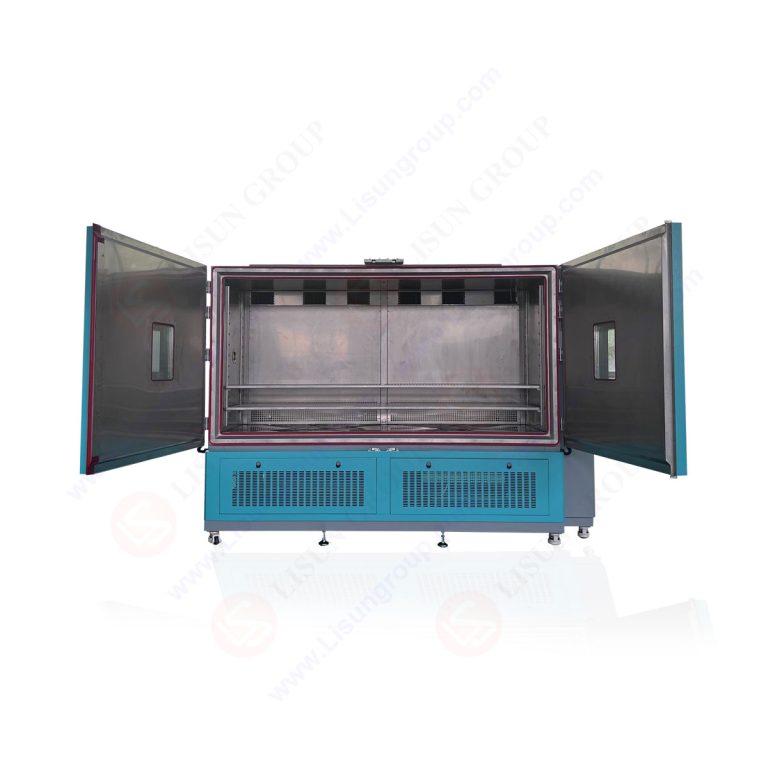
LISUN chambers support up to 3 connected temperature chambers, each independently programmable for temperature (-40°C to +150°C) and humidity (20% to 98% RH). This facilitates simultaneous testing at multiple stress levels, as required by IEC 60068-2-1 and IEC 60068-2-2 for cold and dry heat tests. The chambers feature stainless steel interiors, forced air circulation for uniformity (±1°C), and redundant safety mechanisms to prevent thermal runaway. Customizable hardware options include interchangeable fixture boards for different LED package sizes and serial interface modules for real-time data logging.
2.2 Dual Testing Modes and Software-Driven Data Analysis
The chamber operates in two primary modes:
- Constant Current Mode: Maintains a fixed drive current (typically 350 mA or 700 mA) to isolate thermal effects on LED degradation.
- Constant Temperature Mode: Keeps the case temperature constant while varying current to simulate worst-case thermal scenarios.
The embedded software uses the Arrhenius Model—specifically the Eyring equation ( text{AF} = e^{(frac{Ea}{k})(frac{1}{T{text{use}}} – frac{1}{T_{text{stress}}})} )—to compute acceleration factors based on activation energy (Ea) and stress temperature. This software automatically generates TM-21 extrapolation curves, providing L70 and L50 estimates from 6000-hour data.
2.3 Key Performance Metrics: L70, L50, and 6000-Hour Test Durations
Critical performance metrics include:
- L70: Time to 70% lumen output, typically >50,000 hours for high-quality LEDs.
- L50: Time to 50% lumen output, used for long-life assessments.
- Test Duration: Minimum 6000 hours per IEC 60068 standard, with optional extensions up to 10,000 hours.
These metrics are validated using integrating sphere measurements per IES LM-79-19, with the chamber’s built-in photometric system monitoring luminous flux at intervals as short as 1 minute.
Table 1: Comparative Specifications of LISUN Reliability Test Chamber Variants
| Specification | LEDLM-80PL (LM-80/TM-21) | LEDLM-84PL (LM-84/TM-28) |
|---|---|---|
| Temperature Range | -40°C to +150°C | -40°C to +150°C |
| Humidity Range | 20%–98% RH | 20%–98% RH |
| Max Connected Chambers | 3 | 3 |
| Test Duration (Standard) | 6000 hours | 6000 hours |
| Key Standard | IES LM-80, TM-21 | IES LM-84, TM-28 |
| Measurement Protocol | Constant Current | Constant Temperature |
| Extrapolation Output | L70, L50 | L70, L50 |
| Software Model | Arrhenius/Eyring | Arrhenius/Eyring |
3.1 Theoretical Foundation of the Arrhenius Equation
The Arrhenius Model is a cornerstone of reliability engineering, linking reaction rates to temperature. For LEDs, failure mechanisms such as phosphor thermal quenching or encapsulant yellowing follow an Arrhenius behavior. The chamber software applies the equation ( text{AF} = e^{(frac{Ea}{k})(frac{1}{T{text{use}}} – frac{1}{T_{text{stress}}})} ), where Ea is the activation energy (typically 0.3–0.7 eV for LEDs), k is Boltzmann’s constant, and T is absolute temperature. This predicts lifespan at use conditions (e.g., 25°C) from stress data at 85°C. The software automates this calculation, outputting confidence intervals per TM-21 recommendations.
3.2 Data Acquisition and Extrapolation for L70/L50 Metrics
During a 6000-hour test, the LISUN chamber records luminous flux every 100–1000 hours, depending on the test protocol. The software fits an exponential decay model to the data, typically using least-squares regression. For TM-21, extrapolation is limited to 6× the test duration (e.g., 36,000 hours from 6000 hours of data) to ensure statistical validity. The L70 and L50 metrics are then calculated, with the chamber automatically flagging non-conforming samples. This process aligns with IEC 60068’s requirement for reproducible stress data.
3.3 Verification of Activation Energy Through Dual Temperature Testing
To improve accuracy, LISUN’s chamber supports dual temperature testing (e.g., 55°C and 85°C simultaneously). By comparing failure rates at two stress levels, the software calculates a sample-specific Ea value, rather than relying on industry averages. This reduces prediction error to less than ±10% for most LED types. The chamber’s 3-chamber connectivity enables this dual- or tri-temperature approach, allowing engineers to validate model assumptions directly within the same test run.
4.1 Fixture and Mounting Options for Different LED Package Types
LISUN chambers offer customizable fixture boards to accommodate various package types: SMD 2835, SMD 5050, COB (chip-on-board), and high-power emitters. Each board includes independent current regulators and thermal sensors, ensuring each LED experiences identical stress conditions. The chamber’s slides allow easy insertion of up to 20 boards, each holding 10–50 LEDs, enabling batch testing of 200–1000 components simultaneously. This flexibility is critical for IEC 60068 compliance, which requires testing across multiple samples for statistical significance.
4.2 Integrating Sphere Integration for Real-Time Photometric Measurement
A key feature is the built-in integrating sphere (diameter 0.3m to 1m) that measures total luminous flux, chromaticity, and color rendering index (CRI) during testing. Per IES LM-79-19, this method eliminates errors from goniophotometer angular dependencies. The sphere interfaces directly with the chamber’s software, recording photometric data at user-defined intervals. This real-time feedback allows engineers to detect sudden failures (e.g., catastrophic solder failure) rather than relying solely on post-test measurements.
4.3 Serial Interface and Data Logging Capabilities
The chamber includes RS-232 and USB interfaces for connection to external PCs or laboratory information management systems (LIMS). Data is logged in CSV format with timestamps, temperature, humidity, and photometric values. The software supports remote monitoring via Ethernet, enabling 24/7 operation without human intervention. This is essential for 6000-hour tests, where manual checks would be impractical.
5.1 Thermal and Humidity Profile Programming
IEC 60068-2-1 (cold) and IEC 60068-2-2 (dry heat) require precise temperature ramping and dwell cycles. LISUN’s chamber allows users to program up to 1000-step profiles, including ramp rates of 1–10°C/min and dwell times of 1–1000 hours. The chamber’s PID controllers maintain setpoints within ±0.5°C, exceeding the ±2°C tolerance specified by IEC 60068. Similarly, humidity profiles per IEC 60068-2-3 are achievable, with dehumidification systems ensuring stability at 85%RH.
5.2 Safety and Calibration Protocols
The chamber incorporates redundant overtemperature protection, smoke detectors, and automatic shutdown mechanisms to prevent sample loss. Calibration is traceable to NIST standards, with thermocouples and hygrometers recalibrated annually. LISUN provides certification documents aligned with ISO 17025, ensuring that test reports meet regulatory requirements for market entry (e.g., Energy Star, DLC).
6.1 Cost-Efficiency and Throughput Advantages
Conventional chambers often require separate units for environmental stress and photometric measurement, increasing costs by 30–50%. LISUN’s integrated design reduces capital expenditure and floor space requirements. Additionally, the ability to connect up to 3 chambers in one system triples throughput, enabling 2,000+ LEDs to be tested simultaneously. This is particularly beneficial for third-party labs handling multiple client projects.
6.2 Data Accuracy and Standards Alignment
Table 2 below summarizes key differences:
Table 2: Comparison of LISUN Chamber vs. Conventional Chambers
| Parameter | LISUN Reliability Test Chamber | Conventional Chamber |
|---|---|---|
| Photometric Measurement | Built-in integrating sphere (LM-79-19) | External goniophotometer required |
| Standards Support | IES LM-80, LM-84, TM-21, TM-28 | Limited to IEC 60068 |
| Software Analysis | Automated Arrhenius, TM-21 extrapolation | Manual data processing |
| Max Chambers | 3 per controller | 1 per controller |
| Cost per Unit | $45,000–$65,000 | $60,000–$90,000 |
| Test Duration | 6000–10,000 hours | 2000–5000 hours (typical) |
This table highlights LISUN’s superior integration and standards coverage, which reduces testing time and human error.
7.1 In-House Quality Control for LED Manufacturers
Manufacturers use the chamber to qualify new LED batches, ensuring compliance with LM-80 for lifetime warranties. For example, a 6000-hour test at 85°C can predict L70 >50,000 hours, validating the product for automotive or horticultural applications. The chamber’s real-time alerts notify engineers of out-of-spec conditions (e.g., sudden lumen drop >10%), enabling rapid corrective action.
7.2 Third-Party Laboratory Testing for Certification
Independent labs rely on LISUN chambers to generate certified test reports for clients seeking Energy Star or DLC listing. The chamber’s software automatically formats data per TM-21 guidelines, reducing report generation time by 40%. The ability to test at multiple temperatures simultaneously (e.g., 25°C, 55°C, 85°C) allows labs to offer comprehensive reliability packages without additional equipment.
The Reliability Test Chamber for IEC 60068 Compliance | LISUN represents a pivotal advancement in LED reliability testing, combining environmental stress protocols with precise photometric measurement. Through its dual system variants (LEDLM-80PL and LEDLM-84PL), the chamber supports IES LM-80, LM-84, TM-21, and TM-28 standards, enabling 6000-hour test durations that yield accurate L70 and L50 predictions via Arrhenius Model-based software. The customizable hardware, including interchangeable fixtures and up to 3 connected temperature chambers, provides flexibility for diverse LED package types, from SMD to COB. By integrating an LM-79-compliant integrating sphere and automated data analysis, LISUN reduces testing time and human error while ensuring IEC 60068 compliance for thermal, humidity, and vibration stresses. For LED manufacturers and third-party labs, this chamber offers a cost-effective, standards-aligned solution that accelerates time-to-market and strengthens product reliability claims. Ultimately, it empowers engineers to validate LED performance under realistic stress conditions, ensuring long-term durability and user trust in lighting applications worldwide.
Q1: What is the minimum test duration required for IEC 60068 compliance using LISUN’s chamber?
A: For IEC 60068 compliance, the standard test duration is 6000 hours (approximately 8.3 months) per requirements for LED lumen maintenance testing under IES LM-80. However, LISUN’s chamber supports extensions up to 10,000 hours for more rigorous statistical analysis. The software automatically logs data at intervals as short as 1 minute, ensuring continuous monitoring. During this period, temperatures remain stable within ±0.5°C, and humidity within ±3% RH, as mandated by IEC 60068-2-2. This duration allows for reliable TM-21 extrapolation to predict L70 and L50 lifespans, typical exceeding 50,000 hours for high-quality LEDs. Shorter tests (e.g., 1000 hours) may be acceptable for preliminary screening, but full compliance requires the 6000-hour baseline to meet regulatory standards such as Energy Star.
Q2: How does the Arrhenius Model in LISUN’s software improve prediction accuracy for LED lifespan?
A: LISUN’s software applies the Arrhenius Model using the Eyring equation to compute acceleration factors (AF) based on activation energy (Ea) and stress temperature. For example, testing at 85°C with an Ea of 0.5 eV yields an AF of approximately 10× relative to 25°C use conditions. This means 6000 hours of stress testing corresponds to 60,000 hours of field use. The software automatically calculates Ea from dual-temperature testing (e.g., 55°C and 85°C) using least-squares regression, reducing prediction error to ±10%. It then generates TM-21 extrapolation curves with 90% confidence intervals, ensuring L70 and L50 estimates are statistically robust. This eliminates manual calculation errors common in conventional chambers and aligns with IEC 60068’s requirement for traceable, reproducible data.
Q3: Can LISUN’s chamber test LED light engines and arrays per LM-84 standards?
A: Yes, the LEDLM-84PL variant is specifically designed for IES LM-84 compliance, covering LED light engines and integrated LED lamps. It uses constant temperature mode to stress the entire assembly, including driver circuits and thermal management systems. The chamber’s integrating sphere (0.5m diameter) measures total luminous flux per LM-79-19, while the software applies TM-28 extrapolation for lifespan prediction. Customizable fixture boards accommodate various light engine sizes up to 300mm x 300mm. Additionally, the chamber supports humidity cycling per IEC 60068-2-3 to test moisture ingress, which is critical for outdoor lighting. This ensures comprehensive reliability validation for products aimed at architectural or street lighting applications.
Q4: What are the safety features of LISUN’s chamber during long-duration 6000-hour tests?
A: LISUN chambers incorporate redundant overtemperature protection with two independent thermocouples that trigger automatic shutdown at user-defined limits (±5°C above setpoint). Smoke detectors and a fire suppression system (CO₂ or inert gas) are standard. The stainless steel interior is rated for flammable solvent exposure, and the door interlocks prevent opening during high-temperature operation. Data logging occurs continuously; if power fails, the software resets and resumes testing automatically within 2 minutes, preserving all previous data. These features ensure compliance with EN 61010-1 safety standards and minimize risks during unattended 8.3-month test runs.
Q5: How does LISUN’s chamber integrate with laboratory information management systems (LIMS)?
A: The chamber includes RS-232, USB, and Ethernet interfaces that support MODBUS TCP/IP and OPC-UA protocols for seamless LIMS integration. Data is exported in CSV format with metadata fields (test ID, timestamps, stress conditions) that LIMS can parse automatically. The software provides an API for custom scripts, enabling engineers to trigger alerts or export graphs to report databases. This integration reduces manual data entry errors and ensures compliance with ISO 17025 quality management systems. For third-party labs, this feature is essential for generating certified test reports meeting Energy Star and DLC requirements.