









The increasing demand for precision in optical quality control across automotive electronics, plastics, glass, and display industries necessitates advanced instrumentation capable of simultaneous haze, transmittance, and color analysis. This article presents a comprehensive technical evaluation of the LISUN HM-700 Haze Meter and Spectrophotometer, an all-in-one solution designed to address the limitations of traditional single-function devices. By integrating 0/d geometry optical systems, multi-light source spectral analysis, and compliance with global standards including ASTM D1003, ISO 13468, CIE No.15, and JIS K7105, the HM-700 delivers superior measurement repeatability and accuracy. This article explores its core technologies, practical applications across key manufacturing sectors, and comparative performance data, offering actionable insights for quality control managers, R&D engineers, and compliance specialists seeking to enhance material characterization workflows while reducing instrument redundancy and operational costs.
1.1 0/d Geometry Optical System for Accurate Scatter Measurement
The LISUN HM-700 employs a 0/d (0-degree illumination, diffuse detection) optical geometry, a configuration widely recognized for its effectiveness in measuring total transmittance and haze in translucent materials. In this design, the incident light beam strikes the sample perpendicularly, while an integrating sphere collects both directly transmitted and scattered light components. The 0/d geometry minimizes directional errors caused by sample surface texture and internal inhomogeneities, ensuring consistent results across materials with varying degrees of roughness or refractive index non-uniformity. This is particularly critical for haze measurement, where accurate differentiation between forward-scattered and directly transmitted light determines the precision of haze percentage calculations. The HM-700’s integrating sphere, coated with highly reflective barium sulfate, provides near-Lambertian diffuse reflectance, enabling reliable measurement of materials with haze values ranging from near-zero (optically clear) to over 99% (highly diffuse).
1.2 Multi-Light Source Spectral Analysis for Comprehensive Color Characterization
Unlike conventional haze meters limited to a single CIE illuminant, the HM-700 incorporates multiple light sources including Illuminant A (incandescent), Illuminant C (average daylight), and Illuminant D65 (standard daylight). This multi-source capability allows operators to evaluate color appearance under different lighting conditions, which is essential for automotive interior plastics, display filters, and architectural glass that must maintain consistent visual aesthetics across varied environments. The spectrophotometric engine measures spectral transmittance across the visible range (typically 380–780 nm) at intervals as fine as 10 nm, enabling calculation of CIE Lab, CIE LCh, Yellowness Index (YI), and Whiteness Index (WI). The instrument’s spectral response closely matches the CIE 1931 standard observer color-matching functions, ensuring that computed color coordinates correlate reliably with human visual perception.
1.3 Transmittance Compensation Algorithms and Signal Processing
A key differentiator of the HM-700 is its implementation of advanced transmittance compensation algorithms that correct for systematic errors arising from sample thickness, surface reflections, and temperature-induced drift. The instrument automatically applies Fresnel reflection corrections based on the sample’s refractive index, improving accuracy for materials with high surface reflectivity such as polycarbonate or coated glass. Additionally, real-time dark current subtraction and baseline calibration protocols maintain measurement stability even during extended operation. The device’s signal-to-noise ratio exceeds 1000:1 for transmittance measurements, enabling detection of haze differences as small as 0.01%—a critical feature for R&D applications requiring rigorous batch-to-batch consistency.
2.1 All-in-One Capabilities: Haze, Transmittance, and Colorimetry
The LISUN HM-700 consolidates three distinct measurement functions into a single benchtop instrument, eliminating the need for separate haze meters, spectrophotometers, and colorimeters. This integration significantly reduces laboratory footprint and capital expenditure while streamlining quality control workflows. The instrument can sequentially measure total transmittance (Tt), diffuse transmittance (Td), haze percentage (Haze = Td/Tt × 100%), and colorimetric parameters from a single sample placement, reducing operator handling errors and measurement time by up to 50% compared to multi-instrument processes. A built-in touchscreen interface provides real-time graphical display of spectral curves, color gamut projections, and pass/fail indications based on user-defined tolerance limits.
2.2 Technical Specifications and Compliance Metrics
The HM-700 series meets or exceeds the requirements of multiple international standards for haze and transmittance testing. The table below presents key performance parameters compared to the typical requirements of ASTM D1003 and ISO 13468.
| Parameter | LISUN HM-700 | ASTM D1003 Requirement | ISO 13468 Requirement |
|---|---|---|---|
| Measurement Geometry | 0/d (diffuse) | 0/d or d/0 | 0/d or d/0 |
| Haze Range | 0–100% | 0–100% | 0–100% |
| Haze Repeatability | ±0.02% | ≤0.05% | ≤0.05% |
| Transmittance Repeatability | ±0.1% | ≤0.3% | ≤0.2% |
| Spectral Range | 380–780 nm | Not specified | 380–780 nm |
| Light Sources | A, C, D65, D50 | A, C, D65 | A, D65 |
| Data Storage | 10,000+ records | Not specified | Not specified |
| Compliance Standards | ASTM D1003, ISO 13468, JIS K7105, CIE No.15 | ASTM D1003 only | ISO 13468 only |
The HM-700’s haze repeatability of ±0.02% surpasses the ASTM D1003 requirement of ±0.05%, enabling confident detection of subtle haze variations in high-clarity optical films and display cover glass. Similarly, transmittance repeatability of ±0.1% exceeds ISO 13468 recommendations by a factor of two.
3.1 ASTM D1003 and ISO 13468: Haze and Transmittance Measurement
ASTM D1003, Standard Test Method for Haze and Luminous Transmittance of Transparent Plastics, and ISO 13468, Plastics—Determination of the Total Luminous Transmittance of Transparent Materials, are the foundational standards governing haze measurement in the plastics and optical industries. The HM-700 is specifically designed to conform to both standards, supporting the required 0/d geometry and providing measurement results directly in the percentage units specified by each document. The instrument’s built-in CIE tristimulus weighting functions automatically convert spectral data to photometric values under the designated illuminant, eliminating manual calculation errors. For laboratories seeking ISO/IEC 17025 accreditation, the HM-700 includes calibration certificates traceable to national metrology institutes, and its software supports the generation of test reports formatted according to standard templates.
3.2 CIE No.15 and JIS K7105: Colorimetry and Japanese Industrial Standards
CIE No.15 (Colorimetry) provides the theoretical foundation for the HM-700’s color measurement algorithms, including calculations for CIE 1931 (2°) and CIE 1964 (10°) standard observers. The instrument supports both observer angles, allowing users to select the most appropriate configuration for their application—the 2° observer is typical for small-area color matching, while the 10° observer better correlates with human perception for larger samples. JIS K7105, the Japanese Industrial Standard for Testing Methods for Optical Properties of Plastics, aligns closely with ASTM D1003 but includes additional requirements for sample conditioning and measurement temperature control. The HM-700’s environmental stability features, including temperature-compensated optics and minimal warm-up time, ensure compliance with JIS K7105’s stringent repeatability criteria, making it suitable for export markets in Asia and global supply chains requiring Japanese standard adherence.
4.1 Headlamp Lenses and Transparent Covers
Automotive headlamp lenses must simultaneously provide high luminous transmittance (typically >85%) and minimal haze to ensure safe illumination and compliance with ECE and SAE regulations. The HM-700 enables manufacturers to verify that polycarbonate or acrylic lens materials meet these thresholds before molding and assembly. Its ability to measure both transmittance and color coordinates in a single operation is particularly valuable for evaluating lenses after accelerated weathering tests, where UV-induced yellowing and haze formation must be quantified over time. The instrument’s 0/d geometry is well-suited for curved or textured lens surfaces, as the integrating sphere collects scattered light uniformly regardless of sample curvature, reducing measurement variability compared to directional scattering meters.
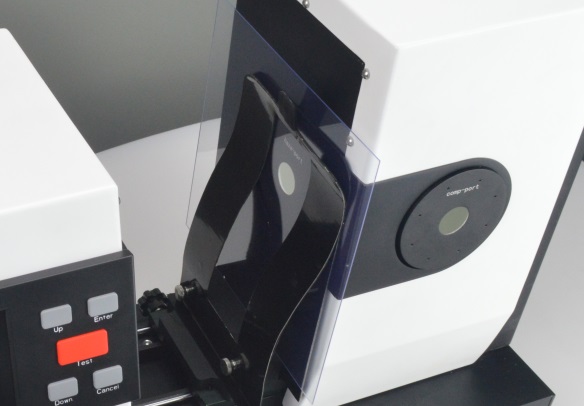
4.2 Dashboard Displays and Touch Interfaces
In automotive and non-automotive display applications, materials such as cover glass, anti-glare films, and light guide plates require precise control of haze and color for optimal readability and aesthetic appeal. The HM-700’s multi-illuminant capability allows display engineers to evaluate color shift under different ambient lighting conditions—critical for ensuring that touch interfaces maintain consistent appearance in direct sunlight versus nighttime driving. The instrument can measure haze values as low as 0.1% for anti-glare coated glass, where even minute scatter levels can affect visual clarity. Additionally, its data storage capacity of over 10,000 records supports comprehensive statistical process control (SPC) and traceability requirements common in automotive Tier 1 supplier contracts.
5.1 Packaging Films and Barrier Materials
Flexible packaging films—including biaxially oriented polypropylene (BOPP), polyethylene terephthalate (PET), and polyamide—must balance mechanical barrier properties with visual clarity for consumer appeal. The HM-700 provides rapid quality checks on incoming film rolls, measuring haze and transmittance at multiple points across the web width to detect processing-induced variations. For metallized films, the instrument can measure the transmittance of the metal coating layer, which directly correlates with barrier performance against oxygen and moisture. The HM-700’s short warm-up time (less than 15 minutes) and fast measurement cycle (under 5 seconds per sample) make it suitable for high-throughput production environments where inline or near-line testing is preferred over off-line laboratory analysis.
5.2 Medical-Grade Plastics and Light-Cured Materials
In medical device manufacturing, transparent plastics used for diagnostic cuvettes, IV components, and light-cured adhesives demand stringent optical uniformity to support proper device function. The HM-700 supports compliance with ISO 11979 and other medical material standards by providing traceable haze and transmittance measurements. Its CIE Lab color output enables verification of sterilization-resistant color stability, while the yellowness index function quantifies discoloration from gamma or ethylene oxide sterilization cycles. The instrument’s low-volume test requirement (sample diameter as small as 10 mm) accommodates the small parts common in medical injection molding without requiring specialized sample holders.
6.1 Measurement Protocols and Operator Training
Integrating the HM-700 into existing quality control workflows requires standardized sampling protocols and operator training. Recommended practice includes calibrating the instrument at the start of each shift using the provided certified haze standards and verifying baseline with a clean air pathway. For materials with known thickness variations (e.g., extruded films), multiple measurements across the sample area should be averaged to account for local non-uniformity. The HM-700’s software supports customizable test sequences that automatically cycle through multiple illuminants and observer angles, reducing operator decision points and potential errors. Data export in CSV or PDF format facilitates integration with laboratory information management systems (LIMS) and enterprise resource planning (ERP) platforms common in automotive and electronics supply chains.
6.2 Maintenance and Long-Term Accuracy
Sustained measurement accuracy requires periodic cleaning of the integrating sphere, replacement of the reference white standard every 12–18 months, and annual recalibration against certified reference materials supplied by national laboratories. The HM-700’s diagnostic software includes self-check routines that validate photodetector linearity and light source stability, alerting operators to potential drift before it affects production decisions. Its modular optical design allows field replacement of the light source module without factory recalibration, minimizing downtime in 24/7 manufacturing environments. For facilities operating under ISO 9001 or IATF 16949 quality management systems, the instrument’s automated calibration logging and measurement audit trails provide robust evidence of measurement system capability.
7.1 Standalone vs. Integrated Instruments
Traditional quality laboratories often field separate devices for haze measurement (e.g., BYK-Gardner Haze-Gard) and color measurement (e.g., Konica Minolta CM-5). This approach introduces sample handling errors, inter-instrument calibration offsets, and increased operator time. The HM-700 eliminates these inefficiencies by providing both functions within a single optical path and calibration framework. Cost analysis across a 5-year ownership period typically shows 30–40% lower total cost of ownership for the integrated solution when accounting for calibration, maintenance, and labor costs. For small- and medium-sized enterprises without dedicated optical testing staff, the HM-700 reduces the technical burden of maintaining multiple instruments and interpreting disparate data formats.
7.2 Portability and On-Site Testing Capabilities
While the HM-700 is primarily a benchtop instrument, its compact dimensions (approximately 350 × 300 × 250 mm) and weight (under 8 kg) allow relocation to different workstations within a facility. This contrasts with larger, heavier spectrophotometers that require dedicated laboratory space. For quality engineers who need to perform measurements at incoming inspection, in-process QC, and final audit stations, the HM-700’s portability supports a more flexible testing strategy. The instrument’s integrated touchscreen eliminates the need for an external computer, further simplifying deployment in cleanroom or ESD-controlled environments commonly found in electronics assembly.
The LISUN HM-700 all-in-one haze meter and spectrophotometer represents a significant advancement in optical testing instrumentation for transparent and translucent materials. By integrating 0/d geometry optical systems, multi-light source spectral analysis, and compliance with ASTM D1003, ISO 13468, CIE No.15, and JIS K7105, the instrument delivers measurement repeatability and accuracy that exceed industry standard requirements. Its ability to simultaneously measure haze, total transmittance, and CIE color parameters in a single workflow reduces testing time, eliminates inter-instrument variability, and lowers total cost of ownership for quality control laboratories. Practical applications span automotive electronics, plastics manufacturing, glass production, display fabrication, and medical device sectors, where precise optical characterization is essential for regulatory compliance and product quality. For quality managers, R&D engineers, and compliance specialists seeking to enhance material testing efficiency while maintaining rigorous metrological standards, the HM-700 provides a technically robust and operationally streamlined solution. Its combination of advanced algorithms, comprehensive standard support, and user-oriented design makes it a valuable asset for any facility prioritizing accurate and repeatable optical property measurements.
Q1: What is the difference between haze and transmittance, and why does the HM-700 measure both?
A: Total transmittance (Tt) measures the percentage of incident light that passes through a sample, while haze specifically quantifies the fraction of transmitted light that is scattered by more than 2.5 degrees from the incident beam direction. A material can have high transmittance (e.g., 90%) yet still exhibit haze that compromises visual clarity—common in extruded films with internal voids or surface roughness. The HM-700 measures both parameters simultaneously because they serve different but complementary quality control functions: transmittance indicates overall light throughput (critical for automotive lenses and display backlights), while haze affects image contrast and visual sharpness (critical for touch screens and packaging films). By providing both values from a single measurement, the instrument enables operators to identify the specific optical deficiency—whether absorption, reflection, or scatter—and take targeted corrective action.
Q2: How does the HM-700 ensure compliance with multiple international standards simultaneously?
A: The HM-700’s firmware includes pre-programmed measurement and calculation protocols for ASTM D1003, ISO 13468, JIS K7105, and CIE No.15. When a user selects a specific standard, the instrument automatically configures the measurement geometry (0/d), light source (e.g., Illuminant C for ASTM, D65 for ISO), observer angle (2° or 10°), and data reporting format. For example, ASTM D1003 requires haze measurement under Illuminant C with the CIE 1931 2° observer, while JIS K7105 specifies Illuminant D65. The HM-700 stores these parameters internally and applies them without operator intervention, eliminating the risk of non-compliant test conditions. Furthermore, the instrument provides calibration certificates traceable to national metrology institutes for each standard, supporting ISO/IEC 17025 laboratory accreditation and customer audit requirements. This multi-standard capability is particularly valuable for suppliers serving global markets where different regions mandate different test methods.
Q3: Can the HM-700 measure curved or textured samples, and are there sample size limitations?
A: Yes, the HM-700 is designed to accommodate a wide range of sample geometries, including flat sheets, curved surfaces, and textured films, thanks to its 0/d integrating sphere design. The sphere collects scattered light uniformly regardless of the sample’s surface directionality, minimizing errors from non-flat samples that would affect directional detectors. The standard sample port has a diameter of 20 mm, but optional mask inserts allow measurement of smaller areas down to 10 mm diameter for tiny medical components or test coupons. For textured surfaces (e.g., anti-glare coatings), the instrument’s haze repeatability of ±0.02% enables detection of scatter differences that correlate with surface roughness parameters. Users should note that extremely thick samples (greater than 10 mm) may exceed the optical depth of field and require sample preparation or correction factors, which the HM-700’s software supports through adjustable thickness compensation parameters.
Q4: How does the HM-700 handle data management and traceability in regulated industries?
A: The HM-700 includes comprehensive data management features designed to support quality management systems such as ISO 9001, IATF 16949, and FDA 21 CFR Part 11 (for medical device applications). The instrument stores up to 10,000 measurement records internally, each tagged with a timestamp, operator ID, sample identifier, and selected standard. Data can be exported via USB or Ethernet connection in CSV format for LIMS integration, or printed as PDF test reports that include measurement conditions, results, and pass/fail status based on user-defined tolerance limits. The software supports user access controls (password-protected administrator versus operator modes) and audit trail logging that records any changes to calibration parameters or tolerance settings. For companies requiring full traceability, the HM-700’s serial number and firmware version are embedded in each report, and calibration certificates can be stored digitally alongside measurement data to provide a complete chain of custody for optical property verification.