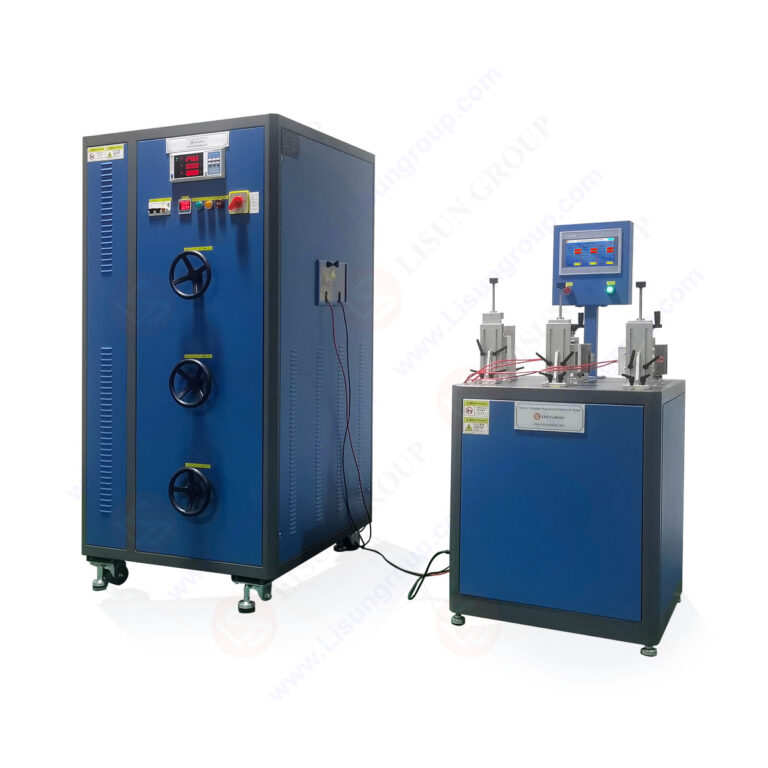
This technical article examines the critical role of electrical component testing in quality assurance and compliance verification, with a primary focus on the LISUN CZKS-3 series of plug, socket, and switch durability testers. The article details how automated test systems enable manufacturers and testing laboratories to conduct rigorous electrical durability testing in accordance with international safety standards. The LISUN CZKS-3 platform provides programmable control over insertion, withdrawal, and rotational actuation cycles, delivering precise data on contact wear, mechanical fatigue, and electrical failure modes. By integrating PLC-based automation, cylinder-driven actuation, and real-time monitoring, these systems support compliance with IEC 60884-1, IEC 60669-1, IEC 61058-1, and GB/T 2099.1. Application scenarios span household electrical accessories, automotive connectors, and industrial switches. This article provides a comprehensive technical analysis of testing methodologies, system architecture, parameter configurations, and data interpretation for quality engineers seeking robust, repeatable test solutions.
1.1 The Role of Durability Testing in Compliance Verification
Electrical component testing serves as the cornerstone of product certification for plugs, sockets, and switches. Manufacturers must demonstrate that their products withstand thousands of operational cycles without exhibiting electrical fatigue failure, contact adhesion, or insulation breakdown. Durability testing simulates years of real-world usage within compressed timeframes, exposing latent design weaknesses in contact geometry, spring tension, and material selection. The LISUN CZKS-3 series addresses these requirements by providing precisely controlled actuation forces, insertion angles, and electrical load conditions during each test cycle.
1.2 Failure Modes Identified Through Systematic Testing
Common failure mechanisms in electrical components include contact resistance increase, arcing damage, mechanical wear of insertion mechanisms, and insulation degradation. Breaking capacity testing evaluates a component’s ability to interrupt current flow without sustaining permanent damage. Switch durability testing assesses the mechanical and electrical endurance of toggle, rocker, and push-button mechanisms. The LISUN CZKS-3A variant incorporates specialized fixtures for automotive connector testing, addressing the unique vibration and insertion force requirements specified in automotive industry standards.
1.3 Standards Framework for Global Compliance
International standards define specific test parameters including insertion force ranges, withdrawal force limits, actuation speed, and electrical load characteristics. IEC 60884-1 clause 21 specifies mechanical endurance requirements for plugs and socket-outlets, while IEC 60669-1 clause 19 governs switch durability testing. The CZKS-3P configuration supports programmable load profiles that replicate resistive, inductive, and capacitive loads encountered in real-world applications.
2.1 PLC-Controlled Actuation and Cycle Management
The LISUN CZKS-3 series employs programmable logic controllers (PLC) to manage test sequences with millisecond precision. Cylinder-driven actuation systems deliver consistent insertion and withdrawal forces across thousands of cycles, eliminating variability associated with manual testing. Operators configure cycle counts, insertion depth, dwell time, and rotational angles through an intuitive human-machine interface. The control architecture supports simultaneous testing of multiple specimens, maximizing throughput for high-volume quality assurance laboratories.
2.2 Mechanical Design and Fixture Configurations
Each variant within the CZKS-3 series addresses specific testing requirements through modular fixture designs. The base CZKS-3 model accommodates standard household plugs and sockets with adjustable clamping mechanisms. The CZKS-3S variant incorporates enhanced rotational actuation for switch durability testing, simulating the angular displacement of rocker and rotary switches. Fixture interchangeability enables rapid changeover between test protocols, reducing downtime between test campaigns.
2.3 Electrical Load Management and Monitoring Systems
Integrated electrical load banks provide controlled current and voltage conditions during breaking capacity testing. The CZKS-3 series supports resistive, inductive, and capacitive load configurations with power factors ranging from 0.6 to 1.0. Real-time monitoring of contact resistance, arc duration, and temperature rise enables early detection of impending failure. Data logging systems capture waveform data for post-test analysis, supporting root cause investigation of electrical fatigue failure mechanisms.
3.1 Model Variants and Parameter Ranges
The LISUN CZKS-3 series offers four primary configurations tailored to different testing applications. Each variant shares a common control architecture while specializing in specific test scenarios. The following table presents key technical specifications across the product line:
| Parameter | CZKS-3 | CZKS-3P | CZKS-3S | CZKS-3A |
|---|---|---|---|---|
| Test Stations | 2 stations | 4 stations | 2 stations | 4 stations |
| Insertion Force Range | 10-150 N | 10-200 N | 10-150 N | 20-250 N |
| Withdrawal Force Range | 5-100 N | 5-150 N | 5-100 N | 10-200 N |
| Actuation Speed | 0.5-2.0 cycles/s | 0.5-2.5 cycles/s | 0.5-3.0 cycles/s | 0.5-2.0 cycles/s |
| Rotational Angle | 0-180° | 0-360° | 0-360° | 0-90° |
| Test Current Range | 1-16 A | 1-32 A | 1-16 A | 1-50 A |
| Test Voltage Range | 50-250 V | 50-400 V | 50-250 V | 12-400 V |
| Power Factor Control | 0.6-1.0 | 0.6-1.0 | 0.6-1.0 | 0.8-1.0 |
3.2 Application-Specific Configuration Guidance
Selection of the appropriate CZKS-3 variant depends on the component category and applicable standard. For household plug and socket testing per IEC 60884-1 clause 21, the standard CZKS-3 with 16 A current capacity suffices. Switch durability testing for lighting controls per IEC 60669-1 clause 19 benefits from the CZKS-3S rotational actuation capability. Industrial power connectors requiring up to 32 A breaking capacity testing align with the CZKS-3P multi-station configuration. Automotive component testing per ISO 8092 specifications utilizes the CZKS-3A variant with its extended force range and low-voltage, high-current load capacity.
4.1 Insertion and Withdrawal Cycle Testing
Plug and socket durability testing evaluates mechanical integrity through repeated insertion and withdrawal cycles. The LISUN CZKS-3 system applies controlled forces at specified angles, measuring contact resistance at predetermined intervals. IEC 60884-1 clause 21 requires 5,000 cycles for socket-outlets and 10,000 cycles for appliance couplers, with contact resistance not exceeding initial values by more than 50%. The cylinder-driven actuation system maintains consistent velocity profiles, preventing damage from shock loading during high-speed testing.
4.2 Breaking Capacity and Overload Testing
Breaking capacity testing assesses a component’s ability to safely interrupt current flow during fault conditions. The CZKS-3P configuration supports load currents up to 32 A at power factors as low as 0.6, replicating inductive load scenarios found in motor-driven appliances. Test sequences include make-and-break operations at rated current, followed by overload conditions at 1.25 times rated current. Arc duration monitoring provides quantitative data on contact performance, with acceptable limits defined in IEC 60884-1 clause 20.
4.3 Thermal Performance and Temperature Rise Evaluation
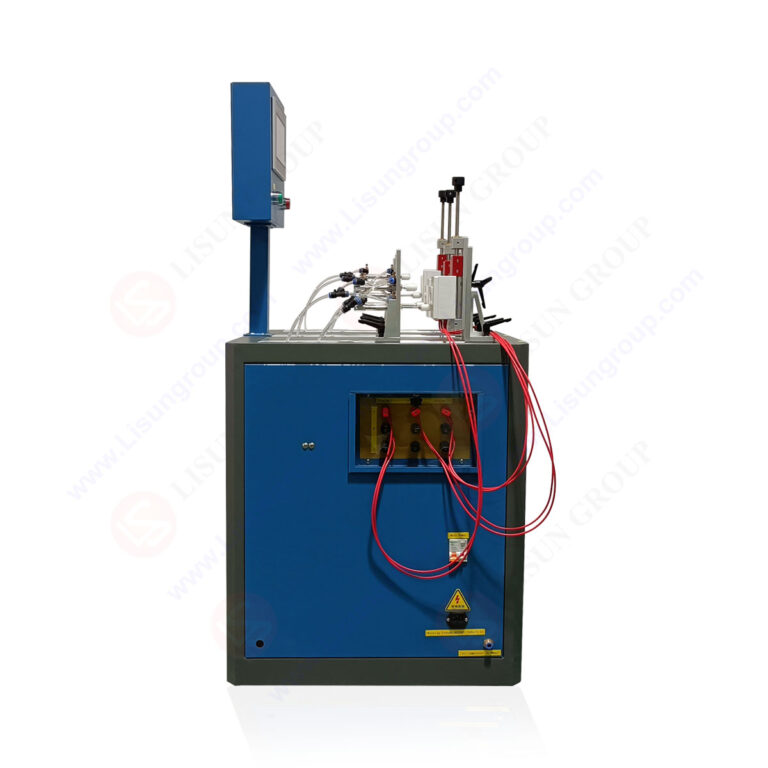
Continuous current testing evaluates temperature rise at contact interfaces under rated load conditions. The LISUN CZKS-3 series incorporates thermocouple inputs for real-time temperature monitoring at multiple measurement points. GB/T 2099.1 clause 19 specifies maximum temperature rise limits of 45 K for plug pins and 30 K for socket contacts. Thermal imaging capabilities in advanced configurations enable visualization of thermal gradients across the test specimen, identifying hot spots that precede insulation failure.
5.1 Mechanical Endurance Protocols for Toggle and Rocker Switches
Switch durability testing requires precise control over actuation force, travel distance, and return characteristics. The CZKS-3S variant applies rotational displacement at programmable angular velocities, simulating the actuation profiles of toggle, rocker, and push-button switches. IEC 60669-1 clause 19 mandates 10,000 cycles for general-use switches and 40,000 cycles for switches intended for frequent operation. The automated system records actuation force versus displacement curves, detecting changes in mechanical behavior that indicate spring fatigue or contact wear.
5.2 Electrical Load Testing Under Resistive and Inductive Conditions
Electrical endurance testing subjects switches to repeated make-and-break operations under controlled load conditions. The LISUN CZKS-3S system applies resistive loads for general-purpose switches and inductive loads with power factor 0.6 for motor-rated switches. Contact resistance measurements at 100-cycle intervals identify gradual degradation trends. IEC 61058-1 clause 17 specifies acceptable contact resistance increases and arc duration limits for switches rated up to 16 A.
5.3 Failure Analysis and Data Interpretation
Post-test analysis of switch performance data enables identification of failure mechanisms including contact welding, spring relaxation, and housing deformation. The CZKS-3 series data logging system captures time-stamped records of each test event, facilitating correlation between mechanical wear patterns and electrical performance degradation. Engineers utilize contact resistance trending graphs and actuation force histograms to determine if components meet the minimum lifetime requirements specified in applicable standards.
6.1 Connector Durability Testing per ISO and Automotive Standards
Automotive electrical connectors face unique durability challenges including vibration exposure, temperature cycling, and high-current operation. The LISUN CZKS-3A variant addresses these requirements with extended force ranges up to 250 N and support for test currents up to 50 A. Testing protocols per ISO 8092-1 specify 100 mating cycles for underhood connectors and 1,000 cycles for interior connectors, with contact resistance maintained below 5 mΩ.
6.2 Environmental Simulation and Combined Testing
Comprehensive automotive component verification combines electrical durability testing with environmental conditioning. The CZKS-3A system interfaces with temperature chambers for testing at elevated temperatures up to 125°C and low temperatures down to -40°C. Humidity exposure testing per ISO 16750-4 evaluates connector performance under condensing conditions. The integrated control system coordinates environmental cycling with electrical load application, enabling combined stress testing that more accurately reflects real-world operating conditions.
6.3 High-Current Breaking Capacity for EV Charging Components
Electric vehicle charging connectors require breaking capacity testing at currents exceeding 32 A under DC conditions. The CZKS-3A configuration supports DC load testing at voltages up to 400 V and currents up to 50 A, covering most Level 2 AC and Level 3 DC charging applications. Arc suppression testing evaluates the effectiveness of integrated arc fault detection and interruption mechanisms. Compliance with IEC 62196-2 and GB/T 20234.1 requires demonstration of 10,000 mechanical insertion cycles followed by electrical endurance testing at rated current.
7.1 Automated Data Collection and Statistical Process Control
The LISUN CZKS-3 series generates comprehensive test data including cycle count, insertion force profiles, contact resistance values, and environmental conditions. Automated data collection eliminates transcription errors and supports statistical process control (SPC) analysis. Control charts track key performance indicators across production batches, enabling early detection of manufacturing process shifts that could affect component durability.
7.2 Compliance Report Generation and Audit Readiness
Automated report generation simplifies documentation for certification bodies and regulatory audits. The CZKS-3 system produces test reports formatted to the requirements of IEC 60884-1, IEC 60669-1, and other applicable standards. Reports include test parameter summaries, raw data tables, graphical trend analysis, and pass/fail determinations for each test clause. Electronic signatures and audit trails support ISO 17025 accreditation requirements for testing laboratories.
7.3 Integration with Laboratory Information Management Systems
The CZKS-3 series supports network connectivity for integration with laboratory information management systems (LIMS). Test results transfer automatically to centralized databases, enabling cross-referencing with production records and field failure data. API interfaces allow custom data extraction for advanced analytics applications including predictive lifetime modeling and design of experiments (DOE) optimization.
The LISUN CZKS-3 series represents a comprehensive solution for electrical component testing in quality assurance and compliance verification applications. By integrating PLC-controlled actuation, cylinder-driven mechanisms, and real-time monitoring, these systems deliver the precision and repeatability required for certification testing per IEC 60884-1, IEC 60669-1, IEC 61058-1, and GB/T 2099.1. The modular architecture comprising CZKS-3, CZKS-3P, CZKS-3S, and CZKS-3A variants addresses the full spectrum of plug, socket, and switch durability testing requirements across household, industrial, and automotive applications. Technical specifications including insertion force ranges up to 250 N, test currents up to 50 A, and rotational angles up to 360° provide the flexibility needed for diverse test protocols. Automated data collection, statistical process control integration, and compliance report generation streamline quality management workflows while supporting ISO 17025 accreditation. Manufacturers and testing laboratories seeking to validate electrical component reliability, reduce field failure rates, and demonstrate compliance with international safety standards will find the CZKS-3 series to be a technically robust and cost-effective investment in product quality.
Q1: What is the difference between the CZKS-3 and CZKS-3P variants for plug and socket testing?
A: The primary difference lies in test station capacity and current handling capability. The standard CZKS-3 supports two test stations with a maximum test current of 16 A, making it suitable for household plug and socket testing per IEC 60884-1. The CZKS-3P variant features four test stations and supports test currents up to 32 A with power factor control down to 0.6, enabling simultaneous testing of multiple specimens and breaking capacity testing for industrial connectors. The CZKS-3P also offers extended insertion force range up to 200 N and rotational angle up to 360°, providing greater flexibility for testing heavy-duty plugs, appliance couplers, and industrial socket-outlets requiring higher force application.
Q2: How does the CZKS-3S variant differ from the standard model for switch durability testing?
A: The CZKS-3S is specifically optimized for switch durability testing with enhanced rotational actuation capabilities. Unlike the standard CZKS-3 which focuses primarily on linear insertion and withdrawal motions, the CZKS-3S supports rotational angles up to 360° with programmable angular velocity profiles. This enables testing of rocker switches, rotary switches, and toggle mechanisms that require precise angular displacement control. The CZKS-3S also features faster actuation speeds up to 3.0 cycles per second, accommodating high-cycle testing requirements for switches rated at 40,000 cycles per IEC 60669-1 clause 19. The fixture system includes specialized switch mounting plates and actuation fingers that replicate human finger interaction patterns for realistic wear simulation.
Q3: What maintenance procedures are recommended to ensure long-term accuracy of the CZKS-3 series?
A: Regular maintenance of the LISUN CZKS-3 series focuses on preserving actuation accuracy and electrical measurement integrity. Cylinder seals and guide rails should be inspected monthly for wear, with lubrication applied per manufacturer specifications. Force sensors require annual calibration verification using certified test weights to maintain accuracy within ±1% of reading. Electrical load bank components including contactors and resistors should be visually inspected quarterly for signs of overheating or contact pitting. Data logging systems benefit from periodic backup of test configurations and calibration records. Annual comprehensive calibration by an ISO 17025 accredited laboratory verifies all measurement channels including force, current, voltage, and temperature against traceable standards.
Q4: Can the CZKS-3A variant be used for testing EV charging connectors per GB/T 20234.1?
A: Yes, the CZKS-3A variant is specifically designed to accommodate electric vehicle charging connector testing per GB/T 20234.1 and IEC 62196-2 standards. The system supports DC load testing at voltages up to 400 V and currents up to 50 A, covering Level 2 AC charging connectors rated at 32 A and Level 3 DC charging connectors rated at 50 A. Extended insertion force range up to 250 N accommodates the higher mating forces required for high-current power connectors. The CZKS-3A includes specialized fixtures for CCS Type 1, CCS Type 2, CHAdeMO, and GB/T DC connector geometries. Temperature monitoring at multiple contact points ensures compliance with GB/T 20234.1 clause 7.3 temperature rise limits during continuous current testing at rated load.