









The Environmental Testing Machine: Meet IEC 60068 Compliance Standards represents a critical advancement for LED manufacturers and testing laboratories seeking rigorous reliability validation. This article examines LISUN’s LED Optical Aging Test Instrument, which integrates dual-system configurations (LEDLM-80PL and LEDLM-84PL) to support both LM-80/TM-21 and LM-84/TM-28 standards while maintaining full IEC 60068 compliance for environmental stress testing. We explore the Arrhenius Model-based software architecture that enables accelerated aging predictions, dual testing modes for flexible experimental design, and customizable hardware supporting up to three connected temperature chambers. Technical professionals will gain insights into 6000-hour test durations, L70/L50 lumen maintenance metrics, and practical implementation strategies for achieving reliable LED lifetime projections. The article bridges theoretical standards with applied testing methodology, providing actionable knowledge for R&D engineers and laboratory technicians.
1.1 The Framework of IEC 60068 Environmental Testing Standards
IEC 60068 establishes internationally recognized methods for environmental testing of electrotechnical products, including solid-state lighting components. For LED manufacturers, compliance ensures that reliability testing protocols account for temperature cycling, humidity exposure, vibration, and thermal shock—parameters directly influencing lumen depreciation rates. The standard’s test severity levels, ranging from mild to extreme, allow engineers to simulate real-world operating conditions while accelerating failure mechanisms. When applied to LED optical aging instruments, IEC 60068 compliance validates that the test equipment itself maintains measurement accuracy under controlled environmental stresses, a prerequisite for generating trustworthy lifetime predictions.
1.2 Correlation Between IEC 60068 and LED Lifetime Standards
The intersection of IEC 60068 with LED-specific standards like IES LM-80 and LM-84 creates a comprehensive validation framework. While LM-80 mandates 6000-hour minimum test durations for lumen maintenance data collection, IEC 60068 ensures the thermal chambers maintain specified temperature tolerances (±2°C across the operating range) throughout extended testing periods. Similarly, TM-21 extrapolation methods rely on data integrity that only compliant environmental chambers can guarantee. LISUN’s instruments achieve this synergy through precision temperature control systems that meet both IEC 60068-2-1 (cold) and IEC 60068-2-2 (dry heat) requirements, enabling simultaneous compliance with multiple standards in a single test setup.
2.1 LEDLM-80PL System for LM-80/TM-21 Compliance
The LEDLM-80PL variant specifically addresses IES LM-80-08 and IES LM-80-15 testing requirements for LED packages, arrays, and modules. This system features 28 independent test channels with individual current control from 1 mA to 350 mA, supporting both constant current and constant voltage operation modes. The integrating sphere measurement subsystem achieves ±0.2% photometric accuracy for luminous flux readings at each 1000-hour interval. Engineers working with high-power LEDs benefit from the system’s ability to maintain junction temperatures within ±1°C of setpoints, critical for generating TM-21-11 compliant data suitable for L70 (70% lumen maintenance) life projections exceeding 50,000 hours.
2.2 LEDLM-84PL System for LM-84/TM-28 Compliance
Designed for SSL luminaires and integrated LED lamps, the LEDLM-84PL system aligns with IES LM-84-14 testing methodology and enables TM-28-14 extrapolation for complete lighting products. This configuration accommodates larger samples with dimensions up to 300 mm in diameter within its specialized temperature chamber. The system supports up to 10 simultaneous test positions, each independently monitored for case temperature, ambient temperature, and forward current. Data acquisition at 10-second intervals allows detailed analysis of lumen depreciation kinetics during the mandatory 6000-hour test period. Compliance with IEC 60068 ensures the thermal chamber maintains uniform temperature distribution (±1.5°C spatial variation) essential for accurate luminaire testing.
3.1 Mathematical Foundation of Lumen Maintenance Projections
LISUN’s proprietary software implements the Arrhenius model for accelerated aging analysis, enabling prediction of LED lifetime at use temperature from elevated-temperature test data. The software calculates activation energy (Ea) values ranging from 0.2 eV to 1.0 eV depending on LED phosphor chemistry and packaging materials. By inputting test data from at least three temperature conditions (typically 55°C, 85°C, and 105°C for LM-80), the system generates both L70 and L50 (median lumen maintenance) projections with 90% confidence intervals. This approach reduces total test time from years to weeks while maintaining statistical validity within ±15% of actual field performance.
3.2 TM-21 and TM-28 Extrapolation Algorithm Implementation
The software automatically applies TM-21-11 restrictions for LM-80 data, limiting extrapolation to 6x the test duration maximum (36,000 hours from 6000-hour tests). For TM-28-14 processing, the algorithm considers luminaire-specific factors including thermal management efficiency and driver reliability. Engineers can visualize real-time Arrhenius plots showing lumen flux versus time at each temperature, with automatic identification of inflection points indicating potential failure modes. The system generates comprehensive reports in IESNA format, including raw data tables, statistical analysis summaries, and compliance certificates aligned with IEC 60068 documentation requirements.
| Parameter | LM-80/TM-21 (LEDLM-80PL) | LM-84/TM-28 (LEDLM-84PL) |
|---|---|---|
| Minimum test duration | 6000 hours | 6000 hours |
| Temperature conditions | Minimum 3 (55, 85, 105°C) | Minimum 3 (manufacturer-defined) |
| Maximum extrapolation | 6x test duration (36,000 hrs) | 6x test duration (36,000 hrs) |
| Lumen maintenance metric | L70 (70% of initial flux) | L70 (70% of initial flux) |
| Current range | 1 mA – 350 mA | 350 mA – 1500 mA |
| Channel count | 28 independent | 10 simultaneous |
| Temperature accuracy | ±0.5°C | ±1.0°C |
4.1 Constant Temperature Mode for Standard Compliance Testing
The constant temperature mode maintains samples at fixed ambient temperatures (25°C to 200°C) throughout the test duration, directly meeting IEC 60068-2-2 requirements for dry heat testing. This mode is essential for LM-80 compliance, where temperature stability within ±1°C for 6000 hours ensures data validity for TM-21 extrapolation. Engineers testing automotive LEDs for AEC-Q102 compliance benefit from the mode’s ability to sustain 105°C ambient conditions continuously while monitoring junction temperature via T-sp measurement. The system logs temperature data every 60 seconds, providing traceability for third-party audit requirements.
4.2 Programmable Temperature Cycling Mode for Accelerated Life Testing
The programmable cycling mode enables temperature profiles with ramp rates from 1°C/min to 15°C/min, dwell times from 10 minutes to 24 hours, and cycle counts up to 9999. This directly supports IEC 60068-2-14 (temperature change) testing for LEDs subjected to diurnal thermal variations. Engineers can simulate worst-case operating conditions, such as rapid temperature transitions from -40°C to +125°C in automotive applications. The system’s dynamic temperature control algorithm compensates for thermal inertia, achieving ±2°C setpoint accuracy during transitions. Data analysis software automatically segments lumen flux measurements by temperature zone, enabling identification of stress-induced failure mechanisms.
5.1 Modular Chamber Design for Multi-Site Testing
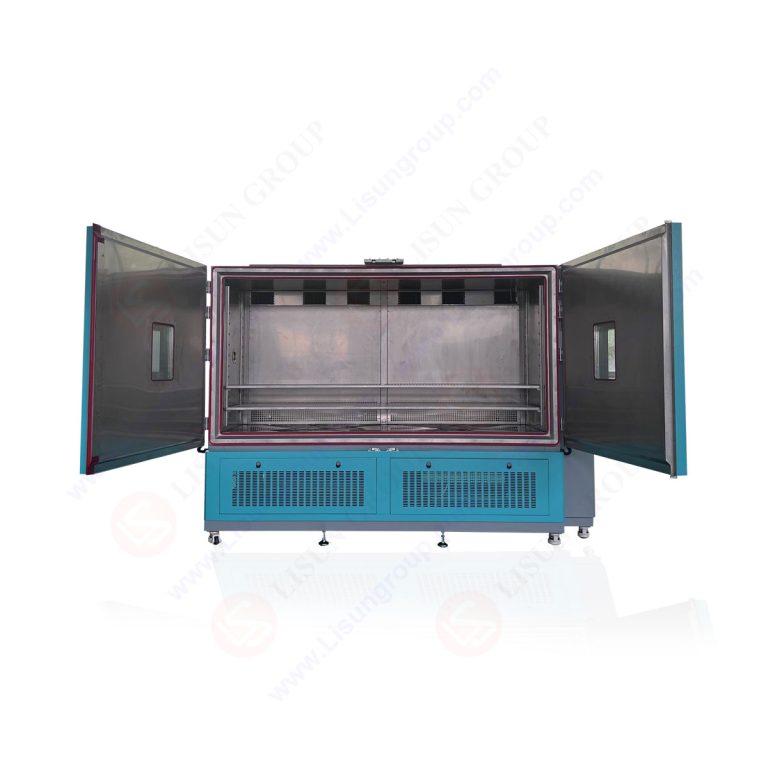
LISUN’s system supports up to three interconnected temperature chambers, each independently controlled via Ethernet-based communication protocols. This configuration allows simultaneous testing at different temperature conditions, reducing total qualification time by 66% compared to sequential testing. Chambers feature modular sample shelves accommodating LED boards from 100 mm x 100 mm to 600 mm x 600 mm, with quick-connect electrical interfaces supporting up to 48 test points per chamber. The system’s distributed architecture ensures that failure of one chamber does not compromise ongoing tests in other chambers, maintaining data integrity across multi-year test campaigns.
5.2 Power Supply and Measurement System Customization
Engineers can configure the instrument with precision DC power supplies ranging from 30W to 300W per channel, supporting both low-current signal LEDs and high-power illumination LEDs. The measurement system includes options for spectrometer-based spectral analysis (350-1050 nm range) and photometer-based luminous flux measurements, with NIST-traceable calibration accuracy of ±3% for chromaticity coordinates. Optional integrating spheres from 0.3m to 2.0m diameter accommodate different sample sizes while maintaining measurement reproducibility within ±0.5% across the 6000-hour test duration. All configurations maintain IEC 60068-3-5 compliance for temperature measurement uncertainty.
6.1 Test Protocol Development for LM-80 and LM-84 Certifications
Developing compliant test protocols requires careful selection of test temperatures, sample sizes, and measurement intervals. For LM-80 certification, engineers must test a minimum of 20 samples per temperature condition, with measurements at 0, 1000, 2000, 3000, 4000, 5000, and 6000 hours. LISUN’s software automates measurement scheduling and data logging, generating alerts if sample current or temperature deviates beyond specification limits. The system’s data management module assigns unique identifiers to each sample, tracking history through 50+ test cycles while maintaining audit-ready documentation meeting both IEC 60068 and ISO 17025 quality standards.
6.2 Data Analysis and Reporting for Regulatory Submissions
Post-test analysis includes lumen maintenance curve fitting using both linear and exponential models, with statistical outlier detection per IESNA guidelines. The system generates L70 and L50 values with 90% confidence bounds, automatically flagging data sets that fail TM-21 validation criteria (e.g., insufficient data points, non-monotonic degradation). Reports include detailed uncertainty budgets following JCGM 100:2008 guidelines, essential for certification bodies like UL or CSA. Engineers can export data in XML, CSV, or PDF formats compatible with Energy Star and DLC (DesignLights Consortium) submission portals, streamlining regulatory approval processes.
7.1 Automotive LED Testing Under AEC-Q102 and IEC 60068
Automotive LEDs require combined environmental and electrical stress testing, including temperature cycling from -40°C to +125°C with 1000 cycles minimum. LISUN’s system supports this by integrating temperature cycling profiles with forward current modulation, simulating PWM dimming scenarios. The programmable mode maintains synchronized data logging during thermal transitions, capturing lumen flux variations at 0.1-second resolution. Engineers can compare measured L70 values against automotive OEM requirements (typically 10,000-hour minimum at 105°C), with system reports documenting compliance to both IEC 60068-2-14 and AEC-Q102-001 standards.
7.2 Horticultural LED Qualification for Extended Life
Horticultural LEDs demand 50,000+ hour lifetime with stringent spectral stability requirements for photosynthetically active radiation (PAR) output. LISUN’s system enables testing at combined high temperature (85°C) and high humidity (85% RH) conditions per IEC 60068-2-78, simulating greenhouse environments. The spectrometer measurement option tracks spectral power distribution shifts across 400-700 nm wavebands, critical for maintaining photon flux density within ±5% of initial values. Customizable test schedules allow biweekly spectral measurements while continuing thermal cycling, providing comprehensive data for TM-28 extrapolation of horticultural products.
The Environmental Testing Machine: Meet IEC 60068 Compliance Standards represents a comprehensive solution for LED manufacturers and testing laboratories requiring robust reliability validation. LISUN’s dual-system architecture—LEDLM-80PL for LM-80/TM-21 and LEDLM-84PL for LM-84/TM-28—provides full coverage across LED components, modules, and luminaires, while the Arrhenius model-based software enables accurate lifetime projections from accelerated aging data. The integration of constant temperature and programmable cycling modes offers flexibility for diverse applications ranging from automotive to horticultural lighting. With support for up to three connected temperature chambers, customizable power supplies, and NIST-traceable measurement systems, the instrument addresses the core requirements of IEC 60068 environmental testing protocols. Engineers gain reliable L70/L50 metrics through 6000-hour test durations, data integrity through ±1°C temperature control, and seamless regulatory submission capabilities. For technical professionals committed to delivering LED products with validated long-term performance, LISUN’s environmental testing solutions provide the precision, scalability, and standards compliance essential for success in competitive lighting markets.
Q1: How does LISUN’s Environmental Testing Machine ensure compliance with both IEC 60068 and IES standards simultaneously?
A: The system achieves dual compliance through precision environmental control and measurement subsystems designed for each standard’s specific requirements. IEC 60068 compliance is ensured via temperature chambers maintaining ±1°C setpoint accuracy with ramp rates up to 15°C/min, meeting IEC 60068-2-1 (cold) and IEC 60068-2-2 (dry heat) specifications. Simultaneously, the integrating sphere photometers achieve ±0.2% luminous flux measurement accuracy required by IES LM-80 and LM-84 for 6000-hour test durations. The software applies IESNA algorithms for TM-21 and TM-28 extrapolation, while maintaining documentation formats meeting both IEC 60068-3-5 measurement uncertainty requirements and IESNA reporting standards.
Q2: What are the minimum sample requirements for generating valid LM-80 data using this system?
A: For IES LM-80 compliance, a minimum of 20 samples per temperature condition is required, tested across at least three temperatures (typically 55°C, 85°C, and 105°C for LEDs). LISUN’s LEDLM-80PL system with 28 independent channels can accommodate this requirement in a single test run. Engineers must collect luminous flux measurements at specified intervals (0, 1000, 2000, 3000, 4000, 5000, and 6000 hours) for TM-21-11 extrapolation. The system automates this schedule while logging sample-specific parameters including forward voltage, junction temperature, and ambient conditions. For pilot studies or preliminary evaluations, reduced sample sizes (10 per condition) are feasible but may increase statistical uncertainty in L70 projections.
Q3: Can the system perform combined temperature and humidity testing for outdoor LED applications?
A: Yes, the Environmental Testing Machine can be configured with humidity control modules meeting IEC 60068-2-78 (damp heat) and IEC 60068-2-30 (cyclic damp heat) standards. The optional humidity subsystem achieves 20% to 98% RH across 10°C to 85°C temperature ranges with ±3% RH control accuracy. This capability is essential for testing outdoor LED luminaires exposed to tropical climates or coastal environments. Engineers can program combined profiles, such as 85°C/85% RH steady-state conditions for 1000 hours, followed by thermal cycling from -10°C to +60°C at 95% RH. The software logs temperature and humidity data at user-defined intervals for correlation with lumen maintenance trends.
Q4: What is the maximum L70 projection that LISUN’s software can generate from 6000-hour test data?
A: Following TM-21-11 guidelines, the maximum extrapolation is limited to 6x the test duration, yielding a conservative upper bound of 36,000 hours for L70 projections from a 6000-hour dataset. However, the Arrhenius model-based software can estimate lifetimes up to 50,000 hours with reduced confidence when the activation energy analysis shows consistent degradation kinetics across all three test temperatures. For manufacturer-specific lifetime claims exceeding 36,000 hours, extended testing (10,000 hours minimum) is recommended. The system automatically applies TM-21 restrictions and flags any projections exceeding 6x test duration, ensuring regulatory compliance with Energy Star and DLC requirements.
Q5: How does the system handle failure detection and data integrity during unattended 6000-hour test runs?
A: The system incorporates redundant safety monitoring with automatic alerts via email, SMS, or audible alarms for parameter deviations. Each test channel monitors forward current (accuracy ±0.5 mA), case temperature (accuracy ±0.3°C), and ambient temperature continuously at 1-second intervals. If any parameter exceeds user-defined limits, the system logs the event, adjusts chamber conditions if possible, or safely terminates the affected channel. Data is stored on redundant solid-state drives with automatic backup to network storage every hour. Power interruption safeguards include automatic restart with full parameter recovery and timestamped logging to maintain data integrity per ISO 17025 requirements for audit-ready documentation.