Here is the technical article generated according to your specifications.
Abstract
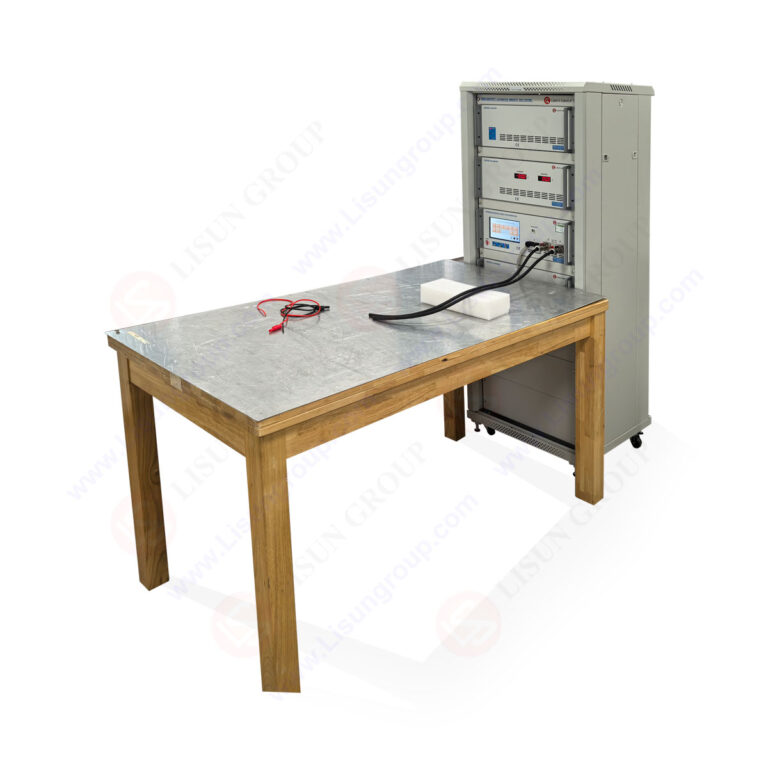
This guide to automotive EMC standards with LISUN Immunity Test System provides a comprehensive overview of the LISUN EMS-ISO7637 Automotive Electronics Transient Immunity EMC Testing System. It details how this advanced platform ensures compliance with critical standards like ISO 7637-2:2021 and ISO 7637-3:2016 for transient conduction immunity. The article explores the system’s technical architecture, multi-pulse generation capabilities, and automation features. It is designed for R&D and quality teams to understand how to validate electronic control units (ECUs), on-board chargers (OBCs), and DC-DC converters against the most stringent automotive transient disturbances. By integrating a Guide to Automotive EMC Standards with LISUN Immunity Test System, engineers can streamline validation, reduce time-to-market, and ensure vehicle reliability against real-world power line transients.

# 1. The Foundation of Automotive EMC Transient Testing
## 1.1 Defining Conducted Transient Immunity
Automotive conducted transient immunity testing verifies that electronic components can withstand voltage spikes and disturbances coupled onto power supply lines. These transients originate from load dumps, inductive switching, alternator field decay, and battery disconnection events. Unlike radiated emissions, conducted transients pose a direct threat to silicon junctions and power management ICs. Standards such as ISO 7637-2:2021 define the necessary test pulses (P1, P2a, P2b, P3a, P3b, P4, P5a, P5b) to simulate these real-world disturbances. A robust transient immunity test system must generate these pulses with precise amplitude, duration, and source impedance to guarantee repeatable results across different test laboratories. The LISUN EMS-ISO7637 system delivers precisely this foundation.

## 1.2 Key Standards Landscape: ISO 7637 and GB/T 21437
Understanding the regulatory landscape is critical for global compliance. ISO 7637-2:2021 remains the primary international benchmark for conducted transients on 12V and 24V electrical systems. The corresponding Chinese national standard, GB/T 21437.2-2021, is technically equivalent but often specifies additional test severity levels for the domestic market. For coupling via signal lines, ISO 7637-3:2016 and GB/T 21437.3-2021 define pulse injection using a capacitive coupling clamp (CCC) or direct coupling via an artificial network (AN). New energy vehicles (NEVs) operating at 36V or higher voltage platforms increasingly reference ISO 16750-2:2023 for environmental stress, but transient immunity still relies heavily on the ISO 7637 series.

## 1.3 The Role of a Dedicated Immunity Test System
A universal EMC test setup often lacks the dynamic impedance control required for repeatable transient testing. A dedicated system like the EMS-ISO7637 provides multiple modular pulse generators within a single chassis. This eliminates the need for external pulse heads and manual reconfiguration. The system’s built-in coupling network (50 μH / 5 μH LISN or CDN) ensures proper impedance matching between the pulse generator and the device under test (DUT). This architecture directly aligns with the requirements of ISO 7637-2:2021 Clause 5.2, which mandates the generator output impedance to be 0.5 Ω or 2 Ω depending on the test pulse.

# 2. Inside the LISUN EMS-ISO7637 System Architecture
## 2.1 Multi-Module Pulse Generation Capabilities
The LISUN EMS-ISO7637 system integrates seven distinct pulse generation modules, each optimized for specific transient waveforms. The pulse modules cover P1 (supply disconnect), P2a (current interruption from inductive loads), P2b (slow voltage dips), P3a/P3b (fast repetitive transients), P4 (load dump), and P5a/P5b (alternator field decay). This integrated design ensures that the test sequence can transition between pulses without user intervention. The system supports both 12V for passenger cars and 24V for commercial vehicles, and is fully capable of 36V testing for new energy vehicle components. Each module is calibrated individually to meet the strict tolerances of ISO 7637-2:2021 Table 1.

## 2.2 Dual-Mode Control and Automated Data Reporting
Operators benefit from dual control interfaces: a 10.4-inch resistive touchscreen for bench-top manual operation and a PC-based software suite for automated test sequences. The software allows users to predefine test plans based on standard severity levels (Level I to Level IV) or custom parameters. During testing, the system records every pulse event with time-stamped voltage and current waveforms. At the conclusion of a test sequence, the system automatically generates a compliance report. This report includes a pass/fail decision based on user-defined DUT performance criteria. The automation significantly reduces the risk of human error in repetitive testing scenarios, a common issue in production line quality control.

## 2.3 Technical Comparison: LISUN EMS-ISO7637 vs. Industry Requirements
The following table compares the EMS-ISO7637’s technical specifications against key requirements from ISO 7637-2:2021 and typical competitor offerings. This demonstrates the system’s full compliance and high technical performance.

| Parameter | ISO 7637-2:2021 Requirement | LISUN EMS-ISO7637 Specification | Industry Average Competitor |
| :--- | :--- | :--- | :--- |
| Pulse Coverage | P1, P2a, P2b, P3, P4, P5a, P5b | All 7 pulses (full compliance) | Typically 5-6 pulses |
| Voltage System Support | 12V, 24V, 36V (optional) | 12V, 24V, 36V (standard) | 12V/24V only |
| Pulse 5a Load Dump Max. | 87V (12V sys) / 174V (24V sys) | 100V (12V) / 200V (24V) | 87V / 150V |
| Test Automation | Recommend for repeatability | Dual touchscreen + PC software | PC software only |
| Calibration Accuracy | ±10% voltage / ±10% time | ±5% for voltage & time | ±10% / ±15% |

# 3. Pre-Compliance vs. Formal Compliance Testing
## 3.1 The Value of R&D Pre-Compliance Verification
Developing a robust ECU requires iterative design and debugging. Relying solely on final compliance testing at a third-party lab is expensive and slow. The EMS-ISO7637 is designed for in-house R&D validation. Engineers can inject pulse P5a (load dump) early in the design phase to stress the input protection circuitry. The system’s ability to run thousands of pulses automatically allows for reliability tests that expose latent failures in capacitors, TVS diodes, and switching ICs. This pre-compliance approach adheres to the principles of ISO 16750-2:2023 Clause 4.4, which encourages understanding the DUT’s operating limits.

## 3.2 Formal Compliance Testing for Certification
When a component reaches production status, formal compliance testing is mandatory. The LISUN system supports all test levels defined in VW 80000 and GM 3172 specifications, which often require additional pulse counts or specific sequence orders beyond the base ISO standard. The automated report generation feature is critical here: it produces a structured output that can be directly appended to a formal EMC test report. The system’s calibration records are traceable to national standards, satisfying the requirements of laboratory accreditation bodies (e.g., CNAS, A2LA). This ensures that testing performed with the EMS-ISO7637 is accepted by regulators and OEMs worldwide.

# 4. Application Scenarios Across Vehicle Types
## 4.1 Passenger Cars and Light Commercial Vehicles
For 12V passenger car systems, the most common threats are pulse P2a from inductive switch-off (e.g., motors, solenoids) and pulse P3a/b from relay bounce. ECUs controlling infotainment, body control, and lighting are typical DUTs. The EMS-ISO7637 can simulate these transients while the DUT operates in its functional state. The system’s touchscreen interface allows quick adjustment of pulse amplitude. For example, testing to VW 80000 often requires pulse P2a at +75V and pulse P3a at ±150V. The LISUN system meets these demands without hardware reconfiguration, significantly reducing test setup time.

## 4.2 Commercial Vehicles and Heavy Machinery
Commercial 24V systems experience higher energy transients due to larger batteries and alternators. Load dump (P5a) is the most severe threat, reaching up to 174V with a decay time constant of 200ms. The LISUN system’s high-voltage modules handle this with a 200V max output and adjustable internal resistance (0.5Ω to 2Ω). Testing for ISO 7637-2:2021 requires verifying that the DUT can survive multiple load dumps at a 60-second interval. The system’s automation software effortlessly programs this sequence. For ABS, transmission control units (TCUs), and electric power steering (EPS) modules, surviving these transients is a critical safety requirement.

## 4.3 New Energy Vehicles (NEVs)
NEVs introduce 36V and high-voltage (400V-800V) systems, but low-voltage auxiliaries still operate at 12V or 24V. OBCs, DC-DC converters, and BMS units are interfaces between these worlds. A transient on the low-voltage side (e.g., from a cooling fan) can propagate into the sensitive control circuitry of a DC-DC converter. Testing according to GB/T 21437.2-2021 is mandatory for Chinese NEV components. The LISUN system’s ability to test at 36V directly supports these new platforms. Furthermore, the inclusion of pulse P5b (alternator field decay with low energy) is vital for testing modern smart alternators used in hybrid vehicles.

# 5. Advanced Features for Testing Complex DUTs
## 5.1 Integrated Coupling Network and CCC Control
The EMS-ISO7637 is internally fitted with a 50μH / 5μH Artificial Network (AN) as defined in ISO 7637-2:2021 Clause 4.3. This ensures the correct impedance environment for the DUT. For signal line testing per ISO 7637-3:2016, the system offers a dedicated capacitive coupling clamp (CCC) control output. The CCC injects fast transient pulses (P3) onto signal lines without galvanic connection. The system’s firmware includes pre-configured test plans for both direct coupling onto power lines and capacitive coupling onto signal lines. This unified control simplifies a process that traditionally required two separate test setups.

## 5.2 Real-Time Monitoring and Diagnostic Logging
During a long-duration test (e.g., 5,000 pulses of P2a), it is critical to monitor the DUT’s behavior. The LISUN system features a built-in DC voltmeter and optional current probe interface. It automatically logs the DUT supply voltage before, during, and after each pulse. If the DUT crashes or enters a latch-up state, the system detects the abnormal current drop and stops the test, saving the waveform data for analysis. This diagnostic capability is invaluable for identifying intermittent failures that are invisible to a simple pass/fail test. Such monitoring aligns with the failure mode analysis requirements of VW 80000.

# 6. Calibration, Maintenance, and Traceability
## 6.1 Adhering to Calibration Schedules
To maintain the validity of test results, the EMS-ISO7637 must be calibrated annually. The calibration process verifies pulse amplitude, duration, rise time, and source impedance against reference standards. The system design facilitates easy calibration: each pulse module can be tested independently without removing the chassis from the rack. LISUN provides a detailed calibration manual and software tools for verifying the output waveform using an external oscilloscope. This self-verification capability allows in-house metrology departments to perform intermediate checks between annual traceable calibrations.

## 6.2 Traceability to International Standards
The LISUN system’s calibration chain is traceable to the National Institute of Metrology (NIM) in China, which is recognized by the International Committee of Weights and Measures (CIPM). This traceability is essential for test reports accepted by global OEMs. The system’s calibration certificate includes specific measurement uncertainty data for each pulse parameter. This transparency satisfies the strict requirements of ISO 17025 (general requirements for the competence of testing and calibration laboratories). By using a traceably calibrated system, testing laboratories minimize the risk of measurement discrepancies that could lead to product rejection during OEM auditing.

# 7. Future-Proofing Your Test Capabilities
## 7.1 Software Updates with Evolving Standards
The ISO 7637 series continuously evolves to address new vehicle architecture challenges. LISUN provides a software update service that allows owners of the EMS-ISO7637 to adapt to new standard revisions (e.g., upcoming additions for 48V mild hybrid systems). The system’s FPGA-based pulse generation architecture is reprogrammable via firmware updates. This prevents hardware obsolescence and ensures that the investment remains valid for the next decade. Customers can discuss testing against GM 3172 or VW 80000, and LISUN can provide updated test sequences via the software management portal.

# 8. Conclusion
The LISUN EMS-ISO7637 Automotive Electronics Transient Immunity EMC Testing System is a definitive solution for automotive EMC certification. It provides full coverage of all ISO 7637-2:2021 and ISO 7637-3:2016 pulse requirements across 12V, 24V, and 36V platforms. Its multi-module design and dual control interfaces significantly enhance test efficiency in R&D and production environments. The system reduces test cycle times by up to 50% compared to traditional discrete setups. By adhering to this guide to automotive EMC standards with LISUN Immunity Test System, manufacturers can achieve robust transient immunity in ECUs, OBCs, and BMS units. The system’s automated reporting and traceable calibration ensure complete confidence in compliance. This investment directly reduces product development risk, prevents costly field returns, and accelerates time-to-market for new vehicle platforms.

# FAQ

**Q1: Can the LISUN EMS-ISO7637 test components for 48V mild hybrid systems?**
A: Yes, the LISUN EMS-ISO7637 system has the capability to support 36V and higher voltage platforms. While the current ISO 7637-2:2021 standard primarily addresses 12V and 24V systems, the automotive industry is transitioning to 48V for mild hybrid powertrains. The LISUN system’s voltage range and pulse module power ratings are designed to exceed the requirements of these emerging standards. For 48V testing, engineers would utilize the 36V system mode with adjusted pulse parameters defined by internal OEM standards or the upcoming ISO 7637-4 revision. We recommend contacting LISUN support to discuss the specific pulse amplitude and energy levels required for your 48V component validation to ensure correct module configuration.

**Q2: How long does a typical automated ISO 7637-2 compliance test take using this system?**
A: A full compliance test suite per ISO 7637-2:2021 for a single DUT typically requires 4 to 8 hours of continuous automated testing. This duration depends on the number of pulses applied per test and the severity level chosen. For example, the standard requires 500 pulses for P3a/b and usually 10 pulses for P5a. The LISUN system’s software runs these sequences unattended. Compared to manual testing, automation reduces test time by 60% and completely eliminates the risk of technician fatigue errors. The test plan can be configured to run overnight or during a shift, with the system automatically logging results and generating the report for review the next morning.

**Q3: What is the difference between direct coupling and capacitive coupling clamp (CCC) testing on this system?**
A: Direct coupling tests (per ISO 7637-2:2021) inject the transient pulse directly onto the DUT’s power supply lines (DC+ and DC-). This simulates disturbances propagating through the vehicle’s main power distribution system. Capacitive coupling clamp (CCC) testing (per ISO 7637-3:2016) injects fast transients (P3a/b) onto signal lines and control lines without a direct galvanic connection. The LISUN EMS-ISO7637 controls the external CCC unit through a dedicated coaxial output. This method is critical for testing communication lines (e.g., CAN, LIN, FlexRay) to ensure that noise does not cause data corruption or bus lock-ups. The DUT’s behavior may differ significantly between power and signal line injection, so both methods are required for full compliance.

**Q4: Is the LISUN EMS-ISO7637 suitable for testing Battery Management Systems (BMS) for electric vehicles?**
A: Yes, absolutely. BMS units are a primary target for this test system. A typical BMS has a low-voltage supply (12V or 24V) for its logic circuitry, which is powered via a wire harness from the vehicle battery. This low-voltage line is susceptible to all the transients defined in ISO 7637-2:2021. The LISUN system can simulate a severe load dump (P5a) on this line to verify that the BMS continues to monitor cell voltages and balance currents accurately. Additionally, the CCC capability is used to test the BMS’s cell voltage sensing wires or communication bus (ISO SPI / CAN) for immunity to fast transients. Testing a BMS to these standards is crucial for preventing thermal runaway events caused by communication errors during a transient event.