









Here is the comprehensive technical article based on your requirements.
Abstract
This guide provides a technical deep dive into the LISUN Environmental Test System: IEC 60068 Temperature Chamber Guide, focusing on its application for LED accelerated aging and reliability validation. As a Senior LED Testing Engineer at LISUN, I outline how our integrated system, featuring the LEDLM-80PL and LEDLM-84PL variants, aligns with critical IES and CIE standards. By leveraging the Arrhenius Model for prediction and supporting up to three connected chambers, the system delivers precise L70/L50 metrics over extended durations. This article offers engineers a strategic framework for implementing robust, standard-compliant lumen maintenance testing to ensure product longevity.
1.1 The Critical Role of IES LM-80 and TM-21
The backbone of LED longevity testing rests on IES LM-80 (Approved Method for Measuring Luminous Flux and Color Maintenance of LED Packages, Arrays, and Modules) and TM-21 (Projecting Long-Term Lumen Maintenance). LM-80 defines the physical test procedure, requiring 6,000 hours of data at specified case temperatures (e.g., 55°C, 85°C). TM-21 then extrapolates this data to project L70 (time to 70% lumen output) or L50 lifetimes. The LISUN Environmental Test System: IEC 60068 Temperature Chamber Guide is engineered to execute these protocols with high fidelity.
1.2 Integrating IES LM-84 and TM-28 for Integrated LED Lamps
For self-ballasted LED lamps and luminaires, IES LM-84 (Method for Measuring Lumen Maintenance of LED Lamps, Light Engines, and Luminaires) and TM-28 (Projecting Long-Term Lumen Maintenance of Products Using LED Light Engines) provide the framework. These standards account for the thermal interactions and driver within the complete assembly. Our LEDLM-84PL system directly supports this, allowing engineers to test complete products within the temperature chambers, ensuring the thermal stress profile of the chamber matches real-world conditions defined by IEC 60068.
2.1 Dual System Variants: LEDLM-80PL vs. LEDLM-84PL
The LISUN system offers two primary configurations tailored to specific application needs. The LEDLM-80PL is optimized for testing LED packages and modules following the LM-80 protocol, typically using a temperature-controlled oven or chamber for ambient control. The LEDLM-84PL variant is designed for integrated LED products (lamps, luminaires), often requiring a thermal platform or specific fixture mounting. Both systems share a common software architecture but differ in hardware configurability for test fixture placement and thermal management within the temperature chamber.
2.2 Customizable Hardware and Temperature Chamber Integration
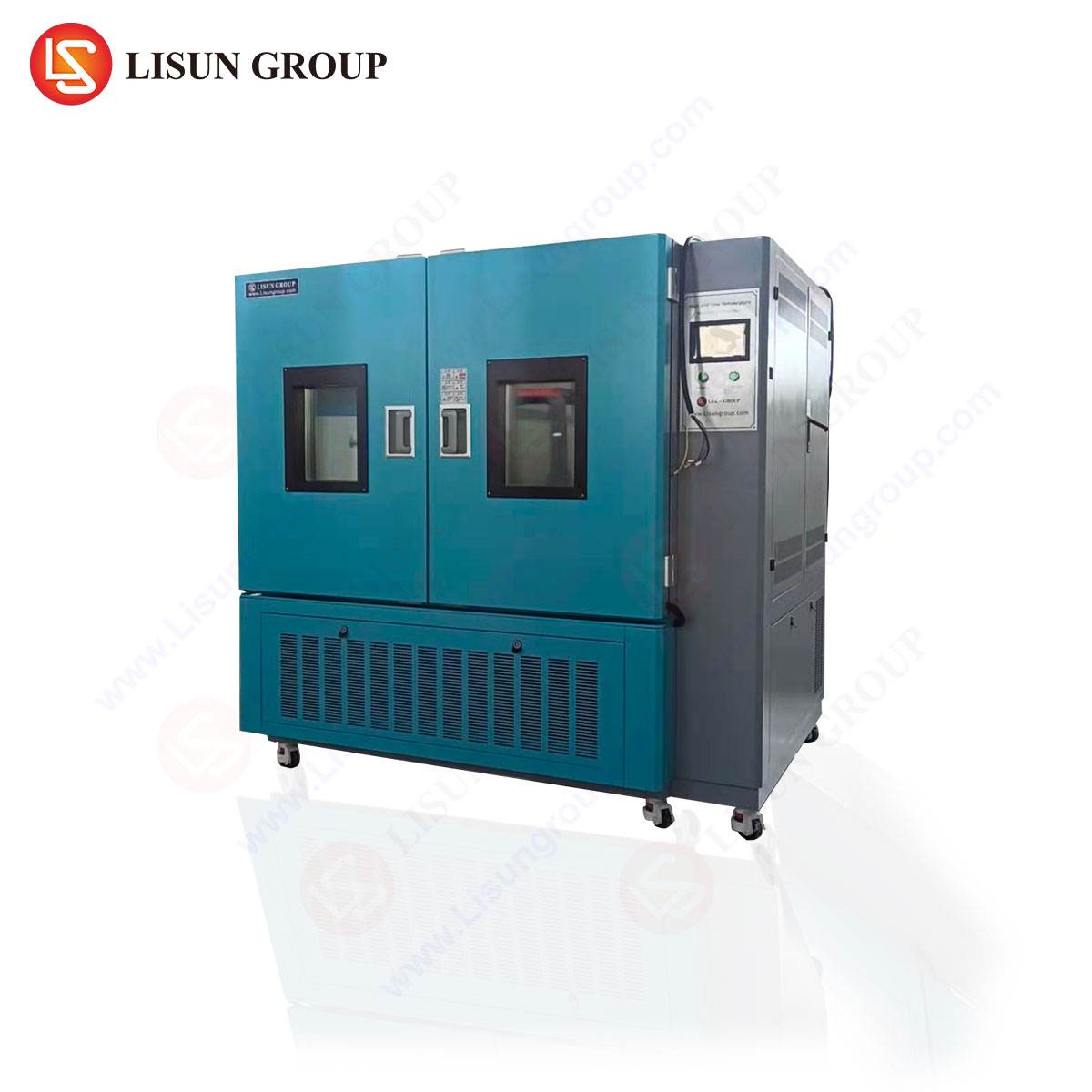
A key feature of the LISUN Environmental Test System: IEC 60068 Temperature Chamber Guide is its support for up to 3 connected temperature chambers. This allows for simultaneous testing at multiple temperature points—such as T_s (55°C), T_h (85°C), and a custom 105°C stress point—as required by the Arrhenius Model. Each chamber channel can accommodate multiple test boards or lamp holders, with independent current control up to 1000 mA DC. This modularity is critical for generating the statistically significant data points needed for reliable TM-21 extrapolations.
Technical Comparison Table: LEDLM-80PL vs. LEDLM-84PL System Specifications
| Feature | LEDLM-80PL (for Modules/Packages) | LEDLM-84PL (for Lamps/Luminaires) |
|---|---|---|
| Primary Standard | IES LM-80, TM-21 | IES LM-84, TM-28 |
| Test Object | LEDs, Modules | Self-ballasted Lamps, Luminaires |
| Temperature Control | Ambient Oven / Forced Air | Thermal Platform / Fixture Mounted |
| Max. Current per Channel | 1000 mA DC | 1000 mA DC |
| Data Acquisition Rate | Automatic, per standard interval (min: 1 min) | Automatic, per standard interval (min: 1 min) |
| Connected Chambers | Up to 3 (for multi-point stress tests) | Up to 3 (for multi-point stress tests) |
| Measuring Units | External Spectroradiometer & Power Meter | External Spectroradiometer & Power Meter |
3.1 Applying the Model to Lumen Depreciation
The Arrhenius Model is the heart of accelerated aging. It mathematically describes how the rate of a chemical reaction (lumen depreciation) increases with temperature. Our software automatically fits the collected LM-80 or LM-84 data to this model, calculating the acceleration factor between the stress temperature and the use temperature. For example, a device tested at 105°C may experience an acceleration factor of 50x compared to operation at 25°C, allowing a 6,000-hour test to project performance for over 30 years.
3.2 Generation of L70 and L50 Metrics and Projection Curves
After data fitting, the software performs TM-21 or TM-28 extrapolation. It generates precise L70(life) and L50(life) values, along with 90% lower confidence bounds. The software also filters data according to TM-21 rules (e.g., data from the first 1,000 hours may be excluded for non-linear fit). The output includes graphical projection curves and a summary table compliant with the required reporting format of the Energy Star or DesignLights Consortium (DLC) standards.
4.1 Mode 1: Continuous Operation for Long-Term Stability
This mode is the standard for LM-80 and LM-84 compliance. The LED package or lamp is powered continuously at the rated current and within a controlled case temperature. The LISUN Environmental Test System: IEC 60068 Temperature Chamber Guide ensures precise temperature cycling within ±1°C per the standard. Data is logged automatically at intervals defined by the standard (e.g., every 1,000 hours up to 6,000 hours). This mode provides the primary dataset for lumen maintenance projection.
4.2 Mode 2: Stress Cycling (On/Off or Thermal) for Component Durability
This advanced mode simulates real-world use where LEDs are turned on and off or subjected to thermal cycling. The software can control the power supply and the temperature chamber to execute a predefined profile, such as 2 hours on at 85°C and 0.5 hours off at 25°C. This is critical for evaluating solder joint fatigue, wire bond integrity, and phosphor thermal shock. Testing in this mode validates reliability beyond simple lumen maintenance, covering mechanisms included in standards like CIE 127 for LED thermal characteristics.
5.1 Adherence to IES LM-79-19 and CIE 084
While the temperature chamber stresses the LED, the photometric measurement is performed using an integrating sphere and spectroradiometer, strictly following IES LM-79-19 (Electrical and Photometric Measurements of Solid-State Lighting Products) and CIE 084. The LISUN system connects a 2-meter sphere (for larger products) or a 0.5-meter sphere (for components) to the chamber port, allowing for in-situ or ex-situ measurements without moving the sample, thus maintaining thermal equilibrium.
5.2 CIE 70 and CIE 127: Colorimetric Stability at Temperature
Accelerated aging is not just about lumen output; color shift is equally critical. The software monitors chromaticity shifts (Δu’v’) per CIE 70 and thermal resistance characterization per CIE 127. By measuring the spectral power distribution (SPD) at each test interval, the system tracks correlated color temperature (CCT) drift and color rendering index (CRI) degradation. This holistic approach ensures the product meets both lifetime and color consistency specifications.
6.1 Sample Preparation and Initial Measurement
A standard LM-80 run begins with mounting an adequate sample size (typically 20 units per case temperature). Initial photometric data is measured at a standard ambient temperature (25°C ±1°C) with a brief stabilization period (typically 0.5–1 hour for packages, 2+ hours for lamps). The samples are then placed into the temperature chamber, which is pre-heated to the target case temperature. The system’s software records the initial flux and color data.
6.2 Intermittent Measurement and Final Analysis
During the test duration (3,000 hours for a quick estimate, 6,000–10,000 hours for full compliance), the LISUN Environmental Test System: IEC 60068 Temperature Chamber Guide automates measurement cycles. At each interval (e.g., 1,000, 2,000, 3,000, 4,000, 5,000, 6,000 hours), the power is briefly interrupted to take a measurement before returning to stress conditions. After 6,000 hours, the software applies TM-21 nonlinear regression (using an exponential decay model: Φ(t) = B * exp(-αt)) to project the L70 lifetime, often exceeding 50,000 hours for quality LEDs.
7.1 Managing Thermal Overshoot and Chamber Uniformity
IEC 60068 requires temperature stability. The LISUN system uses a PID controller to minimize overshoot. However, engineers must ensure proper thermal coupling between the test board and the chamber thermal surface. Using a thermal interface material (TIM) is critical. The system provides data logs to verify that the case temperature (T_s) remained within ±2°C for the entire test, a key requirement for a valid LM-80 report.
7.2 Mitigating Ambient Light and Electrical Interference
Accurate lumen measurement in a temperature chamber is challenging due to stray light. The LISUN system features a light-tight chamber port and electrical filters. Electrical noise from the chamber’s heating/cooling cycles can corrupt power measurements. Our system uses high-precision, isolated power meters (class 0.2 accuracy) and twisted-pair wiring to maintain signal integrity, ensuring the photometric data reflects only the LED performance, not environmental artifacts.
The LISUN Environmental Test System: IEC 60068 Temperature Chamber Guide provides a complete solution for LED reliability validation. By integrating dual-system variants (LEDLM-80PL and LEDLM-84PL) with a powerful Arrhenius Model software engine, it ensures compliance with IES LM-80, TM-21, LM-84, and TM-28 standards. The system’s support for up to three temperature chambers enables simultaneous multi-point stress testing, critical for generating robust lifetime predictions. Key numerical deliverables, such as L70 metrics derived from 6,000-hour data sets, are automatically calculated and reported. For engineers seeking to meet stringent regulatory requirements and ensure product longevity, this system offers a precise, efficient, and standard-compliant path from initial sample characterization to final reliability projection.
Q1: What is the difference between testing using the LEDLM-80PL and a standard temperature chamber?
A: The primary difference is integration. A standard temperature chamber only controls temperature and humidity. The LISUN LEDLM-80PL system combines a compliant IEC 60068 chamber with a dedicated data acquisition system, external spectroradiometer, and power supply controller. This automation ensures photometric measurements are taken at the precise intervals required by IES LM-80 (e.g., every 1,000 hours), under stable thermal conditions. It also includes the specialized software for TM-21 extrapolation and L70/L50 calculation, eliminating manual data transfer and analysis, thereby reducing human error and speeding up the reporting process for R&D and certification labs.
Q2: How does the Arrhenius Model software in the LISUN system handle non-linear lumen depreciation?
A: The software applies a nonlinear regression algorithm based on the exponential decay model recommended by TM-21: Φ(t) = B * exp(-αt). It can also accommodate a two-term exponential if a faster initial decay is observed. The software automatically filters the first 1,000 hours of data for the final fit, as per TM-21 requirements, to improve projection accuracy. It then calculates the activation energy (Ea) using the Arrhenius equation from the decay constants (α) at different test temperatures (T_s and T_h). The final output includes the projected L70 life and a 90% lower confidence bound, ensuring a statistically sound prediction.
Q3: Can I use the LISUN Environmental Test System for testing automotive LED components beyond general lighting?
A: Yes. While the system is optimized for IES LM-80/LM-84, its compatibility with the IEC 60068 standard for temperature chambers makes it highly suitable for automotive LED testing (e.g., AEC-Q102 validation). The system can implement the required temperature cycling profiles (Damp Heat, Temperature Shock) via the dual tester mode. By connecting a spectroradiometer, you can measure flux and color stability during these stress cycles. The ability to control up to 3 chambers independently allows for parallel testing under different stress conditions (e.g., high temperature, low temperature, and a thermal shock profile) to satisfy automotive reliability qualification requirements.
Q4: What is the maximum number of LED samples I can test simultaneously?
A: The capacity depends on the configuration of the temperature chamber and the test fixtures. The LISUN system can control up to 3 independent temperature chambers. For example, in a standard LM-80 test for 3528 SMD packages, a single chamber can typically accommodate 20-30 test boards. If each board holds 20 LEDs, you can test 400-600 devices per chamber. With 3 chambers, you can run up to 1,800 samples simultaneously, each at a different case temperature. This high throughput is essential for statistically significant reliability studies or for testing multiple design variants in a single campaign.