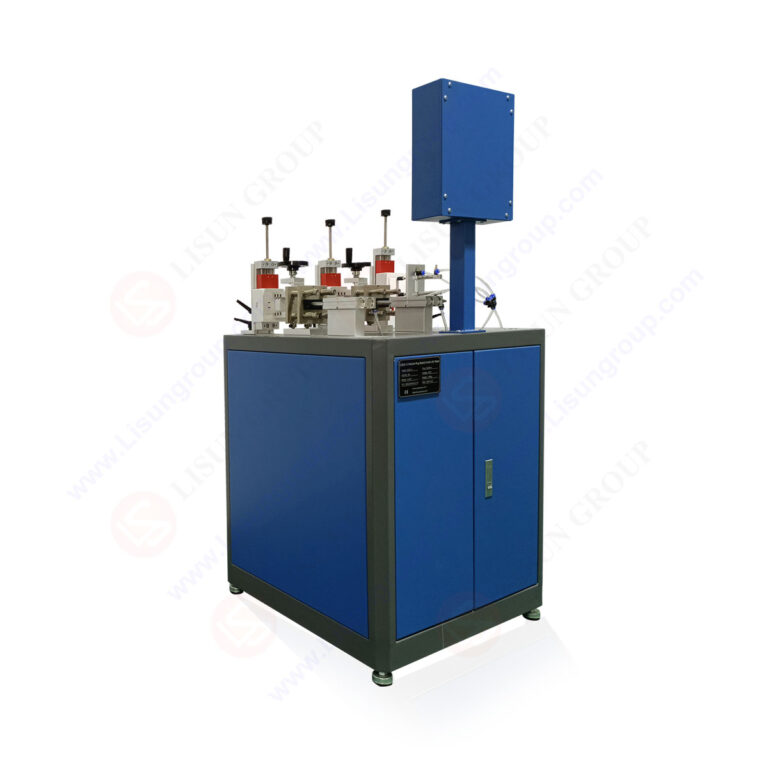
This article examines the technical architecture and compliance applications of LISUN’s CZKS-3 series precision test systems for household appliance component testing, focusing on plug, socket, and switch durability verification. The CZKS-3 series, including variants CZKS-3P, CZKS-3S, and CZKS-3A, provides automated solutions for breaking capacity assessment, mechanical endurance validation, and electrical fatigue failure analysis. Designed to meet international standards such as IEC 60884-1, IEC 60669-1, IEC 61058-1, and GB/T 2099.1, these systems integrate PLC control with pneumatic actuation for repeatable test cycles. The article covers system specifications, application scenarios, data acquisition methodologies, and compliance verification protocols essential for manufacturers and testing laboratories seeking reliable electrical durability testing solutions.
1.1 Mechanical Actuation and Control Integration
The CZKS-3 series employs a modular architecture combining pneumatic cylinder-driven actuation with programmable logic controller (PLC) coordination. This design ensures precise insertion force application and withdrawal cycle repetition, critical for socket breaking capacity testing. The PLC manages timing sequences, cycle counts, and failure detection thresholds, enabling automated testing over extended operational periods without operator intervention. Each actuation module incorporates linear guide rails and force sensors to maintain positional accuracy within ±0.1 mm.
1.2 Electrical Load Circuit Configuration
For switch life cycle verification, the CZKS-3 series integrates configurable resistive, inductive, and capacitive load banks. The standard CZKS-3 model supports single-phase loads up to 16 A at 250 V AC, while the CZKS-3P variant adds three-phase capability for industrial-grade component testing. Load parameters are programmable via the touchscreen interface, allowing test engineers to simulate real-world electrical stress conditions during household appliance component testing. The system automatically logs voltage, current, and power factor data for each cycle.
1.3 Safety Interlock and Emergency Stop Mechanisms
All CZKS-3 series models incorporate redundant safety interlocks including thermal overload protection, earth leakage monitoring, and emergency stop circuits conforming to IEC 61058-1 Annex B requirements. The interlock system prevents test initiation if protective earth continuity exceeds 0.1 Ω or if the enclosure door remains open. This design ensures operator safety during high-repetition endurance tests exceeding 100,000 cycles.
2.1 Comparative Technical Specifications
The following table summarizes key electrical and mechanical parameters across the CZKS-3 series variants:
| Parameter | CZKS-3 | CZKS-3P | CZKS-3S | CZKS-3A |
|---|---|---|---|---|
| Max Voltage (V AC) | 250 | 400 | 250 | 250 |
| Max Current (A) | 16 | 32 | 20 | 10 |
| Test Frequency (Hz) | 50/60 | 50/60 | 50/60 | 50/60 |
| Cycle Rate (ops/min) | 5–30 | 5–20 | 10–60 | 5–15 |
| Max Cycle Count | 1,000,000 | 500,000 | 2,000,000 | 100,000 |
| Load Type | R/L/C | R/L/C | R/L | R only |
| Pneumatic Pressure (MPa) | 0.4–0.8 | 0.5–1.0 | 0.3–0.6 | 0.4–0.7 |
2.2 Selecting the Appropriate Variant
The CZKS-3 base model suits general household plug and socket testing per IEC 60884-1 clauses 20 and 21. The CZKS-3P variant addresses three-phase industrial connectors and switches requiring higher breaking capacity verification. For high-speed switch durability testing, the CZKS-3S achieves cycle rates up to 60 operations per minute, ideal for automotive electrical component evaluation. The CZKS-3A provides a cost-effective solution for low-current appliance switches and signal connectors with resistive loads only.
2.3 Measurement Accuracy and Calibration
All series variants include calibrated strain gauge load cells with ±0.5% full-scale accuracy for insertion and withdrawal force measurement. Contact resistance is measured using a four-wire Kelvin method with resolution down to 0.1 mΩ. The built-in data acquisition system samples at 1 kHz per channel, enabling detection of transient arcing events during breaking capacity testing. Calibration intervals follow ISO/IEC 17025 guidelines, with NIST-traceable reference standards provided upon request.
3.1 IEC 60884-1 Implementation for Plugs and Sockets
The CZKS-3 series directly addresses IEC 60884-1 requirements for mechanical and electrical testing of plugs and socket-outlets. Clause 20 mandates 10,000 cycles of withdrawal and insertion at rated current, with contact temperature rise limited to 45 K above ambient. Clause 21 specifies breaking capacity verification where the socket must interrupt rated current without sustained arcing. The CZKS-3 system automates these sequences, recording force profiles and arc duration for each cycle. Test reports generated by the system include cycle-by-cycle data for all 10,000 operations.
3.2 IEC 60669-1 Compliance for Switches
For household switches, IEC 60669-1 Section 18 requires endurance testing comprising 40,000 mechanical cycles with electrical load, followed by 10,000 cycles at 1.1 times rated voltage. The CZKS-3S variant’s high-speed cycle capability (up to 60 ops/min) reduces test duration for standard 40,000-cycle protocols from over 16 hours to approximately 11 hours. Clause 18.2 further mandates that contact resistance shall not exceed 100 mΩ after testing, a parameter continuously monitored by the CZKS-3S’s four-wire measurement system.
3.3 IEC 61058-1 and GB/T 2099.1 Alignment
IEC 61058-1 for switches in appliances specifies electrical endurance under cos φ = 0.6 lagging for inductive loads. The CZKS-3 series load banks support programmable power factor adjustment from 0.3 to 1.0, enabling compliance testing per Clause 16.2. The Chinese national standard GB/T 2099.1 aligns closely with IEC 60884-1 but adds specific requirements for pin insulation and dimensional gauges. LISUN provides optional fixtures that accommodate GB/T 2099.1 mandrel gauge testing, making the CZKS-3 series suitable for both domestic and international certification bodies.
4.1 Breaking Capacity Verification for Power Cords
Household appliance manufacturers must verify that power cord plugs and connectors can safely interrupt rated current under fault conditions. The CZKS-3 base model executes breaking capacity tests per IEC 60884-1 Clause 21, applying 250 V AC at 16 A with a power factor of 0.6. The system measures arc extinction time with a photodetector and high-speed voltage probe. For appliance connectors with integrated switches, the CZKS-3P variant performs three-phase breaking tests up to 32 A, critical for electric ovens, dryers, and industrial kitchen equipment.
4.2 Switch Durability Validation
The CZKS-3S variant is specifically designed for high-cycle endurance testing of appliance push-button, rocker, and toggle switches. Test protocols include 200,000 mechanical cycles at 10 ops/min under resistive load, followed by 100,000 cycles at 20 ops/min under inductive load to simulate motor-starting conditions. The system detects contact adhesion failure—where contacts fail to separate within 5 ms—and records this as a critical fault. For automotive electronics, the CZKS-3S performs additional thermal cycling between −40°C and +85°C using an optional environmental chamber interface, enabling comprehensive switch durability testing under extreme conditions.
4.3 Compliance Verification for Certification Bodies
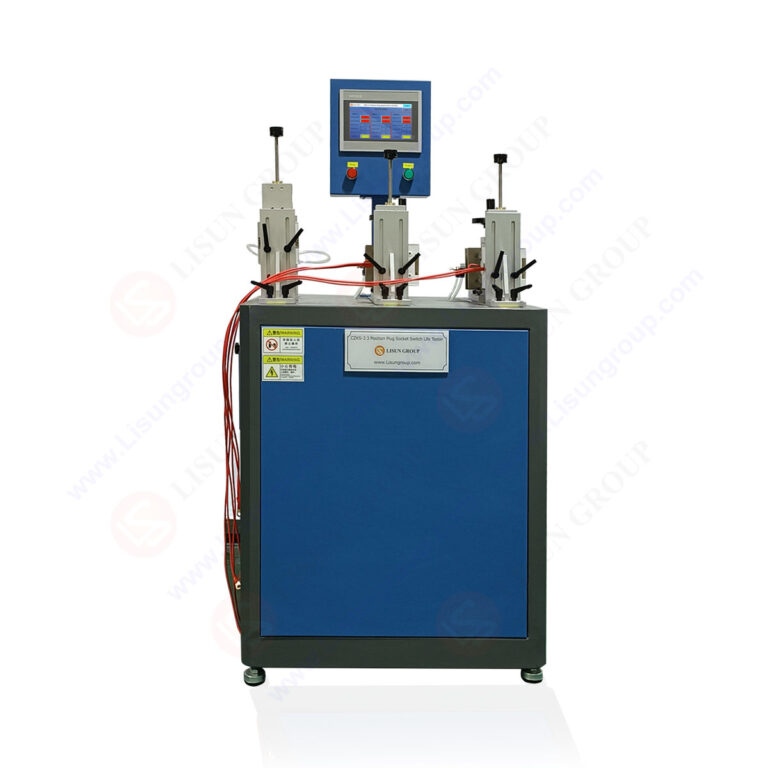
Third-party testing laboratories use the CZKS-3 series to generate reproducible data for UL, CE, and CCC certification submissions. The system’s data export function produces CSV files containing cycle history, force waveforms, and electrical parameter graphs. Accredited laboratories benefit from the CZKS-3 series’ integration with laboratory information management systems (LIMS) via RS-232 and Ethernet interfaces. This integration ensures audit trails satisfy ISO/IEC 17025 documentation requirements for all household appliance component testing activities.
5.1 Real-Time Monitoring Parameters
During testing, the CZKS-3 series simultaneously monitors 12 parameters: insertion force (N), withdrawal force (N), contact resistance (mΩ), arc voltage (V), arc current (A), arc duration (ms), contact temperature (°C), ambient temperature (°C), cycle count, elapsed time, pneumatic pressure (MPa), and power factor deviation. All parameters are displayed on a 10-inch touchscreen with trend lines updated every 100 cycles. Any parameter exceeding user-defined limits triggers an automatic test pause and audible alarm.
5.2 Post-Test Failure Mode Analysis
After completing endurance tests, the system generates a comprehensive fault report highlighting cycles where contact resistance exceeded 100 mΩ or arc duration exceeded 10 ms. For contact adhesion failures, the report includes the specific cycle number and the force required to separate stuck contacts. The CZKS-3 series can correlate force peaks with electrical anomalies, enabling engineers to distinguish between mechanical binding and electrical welding. This analytical capability is essential for identifying root causes of electrical fatigue failure in switch and socket designs.
5.3 Statistical Process Control Integration
Data from the CZKS-3 series can be exported to statistical process control (SPC) software for trend analysis. Control charts for insertion force and contact resistance over the test lifespan reveal degradation patterns predictive of field failure. For example, a gradual increase in contact resistance after 30,000 cycles suggests oxidation or material transfer issues, while sudden spikes indicate mechanical wear or spring relaxation. Manufacturers use this data to qualify component designs for production release.
6.1 Scheduled Calibration Procedures
LISUN recommends annual calibration of the CZKS-3 series with interim force verification every 500,000 cycles. Calibration involves verifying load cell accuracy using certified dead weights (0.5 N to 500 N range), validating voltage and current measurement against a Fluke 5522A calibrator, and confirming timing accuracy with an oscilloscope. The calibration certificate includes as-found and as-left data for all measurement channels, traceable to national standards. The CZKS-3S variant’s high-speed operation requires additional verification of cycle rate accuracy using a photo-interrupter and frequency counter.
6.2 Preventive Maintenance Checklist
Monthly tasks include cleaning pneumatic filters, lubricating linear guide rails with lithium grease, and verifying pneumatic cylinder seals for leaks exceeding 0.1 MPa/min. Quarterly tasks encompass checking electrical contactor wear, replacing desiccant in the air preparation unit, and verifying emergency stop functionality. The PLC battery should be replaced every three years to prevent program loss. LISUN provides a maintenance log template compatible with ISO 9001 quality management systems, ensuring compliance throughout the electrical durability testing equipment lifecycle.
6.3 Troubleshooting Common Issues
If insertion force readings drift by more than 2% over 10,000 cycles, engineers should inspect the load cell mounting bracket for loose bolts. Erroneous arc duration measurements often result from photodetector lens contamination, requiring cleaning with isopropyl alcohol. Communication errors between the PLC and touchscreen typically resolve by updating firmware via the USB port. The CZKS-3 series diagnostic menu displays sensor health status and historical error logs, facilitating rapid troubleshooting during household appliance component testing operations.
7.1 Firmware and Software Update Capabilities
LISUN provides firmware updates that expand the CZKS-3 series’ standard library to include emerging standards such as IEC 62080 for sound signaling devices and IEC 62955 for DC residual current detection. The system’s modular software architecture allows adding custom test sequences for proprietary connector designs. Engineers can remotely upload new test profiles via Ethernet, reducing downtime during protocol changes. The touchscreen interface supports multilingual operation, including English, Chinese, German, and Japanese.
7.2 Hardware Expansion Options
The CZKS-3 series accepts expansion modules for environmental chamber integration, enabling combined temperature/humidity cycling with electrical endurance tests. A four-channel multiplexer allows simultaneous testing of four identical switches, increasing throughput for high-volume validation programs. For automotive applications, a vibration table interface simulates road shock during connector testing per ISO 16750-3. These upgrades extend the CZKS-3 series’ utility beyond standard household appliance component testing into transportation and industrial sectors.
7.3 Data Security and Cloud Integration
Recent upgrades include encrypted data storage and optional cloud synchronization for remote monitoring of test progress. Engineers receive automated email alerts when test parameters exceed tolerances or when routine maintenance is due. Cloud-hosted dashboards aggregate data from multiple CZKS-3 systems across different laboratories, enabling global quality comparisons. Data encryption complies with GDPR and China’s Personal Information Protection Law, ensuring secure handling of proprietary product information.
The LISUN CZKS-3 series represents a comprehensive solution for household appliance component testing, integrating precise pneumatic actuation, programmable electrical loads, and real-time data acquisition into a single automated platform. Compliance with IEC 60884-1, IEC 60669-1, IEC 61058-1, and GB/T 2099.1 ensures the CZKS-3 base model, CZKS-3P, CZKS-3S, and CZKS-3A variants meet international certification requirements for plug, socket, and switch durability testing. The system’s 1 kHz sampling rate and four-wire contact resistance measurement provide the granularity needed for detecting electrical fatigue failure mechanisms, including contact adhesion and arc erosion. By enabling cycle counts up to 2,000,000 operations and supporting breaking capacity tests up to 400 V AC at 32 A, the CZKS-3 series addresses both household appliance and automotive electronics testing needs. Manufacturers and testing laboratories benefit from the system’s statistical process control integration, calibration traceability, and modular upgrade paths. For organizations seeking reliable switch life cycle verification and socket breaking capacity validation, the CZKS-3 series delivers the technical precision and compliance evidence necessary for product certification and quality assurance.
Q1: What is the maximum cycle count achievable with the CZKS-3S variant for switch durability testing?
A: The CZKS-3S variant supports a maximum cycle count of 2,000,000 operations, making it suitable for high-reliability switches used in premium appliances and automotive applications. At the maximum cycle rate of 60 operations per minute, a full 2,000,000-cycle endurance test completes in approximately 555 hours of continuous operation. The system automatically records contact resistance and arc duration for every cycle, identifying failures such as contact adhesion or excessive wear. For standard tests per IEC 60669-1 requiring 40,000 mechanical cycles with load plus 10,000 additional cycles at overvoltage, the CZKS-3S completes testing in under 14 hours. Users can program lower cycle counts for qualification testing and increase to maximum counts for life cycle verification studies.
Q2: How does the CZKS-3 series measure contact resistance during breaking capacity testing?
A: The CZKS-3 series employs a four-wire Kelvin measurement technique to eliminate lead and contact resistance errors from the measurement loop. A calibrated current source delivers 100 mA DC through the test contacts, while a separate pair of sense wires measures the resulting voltage drop across the contacts. This configuration achieves resolution of 0.1 mΩ across a measurement range of 0.1 mΩ to 1000 mΩ. During breaking capacity tests, the system samples contact resistance at 1 kHz intervals, capturing both steady-state values and transient changes during contact opening. If resistance exceeds the user-defined threshold, the system flags the cycle as a failure and records the exact cycle number. This measurement approach complies with IEC 60884-1 Clause 20.3 requirements for verifying that contact resistance remains below 100 mΩ after endurance testing.
Q3: Can the CZKS-3 series test components with non-standard plug geometries or custom connector interfaces?
A: Yes, the CZKS-3 series accommodates non-standard geometries through interchangeable fixture plates and adjustable clamping mechanisms. LISUN offers a custom fixture design service where engineers provide 2D drawings or 3D models of the connector, and LISUN manufactures aluminum or stainless steel mounting plates within two weeks. The fixture interface uses standard M6 bolt patterns and locator pins for repeatable positioning. For extremely irregular shapes, the CZKS-3 series includes a universal grip assembly with rubber-lined clamps that adjust from 10 mm to 80 mm width. Users can program insertion depth and dwell time parameters in the PLC to match connector-specific requirements. The system automatically compensates for different insertion angles by adjusting the pneumatic cylinder stroke based on force feedback.
Q4: What data formats does the CZKS-3 series support for export to external analysis software?
A: The CZKS-3 series exports test data in CSV and XML formats, compatible with Microsoft Excel, MATLAB, Minitab, and most statistical analysis packages. For each test run, the export file includes a header with test parameters (standard, voltage, current, cycle count), followed by cycle-by-cycle data columns for insertion force, withdrawal force, contact resistance, arc duration, and temperature. Users can select to export summary statistics only or full waveform data for specific cycles of interest. The system also generates PDF reports containing graphs of key parameters over the entire test duration, with failure cycles highlighted in red. Ethernet-connected CZKS-3 units support direct database insertion into MySQL and SQL Server through LISUN’s data integration API, enabling seamless LIMS integration.
Q5: How does the CZKS-3P variant differ from the base CZKS-3 model for three-phase testing applications?
A: The CZKS-3P variant adds two additional load channels and a three-phase power meter for simultaneous testing of all three poles in a three-phase plug or switch. Each load channel independently supports up to 32 A at 400 V AC, with programmable phase angle differences to simulate balanced or unbalanced load conditions. The three-phase power meter measures phase voltages, line currents, total harmonic distortion, and power factor for all three phases simultaneously. The CZKS-3P also includes a three-pole pneumatic gripper capable of inserting and withdrawing all three pins simultaneously, maintaining synchronized movement within 0.5 ms. For breaking capacity tests per IEC 60884-1 modified for three-phase connectors, the system monitors arc extinction across all poles and flags any pole where arc duration exceeds 5 ms. The CZKS-3P’s enhanced cooling system uses forced air and heat sinks rated for continuous operation at 32 A per phase, preventing thermal overload during extended endurance tests.