









Here is the comprehensive technical article generated according to your specifications.
Abstract
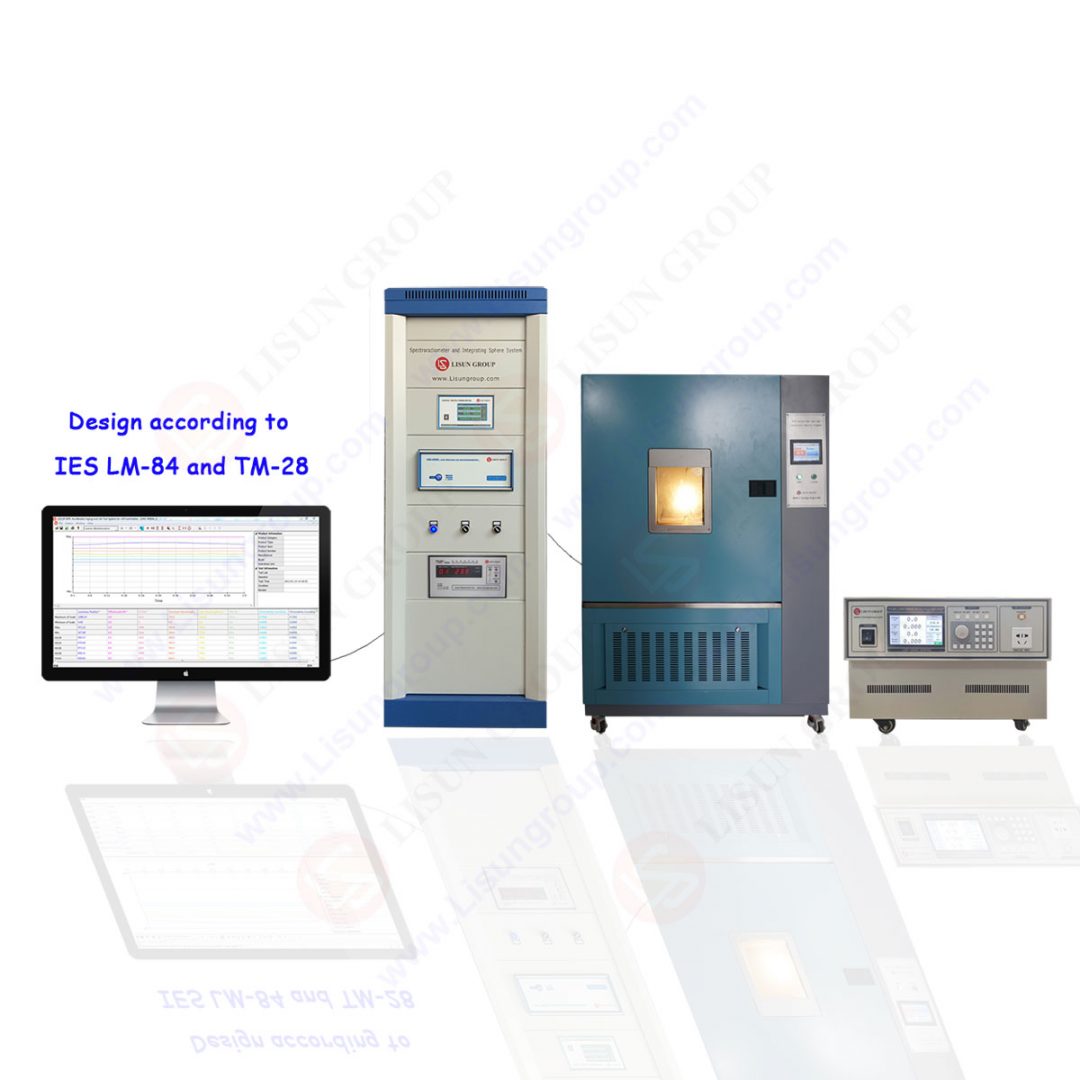
Accurate life prediction for LED modules is critical for warranty validation and product reliability. The LISUN LED Optical Aging Test Instrument for LED Module L50 Life Prediction provides a turnkey solution for accelerated aging tests, directly supporting IES LM-80 and LM-84 standards. By integrating Arrhenius Model-based software, dual testing modes, and customizable hardware, this instrument enables engineers to extrapolate L70 and L50 metrics from 6000-hour test data with high confidence. This article details the technical architecture, standard compliance, and practical application of the system, offering a technical guide for R&D and quality control professionals seeking to validate LED module longevity under stress conditions.
1.1 The Challenge of Lumen Maintenance Testing
LED modules exhibit gradual lumen depreciation over time, a phenomenon governed by junction temperature and drive current. Without rigorous accelerated aging, manufacturers risk premature field failures. LISUN’s instrument addresses this by enforcing standardized test protocols that isolate degradation mechanisms.
1.2 Integrating IES and CIE Frameworks
The system aligns with IES LM-80 (for LED packages, arrays, and modules) and LM-84 (for integral LED lamps and luminaires). For white light quality assessment, it also supports CIE 084 (measurement of luminous flux) and CIE 127 (measurement of LEDs), ensuring photometric data integrity during aging.
2.1 Modular Chamber and Fixturing
The instrument supports up to three connected temperature chambers, enabling simultaneous testing at multiple stress points (e.g., 55°C, 85°C, and 105°C). Each chamber accommodates up to 20 LED modules, with individually controllable current sources (up to 2A per channel) to simulate real-world driver conditions.
2.2 Photometric Sensing and Data Acquisition
A high-speed spectroradiometer and integrating sphere (optional, per LM-79-19) capture real-time luminous flux, CCT, and CRI degradation. The system records data every 15 minutes, with a photometric accuracy of ±1% for lumen measurements, critical for detecting early failure modes.
2.3 Temperature Control and Uniformity
Forced air convection maintains chamber uniformity within ±1°C across the test volume. Each module features a dedicated thermocouple feedback loop, ensuring junction temperature is controlled within ±2°C of the setpoint, a prerequisite for valid TM-21 extrapolation.
3.1 LEDLM-80PL: For LED Modules and Packages
Designed for IES LM-80 testing, this variant focuses on component-level life prediction. It includes a dark box for stray light elimination and supports the standard 6000-hour minimum test duration, with data logging formatted for direct TM-21 analysis.
3.2 LEDLM-84PL: For Integral LED Lamps
This variant aligns with IES LM-84, which requires testing of complete luminaires. It features larger chamber openings (up to 600mm x 600mm) and interfaces for AC/DC power monitoring. The software includes a lumen maintenance factor calculator per TM-28, allowing for accelerated testing at reduced sample sizes.
Technical Comparison Table: System Variants
| Feature | LEDLM-80PL (LM-80 / TM-21) | LEDLM-84PL (LM-84 / TM-28) |
|---|---|---|
| Primary Standard | IES LM-80 | IES LM-84 |
| Test Object | LED packages, arrays, modules | Integral LED lamps, luminaires |
| Max. Sample Count | 20 modules per chamber (60 total) | 10 luminaires per chamber (30 total) |
| Chamber Dimensions | 500 x 500 x 500 mm | 700 x 700 x 700 mm |
| Extrapolation Method | TM-21 (Arrhenius, L70/L50) | TM-28 (Lumen maintenance factor) |
| Key Metric Output | L70 (hours), L50 (hours) | L70 (hours), life factor (hours) |
4.1 Arrhenius Acceleration Modeling
The embedded software utilizes the Arrhenius Model to correlate accelerated stress data with real-world usage. By testing at three or more temperature points (e.g., 55°C, 85°C, 105°C), it calculates the activation energy (Ea) of the LED package, typically between 0.3 eV and 0.7 eV. This enables projection to a use temperature (e.g., 25°C or 45°C) without running tests for years.
4.2 L70 and L50 Metric Calculation
The software automatically fits the lumen maintenance data to an exponential decay curve. It outputs L70 (time to 70% initial lumen output) and L50 (time to 50% initial lumen output). For high-power modules, the system can predict L50 lifetimes exceeding 100,000 hours based on a 6000-hour accelerated test, provided the sample size meets the minimum of 20 units per TM-21 clause 7.2.
4.3 Automated Reporting and Data Integrity
All raw data is stored in encrypted, timestamped files. The software generates a compliance report citing TM-21 formulas, residual analysis, and confidence intervals. This eliminates manual data manipulation and ensures audit-ready documentation for third-party certification.
5.1 Steady-State Aging Mode
In this mode, modules are operated at a constant current and temperature (e.g., 350mA at 85°C) for the entire test duration. This is the default for LM-80 testing, as it isolates thermal degradation from thermal cycling effects.
5.2 Cyclic Aging Mode
For applications with frequent on/off cycles (e.g., automotive lighting, smart lighting), the instrument provides programmable cyclic stress. Users define on-time (e.g., 8 hours) and off-time (e.g., 30 minutes) profiles. This mode is critical for predicting failures due to solder joint fatigue or phosphor thermal shock, which are not captured by steady-state tests.
6.1 Spatial Lumen Depreciation Analysis
While the standard aging test uses an integrating sphere for total luminous flux, optional goniophotometer integration (per IES LM-79-19) allows for spatial distribution measurement during aging. This reveals whether the beam angle shifts as the module degrades, a common issue with poor encapsulant materials.
6.2 Color Shift Monitoring
The system monitors CCT (Correlated Color Temperature) and Duv (distance from the Planckian locus) over time. A shift of more than 200K in CCT or a 0.006 change in Duv typically indicates phosphor degradation. The software flags these metrics in real-time, enabling engineers to halt tests and perform failure analysis.
7.1 Test Configuration for a 100W Streetlight Module
Consider a 100W streetlight module: the LEDLM-80PL is configured with 20 samples at three temperatures (55°C, 85°C, 105°C) at 1.05A drive current. After 6000 hours, the software calculates an Ea of 0.48 eV. The TM-21 extrapolation yields an L70 of 52,000 hours and an L50 of 110,000 hours at a use temperature of 45°C.
7.2 Verification Against Warranty Claims
This data allows the manufacturer to confidently offer a 5-year warranty (43,800 hours) with a 30% lumen maintenance margin. If field returns show higher depreciation, the engineer can compare the actual failure data to the Arrhenius prediction to identify manufacturing process deviations.
The LISUN LED Optical Aging Test Instrument for LED Module L50 Life Prediction provides a robust, standards-compliant platform for accelerated aging and life projection. By integrating dual system variants (LEDLM-80PL and LEDLM-84PL), Arrhenius Model software, and customizable cyclic stress modes, it meets the rigorous demands of IES LM-80, LM-84, TM-21, and TM-28. The hardware support for up to three connected temperature chambers and automated data analysis reduces test time while increasing confidence in L70 and L50 metric accuracy. For LED manufacturing engineers and third-party labs, this instrument is a critical tool for validating product reliability, reducing warranty risks, and ensuring compliance with global lighting standards. Its ability to handle both steady-state and cyclic aging, combined with precise photometric monitoring, positions it as a comprehensive solution for the evolving needs of the solid-state lighting industry.
Q1: What is the minimum test duration required for L50 life prediction using the LISUN instrument?
A: According to IES LM-80, a minimum of 6000 hours (approximately 8.3 months) of test data is required for valid TM-21 extrapolation. However, the LISUN system can begin providing preliminary projections after 3000 hours with specified confidence intervals. The software will compute L70 and L50 metrics automatically after data collection, but users should note that shorter durations reduce the accuracy of the activation energy (Ea) calculation. For high-reliability applications, extending the test to 10,000 hours is recommended to reduce extrapolation error below 10%.
Q2: How does the instrument handle the TM-21 requirement for six samples per temperature point?
A: The LEDLM-80PL variant supports up to 20 modules per chamber, easily exceeding the TM-21 minimum of six. The software allows users to define sample groups and automatically applies the 95% confidence interval (two-sided) as per TM-21 clause 7.3. It will flag groups falling below the minimum sample size (n<5) for invalidation. The system also supports the “all-samples” averaging method, where the average flux of all samples at each temperature is used for the extrapolation, provided no single sample fails (lumen output drops below 50%) before the end of the test.
Q3: Can the LISUN instrument test LED modules with different drive currents simultaneously?
A: Yes, the instrument features individually programmable constant current sources (up to 2A per channel, 0-60V). This allows a single chamber to host modules with different current specifications (e.g., 350mA and 1A) simultaneously. Each channel’s current and voltage are logged independently. However, for valid LM-80 data, the user must define groups with identical drive currents for the TM-21 analysis. Mixed-current testing is ideal for quality control but not for formal life prediction per IES standards without separate statistical grouping.