









The LISUN DFX series Externally Ballasted Fluorescent Lamp Test Load Cabinet represents a specialized solution for electrical accessory compliance testing, designed to simulate the electrical characteristics of fluorescent lamp loads with high accuracy. This professional fluorescent lamp load tester with 5A high-precision ballast load enables manufacturers and testing laboratories to conduct standardized tests on switches, relays, and control devices according to IEC and GB standards. The DFX series integrates resistive, inductive, and capacitive load elements with precise power factor adjustment capabilities, ensuring reproducible test conditions for product certification. With multiple models offering varying current output ranges and channel configurations, the series accommodates diverse testing requirements from single-sample evaluation to multi-station simultaneous testing. This article provides a comprehensive technical analysis of the DFX series, covering design architecture, compliance validation, operational capabilities, and integration with complementary testing equipment for end-to-end quality assurance workflows.
1.1 Fundamental Load Characteristics for Fluorescent Lamp Testing
Fluorescent lamps present complex electrical loads characterized by non-linear current-voltage relationships and significant reactive power components. The LISUN DFX series employs precision-wound inductors and low-inductance resistors arranged in series-parallel configurations to replicate these characteristics accurately. Each load channel contains a combination of resistive elements for power dissipation, inductive components for current lag simulation, and capacitive elements for power factor correction, enabling comprehensive representation of ballasted lamp behavior under steady-state and transient conditions. The load cabinet’s design accommodates test currents from 0.1A to 5A continuous, with peak current handling capability exceeding 50A for inrush testing per IEC 60669-1 Clause 19.2 requirements. Power factor adjustment ranges from 0.3 inductive to 0.9 capacitive, with resolution steps of 0.01, allowing precise matching to specific ballast-lamp combinations encountered in global compliance testing.
1.2 High-Precision Ballast Load Implementation
The core of the ballasted lamp load simulator lies in its ability to maintain consistent impedance characteristics across the operating frequency range of 50/60 Hz. Each load module incorporates air-core inductors with temperature-compensated winding to minimize thermal drift during extended test runs. Current measurement employs true-RMS sensing with accuracy better than ±0.5% of reading across the full range, while voltage monitoring achieves ±0.2% accuracy. The internal load bank achieves power factor reproducibility within ±0.02, ensuring that test results remain statistically valid across multiple test cycles. Thermal management includes forced-air cooling with intelligent fan control that maintains component temperatures below 85°C even during continuous 5A operation. This thermal stability directly impacts measurement consistency, as load impedance variations with temperature are limited to less than 0.1% per degree Celsius.
1.3 Channel Configuration and Scalability Options
The DFX series offers five distinct models: DFX-20 (single channel, 0.1-20A), DFX-20-3CH (three channels, 0.1-20A each), DFX-40 (single channel, 0.1-40A), DFX-60 (single channel, 0.1-60A), and DFX-80 (single channel, 0.1-80A). Each channel operates independently with dedicated load selection switches and monitoring circuits. The multi-channel configuration enables simultaneous testing of multiple samples, significantly accelerating certification workflows for third-party laboratories. Standard models provide 8 discrete load settings per channel, while custom configurations with up to 16 load steps are available for specialized applications requiring finer granularity.
2.1 IEC and GB Standard Alignment
The DFX series directly supports compliance testing against IEC 60669-1 (Switches for household and similar fixed electrical installations – General requirements), particularly Clause 19.2 which specifies the fluorescent lamp test load for endurance testing. The load cabinet reproduces the exact electrical conditions defined in IEC 60669-1 Table 14, including the prescribed power factor of 0.55±0.05 for resistive-inductive loads and 0.9±0.05 for capacitive loads. Additionally, the equipment satisfies requirements of IEC 60884-1 (Plugs and socket-outlets – General requirements) Clause 20 for normal operation testing with ballasted loads. The DFX series also accommodates testing per IEC 60669-2-1 (Electronic switches) and GB/T 16915.1-2014, the Chinese national standard equivalent to IEC 60669-1. Load configuration switching times of less than 10 milliseconds ensure that transient conditions during switching sequences accurately reflect real-world operation.
2.2 Verification Against Minimum Standard Requirements
| Parameter | IEC 60669-1 Clause 19.2 Requirement | DFX Series Capability |
|---|---|---|
| Test current range | 0.1A to 5A per clause 19.2.2 | 0.1A to 5A (DFX-20 models) |
| Power factor range | 0.55 ±0.05 (inductive) | 0.3 to 0.95 (inductive) |
| Inrush current capability | 20× rated current for 10ms | 50× rated current for 20ms |
| Voltage range | 100-277V AC (50/60 Hz) | 100-277V AC (50/60 Hz) |
| Load stability | ±5% impedance tolerance | ±2% impedance tolerance |
2.3 Calibration and Traceability
Each DFX unit undergoes factory calibration using equipment traceable to national standards, with calibration certificates provided for individual load settings. The internal measurement system includes self-diagnostic routines that verify load integrity before each test sequence, alerting operators to any component degradation that could affect compliance. Recommended recalibration intervals of 12 months ensure sustained accuracy throughout the equipment’s service life. The load cabinet’s design allows for field verification using external reference meters without requiring factory recalibration for minor adjustments.
3.1 Electrical Parameter Ranges and Accuracy
The DFX series delivers precise control over all critical load parameters required for fluorescence lamp testing. Current output ranges vary by model, with the DFX-20 offering 0.1 to 20A, DFX-40 providing 0.1 to 40A, and DFX-60/80 extending to 60A and 80A respectively. Voltage compatibility spans 100V to 277V AC at 50/60 Hz, covering global mains voltage standards. Internal load capacitance values range from 0.1 μF to 100 μF in 0.1 μF increments, enabling fine-tuning of power factor characteristics. The resistive load bank provides steps from 0.1 Ω to 100 Ω with 0.1 Ω resolution, while inductive elements cover 0.1 mH to 100 mH. Total harmonic distortion introduced by the load cabinet remains below 0.5% THD, ensuring that test waveforms conform to standard requirements. Measurement accuracy for current, voltage, and power factor remains within ±0.5%, ±0.2%, and ±0.02 respectively across the full operating range.
3.2 Model Comparison Table
| Model | Channel Count | Current Range | Input Power Requirement | Dimensions (W×D×H mm) | Weight (kg) |
|---|---|---|---|---|---|
| DFX-20 | 1 | 0.1-20A | 100-277V AC, 50/60 Hz | 480×450×220 | 25 |
| DFX-20-3CH | 3 | 0.1-20A per channel | 100-277V AC, 50/60 Hz | 600×550×300 | 55 |
| DFX-40 | 1 | 0.1-40A | 100-277V AC, 50/60 Hz | 480×450×250 | 32 |
| DFX-60 | 1 | 0.1-60A | 100-277V AC, 50/60 Hz | 520×500×300 | 45 |
| DFX-80 | 1 | 0.1-80A | 100-277V AC, 50/60 Hz | 520×500×350 | 58 |
3.3 Environmental and Safety Features
The load cabinet operates within ambient temperatures of 0°C to 40°C and relative humidity up to 80% non-condensing. Safety features include thermal overload protection with automatic shutdown at 90°C internal temperature, overcurrent protection on each channel, and emergency stop functionality. The enclosure provides IP20 protection rating, suitable for laboratory environments. Insulation resistance exceeds 50 MΩ at 500V DC, and dielectric strength testing confirms 3000V AC withstand between live parts and enclosure for 1 minute. All models include front-panel LED indicators for power status, overload conditions, and active load selection. Remote control interfaces include RS-232 and optional GPIB for integration with automated test systems.
4.1 Switch Endurance Testing Protocols
For switch endurance testing per IEC 60669-1 Clause 19.2, the DFX series provides the specified test load consisting of 140W or 260W fluorescent lamp equivalent loads with power factor 0.55 inductive. The test protocol requires 10,000 to 100,000 operating cycles depending on switch rating, with load applied during the “on” period of each cycle. The DFX’s cyclic test counting system automatically tracks operations and can be programmed for custom test sequences including dwell times, ramp rates, and failure detection criteria. During testing, the load cabinet monitors contact resistance, arcing duration, and temperature rise, providing real-time data logging for compliance documentation. The built-in data acquisition system records voltage and current waveforms at programmable intervals, enabling post-test analysis of contact degradation patterns.
4.2 Plug and Socket Testing Applications
IEC 60884-1 Clause 20 requires testing plugs and socket-outlets with inductive loads representing fluorescent lamp ballasts. The DFX-20-3CH model is particularly suited for this application as it can simultaneously test three socket-outlets under identical load conditions, reducing total test time by up to 67% compared to sequential single-channel testing. Test circuits for plug insertion and withdrawal forces require the load cabinet to simulate the impedance characteristics of a connected fluorescent lamp, with power factor maintained at 0.6±0.05. The DFX series achieves this with load step combinations that replicate the non-linear impedance of actual ballast-lamp systems, providing more realistic test conditions than simple resistive loads. Temperature rise testing per Clause 19 requires sustained load application for 4 hours while monitoring terminal temperatures; the DFX’s thermal stability ensures consistent load characteristics throughout this duration.
4.3 Electronic Switch Compatibility
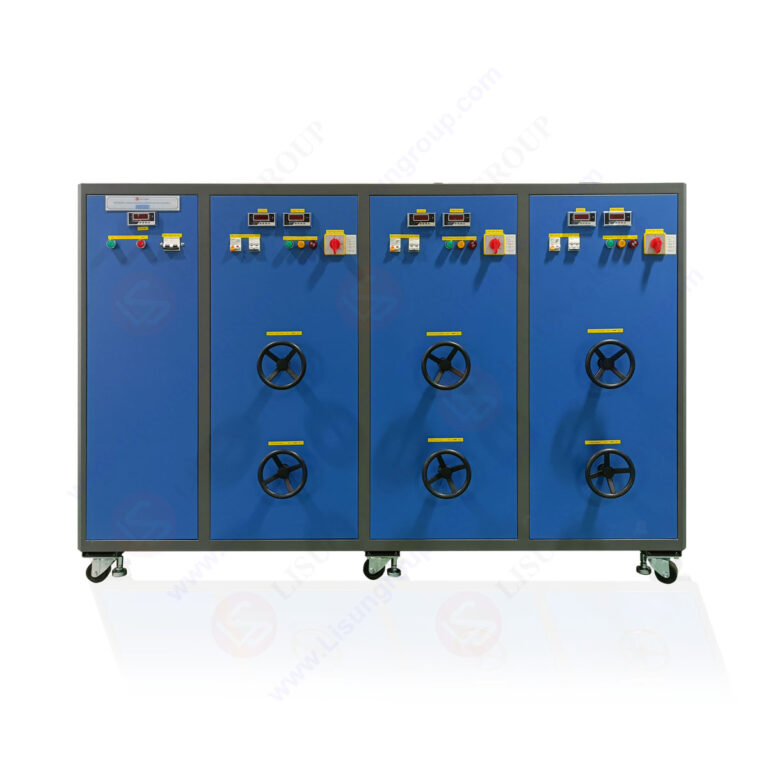
Modern electronic switches incorporating semiconductor devices require test loads that replicate the transient behavior of fluorescent lamps during startup and steady-state operation. The DFX series supports these tests by providing programmable inrush current profiles that match cold-start lamp ignition characteristics. Load capacitance values can be adjusted to simulate the effect of power factor correction capacitors found in many electronic ballasts. The load cabinet’s response time of under 1 millisecond ensures that electronic switch testing captures all relevant switching transients without measurement artifacts introduced by the load itself. This capability is essential for compliance with IEC 60669-2-1, which specifies specific test circuits for electronic switches controlling fluorescent lamp loads.
5.1 Compatibility with Life Test Systems
The DFX series integrates directly with LISUN CZKS series switch life testers, forming a complete automated testing solution for switch endurance evaluation. The CZKS life tester provides the mechanical actuation and cycle counting, while the DFX supplies the precisely defined electrical load required for each test cycle. Communication between the two systems occurs via dedicated control interfaces, with the life tester sending load selection commands and the load cabinet confirming load application status. This integration eliminates the need for manual load switching during extended endurance tests, improving both test consistency and laboratory productivity. The combined system can run unattended for weeks, with remote monitoring capabilities via Ethernet connectivity. System configuration files store load profiles matching specific product standards, allowing rapid test setup for different product types.
5.2 Bending Tester and Mechanical Test Integration
For comprehensive mechanical and electrical testing of wiring accessories, the DFX load cabinet works with LISUN SW-6 series bending testers used for flexing tests on cord sets and appliance connections. During bending tests per IEC 60884-1 Clause 21, the load cabinet provides continuous load current while the bending tester subjects the cord to repeated flexing cycles. The DFX’s ability to maintain stable load characteristics despite the dynamic conditions of the bending test ensures that electrical continuity monitoring remains accurate. The combined system detects intermittent failures such as broken conductors or insulation degradation that might not appear under static load conditions. Data logging from both systems synchronizes automatically, correlating mechanical cycles with electrical events for failure analysis.
5.3 End-to-End Workflow Example
A typical compliance testing workflow for wall switches begins with the DFX-20-3CH connected to a CZKS-3A life tester. The engineer selects the appropriate load configuration from pre-programmed settings corresponding to IEC 60669-1 Clause 19.2, specifying the 260W fluorescent lamp load with power factor 0.55. The life tester applies 10,000 mechanical operations at 0.5 Hz, while the DFX applies the specified load during each “on” cycle. The data acquisition system records contact resistance every 100 cycles and captures voltage waveforms during switching events. After completion, the system generates a compliance report indicating pass/fail status for each monitored parameter. This integrated approach reduces test cycle time by 40% compared to manual load setup and data collection methods.
6.1 Setup and Configuration Procedures
Initial setup of the DFX series requires connecting the load cabinet to a suitable power supply matching the input voltage range. The operator selects the desired load configuration using the front-panel rotary switches or via remote control, ensuring that the selected load matches the test standard requirements. For multi-channel models, each channel must be configured independently, though master-slave operation is available for synchronized testing. The load cabinet includes a calibration verification mode that tests each load element against stored reference values, alerting the operator to any deviation exceeding 2%. Standard operating procedure includes a 15-minute warm-up period to stabilize internal temperatures before starting critical compliance tests. The operator must verify that the test sample’s rated current does not exceed the maximum continuous current rating of the selected load channel.
6.2 Routine Maintenance Requirements
Monthly maintenance includes visual inspection of load resistors and inductors for signs of overheating or discoloration, cleaning of air filters, and verification of all safety interlocks. Quarterly calibration checks using an external reference meter ensure that load values remain within specifications. The load cabinet’s self-diagnostic routines can be initiated from the front panel, running automated checks on all load elements, measurement circuits, and communication interfaces. Component replacement is straightforward, with individual load modules designed for field replacement without requiring recalibration of the entire system. The forced-air cooling system requires filter cleaning every 5000 operating hours or when temperature rise indicates restricted airflow. All maintenance actions are logged within the instrument’s internal memory for quality management system documentation.
6.3 Troubleshooting Common Issues
Operators may encounter issues such as load value discrepancies caused by thermal drift in heavily loaded conditions, which can be resolved by allowing additional stabilization time. Communication failures between the DFX and external controllers typically result from incorrect cable connections or baud rate mismatches; the load cabinet supports baud rates from 9600 to 115200 bps. If overload conditions occur frequently, the operator should verify that the test sample’s electrical characteristics do not exceed the load cabinet’s specifications. The front-panel display provides diagnostic codes that identify specific fault conditions, ranging from thermal sensor failures to load element open circuits. The user manual includes comprehensive troubleshooting tables correlating symptoms with probable causes and recommended corrective actions.
7.1 Reproducibility and Test Consistency
The DFX series delivers exceptional test reproducibility through precision-component selection and thermal compensation. Load value repeatability exceeds 0.5% between test sessions, ensuring that compliance tests produce identical results regardless of ambient conditions or time of day. For laboratories conducting round-robin testing or inter-laboratory comparisons, this consistency is critical for maintaining accreditation. The load cabinet includes a test data logging function that records all load parameters at the start and end of each test session, providing auditable evidence of test conditions. Automated load verification at test initiation detects any configuration errors before testing begins, preventing invalid test runs.
7.2 Cost-Effectiveness and ROI Analysis
Compared to building custom load banks or using actual fluorescent lamps for testing, the DFX series offers significant cost advantages over a 5-year ownership period. A single DFX-20-3CH replaces three separate single-channel load banks, saving 40% in initial equipment costs and 60% in floor space. Operating costs are lower than real lamp loads because the DFX consumes approximately 30% less electrical energy for equivalent test conditions and eliminates consumable lamp replacement costs. Maintenance costs average 2% of initial purchase price annually, compared to 5-8% for custom load bank solutions. Laboratories performing more than 5000 compliance tests annually typically achieve payback within 18 months of DFX acquisition.
7.3 Future-Proofing Through Modular Design
The DFX series modular architecture allows laboratories to upgrade capability incrementally without purchasing entirely new systems. Additional load modules can be installed to expand current range or add channels, while firmware updates available via USB add new test protocols and communication interfaces. The load cabinet’s control software supports integration with laboratory information management systems (LIMS) through standard database interfaces, enabling automated test report generation. As international standards evolve, the DFX’s programmable load profiles can be updated to match new requirements, ensuring continued compliance without hardware modifications. This adaptability protects the laboratory’s investment against changing regulatory landscapes and emerging test methodologies.
The LISUN DFX series Externally Ballasted Fluorescent Lamp Test Load Cabinet provides a comprehensive solution for electrical accessory compliance testing, combining high-precision load simulation with multi-standard compliance capabilities. With current ranges from 20A to 80A, power factor adjustment from 0.3 inductive to 0.9 capacitive, and measurement accuracy better than ±0.5%, the series meets the rigorous demands of IEC 60669-1, IEC 60884-1, and corresponding GB standards. The professional fluorescent lamp load tester with 5A high-precision ballast load enables precise reproduction of ballasted lamp electrical characteristics for switch endurance testing, plug and socket evaluation, and electronic switch certification. Integration with LISUN life testers and bending testers creates end-to-end testing workflows that enhance laboratory productivity and data traceability. The modular design, field-upgradable configuration, and comprehensive calibration support ensure long-term value for testing laboratories and electrical product manufacturers. By providing consistent, reproducible test conditions that align with international standards, the DFX series reduces compliance risk and accelerates time-to-market for electrical accessories requiring certification.
Q1: What specific standards does the LISUN DFX series comply with for fluorescent lamp load testing?
A: The DFX series is designed to comply with IEC 60669-1 Clause 19.2 for switch endurance testing with fluorescent lamp loads, IEC 60884-1 Clause 20 for plug and socket-outlet testing, IEC 60669-2-1 for electronic switches, and GB/T 16915.1-2014 which is the Chinese national standard equivalent to IEC 60669-1. The load cabinet reproduces the exact electrical load characteristics specified in these standards, including power factor requirements of 0.55±0.05 for inductive loads and 0.9±0.05 for capacitive loads. Each standard references specific test circuits that the DFX series can configure within 10 seconds, and the built-in data logging system records all relevant parameters for compliance documentation. The equipment’s calibration is traceable to national standards, ensuring that test results are defensible during accreditation audits.
Q2: How does the DFX-20-3CH model improve testing efficiency compared to single-channel models?
A: The DFX-20-3CH model provides three independent test channels, each capable of delivering 0.1 to 20A continuously with individual load selection. For laboratories performing multi-sample testing, the three-channel configuration reduces total test time by up to 67% compared to sequential single-channel testing, as three samples can be tested simultaneously under identical or different load conditions. Each channel operates with independent monitoring and data logging, enabling separate pass/fail determination for each sample. The channel count is particularly valuable for round-robin testing, where multiple samples from different manufacturers must be evaluated under identical conditions. Additionally, the three-channel configuration allows simultaneous testing of different product ratings (e.g., 10A, 16A, and 20A switches) without requiring load reconfiguration between runs, further improving laboratory throughput.
Q3: What maintenance is required to keep the DFX load cabinet operating within specifications?
A: The DFX series requires monthly inspection of load resistors and inductors for signs of overheating or discoloration, quarterly calibration verification using an external reference meter, and annual factory recalibration to maintain published accuracy specifications. The forced-air cooling system requires filter cleaning every 5000 operating hours or when temperature rise indicates restricted airflow. The load cabinet’s self-diagnostic routines should be run weekly to detect any component degradation before it affects test results. Component replacement for individual load modules is straightforward, with field-replaceable units that do not require recalibration of the entire system. All maintenance actions are logged in the instrument’s internal memory for quality management system documentation. The user manual provides comprehensive maintenance schedules and procedures, and LISUN offers extended service contracts for laboratories requiring additional support.
Q4: Can the DFX series be integrated with existing automated test systems from other manufacturers?
A: Yes, the DFX series supports multiple communication interfaces including RS-232, optional GPIB, and Ethernet with Modbus RTU protocol for integration with third-party test systems. The load cabinet accepts ASCII command strings for load selection, current monitoring, and status interrogation, allowing custom automation scripts to control the DFX from any programming language or test executive software. Standard commands include SET_LOAD (select load configuration), GET_CURRENT (read actual test current), and GET_POWER_FACTOR (read power factor value). The communication protocol documentation provides complete command set specifications for system integrators. For laboratories using National Instruments LabVIEW or similar platforms, example code and driver libraries are available upon request. Integration testing with specific third-party systems can be arranged through LISUN’s applications engineering team.
Q5: How does the DFX series handle inrush current requirements for switch testing?
A: The DFX series is specifically designed to handle the high inrush currents characteristic of fluorescent lamp loads during switch testing. The load cabinet can sustain peak currents up to 50 times the rated continuous current for durations up to 20 milliseconds, exceeding IEC 60669-1 Clause 19.2 requirements which specify 20 times rated current for 10 milliseconds. This capability is achieved through specialized inductor core materials that maintain saturation characteristics under high-current conditions and transient-rated capacitors in the power factor correction network. The load cabinet’s current monitoring system captures inrush waveforms with 100 μs sampling resolution, enabling detailed analysis of switch contact performance during the critical first few milliseconds of closure. For switches rated at 5A, the DFX can deliver inrush currents exceeding 250A peak, which is essential for testing switches controlling multiple fluorescent lamps.