









This technical article, Temperature Chamber vs Humidity Chamber: Key Technical Differences Explained, provides a comprehensive analysis for LED testing professionals navigating accelerated aging and reliability validation. While both chamber types are critical for evaluating solid-state lighting durability, their distinct operational principles, standard compliance requirements, and application scopes demand clear differentiation. For LED manufacturers and third-party testing laboratories, understanding these differences directly impacts test accuracy, cost efficiency, and adherence to IES standards such as LM-80 and TM-21. The LISUN LED Optical Aging Test Instrument series, including the LEDLM-80PL and LEDLM-84PL variants, offers dual system configurations that integrate temperature and humidity control within a single platform. This article explores technical distinctions, hardware specifications, standard alignment, and practical implementation strategies, supported by numerical data and comparative tables. Readers will gain actionable insights for selecting appropriate test environments and optimizing lumen maintenance testing protocols.
1.1 Temperature Chamber Operating Principles
Temperature chambers, also known as thermal chambers, precisely control ambient temperature within enclosed environments for accelerated aging tests. These systems rely on resistive heating elements and mechanical refrigeration to achieve set points ranging from -40°C to +150°C, with typical stability tolerances of ±0.5°C. In LED lumen maintenance testing per IES LM-80, temperature chambers maintain constant conditions at 55°C, 85°C, or customized set points over 6000-hour durations. The LISUN LEDLM-80PL supports up to three connected temperature chambers, enabling simultaneous testing of multiple LED sample sets under identical thermal profiles. Temperature chambers lack active humidity control, making them unsuitable for tests requiring moisture exposure.
1.2 Humidity Chamber Operating Principles
Humidity chambers, or environmental chambers, combine temperature control with relative humidity regulation, typically ranging from 20% to 98% RH. These systems employ steam generators or ultrasonic humidifiers coupled with dehumidification coils to maintain precise moisture levels. For LED reliability testing, humidity chambers simulate tropical or high-moisture environments per standards like IES LM-84, which may require combined temperature and humidity stress. Humidity chambers are essential for assessing corrosion, delamination, and moisture-induced failures in LED packages. However, their increased mechanical complexity results in higher operational costs and longer stabilization times compared to temperature-only chambers.
1.3 Core Application Differentiators
The primary Temperature Chamber vs Humidity Chamber: Key Technical Differences Explained centers on environmental control scope. Temperature chambers are optimized for thermal-only aging, critical for Arrhenius Model-based lumen depreciation analysis. Humidity chambers extend capability to moisture stress, but introduce condensation risks and calibration complexities. For LED testing, LM-80 mandates temperature-only conditions, while LM-84 may incorporate humidity for specific application profiles. LISUN’s dual-system approach allows seamless switching between configurations, minimizing equipment redundancy.
2.1 LEDLM-80PL Configuration for LM-80/TM-21
The LISUN LEDLM-80PL is specifically designed for IES LM-80 and TM-21 standard compliance. This variant operates purely as a temperature chamber, supporting up to three interconnected thermal units. Key specifications include:
- Temperature range: 20°C to 150°C, accuracy ±0.5°C
- Channel capacity: Up to 12 independent test channels per chamber
- Test duration: 6000 hours minimum per LM-80 protocol
- Data acquisition: Lumen and color temperature recording every 1000 hours
- Software: Arrhenius Model-based extrapolation for L70/L50 projections
This configuration eliminates humidity variables, ensuring pure thermal aging data for reliable TM-21 extrapolation.
2.2 LEDLM-84PL Configuration for LM-84/TM-28
The LEDLM-84PL variant addresses IES LM-84 and TM-28 standards, incorporating both temperature and humidity control. This system supports:
- Temperature range: 20°C to 100°C, accuracy ±0.5°C
- Humidity range: 30% to 95% RH, accuracy ±3% RH
- Dual test modes: Constant temperature/humidity or cyclic profiles
- Sample capacity: Up to 8 samples per chamber with humidity monitoring
- Software: TM-28 extrapolation algorithms for hybrid stress aging
The LEDLM-84PL is essential for evaluating LED performance under combined thermal and moisture stress, as required for outdoor or high-humidity applications.
2.3 Customizable Hardware Configurations
Both variants offer modular upgrades, including integrating sphere photometers (e.g., LISUN LMS-9000) for in-situ optical measurements. Users can configure chamber size, sample board layouts, and data logging intervals. The dual-system platform reduces capital expenditure by allowing laboratories to purchase one base system and add humidity modules as needed.
3.1 IES LM-80 and TM-21: Temperature-Only Framework
IES LM-80 specifies temperature chamber testing for LED lumen maintenance at three temperatures (typically 55°C, 85°C, and a third user-defined point) over 6000 hours. TM-21 uses Arrhenius Model extrapolation to project L70 (70% lumen maintenance) and L50 (50% lumen maintenance) lifetimes. Temperature chambers exclusively meet LM-80 requirements because humidity effects are not considered in standard thermal aging models. The LISUN LEDLM-80PL directly supports this framework with precise thermal control and automated data collection.
3.2 IES LM-84 and TM-28: Humidity-Integrated Standards
IES LM-84 extends testing scope to include humidity, allowing for combined temperature and moisture stress. TM-28 provides extrapolation methods for hybrid aging profiles. Humidity chambers are mandatory for LM-84 compliance, as moisture accelerates failure mechanisms like phosphor degradation and solder joint corrosion. The LEDLM-84PL’s humidity control enables simultaneous testing under multiple RH conditions, aligning with TM-28’s requirement for variable stress modeling.
3.3 Supporting Standards: LM-79-19, CIE 084, CIE 70, CIE 127
IES LM-79-19 governs photometric testing of solid-state lighting, requiring integrating sphere or goniophotometer measurements under controlled ambient conditions. While not directly specifying chambers, LM-79-19 emphasizes temperature stabilization during optical tests. CIE 084 and CIE 70 provide general guidelines for luminance measurement and light source characterization. CIE 127 defines LED intensity measurement methodologies. Temperature and humidity chambers indirectly support these standards by ensuring reproducible test environments.
4.1 Parameter-Level Comparison Table
| Parameter | Temperature Chamber (LEDLM-80PL) | Humidity Chamber (LEDLM-84PL) |
|---|---|---|
| Temperature Range | -40°C to +150°C | 20°C to 100°C |
| Temperature Stability | ±0.3°C | ±0.5°C |
| Humidity Range | Not applicable | 30% to 95% RH |
| Humidity Stability | Not applicable | ±3% RH |
| Ramp Rate (Heating) | 3°C/min typical | 1.5°C/min typical |
| Cooling Method | Mechanical refrigeration | Mechanical refrigeration + dehumidifier |
| Typical Test Duration | 6000 hours (LM-80) | 6000 hours (LM-84) |
| Max Connected Chambers | 3 | 2 |
| Sample Capacity | Up to 12 channels | Up to 8 channels |
| Standards Compliance | LM-80, TM-21 | LM-84, TM-28 |
| Software | Arrhenius Model extrapolation | TM-28 hybrid extrapolation |
| Typical Power Consumption | 2.5 kW | 4.0 kW |
| Stabilization Time | 15 minutes | 45 minutes |
4.2 Cost and Maintenance Implications
Humidity chambers incur 30-40% higher initial cost and 50% greater maintenance due to humidification systems, sensors, and condensation management. Temperature chambers offer lower total cost of ownership for LM-80 testing. However, for laboratories requiring LM-84 compliance, humidity chambers are indispensable. LISUN’s dual-system approach mitigates cost by enabling modular upgrades.
4.3 Test Data Integrity Considerations
Temperature chambers maintain stable conditions without humidity interference, ensuring repeatable lumen depreciation data for Arrhenius Model calculations. Humidity chambers introduce potential data noise from condensation on photometric sensors, necessitating careful calibration. LISUN’s optical aging instruments integrate real-time monitoring to detect anomalous humidity effects.
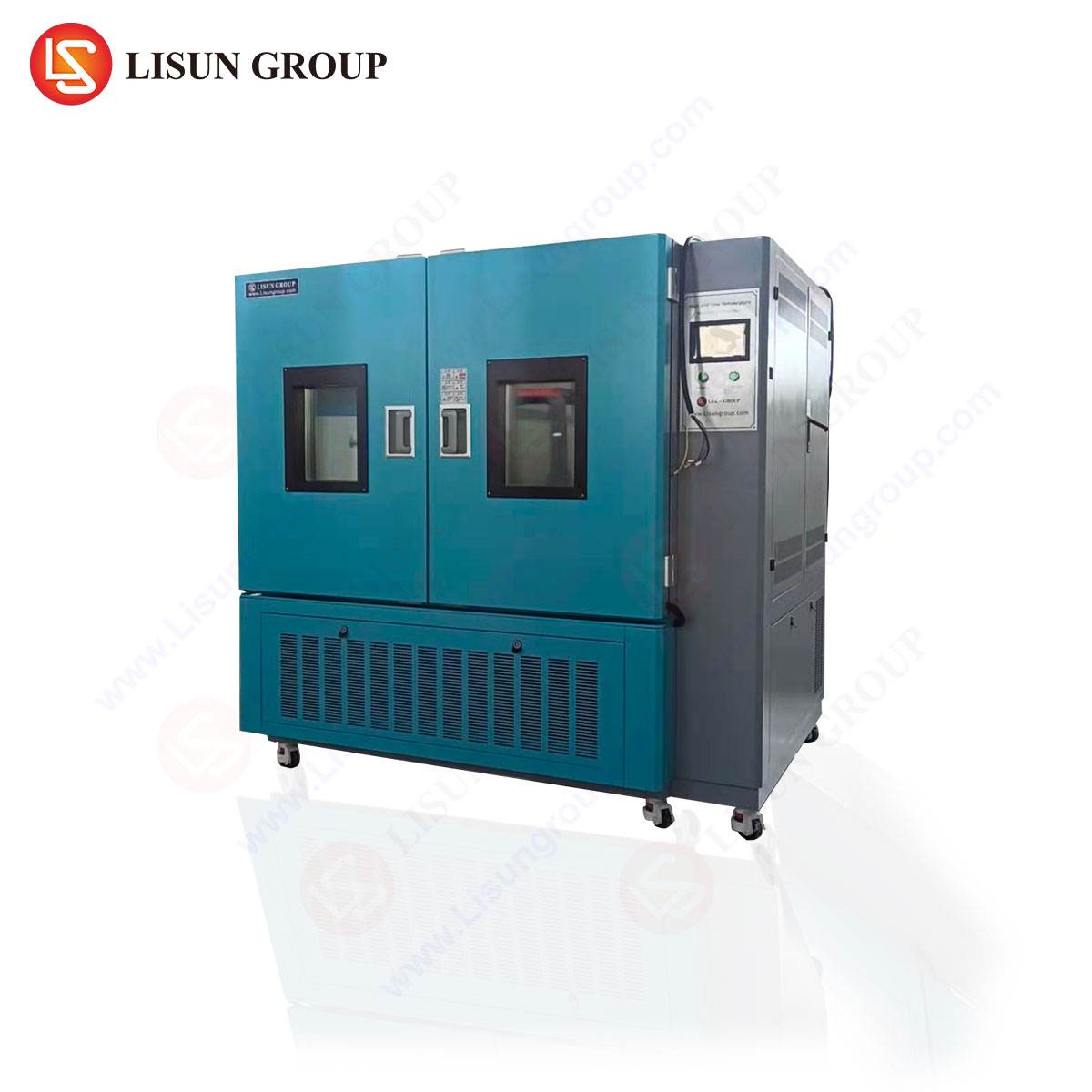
5.1 Constant Temperature/Humidity Mode
Constant mode maintains fixed set points for the entire test duration, standard for LM-80 (temperature) and basic LM-84 profiles. This mode simplifies data analysis and supports Arrhenius Model fitting. The LISUN software records lumen degradation at prescribed intervals (e.g., 0, 1000, 2000, 3000, 4000, 5000, 6000 hours) for each channel.
5.2 Cyclic Mode for Accelerated Aging
Cyclic mode alternates between temperature/humidity set points to simulate real-world thermal cycling (e.g., 85°C/85% RH for 12 hours, then 25°C/50% RH for 12 hours). This mode is critical for evaluating LED resilience to thermal expansion and moisture absorption. LISUN instruments support user-defined cycle profiles with up to 10 segments per cycle, enabling customized stress testing.
5.3 Application-Specific Mode Selection
Temperature chambers are adequate for constant mode LM-80 tests. Humidity chambers enable both constant and cyclic modes, essential for LM-84 and TM-28 compliance. Choosing the correct mode depends on target application environment: indoor (constant temperature) vs outdoor or automotive (cyclic temperature/humidity).
6.1 Arrhenius Model Application in Temperature Chambers
The Arrhenius Model relates aging temperature to reaction rate, allowing extrapolation of lumen maintenance from accelerated tests to real-world conditions. For example, testing at 85°C (358 K) with activation energy (Ea) of 0.7 eV yields an acceleration factor of approximately 10x compared to 55°C operation. LISUN software automates Arrhenius calculations, producing L70 and L50 projections with confidence intervals. This model assumes temperature-only stress, making humidity chambers incompatible without modification.
6.2 TM-21 Extrapolation from LM-80 Data
TM-21 uses LM-80 data to project lumen maintenance beyond 6000 hours, typically to 36,000 or 60,000 hours. The formula involves exponential decay fitting: Φ(t) = Φ₀ × exp(-αt), where α is derived from Arrhenius Model. Temperature chamber data provides clean datasets for this fitting. LISUN’s LEDLM-80PL outputs TM-21 compliant reports with 6,000, 10,000, and 30,000 hour projections.
6.3 TM-28 Extrapolation for Hybrid Stress
TM-28 extends TM-21 methodology to include humidity effects, using a modified Arrhenius-Humidity Model: lifetime ∝ exp(Ea/kT + b·RH). Humidity chambers provide necessary RH data points (e.g., 85°C/85% RH, 60°C/90% RH) for parameter fitting. LISUN’s LEDLM-84PL software supports TM-28 regression with goodness-of-fit metrics.
7.1 Selecting the Appropriate Chamber Type
For laboratories focused on LM-80/TM-21 compliance, temperature chambers (LEDLM-80PL) are sufficient and cost-effective. Facilities requiring LM-84/TM-28 testing for outdoor or automotive LED products need humidity chambers (LEDLM-84PL). LISUN’s dual-system approach allows incremental investment: start with temperature chambers, add humidity modules later.
7.2 Sample Preparation and Mounting
Temperature chambers require LED samples mounted on heat sinks compliant with LM-80 specifications (e.g., 3000 mm² heat sink area per sample). Humidity chambers necessitate additional sealing against moisture ingress, with sample board conformal coating recommended. Both chamber types support standard 2-inch x 4-inch test boards.
7.3 Data Management and Reporting
LISUN software centralizes data from up to 3 connected chambers, generating automated reports with lumen maintenance curves, TM-21/TM-28 projections, and uncertainty analysis. This streamlines quality control documentation for ISO/IEC 17025 accreditation.
8.1 Integration of Real-Time Photometric Monitoring
Advancements in integrating sphere technology enable in-situ lumen and color measurements during aging tests, reducing handling errors. LISUN’s LMS-9000 series can be integrated with both chamber types for continuous monitoring.
8.2 AI-Driven Predictive Maintenance
Machine learning algorithms analyze chamber sensor data (temperature, humidity, power consumption) to predict failures and optimize test schedules. This reduces downtime in high-throughput laboratories.
8.3 Standard Evolution: LM-80 Revision and Humidity Inclusion
Emerging revisions to IES LM-80 may incorporate humidity as an optional parameter, blurring the Temperature Chamber vs Humidity Chamber: Key Technical Differences Explained. LISUN’s modular platform positions laboratories for future compliance without full equipment replacement.
The Temperature Chamber vs Humidity Chamber: Key Technical Differences Explained article highlights that the fundamental distinction lies in environmental control scope: temperature chambers optimize thermal-only aging for LM-80/TM-21 conformity, while humidity chambers extend capability to moisture stress for LM-84/TM-28 standards. LISUN’s LED Optical Aging Test Instrument dual-system variants, LEDLM-80PL and LEDLM-84PL, provide targeted solutions for each requirement, supporting up to 3 connected chambers and customizable test modes. For LED manufacturers and testing laboratories, selecting the appropriate chamber type directly impacts test accuracy, standard compliance, and operational costs. Temperature chambers offer simplicity and cost efficiency for pure thermal aging, whereas humidity chambers address application-specific reliability challenges. The Arrhenius Model-based software and automated extrapolation features ensure robust L70/L50 projections. By aligning equipment selection with industry standards and future trends, professionals can enhance product validation, reduce time-to-market, and maintain regulatory compliance. LISUN’s integrated platform represents a strategic investment for optimizing LED reliability testing workflows.
Q1: What is the primary difference between a temperature chamber and a humidity chamber for LED testing?
A: The primary difference is the environmental parameter controlled. Temperature chambers regulate only ambient temperature (typical range -40°C to +150°C), making them ideal for IES LM-80 and TM-21 lumen maintenance testing where thermal stress alone is evaluated. Humidity chambers additionally control relative humidity (20% to 98% RH), enabling combined temperature and moisture stress testing per IES LM-84 and TM-28. For LED applications, choosing between them depends on the target failure mechanism: thermal aging (temperature chamber) or moisture-induced degradation (humidity chamber). LISUN’s LEDLM-80PL and LEDLM-84PL variants provide dedicated solutions for each, with the latter capable of cyclic profiles for realistic environmental simulation. Cost, stabilization time, and maintenance also differ, with humidity chambers being more complex and expensive.
Q2: Can I use a temperature chamber for LM-84 testing?
A: No, standard IES LM-84 testing requires controlled humidity exposure, which a temperature chamber cannot provide. LM-84 specifies combined temperature and relative humidity conditions (e.g., 85°C/85% RH) to assess moisture-related failures such as phosphor degradation, solder joint corrosion, and encapsulant delamination. A temperature chamber only regulates thermal stress, thus failing to meet LM-84 requirements. However, if testing is limited to thermal-only aging per LM-80, a temperature chamber is sufficient. LISUN’s LEDLM-84PL is specifically designed for LM-84 compliance, offering precise humidity control and TM-28 extrapolation software. For laboratories needing both capabilities, LISUN’s modular system allows switching between temperature-only and humidity-enhanced configurations.
Q3: How do L70 and L50 metrics differ between temperature and humidity chamber testing?
A: L70 and L50 represent lumen maintenance thresholds (70% and 50% of initial output, respectively). In temperature chamber testing (LM-80/TM-21), these metrics are projected using the Arrhenius Model, which assumes thermal stress as the primary accelerator of degradation. Typical L70 values for quality LEDs at 85°C range from 30,000 to 50,000 hours. In humidity chamber testing (LM-84/TM-28), L70 and L50 are projected using a modified Arrhenius-Humidity Model, where humidity reduces lifetime expectancy. For example, at 85°C/85% RH, L70 may drop to 10,000-20,000 hours due to accelerated moisture effects. LISUN’s software automates both calculations, providing confidence intervals and comparative analysis between thermal-only and hybrid stress conditions.
Q4: What is the significance of 6000-hour test durations in LED aging?
A: IES LM-80 mandates a minimum test duration of 6000 hours (approximately 8.3 months) to generate sufficient lumen depreciation data for reliable TM-21 extrapolation. This duration captures the early failure period (infant mortality) and the steady-state degradation phase, enabling accurate exponential decay model fitting. Shorter tests (e.g., 3000 hours) may lead to overestimated L70 projections due to incomplete degradation data. LISUN’s LED Optical Aging Test Instruments are designed for continuous 6000-hour operation with minimal drift, supporting up to 3 chambers for parallel testing. For humidity chamber testing per LM-84, 6000 hours is also standard, though accelerated conditions (higher RH) may reduce required duration.
Q5: How does LISUN’s dual-system approach reduce laboratory costs?
A: LISUN’s dual-system architecture (LEDLM-80PL and LEDLM-84PL) allows laboratories to purchase one base platform and add humidity modules as testing requirements evolve. This modular approach reduces initial capital expenditure by 30-40% compared to buying separate temperature and humidity chambers. The system also supports up to 3 connected chambers (temperature) or 2 chambers (humidity), optimizing floor space and electrical infrastructure. Software is unified for both configurations, eliminating training redundancy. For laboratories transitioning from LM-80 to LM-84 compliance, LISUN’s platform provides a clear upgrade path without equipment replacement, minimizing downtime and accelerating return on investment.