









Here is the comprehensive technical article generated according to your specifications.
Abstract
Understanding the nuanced differences between Damp Heat vs Constant Humidity: Key Testing Differences | LISUN is critical for accurate LED reliability validation. This article dissects the distinct failure mechanisms accelerated by each stressor, contrasting the corrosion-driven degradation from cyclic damp heat against the photometric lumen depreciation observed under steady-state humidity. We explore how the LISUN LEDLM-80PL and LEDLM-84PL optical aging test instruments, equipped with dual-mode capabilities and Arrhenius Model software, enable precise simulation of both environments. By integrating standards like IES LM-80, IES LM-84, and TM-21, this technical analysis provides engineers with a data-driven framework to select the correct test protocol, ensuring robust product longevity predictions for solid-state lighting.
1.1 The Necessity of Accelerated Aging
The long operational life of LEDs, often exceeding 50,000 hours, renders real-time testing impractical for product development and certification. Accelerated aging tests, governed by standards like IES LM-80 and LM-84, apply controlled stressors to expedite failure mechanisms. These stressors primarily include elevated temperature, constant humidity, and cyclic damp heat. Understanding which stressor to apply and how to interpret the results is paramount for predicting the useful life of a lighting product using extrapolation models like TM-21 and TM-28.
1.2 Differentiating Environmental Stressors
The core distinction between Damp Heat (typically defined as 85°C / 85% RH in a cyclic or non-cyclic pattern) and Constant Humidity (often 85°C / 85% RH or 60°C / 90% RH in a steady state) lies in the failure mechanism they target. Damp heat tests often involve thermal cycling and condensation, which accelerates physical failures like solder joint cracking, delamination, and corrosion of metal components. Constant humidity tests, conversely, primarily focus on the chemical degradation of the phosphor and encapsulant materials, which directly manifests as lumen depreciation and color shift. The LISUN LEDLM series systems are engineered to handle both these distinct profiles.
2.1 Dual System Variants: LEDLM-80PL vs. LEDLM-84PL
The LISUN platform is bifurcated to align with two primary industry standards: the LEDLM-80PL for IES LM-80 / TM-21 testing and the LEDLM-84PL for IES LM-84 / TM-28 testing. While both systems measure high-power and component-level LEDs, their primary distinction lies in test bed configuration and measurement methodology. The LEDLM-80PL is optimized for the rigorous 6,000-hour minimum test duration with specific viewing angle and current requirements, supporting up to 3 connected temperature chambers. The LEDLM-84PL is designed for the newer, faster LM-84 protocol, often using integrating sphere measurements for total luminous flux, and can accommodate larger sample sizes including SSL modules.
2.2 Core Hardware and Environmental Control
Both systems feature a highly stable DC power supply with continuous monitoring to maintain the specified drive current (e.g., 350mA, 500mA) within ±0.5%. The environmental control is precise, with temperature chambers capable of maintaining a set point of 85°C ± 2°C and relative humidity of 85% ± 5% RH. For damp heat testing, the system integrates a programmable logic controller to execute the cyclic profile defined by the user, moving from a high humidity hot state to a condensation phase. The core photometric measurement is performed via a high-speed spectral array detector, allowing for simultaneous measurement of up to 20 channels per test board.
2.3 Key Numerical Data for Reliability Testing
The following table outlines the critical specifications for the LISUN LEDLM-80PL system, demonstrating its capability for both Damp Heat and Constant Humidity testing.
| Specification | LEDLM-80PL (LM-80 / TM-21) | LEDLM-84PL (LM-84 / TM-28) |
|---|---|---|
| Primary Standard | IES LM-80, TM-21 | IES LM-84, TM-28 |
| Test Duration | Min. 6,000 hours | Min. 3,000 hours |
| Sample Size per Chamber | 20 (Component & Module) | 10 (SSL Module & Array) |
| Photometric Method | Goniometer or Integrating Sphere | Integrating Sphere |
| Temperature Control | Up to 3 Chambers (85°C / 85% RH) | 1 or 2 Chambers (85°C / 65°C) |
| Metric | L70, L50, L90 (via TM-21) | L70, L50 (via TM-28) |
| Humidity Modes | Constant & Cyclic (Damp Heat) | Constant & Cyclic (Damp Heat) |
3.1 Failure Mechanisms: Solder Joint Reliability and Delamination
Damp heat testing is not merely about humidity; it is about the thermal and mechanical stress from cycling. In a typical 24-hour cycle, the temperature and humidity rise from ambient to 85/85, hold for a defined period (e.g., 20 hours), and then drop rapidly, causing condensation. This condensation accelerates corrosion of lead frames and can cause electrolytic migration between adjacent terminals. Furthermore, the mismatch in coefficients of thermal expansion (CTE) between the silicone encapsulant, the LED die, and the substrate silver-loaded epoxy leads to delamination. The LISUN system’s ability to precisely control the ramp rate and the condensation phase is critical for reproducing these failures.
3.2 Application of the LISUN System for Cyclic Protocols
The LISUN software, based on the Arrhenius Model, allows engineers to define the Damp Heat profile in alignment with standards like IEC 60068-2-30 (Test Db). Within the LEDLM-80PL setup, a user can program the temperature chamber to run specific cycles. The system automatically pauses photometric measurements during the condensation phase (as condensation on the photodetector would yield erroneous data), resuming only after the chamber returns to a steady state. This intelligent measurement gating prevents data contamination. The final data set is used to generate a L70/L50 extrapolation that includes a “corrosion acceleration factor,” separate from the “temperature acceleration factor.”
4.1 Failure Mechanisms: Lumen Depreciation and Color Shift
Constant humidity testing, typically at 85°C / 85% RH without cycling, is a primary stressor for quantifying lumen depreciation due to phosphor conversion efficiency loss. The constant presence of moisture at high temperature catalyzes the hydrolysis of the organic and silicone-based encapsulants, turning them yellow or brown. This directly reduces Light Output. Additionally, the moisture can cause the phosphor (typically YAG:Ce) to convert to a less efficient state or suffer from surface oxidation. The LISUN system’s CIE 127:2007 compliance ensures that color shift (Δu’v’) is simultaneously tracked alongside lumen decay, providing a complete picture of the degradation.
4.2 Using the Arrhenius Model for Extrapolation
The LISUN software employs a multi-stress Arrhenius Model to extrapolate the lumen maintenance life. For Constant Humidity tests, the model incorporates the humidity acceleration factor (h) alongside the temperature activation energy (Ea). The software allows the user to input multiple temperature sets (e.g., 55°C, 65°C, 85°C at 85% RH) to statistically derive the acceleration parameters. This is crucial for TM-21 extrapolation, which requires data from at least two different case temperatures. The software automatically calculates the confidence intervals and provides the L70 value, accepted by the Energy Star and DesignLights Consortium (DLC) for program compliance. The system supports up to 3 temperature chambers to run these parallel stress conditions simultaneously.
5.1 When to Use Damp Heat vs. Constant Humidity
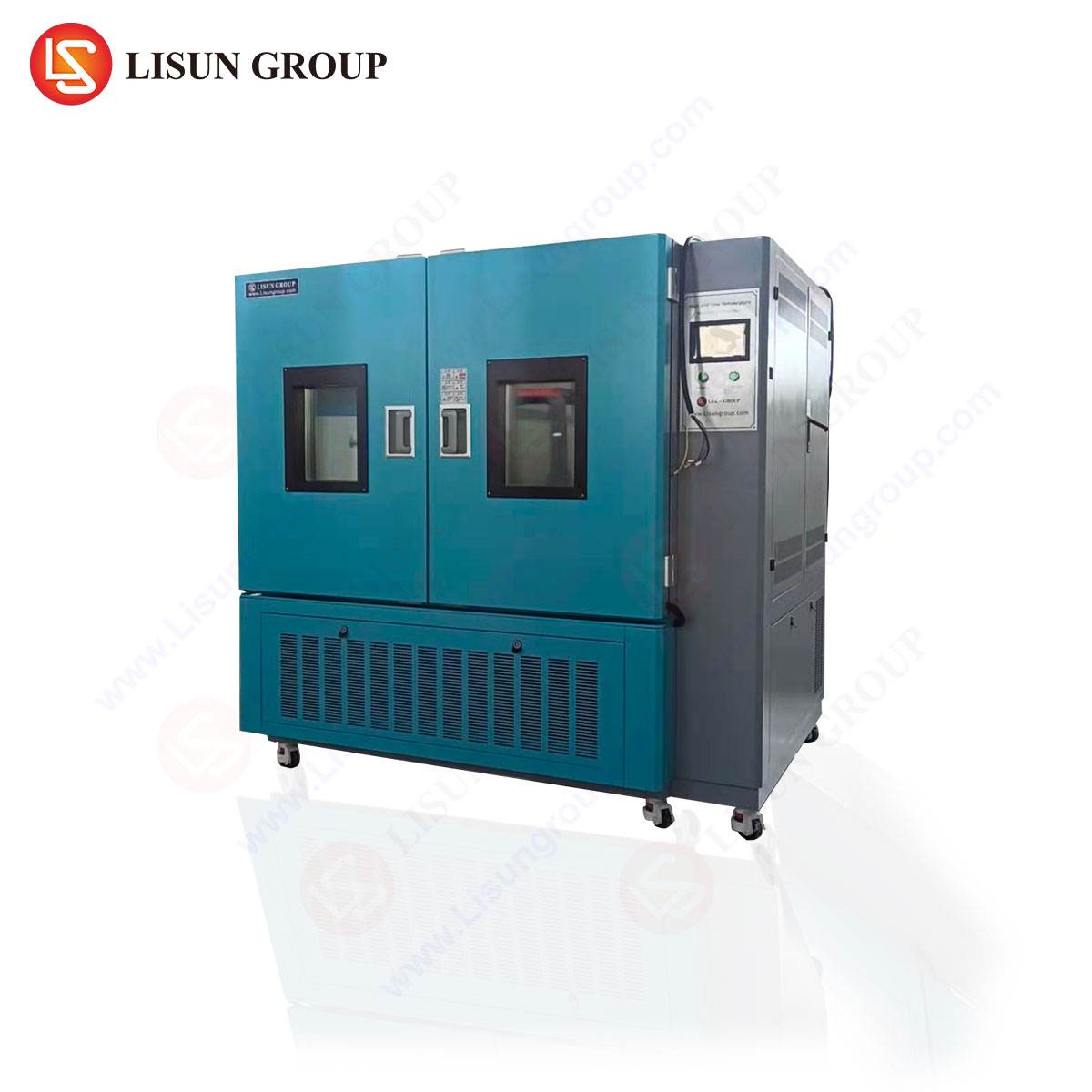
The decision matrix for an engineer is based on the primary failure mode of interest:
- Choose Damp Heat (Cyclic) when: The product is intended for outdoor, high-condensation environments (e.g., street lighting, automotive headlamps, marine applications). The focus is on inter-connect reliability, solder joint integrity, and housing seal performance.
- Choose Constant Humidity (Steady State) when: The product is intended for dry, indoor applications (e.g., commercial panels, downlights, T8 tubes). The focus is on the purity of the raw materials, the quality of the phosphor formulation, and the stability of the encapsulant.
A robust qualification program often requires both tests. A product might pass Constant Humidity (good phosphor) but fail Damp Heat (poor solder joints), revealing a design flaw that would be missed with a single test.
5.2 Interpreting Results: L70, L50, and TM-21 Delta
Results from both tests must be interpreted carefully. The TM-21 standard provides guidance on extrapolating lumen maintenance. For Constant Humidity tests, the extrapolation limit is often 6x the test duration. For a 6,000-hour test, this allows an L70 claim of up to 36,000 hours. However, for Damp Heat tests, the extrapolation factor is often more conservative due to the stochastic nature of condensing failures. The LISUN software automatically checks data normality and applies the correct statistical methods. Furthermore, the standard CIE 127 / CIE 084 color measurement ensures that the data for the entire IES LM-80 or LM-84 report is valid.
6.1 Dual-Mode Functionality of the LISUN System
The LISUN LEDLM-80PL and LEDLM-84PL are not single-purpose instruments. They feature a Dual Testing Mode that allows the operator to switch between Constant Humidity and Damp Heat protocols without changing the core hardware. This is achieved via the software-defined temperature chamber controller. The operator simply selects the test profile from a library.
| Feature | Constant Humidity Mode | Damp Heat (Cyclic) Mode |
|---|---|---|
| Temperature Profile | Flat line at 85°C | Cyclic (e.g., 25°C to 85°C) |
| Humidity Profile | Constant 85% RH | Variable (85% RH, followed by 95%+ during condensation) |
| Test Duration | 6,000 / 10,000 hours | 500 to 1,000 cycles |
| Primary Metric | Lumen Depreciation (LM-80) | Mechanical Failure Rate (Visual / Electrical) |
| Measurement Intervals | Every 1,000 hours | At end of each temperature hold |
6.2 Customizable Hardware for Specific Test Needs
Customization is a key feature of the LISUN offering. The system can be configured with:
- Specific Board Designs: Custom test boards for COB, SMD, or high-power LEDs with proprietary footprints.
- Variable Count Channels: Support for 20 to 200 channels, allowing simultaneous testing of multiple product families.
- External Chamber Integration: The ability to connect up to 3 different brands of environmental chambers, ensuring the control and measurement are centralized on the LISUN platform.
This flexibility allows the user to simulate a wide range of conditions, from the steady-state of a warehouse troffer to the harsh Damp Heat of a tropical streetlight. The system’s software logs all parameters, ensuring full traceability for the final report.
7.1 Adherence to IES LM-80 and TM-21
The LISUN system is built to fully comply with the IES LM-80-15 standard, which mandates specific test duration, sample size (minimum 20 units per test condition), and measurement intervals. The LEDLM-80PL is configured to ensure the photometric measurement repeatability is within ±1% over the 6,000-hour test. The integrated TM-21 software automatically handles the 55°C, 85°C, and optional third temperature dataset. This ensures the reported L70 is not just a number but a statistically sound prediction, meeting the stringent requirements of the DLC.
7.2 Application of IES LM-84 and TM-28
For large SSL modules and luminaires, the LISUN LEDLM-84PL aligns with the IES LM-84 standard. This protocol is faster and often uses an integrating sphere for total flux measurement. The system supports the TM-28 project method, which is often used for testing to LM-84. By using the integrating sphere in conjunction with the temperature chambers, the LEDLM-84PL provides an accurate L70 value for the complete lighting assembly, including the driver and thermal management system.
7.3 Reference to Other Core Standards
The instrumentation is also designed to meet the specifications of:
- IES LM-79-19: For the electrical and photometric measurements of solid-state lighting products.
- CIE 127: For the measurement of LEDs, specifically defining the “Average LED Intensity” concept.
- CIE 084: For the measurement of luminous flux.
- CIE 70: For the measurement of absolute spectral distribution.
These standards guarantee that the photometric data collected during the Damp Heat or Constant Humidity tests is accurate, traceable, and globally accepted by lighting authorities.
The distinction between Damp Heat vs Constant Humidity: Key Testing Differences | LISUN is not merely academic; it is a practical engineering decision that directly impacts product reliability and time-to-market. While Constant Humidity tests expose weaknesses in phosphor and encapsulant chemistry, Damp Heat tests reveal vulnerabilities in the mechanical and electrical architecture of the LED package. The LISUN LEDLM-80PL and LEDLM-84PL systems, with their dual-mode capability, precise environmental control, and compliance with IES LM-80, TM-21, and other core standards, provide the definitive solution for conducting both tests with a single platform. By leveraging the Arrhenius Model-based software and extensive customization options, engineers can design more robust products and generate the high-confidence lifetime projections demanded by today’s regulatory environment. Investing in the correct test methodology is the first step toward ensuring long-term luminaire performance.
Q1: What are the typical failure signatures we should look for in our LED samples during a Damp Heat test that are different from a Constant Humidity test?
A: In a Damp Heat test, which involves thermal cycling and condensation, the primary failure signatures are often electrical or visual, rather than purely photometric. You should look for intermittent electrical opens or short circuits, indicative of solder joint cracking or bond wire fatigue. Visually, look for delamination of the silicone material from the substrate or LED die, often appearing as a silver or dark ring around the die (corrosion of the silver plating). In contrast, Constant Humidity tests primarily produce a steady, measurable drop in light output and a characteristic yellowing of the encapsulant. A sudden catastrophic failure (LED dies completely dark) is more common in Damp Heat, while a gradual decay is typical of Constant Humidity.
Q2: How does the LISUN system handle the measurement of color shift (Δu’v’) during these humidity tests, particularly since LM-80 and TM-21 focus on lumen maintenance?
A: While LM-80 mandates lumen maintenance reporting, both LM-80 and the newer LM-84 strongly recommend reporting color shift. The LISUN system simultaneously captures spectral data, not just photometric flux. The included software, compliant with CIE 127 and CIE 84, calculates chromaticity coordinates (u’, v’) for every measurement interval. During a Constant Humidity test, the system tracks the Δu’v’ shift, which is critical for applications like retail or museum lighting where color consistency is key. For Damp Heat tests, a large, sudden shift in color often precedes the catastrophic failure of the LED, providing an early warning signal. The report generation module automatically calculates and plots this data, ensuring your report exceeds the minimum requirements.
Q3: Our product is rated for an L70 of 50,000 hours. We are using the LISUN LEDLM-80PL for testing. Can using the Damp Heat protocol shorten the test time, as it crashes faster?
A: No. This is a critical distinction. While Damp Heat tests often cause failures faster than Constant Humidity tests, these failures (corrosion, delamination) are typically mechanical and not suitable for the same TM-21 extrapolation. The TM-21 standard is designed for thermally-activated lumen depreciation, which is best characterized by a stable, high-temperature, high-humidity environment (Constant Humidity). Using Damp Heat data for L70 extrapolation would likely produce a wildly inaccurate result, as the failure mechanism is not a slow, predictable decay but a sudden, catastrophic event. The Damp Heat test is used to qualify the design’s ruggedness, not to predict its long-term lumen maintenance. For your 50,000-hour L70 claim, you must run a standard Constant Humidity test at 85/85 for 6,000 hours as per LM-80.