









Here is the comprehensive technical article generated based on your detailed instructions.
Abstract
Environmental testing is the cornerstone of modern LED product reliability, directly correlating laboratory stress conditions with real-world performance longevity. This article outlines 5 reasons why environmental testing ensures product reliability, focusing on accelerated aging methods like LM-80. We explore how LISUN’s LED Optical Aging Test Instrument series (LEDLM-80PL and LEDLM-84PL) integrates the Arrhenius Model, IES standards compliance, and customizable thermal chambers to predict lumen maintenance (L70/L50) over 60,000+ hours. Technical professionals will gain actionable insights into dual test modes, data extrapolation via TM-21, and hardware configuration for third-party lab certification. This data-driven analysis bridges the gap between regulatory mandates and engineering validation, ensuring product integrity under thermal and photometric stress.
1.1 Defining the Lumen Depreciation Curve
LED reliability is defined by the gradual decay of luminous flux over time, quantified as L70 (time to 70% lumen maintenance) or L50 (time to 50% lumen maintenance). Real-world testing over a 60,000-hour lifespan is impractical; thus, environmental testing simulates accelerated aging. The LISUN LEDLM-80PL system operates on the Arrhenius Model, which describes how reaction rates (lumen depreciation) increase exponentially with temperature. By testing LEDs at elevated case temperatures (e.g., 55°C, 85°C, and 105°C), engineers derive activation energies (Ea) that predict field performance. This principle is the first reason why environmental testing ensures product reliability: it compresses years of degradation into a measurable 6,000-hour test window.
1.2 Standard Compliance: IES LM-80 and TM-21
The IES LM-80 standard dictates the methodology for measuring lumen maintenance of LED light sources, requiring a minimum of 6,000 hours of data (with reporting at 1,000-hour intervals). The LISUN LEDLM-80PL system adheres strictly to this standard, offering dual temperature control within ±1°C to maintain consistent stress conditions. Once data is collected, TM-21 (Projecting Long-Term Lumen Maintenance) provides an exponential curve-fitting algorithm. Environmental testing without TM-21 extrapolation is incomplete; the LISUN software automates this projection, confirming that tests meeting LM-80 criteria yield reliable L70 projections beyond 36,000 hours. This combination ensures that manufacturers can certify product lifetimes with statistical confidence.
2.1 Constant Current Mode (CCM)
In Constant Current Mode, the LISUN LED Optical Aging Test Instrument maintains a fixed forward current (e.g., 350mA or 700mA) through the LED samples while the ambient temperature fluctuates slightly. This mode is critical for evaluating how LEDs perform under a stable electrical stimulus in a controlled thermal environment. It replicates scenarios where drivers regulate current tightly, such as in high-bay lighting or streetlights. Engineers observe the natural rise in junction temperature due to ambient heat, which directly impacts phosphor degradation. This mode is preferred for TM-21 data collection because it isolates thermal stress from electrical variability, providing clean data for Arrhenius analysis.
2.2 Constant Temperature Mode (CTM)
Constant Temperature Mode maintains the LED board case temperature (Ts) at a set point (e.g., 85°C) by dynamically adjusting the ambient chamber temperature. This mode simulates worst-case thermal environments, such as enclosed fixtures. The LISUN system supports up to 3 connected temperature chambers, allowing simultaneous testing of multiple product batches at different Ts points. CTM is essential for validating thermal interface materials and heat sink design. When comparing CCM to CTM, engineers can isolate whether lumen depreciation is current-driven or temperature-driven. This dual-mode capability is a key reason why environmental testing ensures product reliability: it provides comprehensive stress vectors.
Technical Comparison Table: Test Modes and System Capabilities
| Feature | LEDLM-80PL (LM-80/TM-21) | LEDLM-84PL (LM-84/TM-28) |
|---|---|---|
| Primary Standard | IES LM-80, TM-21 | IES LM-84, TM-28 |
| Test Object | LED packages, modules, arrays | LED lamps, luminaires |
| Measurement Method | External integrating sphere (goniometer) | Internal self-contained sphere |
| Typical Test Duration | 6,000+ hours (minimum) | 3,000 – 6,000 hours |
| Temperature Control | ±1.0°C accuracy | ±1.5°C accuracy |
| Max Connected Chambers | 3 independent chambers | 2 independent chambers |
| Data Output | L70, L50, Ea, TM-21 projection | L70, L50, TM-28 projection |
| Key Application | Component qualification | Final product certification (e.g., ENERGY STAR) |
3.1 Connecting to IES LM-79-19
Environmental testing must capture both thermal degradation and photometric shift. The LISUN system integrates seamlessly with an integrating sphere and spectroradiometer, enabling compliance with IES LM-79-19 (Electrical and Photometric Measurements of Solid-State Lighting Products). During an aging test, the software pauses the stress cycle, commands the sphere to measure total luminous flux, color temperature (CCT), and Color Rendering Index (CRI). This process is automated every 1,000 hours. A common failure mode is chromaticity shift (Δu’v’) due to phosphor thermal quenching; without this integration, the data is incomplete. This photometric correlation is a critical aspect of environmental testing that ensures product reliability.
3.2 Color Shift and Spectral Analysis
Beyond lumen maintenance, environmental testing must assess color stability. Standards like CIE 013.3 and CIE 127 guide the measurement of LED average luminance and color. The LISUN software logs spectral power distribution (SPD) at each reading interval. For example, a test on a 3000K LED module might show a 2% lumen drop but a 0.003 shift in du’v’ after 4,000 hours. The Arrhenius Model can also be applied to color shift, predicting when a product will fall outside ANSI quadrangles. By including spectroradiometric data, engineers can predict early field failures due to yellowing of encapsulants or browning of phosphor, reinforcing the predictive power of environmental testing.
4.1 Scalable Thermal Stress Environments
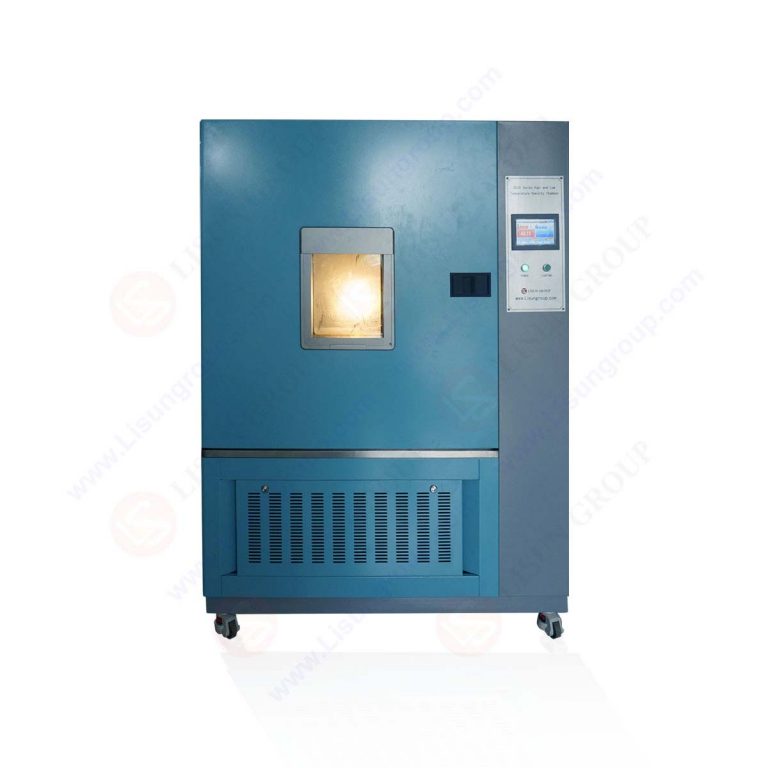
A major reason why environmental testing ensures product reliability is its ability to parallelize stress conditions. The LISUN controller supports up to 3 temperature chambers simultaneously, each set to a different Ts point (e.g., 55°C, 85°C, and 105°C). This multi-point method is required by TM-21 for calculating activation energy (Ea). Each chamber can hold multiple LED boards (e.g., 20-50 devices per chamber). The system’s modular design allows labs to scale from R&D prototype validation to full-scale production qualification. This hardware flexibility reduces test time to market by enabling simultaneous stress profiles.
4.2 Customizable Test Jigs and Wiring
The system offers customizable test jigs for different LED form factors—from small SMD packages to high-power COBs. These jigs maintain consistent thermal contact and electrical connection. The wiring harness is designed for Kelvin (4-wire) connections to eliminate voltage drop errors, ensuring accurate forward voltage (Vf) monitoring. Vf drift is often an early indicator of solder joint fatigue or die attach degradation. By monitoring Vf during the 6,000-hour test, engineers can detect incipient failures before catastrophic lumen loss. This level of customization ensures that the environmental testing protocol is not a one-size-fits-all approach but tailored to specific product geometries.
5.1 Real-Time Monitoring and Alerts
The LISUN software offers real-time data visualization of lumen maintenance, temperature, and current. Alerts can be set for abnormal events, such as a sudden lumen drop exceeding 5% in 24 hours, which may indicate a single test board failure (e.g., a wire break). This real-time monitoring is crucial for third-party labs that need to document every deviation. The software logs the exact timestamp of temperature excursions, ensuring compliance with audit trails required by ISO 17025. This data integrity is a fundamental reason why environmental testing ensures product reliability: it produces auditable, reproducible results.
5.2 Automatic TM-21 and TM-28 Extrapolation
After the 6,000-hour test, the system automatically performs TM-21 non-linear curve fitting. It calculates L70(6k) and projects L70(50k). For integral LED lamps, the LEDLM-84PL uses TM-28, which applies a similar exponential model but accounts for the self-heating of the entire luminaire. The report includes the number of samples, test temperature, failure criteria, and activation energy. This automation removes human error from manual extrapolation and ensures that the reported lifetime meets regulatory standards like ENERGY STAR, DesignLights Consortium (DLC), and EU Ecodesign directives.
6.1 Differentiating Phosphor vs. Chip Degradation
Environmental testing provides data to differentiate failure mechanisms. By analyzing the spectroradiometric data, a drop in luminous flux accompanied by a shift in CCT towards blue indicates phosphor degradation. Conversely, a drop in flux without CCT shift suggests chip-level degradation (e.g., quantum efficiency droop). The LISUN system’s ability to measure both total and spectral flux allows engineers to pinpoint the root cause. This diagnostic capability is a critical reason why environmental testing ensures product reliability: it guides corrective action, such as changing phosphor composition or improving heat sinking.
6.2 Vf and Temperature Correlation for Thermal Runaway
Thermal runaway occurs when increased temperature leads to higher forward current, which in turn raises temperature further. The Arrhenius Model software in the LISUN system can plot Vf against case temperature (Ts). A negative Vf coefficient (e.g., -2 mV/°C) is normal, but a sudden change in slope indicates a failure in the thermal path. By analyzing this trend over 6,000 hours, engineers can predict field failures in high-ambient environments like enclosed street light housings. This thermal-electrical correlation is a sophisticated layer of analysis only available through rigorous environmental testing.
7.1 Passing Third-Party Lab Audits
Manufacturers using the LISUN system generate data that meets the strictest industry standards. The system’s compliance with IES LM-80, IES LM-84, IES LM-79-19, CIE 084, and CIE 127 means that data submitted to a test lab (e.g., UL, TÜV, Intertek) is pre-validated. For a manufacturer seeking DLC Premium qualification, a TM-21 projection of L70 > 50,000 hours is required. The LISUN system directly provides this value, reducing the risk of failing a certification audit. This regulatory confidence is the final reason why environmental testing ensures product reliability: it unlocks market access.
7.2 Cost Reduction through Early Detection
The cost of a field failure is 10-100 times higher than a lab failure. Environmental testing with the LISUN system allows engineers to catch defective materials (e.g., improper solder paste, delamination) within the first 100 hours of thermal cycling. By investing in a 6,000-hour accelerated test, a manufacturer can save millions by avoiding product recalls. The system’s ability to run parallel tests on multiple chambers accelerates this screening. For large-volume manufacturers, this translates directly to improved profit margins and brand reputation.
In conclusion, the 5 reasons why environmental testing ensures product reliability are deeply interwoven with the technical capabilities of advanced systems like the LISUN LED Optical Aging Test Instrument. First, accelerated aging via the Arrhenius Model provides predictive data that compresses years of validation into weeks. Second, dual testing modes (CCM and CTM) isolate stress vectors, offering a holistic failure analysis. Third, integration with spectroradiometers ensures photometric integrity alongside lumen maintenance. Fourth, multi-chamber hardware customization allows for scalable, simultaneous stress profiles. Fifth, automated reporting with TM-21/TM-28 extrapolation ensures regulatory compliance for ENERGY STAR and DLC. By understanding and implementing these principles, engineers can certify products that survive harsh thermal environments, meet customer lifetime expectations, and pass rigorous third-party audits. LISUN’s commitment to IES LM-80, LM-79-19, CIE 127, and TM-28 standards makes their instruments an indispensable tool for any organization committed to LED reliability excellence. The investment in such testing is not an expense; it is a strategic guarantee of product performance.
Q1: How does the Arrhenius Model in the LISUN system improve the accuracy of TM-21 projections?
A: The Arrhenius Model mathematically relates the rate of lumen depreciation (reaction rate) to absolute temperature. The LISUN software uses measured data from at least three different case temperatures (e.g., 55°C, 85°C, 105°C) over 6,000 hours to calculate the activation energy (Ea) of the LED package. This Ea value is then used in the TM-21 non-linear regression to extrapolate L70 lifespans to 60,000+ hours. Without this multi-temperature approach, a single-temperature test might underestimate the failure rate at a different field temperature. The software automates this calculation, removing manual error and ensuring compliance with IES TM-21 guidelines.
Q2: What is the difference between using a LEDLM-80PL for component testing versus a LEDLM-84PL for luminaire testing?
A: The LEDLM-80PL is designed for bare LED packages, modules, and arrays. It requires an external integrating sphere and spectroradiometer (often part of a LISUN photometric system) to measure total flux at each test interval. It adheres strictly to IES LM-80, which mandates a 6,000-hour minimum test duration. Conversely, the LEDLM-84PL includes a self-contained integrating sphere and is designed for complete LED lamps and luminaires (e.g., A-lamps, PAR lamps). It follows IES LM-84 and TM-28. The key difference is that the LM-84PL tests the entire product under operating conditions, including driver and thermal management effects, whereas the LM-80PL focuses on the LED itself.
Q3: Can the LISUN system test for color shift (Δu’v’) in addition to lumen maintenance?
A: Yes, absolutely. The LISUN LED Optical Aging Test Instrument integrates with a high-precision spectroradiometer (often an LSR series) that measures the full spectral power distribution (SPD) at each measurement interval (e.g., every 1,000 hours). From the SPD, the software automatically calculates CCT (Correlated Color Temperature), CRI, and chromaticity coordinates (u’, v’). It then tracks chromaticity shift (Δu’v’) over the entire 6,000-hour test. This data is critical for standards like ENERGY STAR, which requires a Δu’v’ of less than 0.007 over the lifetime. The software can even apply an Arrhenius model to color shift, providing a projected lifetime for color stability.
Q4: What are the electrical requirements for running up to 3 connected temperature chambers simultaneously?
A: The LISUN temperature chambers (e.g., the LT series) typically require a dedicated 220V/50Hz or 110V/60Hz power supply, consuming approximately 3-5 kVA each depending on the temperature setpoint (e.g., 105°C vs 55°C). For three chambers, a lab should have a stable electrical infrastructure of at least 15 kVA with proper grounding. The LED test samples themselves require a separate low-voltage DC power supply managed by the LEDLM controller. It’s highly recommended to use a line conditioner or UPS to prevent power fluctuations from affecting the 6,000-hour continuous test.
Q5: How does the system handle data logging if there is a power interruption?
A: The LISUN software includes an automatic data recovery feature. The controller has a non-volatile memory that logs the last state (temperature, current, elapsed time). Upon power restoration, the system automatically resumes the test from the last saved point, checking the thermal ramp rate to avoid overshoot. The software marks the data log with the exact time and duration of the interruption. This resilience is essential for long-duration tests in production labs where power outages are possible. Engineers can review the interruption log to ensure it did not affect the statistical validity of the TM-21 projection.