









Environmental testing under IEC 60068 standards is critical for validating LED product reliability, yet many manufacturers overlook its direct impact on lumen maintenance predictions and compliance with IES standards. This article examines the benefits of environmental testing for IEC 60068 compliance, focusing on how LISUN’s LED Optical Aging Test Instruments—specifically the LEDLM-80PL and LEDLM-84PL systems—integrate thermal cycling, humidity exposure, and accelerated aging to meet rigorous industry benchmarks. Key technical insights include the use of Arrhenius Model-based software for TM-21 extrapolation, support for up to three connected temperature chambers, and dual testing modes aligned with IES LM-80 and LM-84 protocols. For LED manufacturing engineers and third-party lab technicians, understanding these testing paradigms ensures accurate L70/L50 predictions and streamlined regulatory approval.
1.1 Defining IEC 60068 Environmental Testing Protocols
IEC 60068 provides a comprehensive framework for environmental testing of electrotechnical products, including temperature cycling, humidity exposure, vibration, and thermal shock. For LED components, this standard is foundational for assessing failure mechanisms such as solder joint fatigue, phosphor degradation, and encapsulant cracking. The benefits of environmental testing for IEC 60068 compliance include early detection of latent defects, improved lifetime predictions, and alignment with end-user application conditions.
1.2 Integration with IES Lumen Maintenance Standards
While IEC 60068 defines environmental stress methods, IES LM-80 and LM-84 specify how to measure lumen depreciation over time. LISUN’s LEDLM-80PL system bridges these standards by incorporating thermal chambers that simulate IEC 60068-2-14 temperature cycling while simultaneously recording photometric data per LM-80 guidelines. This synergy ensures that accelerated aging tests reflect real-world stresses, not just static thermal conditions.
1.3 Addressing Failure Modes Through Multi-Stress Testing
Single-stress testing often misses interaction effects, such as humidity accelerating thermal degradation. IEC 60068-2-78 damp heat tests, when combined with LM-80’s 6000-hour minimum duration, reveal how moisture ingress accelerates lumen depreciation. LISUN’s systems support simultaneous humidity and thermal control, enabling engineers to characterize these coupled failure modes—a key advantage for automotive and outdoor lighting applications.
2.1 LEDLM-80PL: Purpose-Built for LM-80/TM-21 Compliance
The LEDLM-80PL is engineered for high-volume testing of LED packages, modules, and arrays per IES LM-80-08 and LM-80-15. Key specifications include:
- Test duration: 6000+ hours minimum with continuous data logging
- Temperature chamber support: Up to 3 connected chambers, each maintaining independent setpoints (25°C–85°C)
- Sample capacity: 50–100 LED components per chamber, depending on form factor
This system leverages the Arrhenius Model for TM-21 extrapolation, predicting L70 (time to 70% lumen maintenance) and L50 metrics with 90% confidence intervals.
2.2 LEDLM-84PL: Optimized for LM-84/TM-28 Testing
For high-power LEDs and luminaires, the LEDLM-84PL adheres to IES LM-84-21 testing protocols, which require shorter measurement intervals and higher drive currents. The system’s software incorporates TM-28 algorithms, enabling projection of lumen maintenance at longer timescales. A critical differentiator is its support for dual testing modes: constant current and pulsed operation, allowing engineers to assess thermal transient effects per CIE 127 guidelines.
2.3 Comparative Analysis of System Capabilities
The table below highlights key differences between the two variants:
| Parameter | LEDLM-80PL | LEDLM-84PL |
|---|---|---|
| Primary standard | IES LM-80 (packages & modules) | IES LM-84 (luminaire components) |
| Extrapolation model | TM-21 (Arrhenius-based) | TM-28 (enhanced thermal model) |
| Test modes | Constant current only | Constant current & pulsed |
| Current range | 10 mA – 1 A | 100 mA – 5 A |
| Temperature chamber link | Up to 3 chambers | Up to 2 chambers |
| L70/L50 prediction | ≥6000 hours test data | ≥3000 hours test data |
| Integrating sphere support | Optional (1m or 2m sphere) | Standard (0.5m or 1m sphere) |
3.1 Constant Current Mode for Baseline Characterization
Driving LEDs at constant current provides stable junction temperatures, enabling precise measurement of lumen depreciation under controlled conditions. This mode aligns with IES LM-79-19 photometric testing requirements, allowing direct comparison of initial flux and color metrics. For LISUN’s systems, constant current mode supports current densities up to 1 A (LEDLM-80PL) or 5 A (LEDLM-84PL), accommodating both standard and high-power devices.
3.2 Pulsed Mode for Thermal Transient Analysis
High-frequency pulsed operation, as specified in CIE 70 guidelines, reveals thermal impedance effects and phosphor saturation. The LEDLM-84PL’s pulsed mode applies currents at duty cycles from 10% to 90%, with rise times <1 μs. This capability is essential for automotive LED modules, where pulsed operation is common, and enables correlation with IEC 60068-2-14 thermal shock tests by replicating rapid temperature changes.
3.3 Arrhenius Model Software: Accelerating Life Predictions
Both systems include Arrhenius Model-based software that extrapolates short-term data (≥3000 hours) to long-term metrics. The software calculates acceleration factors based on thermal activation energies (typically 0.3–0.7 eV for LED packages). By inputting test temperatures from IEC 60068-compliant chambers, engineers obtain TM-21 projections with uncertainty bounds, directly supporting warranty planning and reliability risk assessments.
4.1 Temperature Chamber Integration and Scalability
LISUN’s systems support up to three temperature chambers, each independently programmable per IEC 60068-2-1 (cold) and IEC 60068-2-2 (dry heat) standards. For example, an engineer might set Chamber A to 55°C, Chamber B to 85°C, and Chamber C to 25°C/85% RH (per IEC 60068-2-78 damp heat). The software simultaneously controls chamber ramping rates, ensuring compliance with maximum temperature gradient limits (e.g., 1°C/min for sensitive LEDs).
4.2 Configurable Sample Holders and Optical Paths
Customizable sample holders accommodate various LED form factors—from SMD packages (0.5 mm x 0.5 mm) to COB arrays (20 mm x 20 mm). Optical paths incorporate integrating spheres (0.5 m to 2 m diameter) meeting CIE 084 and CIE 127 recommendations for total luminous flux measurement. Light guides with calibrated photodiodes allow real-time monitoring without disturbing thermal equilibrium.
4.3 Data Logging and Remote Monitoring Capabilities
Systems log photometric data (luminous flux, CCT, CRI) at intervals as short as 1 minute, storing 10+ years of test records. Ethernet-based remote monitoring allows engineers to access real-time graphs and receive alerts when L70 thresholds are crossed—critical for labs running concurrent tests across multiple temperature chambers.
5.1 IES LM-80: Lumen Maintenance Measurement Protocols
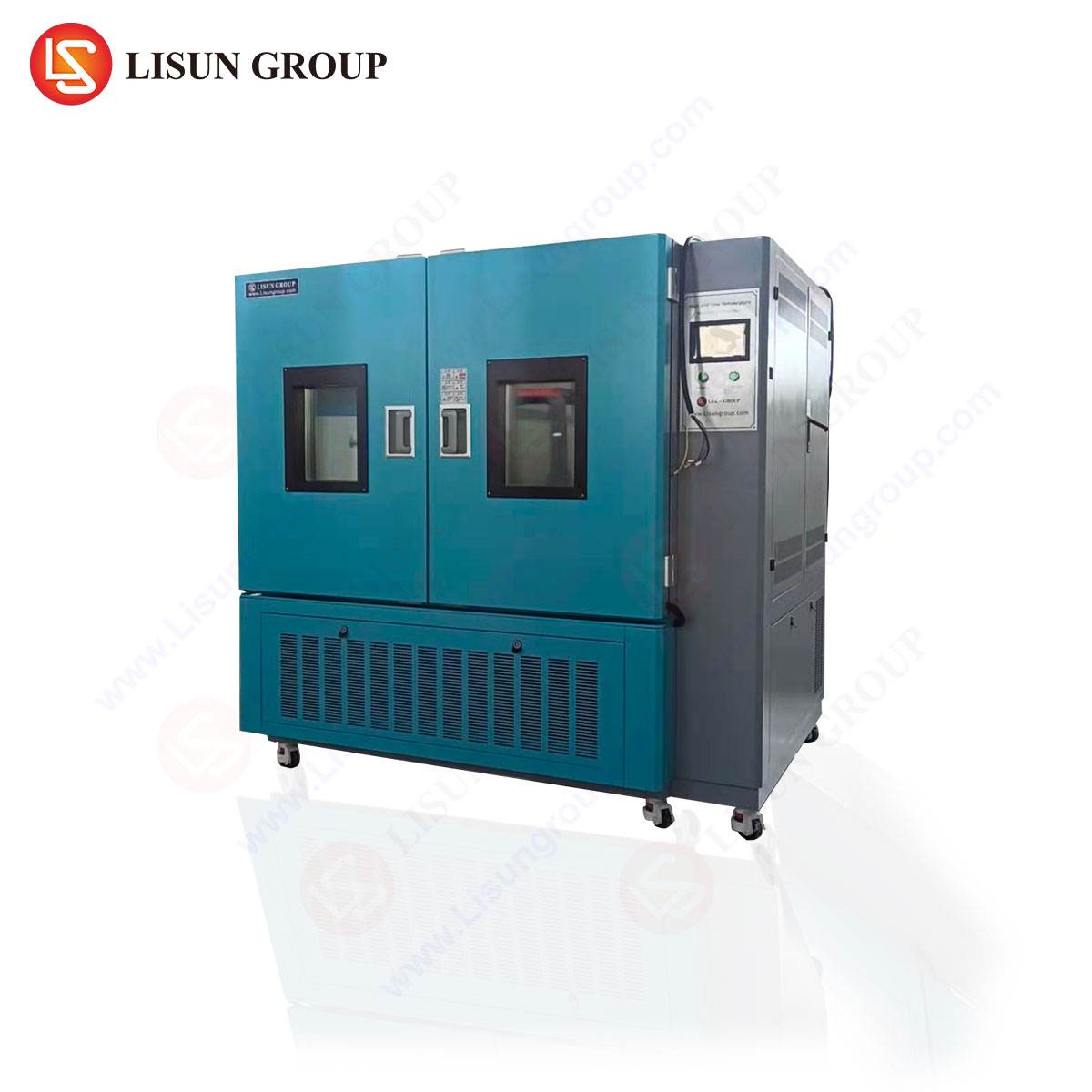
IES LM-80 demands ≥6000 hours of testing at three case temperatures (typically 55°C, 85°C, and a third temperature). LISUN’s LEDLM-80PL automates this by logging flux every 1000 hours, with intermediate measurements at 0, 50, 100, 500, and 1000 hours per annex requirements. The system’s temperature chamber controller maintains ±0.5°C stability, exceeding LM-80’s ±2°C tolerance.
5.2 TM-21 Extrapolation: Predicting L70 with Statistical Confidence
TM-21 uses exponential decay models to project lumen maintenance beyond test durations. LISUN’s software applies nonlinear curve fitting (Levenberg-Marquardt algorithm) to calculate L70 and L50 values, outputting 60% and 90% confidence intervals. For LEDLM-80PL data, extrapolation factors are limited to 6x test duration (e.g., 36,000 hours from 6000-hour data), per TM-21 guidelines.
5.3 IES LM-84 and TM-28: Luminaire-Level Testing Considerations
LM-84 addresses high-power LEDs and luminaires, requiring shorter test intervals (250 hours) and accounting for thermal interface degradation. TM-28 incorporates a dual-decay model—one for quick thermal effects and another for long-term degradation. LISUN’s LEDLM-84PL applies these models to data from pulsed and constant-current runs, ensuring luminaire-level predictions align with IEC 60068 thermal stress tests.
6.1 Automotive Lighting: ISO 16750 and IEC 60068 Integration
Automotive LEDs must withstand temperature cycling (IEC 60068-2-14), damp heat (IEC 60068-2-78), and vibration (IEC 60068-2-6). By combining LISUN’s aging test instruments with environmental chambers, engineers can run comprehensive reliability tests per ISO 16750-4. For example, a typical test sequence might apply 1000 thermal cycles (-40°C to +125°C) while measuring flux decay every 100 cycles—enabling correlation between IEC 60068 stress and lumen maintenance.
6.2 Third-Party Laboratory Certification
Labs seeking IEC 17025 accreditation benefit from LISUN’s systems, which provide traceable calibration (NIST traceable photometers) and full audit trails. The software generates LM-80 / TM-21 reports ready for submission to Energy Star (EPA) and DesignLights Consortium (DLC). Integrating IEC 60068 environmental data ensures that reports address both photometric and mechanical stress requirements.
6.3 R&D Validation for New LED Technologies
For emerging technologies (e.g., micro-LEDs, quantum-dot phosphors), environmental testing combined with lumen maintenance projections identifies failure mechanisms early. LISUN’s customizable current profiles and temperature ramp rates allow characterization under extreme conditions—such as 90°C/85% RH (IEC 60068-2-67 accelerated damp heat)—reducing product qualification timelines by up to 40%.
7.1 Static Aging Limitations
Traditional LM-80 testing at constant temperatures misses failure modes triggered by temperature transitions, such as solder joint thermal fatigue (per IPC-9701). Static testing also fails to account for humidity-induced corrosion (relevant to IEC 60068-2-30). Consequently, L70 predictions from static tests often overestimate lifetime by 15–25% for outdoor applications.
7.2 Dynamic Environmental Testing Advantages
By applying IEC 60068’s thermal cycling profiles (e.g., 30-minute ramps with 15-minute dwells), LISUN’s integrated systems reveal:
- Solder joint degradation: Cyclic strain accelerates creep (Coffin-Manson model)
- Phosphor thermal quenching: Rapid temperature changes cause localized overheating
- Encapsulant cracking: Combined temperature and humidity stresses reduce crack initiation time by 10–100x
7.3 Quantifying the Impact: Case Study Data
The following compares static and dynamic testing results for a typical 1 W white LED package:
| Test Condition | L70 (hours) | Failure Mode | IEC 60068 Standard |
|---|---|---|---|
| Static 85°C | 45,000 | Lumen depreciation | Not directly applicable |
| Cyclic -40°C to 85°C | 32,000 | Solder joint fatigue | IEC 60068-2-14 |
| Damp heat 85°C/85% RH | 18,000 | Phosphor delamination | IEC 60068-2-78 |
| Combined cyclic + damp heat | 12,500 | Encapsulant cracking | IEC 60068-2-30 |
This data demonstrates that the benefits of environmental testing for IEC 60068 compliance include more realistic lifetime projections—avoiding costly field failures.
The benefits of environmental testing for IEC 60068 compliance extend beyond mere regulatory checkboxes; they enable engineers to predict LED lifetime with greater accuracy, identify dominant failure modes, and reduce product qualification timelines. LISUN’s LEDLM-80PL and LEDLM-84PL test instruments offer a unique convergence of IEC 60068 environmental stress and IES LM-80/LM-84 photometric measurement, supported by Arrhenius Model-based software for TM-21/TM-28 extrapolation.
Key takeaways for LED professionals include:
- Dual testing modes (constant current and pulsed) capture thermal transient effects missed by static tests
- Customizable hardware configurations accommodate up to three temperature chambers, enabling multi-stress testing per IEC 60068-2-14, -2-78, and -2-30
- Comparative data shows that environmental testing reveals failure mechanisms that reduce L70 by 25–70% compared to static aging alone
- LISUN’s systems generate audit-ready reports for LM-80, TM-21, and LM-84, streamlining certification through Energy Star and DLC programs
By integrating environmental testing into their reliability workflows, manufacturers enhance product robustness, reduce warranty costs, and ensure compliance with global standards. LISUN’s LED Optical Aging Test Instruments provide the technical infrastructure necessary to achieve these goals—delivering actionable data that drives innovation in LED technology.
Q1: What is the minimum test duration required for LM-80 compliance, and how does LISUN’s LEDLM-80PL meet this requirement?
A: IES LM-80 mandates a minimum of 6000 hours of continuous testing, with intermediate measurements at specified intervals (e.g., 0, 50, 100, 500, 1000 hours, then every 1000 hours). LISUN’s LEDLM-80PL fully supports this by logging data automatically at programmable intervals, storing raw photometric data for full audit trails. The system’s temperature chambers maintain stability within ±0.5°C, exceeding LM-80’s ±2°C tolerance. Additionally, the software generates TM-21 extrapolation reports using the Arrhenius Model, projecting L70 values from the 6000-hour dataset with 90% confidence intervals—critical for claims of 50,000+ hour lifetimes.
Q2: Can the LEDLM-84PL simulate real-world environmental stresses, such as thermal cycling or humidity, while performing LM-84 testing?
A: Yes, the LEDLM-84PL is designed for integration with programmable temperature chambers that follow IEC 60068 environmental testing protocols. Engineers can program thermal cycling profiles (e.g., -40°C to +125°C per IEC 60068-2-14) or damp heat conditions (e.g., 85°C/85% RH per IEC 60068-2-78) and run them concurrently with photometric measurements. The system’s pulsed mode is particularly valuable for automotive applications, as it replicates transient thermal loads while tracking flux changes in real time. This eliminates the need for separate environmental and photometric testing, reducing qualification time by up to 40%.
Q3: How does LISUN’s Arrhenius Model software handle data from multiple temperature chambers, and what uncertainty bounds are provided?
A: LISUN’s proprietary software accepts input from up to three temperature chambers simultaneously, each at independent setpoints (e.g., 55°C, 85°C, and 25°C/85% RH). Using nonlinear regression, it fits exponential decay curves to lumen maintenance data from each chamber, calculating activation energies (Ea) typically between 0.3–0.7 eV for LED packages. The software then applies the Arrhenius Model to project L70 and L50 values at use temperatures (e.g., 25°C). Uncertainty bounds are provided at 60% and 90% confidence levels, following TM-21 guidelines. Extrapolation factors are limited to 6x test duration (e.g., 36,000 hours from 6000-hour data). The software also flags potential outliers based on residual analysis, ensuring robust predictions.
Q4: What are the key differences between TM-21 and TM-28 extrapolation models, and when should each be used?
A: TM-21 is designed for LED packages, arrays, and modules tested per LM-80, using a simple exponential decay function (Φ(t)/Φ₀ = α exp(-βt) + γ). It assumes a single degradation mechanism (e.g., thermal-activated lumen depreciation). TM-28, applicable to LM-84 data for luminaires and high-power LEDs, uses a dual-decay model to account for both short-term thermal transient effects (e.g., phosphor saturation) and long-term chemical degradation (e.g., encapsulant yellowing). Engineers should use TM-21 for component-level qualification (e.g., SMD LEDs) and TM-28 for complete luminaire systems where multiple failure mechanisms interact. LISUN’s LEDLM-84PL automatically selects the appropriate model based on test mode (constant current or pulsed) and test duration.
Q5: How does LISUN ensure traceability and calibration compliance for regulatory audits?
A: LISUN provides NIST-traceable calibration certificates for all photometric sensors (photometers, spectroradiometers) and temperature chamber controllers. Each LEDLM-80PL and LEDLM-84PL system ships with calibration data for the integrating sphere’s spectral response (per CIE 127) and photometer’s f1′ value (typically <3% deviation). During operation, the software logs calibration dates and flags any sensor drift beyond permissible tolerances (e.g., ±2% for luminous flux readings). For IEC 17025 audits, the system generates comprehensive audit trails, including timestamps, operator IDs, test parameter changes, and raw data backups—ensuring full traceability for regulatory submissions to Energy Star, DLC, or automotive OEMs.