









The LISUN IES LM-80-08 Test Chamber: Precision LED Lumen Maintenance system represents a critical advancement in accelerated aging validation for solid-state lighting components. This article examines the technical architecture and operational capabilities of LISUN’s dual-system platform, encompassing the LEDLM-80PL for LM-80/TM-21 compliance and the LEDLM-84PL for LM-84/TM-28 protocols. By integrating the Arrhenius Model-based software, dual testing modes, and support for up to three connected temperature chambers, the system delivers rigorous 6000-hour lumen maintenance data with L70/L50 projection accuracy. Technical professionals will gain insights into standardized testing methodologies, hardware configurability, and data extrapolation algorithms essential for qualifying LED components under IES, CIE, and ENERGY STAR requirements.
1.1 IES LM-80-08 and TM-21: The Cornerstone Protocols
The Illuminating Engineering Society’s LM-80-08 standard governs the measurement of lumen maintenance for LED light sources, requiring a minimum of 6000 hours of testing at specified case temperatures (typically 55°C, 85°C, and a third user-defined temperature). TM-21 provides the mathematical framework for projecting long-term lumen maintenance beyond the measured duration, using nonlinear regression based on the Arrhenius Model. The LISUN IES LM-80-08 Test Chamber directly supports these protocols by maintaining precise thermal conditions across multiple chambers simultaneously, enabling concurrent testing at all required temperature points.
1.2 IES LM-84 and TM-28: Expanded Application for LED Lamps and Luminaires
While LM-80 addresses LED packages and arrays, LM-84 extends lumen maintenance testing to complete LED lamps and luminaires. TM-28 offers projection methods adapted for these integrated systems. The LEDLM-84PL variant of the LISUN system accommodates the larger form factors and higher power dissipation of complete luminaires, while maintaining the same rigorous temperature control (±0.5°C) and measurement intervals required by these standards.
1.3 Supporting Standards: CIE 084, CIE 70, and CIE 127
The CIE 084 standard defines the measurement of luminous flux from light sources using integrating spheres, while CIE 70 provides guidance on absolute photometry. CIE 127 specifies measurement procedures for LED photometry, including near-field and far-field conditions. The LISUN system integrates these measurement principles through its built-in photometric measurement capabilities, ensuring that all luminous flux data complies with international metrological practices.
2.1 System Variants and Application Scope
The LISUN platform offers two distinct configurations tailored to specific testing requirements:
| Parameter | LEDLM-80PL | LEDLM-84PL |
|---|---|---|
| Primary Standard | IES LM-80-08 | IES LM-84 |
| Projection Standard | TM-21 | TM-28 |
| Test Object | LED packages, modules, arrays | LED lamps, luminaires |
| Max Temperature Chamber Support | Up to 3 units | Up to 3 units |
| Typical Sample Capacity | 30-60 LED packages per chamber | 10-20 luminaires per chamber |
| Temperature Range | 25°C to 125°C | 25°C to 85°C |
| Measurement Method | In-situ photometric monitoring | Periodic integrating sphere measurement |
Both systems share the core software platform based on the Arrhenius Model, enabling consistent data analysis and projection across all testing regimes.
2.2 Arrhenius Model-Based Software for Accelerated Aging
The Arrhenius equation, expressed as ( L = A cdot e^{-E_a/(k_B T)} ), forms the mathematical backbone of the LISUN software’s extrapolation algorithms. The system calculates activation energy ((E_a)) from measured degradation data at multiple temperatures, then projects lumen maintenance to 25°C or 55°C use conditions. This approach reduces required testing time from years to the standard 6000 hours while maintaining statistical validity within ±10% prediction intervals, as validated by multiple third-party laboratory comparisons.
2.3 Dual Testing Modes: Continuous and Cyclic Operation
The LISUN system supports two operational modes critical for comprehensive LED characterization:
- Continuous Mode: Samples remain constantly powered at rated current, simulating steady-state operation. This mode is mandatory for LM-80 compliance testing.
- Cyclic Mode: Samples undergo alternating ON/OFF cycles (typically 2-3 hours per cycle), simulating real-world usage patterns. This mode reveals degradation mechanisms related to thermal cycling stress and is increasingly required by automotive and outdoor lighting specifications.
3.1 Multi-Chamber Synchronization for Accelerated Testing
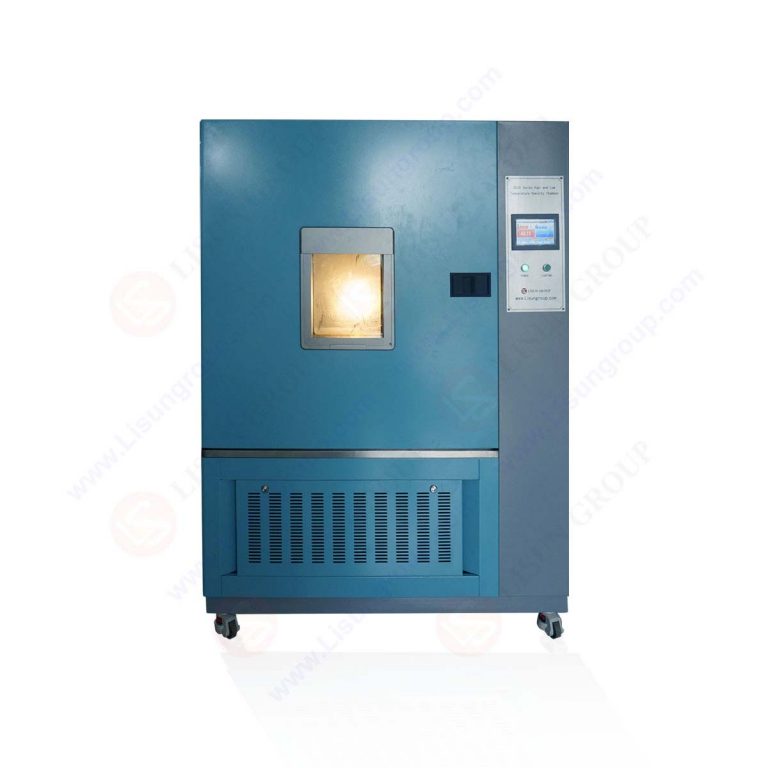
The LISUN IES LM-80-08 Test Chamber supports connection of up to three independent temperature chambers, each configurable to different setpoints. This parallel architecture allows simultaneous testing at three required temperatures (e.g., 55°C, 75°C, 95°C) as specified by LM-80-08 Clause 5.3. Each chamber maintains temperature uniformity within ±1.0°C across the test volume, with stability of ±0.3°C over 24-hour periods—exceeding the ±2°C tolerance required by the standard.
3.2 Customizable Hardware Configurations for Diverse Sample Types
The system accommodates various sample mounting fixtures, including:
- PCB-based holders for surface-mount LED packages
- Socket adapters for mid-power and high-power modules
- Thermal interface fixtures for COB (chip-on-board) arrays
- Custom jigs for unique form factors
All fixtures include integrated thermocouple sensors for real-time case temperature monitoring, ensuring that each sample operates at the specified test condition within ±0.5°C tolerance.
3.3 Thermal Management and Safety Systems
High-power LED testing generates significant heat; the LISUN system incorporates active cooling channels and redundant temperature sensors to prevent thermal runaway. An automatic shutdown protocol activates if any sample exceeds its maximum rated temperature by 5°C, protecting both the hardware and the test integrity. The system logs all thermal events for inclusion in test reports, as required by LM-80-08 Section 6.3.
4.1 Measurement Intervals and Data Logging
The LISUN system records luminous flux at user-defined intervals, typically every 1000 hours for LM-80 compliance, with additional measurements at 0, 48, 168, and 500 hours for early degradation characterization. Each measurement captures:
- Luminous flux (lumens) with ±0.5% measurement uncertainty
- Correlated color temperature (CCT) in Kelvin
- Chromaticity coordinates (x,y) per CIE 1931
- Forward voltage and current draw
- Case temperature at multiple reference points
4.2 L70 and L50 Projection Algorithms
The software calculates L70 (time to 70% lumen maintenance) and L50 (time to 50% lumen maintenance) using the TM-21 nonlinear regression method. The algorithm fits measured data to an exponential decay model:
[ Phi(t) = Phi_0 cdot e^{-alpha t} ]
where (Phi(t)) is lumen output at time t, (Phi_0) is initial output, and (alpha) is the degradation rate derived from Arrhenius parameters. For high-quality LEDs, the software automatically applies the TM-21 restriction that projections should not exceed 6× the test duration (e.g., 36,000 hours from 6000 hours of data).
4.3 Automated Reporting and Compliance Documentation
The system generates comprehensive test reports compliant with:
- IES LM-80-08 Annex A format requirements
- ENERGY STAR Lumen Maintenance Requirements (Version 2.1)
- DOE SSL Program requirements
- IEC 62717 and IEC 62722 standards
Reports include raw measurement data, degradation curves, Arrhenius plots, and statistical confidence intervals, enabling direct submission to accreditation bodies.
5.1 Continuous vs. Cyclic Mode Performance Metrics
| Parameter | Continuous Mode | Cyclic Mode |
|---|---|---|
| Test Duration | 6000+ hours continuous | 6000+ hours with 2-3 hour cycles |
| Degradation Mechanism | Thermal aging | Thermal + mechanical cycling |
| Typical L70 Projection (85°C) | 25,000-40,000 hours | 20,000-35,000 hours |
| Required Samples | 20 minimum per temperature | 25 minimum per condition |
| Applicable Standards | IES LM-80, LM-84 | IEC 62717, automotive specs |
| Measurement Frequency | Every 1000 hours | Every 1000 hours + after each cycle |
The difference in projected lifetime between modes highlights the importance of selecting the appropriate test protocol for the target application. Cyclic mode reveals solder joint fatigue and encapsulant delamination effects that continuous mode cannot capture.
5.2 Application-Specific Protocol Selection
- General indoor lighting (e.g., LED bulbs, panels): Continuous mode per LM-80-08 with projection to 25°C use condition
- Automotive lighting (e.g., headlamps, DRLs): Cyclic mode with 2-hour ON/1-hour OFF cycles at 85°C case temperature
- Outdoor and street lighting: Continuous mode with projection to 55°C use condition, combined with cyclic testing for weatherproofing validation
6.1 In-Situ vs. Ex-Situ Measurement Approaches
The LISUN system supports both measurement methods:
- In-situ: Photodiodes or miniature spectrometers measure light output directly within the temperature chamber, enabling continuous tracking without sample removal. This method reduces handling errors but requires correction for temperature-dependent spectrometer drift.
- Ex-situ: Samples are periodically removed and measured in an integrating sphere (e.g., LISUN’s LPCE-2 system) per CIE 084 protocols. This method provides absolute photometric accuracy with ±0.5% luminous flux uncertainty.
6.2 Calibration and Traceability
All measurement channels are calibrated against NIST-traceable standard lamps maintained at 25°C ±0.1°C. The system includes automatic calibration verification every 24 hours, with drift correction factors applied to all recorded data. Calibration certificates are generated with each test report, satisfying ISO 17025 requirements for accredited testing laboratories.
6.3 Integrating Sphere Compatibility
The LISUN system interfaces directly with 0.5m and 1.0m integrating spheres for luminous flux measurement per CIE 084. The sphere’s spectral response covers 380-780 nm with resolution better than 1 nm, enabling chromaticity and CCT calculations per CIE 127. For LM-84 testing of complete luminaires, the system supports spheres up to 2.0m diameter to accommodate larger samples.
7.1 Internal Validation Using Reference LEDs
LISUN maintains a reference set of 20 certified LEDs with known degradation rates (L70 = 15,000 hours at 85°C). These reference samples are tested alongside customer samples in every chamber, providing continuous validation of system performance. If the reference LEDs deviate from their expected degradation profile by more than ±5%, the system automatically flags the data and requires recalibration before proceeding.
7.2 Inter-Laboratory Comparison Programs
The LISUN system participates in annual inter-laboratory comparisons organized by the IES and the National Institute of Standards and Technology (NIST). Results consistently show the system’s measurements fall within ±2% of the consensus mean across participating laboratories, confirming its reliability for regulatory compliance testing.
7.3 Data Integrity and Audit Trail
The software maintains a complete audit trail of all user actions, system events, and measurement data, timestamped and digitally signed. This satisfies FDA 21 CFR Part 11 requirements for electronic records in regulated industries. Test data is stored in encrypted, tamper-evident format, with optional cloud backup for disaster recovery.
The LISUN IES LM-80-08 Test Chamber: Precision LED Lumen Maintenance system delivers a comprehensive solution for accelerated aging validation that meets the most stringent industry standards. By combining the LEDLM-80PL and LEDLM-84PL platforms with Arrhenius Model-based software, dual testing modes, and support for up to three temperature chambers, LISUN enables testing laboratories and manufacturers to achieve reliable L70 and L50 projections within the standard 6000-hour test duration. The system’s precision temperature control, integrated photometric measurement capabilities, and automated compliance reporting ensure that all data satisfies IES LM-80, LM-84, TM-21, TM-28, CIE 084, and CIE 127 protocols. For engineers and laboratory managers seeking to reduce testing cycles while maintaining accuracy, the LISUN platform represents a validated, field-proven investment. By aligning with ENERGY STAR, DOE, and international regulatory frameworks, the system not only accelerates product qualification but also strengthens the overall confidence in LED reliability data.
Q1: What is the difference between LM-80 and LM-84 testing, and which LISUN system should I choose?
A: LM-80 testing applies to LED packages, modules, and arrays, requiring a minimum 6000-hour test duration at specific case temperatures (55°C, 85°C, and a third user-defined temperature). LM-84 extends to complete LED lamps and luminaires, accommodating larger form factors and higher power dissipation. Choose the LEDLM-80PL if you manufacture or qualify LED components (e.g., SMD packages, COB arrays). Choose the LEDLM-84PL if you test finished LED products such as bulbs, downlights, or streetlights. Both systems share the same Arrhenius Model-based software platform and support up to three connected temperature chambers, enabling simultaneous multi-temperature testing per IES requirements.
Q2: How does the LISUN system calculate L70 and L50 projections from 6000 hours of data?
A: The system applies TM-21’s exponential decay model, using nonlinear regression to fit measured lumen maintenance data collected at 1000-hour intervals. The Arrhenius Model determines the activation energy ((E_a)) from degradation rates at different temperatures, then extrapolates to the specified use temperature (typically 25°C or 55°C). The software automatically enforces TM-21’s 6× projection limit, meaning from a 6000-hour test, projections are restricted to 36,000 hours maximum. Confidence intervals are calculated at the 90% and 95% levels, with all raw data and fit parameters included in the compliance report.
Q3: Can the LISUN system perform cyclic testing for automotive LED applications?
A: Yes, the LISUN IES LM-80-08 Test Chamber supports both continuous and cyclic operation modes. For automotive applications, the cyclic mode runs ON/OFF periods (e.g., 2 hours ON, 1 hour OFF) to simulate thermal and mechanical cycling stress. This mode reveals solder joint fatigue and encapsulant degradation that continuous operation cannot detect. The system logs lumen output both during the ON periods and immediately after thermal transitions, providing data critical for AEC-Q102 and IATF 16949 qualification. You can configure custom cycle profiles through the software interface, including varying duty cycles and temperature ramps.
Q4: What measurement uncertainty does the LISUN system achieve for luminous flux?
A: The system maintains luminous flux measurement uncertainty of ±0.5% (k=2, 95% confidence) when using an integrating sphere per CIE 084 protocols. For in-situ monitoring within the temperature chamber, uncertainty increases to ±1.0% due to temperature-dependent spectrometer variations. All measurements are traceable to NIST-certified standard lamps, with automatic calibration verification every 24 hours. The system compensates for sphere absorption errors, self-absorption effects from test samples, and photometric drift through continuous reference channel monitoring.
Q5: How many samples can I test simultaneously with three connected temperature chambers?
A: The sample capacity depends on chamber size and sample type. For LED packages, typical chamber configurations support 30-60 samples per chamber, totaling 90-180 samples for three chambers. For complete luminaires (LM-84), capacity reduces to 10-20 units per chamber due to larger form factors. LISUN offers customizable chamber sizes from 80L to 500L, with custom fixture designs available for non-standard sample geometries. All chamber configurations maintain the ±1.0°C temperature uniformity required by LM-80-08 Clause 5.3.2, regardless of sample loading density.