









Abstract
This article provides a comprehensive technical analysis of LED Aging Test: Standards Compliance for IEC 60068, focusing on the integration of accelerated aging methodologies with international reliability standards. As LED manufacturers face increasing demands for validated lumen maintenance data, the LISUN LED Optical Aging Test Instrument offers a dual-system approach supporting IES LM-80/TM-21 and LM-84/TM-28 protocols. With capabilities for 6000-hour test durations, L70/L50 metric calculations, and support for up to three connected temperature chambers, this system enables precise Arrhenius Model-based extrapolation of LED lifespan. This article examines the technical requirements, testing configurations, and compliance pathways essential for engineers seeking IEC 60068 alignment in LED aging validation.
1.1 The Role of IEC 60068 in Environmental Stress Testing
IEC 60068 provides a foundational framework for environmental testing of electrotechnical products, including temperature, humidity, and vibration stresses. For LED components, this standard defines the test conditions under which accelerated aging must occur, specifying parameters such as temperature cycling ranges, duration profiles, and measurement intervals. The standard’s applicability to LED aging tests lies in its requirement for controlled environmental chambers that maintain ±1°C temperature stability and ±3% relative humidity accuracy. LISUN’s LED Optical Aging Test Instrument incorporates these IEC 60068 conditions by integrating programmable temperature and humidity controls that align with the standard’s severity levels, ensuring that accelerated aging data is reproducible across different laboratory environments.
1.2 Alignment of LED Aging Test Protocols with International Standards
The LED Aging Test: Standards Compliance for IEC 60068 requires harmonization with multiple lighting-specific standards. IES LM-80-15 specifies the methodology for measuring lumen maintenance of LED light sources, requiring data collection at 0, 1000, 3000, 5000, and 6000 hours under controlled temperatures of 55°C, 85°C, and optionally a third temperature. TM-21-19 then provides the mathematical framework for extrapolating L70 and L50 lifetimes from these measurements. LISUN’s dual-system architecture supports both LM-80/TM-21 (LEDLM-80PL) and LM-84/TM-28 (LEDLM-84PL) protocols, offering separate validation paths for LED packages, arrays, and modules versus SSL products.
2.1 Dual-System Configuration for Standard-Specific Testing
The LISUN LED Optical Aging Test Instrument comprises two distinct variants designed for specific testing standards. The LEDLM-80PL system is optimized for LM-80 compliance, supporting up to 30 test positions per temperature chamber with individual current control for each LED sample. This system collects photometric data including luminous flux, chromaticity coordinates (Cx, Cy), and correlated color temperature (CCT) at each measurement interval. The LEDLM-84PL variant, conversely, addresses LM-84 requirements for SSL products, accommodating larger fixtures and higher power loads up to 300W per channel. Both systems share the same control software architecture but differ in hardware configurations, such as integrating sphere sizes (0.3m to 2.0m options) and thermal management capabilities.
2.2 Core Hardware Components and Measurement Capabilities
Each LISUN aging test instrument includes precision DC power supplies with ±0.05% accuracy, programmable temperature chambers with ranges from -40°C to +150°C, and spectroradiometers or photometer heads for light measurements. The system supports up to three interconnected temperature chambers, enabling simultaneous testing at multiple stress levels. Data acquisition occurs automatically at preset intervals—typically every 1 hour during the first 1000 hours, then every 100 hours thereafter—without disrupting the aging process. The integrating sphere photometer, compliant with CIE 127 guidelines, provides total luminous flux measurements with uncertainty below 2% for standard LED samples.
Table 1: Comparison of LISUN LEDLM-80PL and LEDLM-84PL System Specifications
| Parameter | LEDLM-80PL | LEDLM-84PL |
|---|---|---|
| Applicable Standard | IES LM-80 / TM-21 | IES LM-84 / TM-28 |
| Test Object | LED packages, arrays, modules | SSL products (luminaires) |
| Maximum Test Positions | 30 per chamber | 10-20 per chamber |
| Power Capacity per Channel | Up to 30W | Up to 300W |
| Temperature Chamber Support | Up to 3 chambers | Up to 3 chambers |
| Standard Test Duration | 6000 hours minimum | 6000 hours minimum |
| Photometric Measurement | 0.3m integrating sphere | 1.0m-2.0m integrating sphere |
| L70/L50 Extrapolation | Software-based (Arrhenius) | Software-based (Arrhenius) |
3.1 Theoretical Foundation of the Arrhenius Model in LED Aging
The Arrhenius Model serves as the mathematical backbone for predicting LED lifespan from accelerated aging data. The model relates the degradation rate of LED luminous flux to temperature through the equation ( k = A cdot e^{-E_a/(R cdot T)} ), where ( k ) is the reaction rate, ( A ) is a pre-exponential factor, ( E_a ) is activation energy (typically 0.3-0.7 eV for LEDs), ( R ) is the universal gas constant, and ( T ) is absolute temperature. LISUN’s software implements this model using data from at least two temperature conditions (55°C and 85°C per LM-80), performing nonlinear regression to determine ( E_a ) for each LED sample batch. The extrapolated lifetimes—L70 (time to 70% lumen maintenance) and L50 (time to 50% lumen maintenance)—are calculated at the use temperature, typically 25°C or 55°C as specified by TM-21.
3.2 Software Implementation and Data Analysis Workflow
The LISUN LED Optical Aging Test Instrument software automates the Arrhenius Model calculation, guiding users through the TM-21 extrapolation process. After collecting 6000 hours of lumen maintenance data, the software validates data quality by checking for outliers using Chauvenet’s criterion and ensuring minimum R² values above 0.90 for regression fits. Users can select either exponential decay (single-mechanism) or biexponential decay (dual-mechanism) models, depending on LED phosphor degradation characteristics. The software generates comprehensive reports including projected L70 values, confidence intervals at 90% and 95% levels, and graphical plots of lumen maintenance curves. For LM-84/TM-28 applications, the same engine adjusts for SSL product thermal management effects, incorporating case temperature data from thermocouples placed on the LED module.
4.1 LM-80/TM-21 Testing Protocol for LED Components
The LM-80 standard requires testing LED packages, arrays, and modules at three case temperatures: 55°C, 85°C, and a third temperature selected by the manufacturer (typically 105°C for high-power LEDs). LISUN’s LEDLM-80PL system accommodates this by using three temperature chambers simultaneously, with each chamber maintaining the specified temperature within ±2°C. Test duration extends to 6000 hours minimum, though extended testing to 10,000 hours is recommended for improved extrapolation accuracy. Photometric measurements are performed at 0, 1000, 2000, 3000, 4000, 5000, and 6000 hours, with each measurement cycle completed within 30 minutes to minimize thermal disruption. The TM-21 extrapolation then calculates L70 at 6000 hours for 65°C use temperature, with reporting requirements including raw data tables, normalized luminous flux values, and statistical confidence bounds.
4.2 LM-84/TM-28 Testing Protocol for SSL Products
LM-84 addresses SSL products—complete luminaires—where thermal management and driver electronics influence aging behavior. The LISUN LEDLM-84PL system supports larger integrating spheres (1.0m to 2.0m diameters) to accommodate luminaires up to 1.5m in length. Testing at ambient temperatures of 25°C, 45°C, and optionally 65°C provides data for Arrhenius analysis using TM-28 extrapolation methods. Unlike component testing, LM-84 emphasizes in-situ photometric measurement, where the SSL product remains in the integrating sphere during aging. This configuration captures real-time lumen depreciation including effects of phosphor thermal quenching and driver component degradation. The TM-28 model accounts for these additional failure mechanisms, using activation energies derived from both LED junction temperature and ambient temperature data.
5.1 Electrical and Photometric Measurement Requirements per LM-79-19
IES LM-79-19 specifies the measurement protocol for electrical and photometric characterization of SSL products, including total luminous flux (Φ), electrical power (P), efficacy (lm/W), CCT, and CRI. LISUN’s integrating sphere system incorporates LM-79-19 compliance through its spectroradiometer calibration, which uses NIST-traceable reference standards. The measurement procedure requires stabilization of the LED sample—typically 30-60 minutes at rated current—before data acquisition. The system’s DC power supplies maintain current accuracy within ±0.05% of the setpoint, critical for LM-79-19’s requirement that test current deviation not exceed ±0.5%. When integrated with aging test protocols, LM-79-19 measurements are taken at each 1000-hour interval, providing photometric data consistency across the entire aging duration.
5.2 Alignment with CIE 084, CIE 070, and CIE 127 Standards
CIE 084 (Measurement of Luminous Flux) and CIE 070 (Measurement of Absolute Luminous Intensity) provide supplementary guidance for integrating sphere and goniophotometer methods used in aging tests. LISUN’s instrument follows CIE 127’s recommendations for LED photometric measurements, particularly regarding self-absorption correction factors and sphere coating quality. The integrating sphere’s barium sulfate coating maintains reflectance above 95% across the visible spectrum, with annual recalibration ensuring measurement stability. For chromaticity measurements, the spectroradiometer complies with CIE 015 guidelines for colorimetry, achieving wavelength accuracy within ±0.3 nm. These alignments ensure that aging test data—including lumen depreciation trends and color shift (Δu’v’)—meets international comparability requirements for regulatory submissions.
6.1 Temperature Chamber Integration and Thermal Management
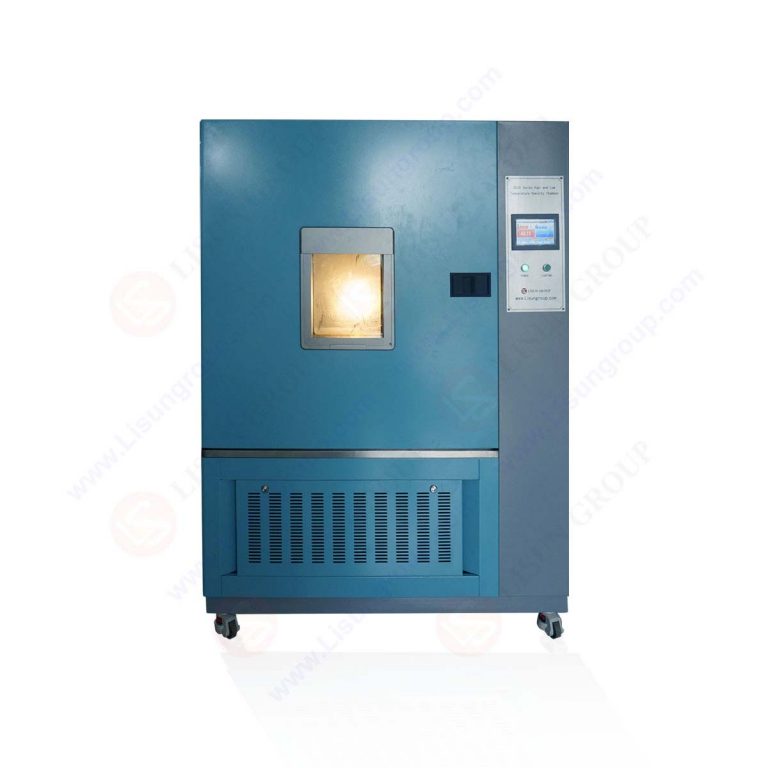
LISUN’s system supports up to three temperature chambers, each with independent control of temperature and humidity. Standard chambers offer internal volumes of 80 liters to 500 liters, with options for high-humidity (up to 98% RH) or low-temperature (-40°C) configurations for specialized testing. For LED aging tests under IEC 60068-2-14 (temperature cycling), the chambers can execute programmed thermal profiles, such as rapid transitions between -10°C and +85°C at rates up to 5°C/minute. Thermal management within the chamber uses forced air circulation with ±1°C uniformity across all test positions, critical for ensuring that all LEDs experience identical stress conditions. The system can be expanded by daisy-chaining chambers through a single control interface, allowing simultaneous testing of up to 90 LED samples across three temperature levels.
6.2 Integrating Sphere Options and Photometer Configurations
Users can select integrating sphere diameters from 0.3m (for individual LED packages) to 2.0m (for large luminaires), with auxiliary ports for fiber-coupled spectroradiometers or filter-based photometers. The 0.3m sphere is standard for LM-80 testing, providing sufficient spatial integration for LED arrays up to 50mm diameter, while the 1.0m sphere accommodates most SSL products for LM-84 testing. Photometer options include high-speed spectroradiometers (measurement time < 1 second) for monitoring rapid aging changes, or precision array spectroradiometers (0.2nm spectral resolution) for detailed chromaticity analysis. The system’s calibration module includes a reference LED with known luminous flux and chromaticity, traceable to NIST, enabling automatic self-absorption correction for each measurement sequence.
7.1 Minimum Test Duration and Measurement Frequency Requirements
IEC 60068-based LED aging tests require a minimum of 6000 hours of continuous operation, with data collection at intervals defined by LM-80 and LM-84. The LISUN system automates this schedule: measurements occur every 1-2 hours during the first 500 hours (burn-in period), then every 100 hours from 500 to 3000 hours, and finally every 500 hours from 3000 to 6000 hours. This profile captures both initial degradation (often due to phosphor thermal activation) and steady-state lumen depreciation. For extended testing beyond 6000 hours—recommended for high-efficiency LEDs with very slow degradation—the system continues data collection at 1000-hour intervals up to 20,000 hours, limited only by physical sample degradation or power supply reliability.
7.2 Calculating L70 and L50 Metrics with Statistical Confidence
L70 and L50 represent the time at which LED luminous flux reaches 70% and 50% of initial value, respectively. LISUN’s software calculates these metrics using TM-21’s exponential model: ( Phi(t) = Phi0 cdot e^{-alpha t} ), where ( alpha ) is the degradation rate constant derived from Arrhenius analysis. For L70: ( t{L70} = -ln(0.70)/alpha ), and for L50: ( t_{L50} = -ln(0.50)/alpha ). The software provides both point estimates and confidence intervals, typically reporting L70 with 90% confidence bounds as required for ENERGY STAR qualification. For multi-temperature tests, the software interpolates L70 values to the target use temperature (e.g., 55°C for indoor lighting) and reports the projected lifetime in hours, with indication whether the projection exceeds 50,000 hours (common for high-quality LEDs).
The LED Aging Test: Standards Compliance for IEC 60068 represents a critical capability for LED manufacturers and testing laboratories seeking to validate product reliability and meet international regulatory requirements. LISUN’s LED Optical Aging Test Instrument provides a comprehensive solution through its dual-system architecture, supporting both LM-80/TM-21 for component-level testing and LM-84/TM-28 for SSL products. The integration of Arrhenius Model-based software enables accurate lifetime extrapolation from 6000-hour accelerated tests, yielding L70 and L50 metrics essential for product specification and warranty claims. With support for up to three temperature chambers, customizable integrating sphere configurations, and full compliance with IES LM-79-19 and CIE standards, this system addresses the full spectrum of LED aging validation needs. By automating data collection, analysis, and reporting, the LISUN instrument reduces testing time while improving measurement repeatability, ultimately enabling engineers to deliver reliable, standards-compliant LED products to market with confidence.
Q1: What is the minimum test duration required for LED aging tests under IEC 60068 compliance, and why is 6000 hours specified?
A: The minimum test duration for LED aging tests aligned with IEC 60068 and IES LM-80 standards is 6000 hours of continuous operation. This duration is specified because LED lumen depreciation often follows a multi-phase decay pattern—rapid initial degradation (first 1000 hours) followed by steady-state exponential decay. 6000 hours provides sufficient data points (typically 8-12 measurements) for reliable Arrhenius Model fitting and TM-21 extrapolation. Shorter tests (e.g., 3000 hours) risk underestimating activation energy and overestimating projected L70 values, while longer tests (10,000+ hours) improve accuracy but extend development cycles. LISUN’s system supports extended testing up to 20,000 hours for high-reliability applications.
Q2: How does the LISUN LED Optical Aging Test Instrument handle temperature chamber integration for multi-temperature testing?
A: The LISUN system supports up to three temperature chambers connected through a single control interface, enabling simultaneous testing at 55°C, 85°C, and a third user-specified temperature (e.g., 105°C) as required by LM-80. Each chamber operates independently with ±1°C temperature uniformity and ±0.5°C setpoint accuracy. The control software manages power supply allocation across chambers, automatically sequencing photometric measurements from each chamber without cross-contamination. This configuration allows 90 LED samples to be tested simultaneously—30 per chamber—dramatically reducing overall test time compared to sequential testing.
Q3: What is the difference between LM-80/TM-21 and LM-84/TM-28 testing protocols, and which should I use for my product?
A: LM-80/TM-21 is designed for LED components—packages, arrays, and modules—testing at case temperatures with individual current control. LM-84/TM-28 addresses SSL products (complete luminaires) including thermal management and driver effects, testing at ambient temperatures. Use LM-80/TM-21 if you manufacture LED components or need component-level qualification for integration into luminaires. Use LM-84/TM-28 for final SSL product certification, as it captures real-world aging including thermal interface material degradation and driver component failure. LISUN offers separate systems optimized for each protocol (LEDLM-80PL and LEDLM-84PL) to ensure proper hardware configuration.
Q4: How does the Arrhenius Model software determine activation energy for LED aging?
A: The LISUN software performs nonlinear regression on lumen maintenance data from at least two test temperatures (typically 55°C and 85°C). The degradation rate k at each temperature is calculated from the exponential decay fit. Using the Arrhenius equation ln(k) = ln(A) – Ea/(R·T), the software plots ln(k) versus 1/T (in Kelvin), with the slope equal to –Ea/R. Activation energy values typically range from 0.3-0.7 eV for LEDs, with higher values indicating stronger temperature dependence. The software validates goodness-of-fit using R² statistics > 0.90 and provides confidence intervals for Ea, which is then used to project L70 at the user-specified use temperature.
Q5: What measurement uncertainty can I expect from the LISUN LED Aging Test Instrument for L70 calculations?
A: For L70 calculations under standard conditions (6000-hour test, two temperatures, 95% confidence level), the typical measurement uncertainty is ±10-15% for LED components and ±15-20% for SSL products. This uncertainty arises from photometric measurement errors (±2% for total luminous flux), temperature variability (±1°C), and inherent LED batch-to-batch variations. LISUN’s system minimizes these through NIST-traceable calibration, automated self-absorption correction, and statistical outlier detection. The software reports uncertainty bounds along with point estimates, enabling engineers to make risk-informed decisions about product reliability and warranty claims.