









The LED Life Test: Ensure LM-80 Compliance with LISUN Environmental Chambers represents a critical methodology for validating LED lumen maintenance and predicting long-term performance under accelerated aging conditions. This article provides a comprehensive technical examination of LISUN’s LED Optical Aging Test Instrument series, including the LEDLM-80PL and LEDLM-84PL variants, which integrate Arrhenius Model-based software for precise life projection. Covering test durations up to 6,000 hours with L70 and L50 metrics, the system supports up to three connected temperature chambers for simultaneous multi-condition testing. Key industry standards including IES LM-80, IES LM-84, TM-21, and TM-28 are contextualized within practical testing workflows. For LED manufacturing engineers, third-party lab technicians, and R&D specialists, this article delivers actionable insights into achieving regulatory compliance, optimizing test throughput, and ensuring reliable photometric degradation data for product certification.
1.1 The Regulatory Framework of IES LM-80 Standard
The IES LM-80-15 standard, formally titled “Approved Method for Measuring Lumen Maintenance of LED Light Sources,” establishes the benchmark for evaluating LED package, array, and module reliability. This standard mandates test durations of 3,000, 6,000, and 10,000 hours under controlled temperature conditions, typically at 55°C, 85°C, and a manufacturer-selected temperature. Compliance requires photometric measurements at defined intervals, with data extrapolated using TM-21 methodology to project L70 (70% lumen maintenance) lifetime. LISUN’s LEDLM-80PL system is purpose-built to satisfy these rigorous requirements, offering automated data logging and seamless integration with TM-21 projection algorithms.
1.2 The Role of Accelerated Aging in Lumen Depreciation Prediction
Accelerated aging tests leverage elevated temperatures to expedite lumen depreciation, governed by the Arrhenius Model which correlates failure rates with thermal stress. The LISUN system incorporates this model within its software, enabling engineers to calculate activation energy and project lumen maintenance at use-case temperatures. For instance, a 6,000-hour test at 85°C may simulate 50,000+ hours of real-world operation, provided the thermal coefficient is accurately derived. This approach reduces time-to-market for new LED products while ensuring LM-80 compliance.
1.3 Distinguishing LM-80 from LM-84 Standards
While LM-80 primarily addresses individual LED packages and arrays, IES LM-84-20 extends to LED light engines and luminaires, encompassing complete lighting assemblies. The LISUN LEDLM-84PL variant is tailored for this standard, supporting larger sample sizes and integrating sphere measurements for total luminous flux. Understanding this distinction is critical: LM-80 focuses on component-level aging, while LM-84 evaluates system-level performance, including driver and thermal management impacts.
2.1 LEDLM-80PL: Optimized for LM-80 and TM-21 Compliance
The LEDLM-80PL system is engineered for precise control over test conditions, featuring programmable temperature chambers capable of maintaining ±1°C accuracy across a range of 20°C to 100°C. It supports simultaneous testing of up to 20 LED samples per chamber, with data acquisition intervals configurable from 1 to 100 hours. The integrated photometric measurement unit employs a spectrometer-based detector for spectral power distribution analysis, ensuring compliance with CIE 127 guidelines for LED measurement. This system is the preferred choice for LED component manufacturers seeking LM-80 certification.
2.2 LEDLM-84PL: Dedicated for LM-84 and TM-28 Testing
For luminaire-level testing, the LEDLM-84PL incorporates a larger integrating sphere (1.0m or 2.0m diameter) to accommodate complete light engines. TM-28, which specifies methods for projecting lumen maintenance of LED light sources based on LM-84 data, is directly supported through LISUN’s software suite. The system accommodates up to three connected temperature chambers, enabling multi-temperature characterization in a single test run. This capability is essential for automotive and architectural lighting applications where thermal dynamics vary significantly.
2.3 Comparative Analysis of Dual System Capabilities
The table below summarizes key technical differences between the two LISUN platforms:
| Feature | LEDLM-80PL | LEDLM-84PL |
|---|---|---|
| Applicable Standards | IES LM-80, TM-21 | IES LM-84, TM-28 |
| Measurement Scope | LED packages, arrays | Light engines, luminaires |
| Test Duration Range | 3,000 – 10,000 hours | 3,000 – 6,000 hours (accelerated) |
| Temperature Chambers Supported | Up to 3 | Up to 3 |
| Photometric Detection | Spectrometer | Integrating sphere (1.0-2.0m) |
| Sample Capacity per Chamber | Up to 20 | Up to 10 (larger fixtures) |
3.1 Theoretical Foundations of the Arrhenius Model in LED Aging
The Arrhenius Model, expressed as L(t) = L₀ exp(-α exp(-Ea/(kT)) t), quantifies lumen depreciation as a function of temperature and time. In the LISUN software, activation energy (Ea) is derived from multi-temperature test data, typically ranging 0.3-1.0 eV for LED phosphors and semiconductors. This model enables TM-21 extrapolation, which mandates a minimum 6,000-hour test for L70 projection up to 60,000 hours. The software automatically calculates confidence bounds, ensuring that reported lifetimes meet IES requirements.
3.2 Software Implementation: Automated Data Analysis and Reporting
LISUN’s proprietary software processes raw photometric data in real-time, generating lumen maintenance curves and Arrhenius plots. Key features include:
- Automatic curve fitting using nonlinear regression algorithms
- Calculation of L70, L50, and L30 metrics with 90% confidence intervals
- Compliance checklists aligned with TM-21 and TM-28 report templates
- Exportable results in CSV, PDF, and XML formats for third-party submission
This automation reduces manual error and accelerates the certification process, a critical advantage for high-volume testing laboratories.
3.3 Handling Multi-Temperature Chamber Data for Robust Projections
With support for up to three connected chambers, the software manages synchronized measurement cycles across different temperatures (e.g., 55°C, 75°C, 85°C). It aggregates data to compute Arrhenius parameters, then projects lifetime at user-defined use temperatures (e.g., 25°C for indoor applications). This multi-point characterization is essential for products deployed in diverse thermal environments, such as outdoor lighting fixtures exposed to extreme heat.
4.1 Constant Current Mode: Standard for LED Reliability Testing
In constant current mode, the DUT (Device Under Test) receives a fixed current, simulating typical driver operation. This method is mandated by IES LM-80, as lumen depreciation is sensitive to current drift. The LISUN system maintains current stability within ±0.5%, ensuring that photometric degradation is purely temperature-driven. This mode is ideal for component-level qualification where driver effects are excluded.
4.2 Constant Voltage Mode: Evaluating Luminaire-Level Performance
Constant voltage testing applies a fixed voltage, allowing current to vary with temperature-induced resistance changes. This mode is relevant for LM-84 testing of complete luminaires, where driver-LED interactions influence overall reliability. The LISUN software logs both voltage and current, enabling power consumption analysis alongside lumen maintenance trends. Engineers can compare results between modes to isolate thermal vs. electrical degradation mechanisms.
4.3 Selecting the Appropriate Mode Based on Standard Requirements
The choice between modes depends on the target standard:
- LM-80 Compliance: Constant current required for component testing.
- LM-84 Compliance: Constant voltage recommended for system-level evaluation.
- Custom R&D Studies: Both modes can be run simultaneously on different chambers for comparative analysis.
LISUN’s hardware allows mode switching without reconfiguration, offering flexibility for multi-purpose laboratories.
5.1 Temperature Chamber Options: Range, Precision, and Scalability
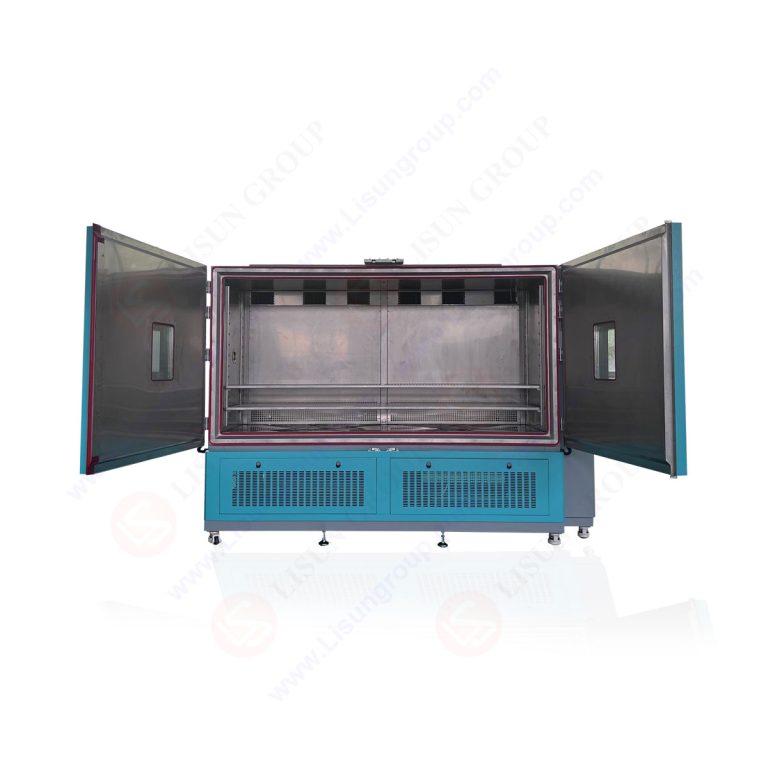
The chambers operate across -40°C to +150°C with ±0.5°C stability, supporting both accelerated aging and cold-start testing. Options include:
- Single-chamber configurations for budget-conscious labs
- Modular three-chamber racks for high-volume testing
- Explosion-proof variants for flammable environment applications
Chamber size ranges from 150L to 500L, accommodating sample boards up to 300mm x 300mm.
5.2 Photometric Measurement Tools: Spectrometers and Integrating Spheres
LISUN offers two measurement pathways:
- Spectrometer-based: For LM-80 testing, measuring spectral distribution (350-1050nm) with 0.5nm resolution.
- Integrating sphere-based: For LM-84 testing, measuring total luminous flux with 2m spheres delivering <2% measurement uncertainty.
Both systems are calibrated against NIST-traceable standards, ensuring data integrity for regulatory submission.
5.3 Data Acquisition and Remote Monitoring Features
The system includes Ethernet connectivity, enabling remote monitoring via LISUN’s cloud platform. Alarms for temperature excursions, current drifts, or photometric anomalies are sent via email or SMS. Historical data is stored locally (1TB SSD) and backed up weekly, preventing loss during extended 6,000-hour tests.
6.1 The Role of Integrating Spheres in Total Flux Measurement
For LM-84 compliance, the integrating sphere collects all emitted light, providing accurate total luminous flux values. LISUN’s spheres are coated with high-reflectance barium sulfate (>95% efficiency) and include baffles to minimize self-absorption errors. Calibration with a standard lamp ensures traceability to CIE 084 guidelines.
6.2 Spectroradiometric Analysis for Color Shift Monitoring
Color shift over time is a critical reliability metric, measured by calculating Δu’v’ coordinates per IES LM-80. The LISUN spectrometer tracks chromaticity coordinates every measurement cycle, alerting engineers if shift exceeds 0.007 (TM-21 recommended limit). This capability is vital for applications where color consistency is paramount, such as retail or medical lighting.
6.3 Ensuring Measurement Repeatability and Reproducibility
To minimize variability, LISUN instruments employ:
- Temperature-stabilized detectors (15-35°C operating range)
- Automated dark current subtraction
- Pre-test warm-up cycles (30 minutes minimum)
These measures ensure that measurement uncertainty remains below 3% across the test duration, satisfying accreditation bodies like ISO 17025.
7.1 Compliance with CIE 084 and CIE 70 Guidelines
CIE 084 provides measurement methods for luminous flux of electric lamps, while CIE 70 addresses procedures for assessing lamp life. LISUN’s photometric systems adhere to these standards, ensuring global acceptance of test results. For instance, the 2° field-of-view used in spectrometer alignment follows CIE 127 recommendations for near-field measurements.
7.2 Harmonization with IES LM-79-19 for Total Luminous Flux
IES LM-79-19 specifies electrical and photometric measurements for solid-state lighting products. LISUN chambers integrate LM-79-compliant goniophotometers for angular intensity distribution, complementing aging test data with full photometric characterization. This combined approach allows manufacturers to provide comprehensive datasheets for regulatory bodies like ENERGY STAR.
7.3 Future-Proofing with TM-28 and Emerging Standards
TM-28 (2020 version) updates TM-21 projections for luminaire-level data, incorporating driver degradation factors. The LEDLM-84PL software already supports TM-28 algorithms, ensuring that test data remains relevant as standards evolve. LISUN also provides firmware updates to address emerging requirements, such as CIE’s upcoming standard on phosphor-converted LED reliability.
The LED Life Test: Ensure LM-80 Compliance with LISUN Environmental Chambers is fundamentally achieved through precise instrumentation, rigorous data analytics, and adherence to globally recognized standards. The LISUN LEDLM-80PL and LEDLM-84PL systems offer distinct but complementary capabilities: the former excels in component-level testing under IES LM-80 and TM-21, while the latter addresses luminaire-level requirements per IES LM-84 and TM-28. Both platforms leverage Arrhenius Model-based software to project L70 and L50 lifetimes with high confidence, supported by dual testing modes and customizable hardware. The integration of up to three temperature chambers, spectrometer or integrating sphere photometry, and remote monitoring ensures that engineers can generate reliable data for certification while reducing test cycle times. For LED manufacturers, third-party labs, and R&D teams, LISUN provides a complete ecosystem for lumen maintenance validation, color shift tracking, and thermal characterization. By aligning with standards like CIE 084, CIE 70, and IES LM-79-19, these instruments guarantee global regulatory acceptance. Ultimately, LISUN’s solution empowers the lighting industry to deliver durable, high-performance products backed by scientific rigor and compliance certainty.
Q1: What is the minimum test duration for LM-80 compliance using the LISUN LEDLM-80PL system?
A: Per IES LM-80-15, the minimum test duration is 3,000 hours, though 6,000 hours is required for TM-21 projection up to 60,000 hours. The LISUN system supports continuous operation for 10,000+ hours with automated data logging at user-defined intervals (e.g., every 100 hours). For accelerated aging, testing at 85°C for 6,000 hours is standard, as it typically provides sufficient data points for Arrhenius model fitting. The software automatically flags if data insufficient for projection.
Q2: Can I test multiple LED samples at different temperatures simultaneously?
A: Yes, the LISUN platform supports up to three connected temperature chambers, each capable of independent temperature settings. For instance, you could run one chamber at 55°C, another at 75°C, and a third at 85°C simultaneously. The software synchronizes measurement cycles across all chambers, providing multi-temperature data for Arrhenius analysis. This setup reduces total test time by 50-66% compared to sequential testing.
Q3: How does the Arrhenius Model software handle non-Arrhenius degradation behaviors?
A: While the Arrhenius Model assumes exponential degradation with temperature, some LED failures (e.g., phosphor delamination) follow non-Arrhenius kinetics. The LISUN software includes a verification module that analyzes residuals from model fitting. If deviation exceeds 5%, the system flags the data and suggests alternative models, such as Eyring or Peck models. Engineers can then select the best-fit model for their specific LED chemistry.
Q4: What is the difference between L70 and L50 metrics, and when should each be reported?
A: L70 refers to the time when lumen output drops to 70% of initial value, while L50 indicates 50% retention. IES standards require L70 for general lighting applications (e.g., commercial, residential), as human perception notes significant drop at 30% loss. L50 is used for applications like automotive headlights where failure threshold is higher. TM-21 extrapolations are valid for L70 up to 6x the test duration (e.g., 36,000 hours for a 6,000-hour test) but only 5.5x for L50.
Q5: Does the system comply with ISO 17025 laboratory accreditation requirements?
A: Yes, the LISUN LEDLM-80PL and LEDLM-84PL are designed to meet ISO 17025:2017 standards for testing and calibration laboratories. Key features include automatic recording of environmental conditions (temperature, humidity), traceable calibration certificates for all photometric instruments, and audit trails for every data change. LISUN also provides documentation templates for method validation and uncertainty budgets, facilitating accreditation with bodies like UKAS or A2LA.