









Here is the technical article generated according to your specifications.
Abstract
The modern LED manufacturing landscape demands rigorous validation of lumen maintenance and color stability to meet long-term warranty obligations. A dedicated LED Environmental Test Chamber: Complies with IEC 60068 Standards is now the cornerstone of accelerated aging protocols for solid-state lighting. This article provides a comprehensive technical analysis of the LISUN LED Optical Aging Test Instrument, detailing how its dual-platform architecture (LEDLM-80PL and LEDLM-84PL) integrates with the Arrhenius Model for predictive lifetime assessment. We will explore specific compliance pathways for IES LM-80, TM-21, and LM-84 standards, emphasizing 6000-hour test durations and L70/L50 metric calculations. Designed for R&D engineers and third-party laboratory technicians, this piece offers data-driven insights into customizable hardware configurations, temperature chamber integration, and automated data logging required for IEC 60068 environmental stress screening.
1.1 The Necessity of Environmental Stress Testing for LEDs
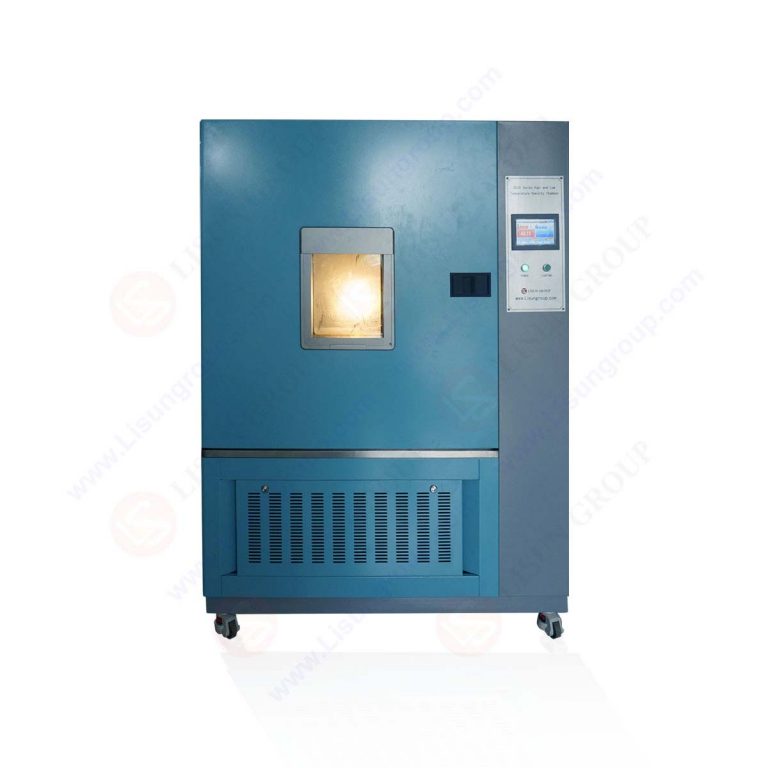
Solid-state lighting devices exhibit non-linear lumen depreciation influenced by junction temperature and humidity. Unlike traditional sources, LEDs require sustained operation for thousands of hours to yield statistically significant L70 (time to 70% lumen maintenance) data. The LED Environmental Test Chamber: Complies with IEC 60068 Standards provides the controlled thermal and electrical stress necessary to accelerate this degradation without introducing failure mechanisms not seen in the field. This chamber ensures reproducibility across test runs, a requirement for ISO 17025 accredited facilities.
1.2 Understanding the IEC 60068 Framework
IEC 60068 is a family of environmental testing standards covering cold, dry heat, damp heat, and thermal cycling. For LED modules, the relevant subset includes IEC 60068-2-78 (Damp heat, steady state) and IEC 60068-2-14 (Thermal shock). The LISUN instrument integrates these profiles directly into its control logic, allowing the chamber to modulate temperature and humidity while simultaneously driving the LED samples at specified currents. This closed-loop control is critical for maintaining the constant case temperature (Ts) demanded by the IES standards.
2.1 LEDLM-80PL: Precision for LM-80 and TM-21 Protocols
The LEDLM-80PL variant is engineered specifically for the IES LM-80-15 standard, which mandates a minimum of 6,000 hours of testing with data points collected every 1,000 hours. This system uses the Arrhenius Model to accelerate the reaction rate of chemical degradation within the phosphor and LED die. By operating samples at three different case temperatures (typically 55°C, 85°C, and a third user-defined temperature), engineers can calculate activation energy (Ea) values. The software then performs TM-21 extrapolation to project lumen maintenance beyond 36,000 hours.
2.2 LEDLM-84PL: High-Temperature Focus for LM-84 and TM-28
Designed for IES LM-84-19, the LEDLM-84PL focuses on higher temperature thresholds, often required for automotive and high-lumen density applications. It supports the TM-28 projection methodology, which is more robust for LEDs exhibiting non-Arrhenius behavior under extreme thermal stress. This variant features enhanced heat dissipation for the test board and supports higher current drive levels, allowing for accelerated testing of high-power COB (Chip-on-Board) arrays.
2.3 Technical Comparison of the Two Platforms
The table below provides a direct technical contrast between the two primary configurations offered by LISUN.
| Feature / Parameter | LEDLM-80PL (LM-80/TM-21 Focus) | LEDLM-84PL (LM-84/TM-28 Focus) |
|---|---|---|
| Primary Standard | IES LM-80-15 | IES LM-84-19 |
| Projection Model | TM-21 (Arrhenius based) | TM-28 (Empirical quadratic) |
| Min. Test Duration | 6,000 hours (mandatory) | 6,000 hours (recommended) |
| Temperature Range | 20°C to 100°C | 20°C to 130°C |
| Supported Channels | Up to 3 Temperature Chambers | Up to 3 Temperature Chambers |
| Key Metric Output | L70 / L50 / Ea Activation Energy | L70 / L50 / High-Temp Stability |
3.1 Dual Testing Modes: Constant Temperature vs. Thermal Cycling
The instrument offers two distinct operational modes crucial for diverse product validation. The Constant Temperature Mode maintains a fixed case temperature (Ts) for the duration of the 6000-hour test, required for LM-80 characterization. Conversely, the Thermal Cycling Mode replicates real-world on/off cycles, essential for evaluating solder joint fatigue and thermal expansion mismatches under IEC 60068-2-14 guidance. This mode is particularly valuable for outdoor and horticultural lighting fixtures.
3.2 Customizable Hardware and Multichannel Support
LISUN provides modular test racks that can be configured for various LED package types (SMD, COB, through-hole). The system supports connection to up to 3 connected temperature chambers, each capable of independent temperature and humidity control. This parallel processing capability allows a single controller to manage 90 or more individual LED samples simultaneously, drastically reducing the total time required for a comprehensive DOE (Design of Experiments). Each channel features dedicated constant current sources with an accuracy of ±0.5%.
3.3 Integrating Sphere Integration for Colorimetric Data
While the aging chamber focuses on lumen maintenance, the system is designed to interface with LISUN’s LMS-series integrating spheres. After each 1,000-hour interval, samples are moved to the sphere for measurement per IES LM-79-19 standards. This combined approach yields not only L70 data but also chromaticity shift (Δu’v’) over time, a critical parameter for indoor lighting quality.
4.1 Application of the Arrhenius Model
The Arrhenius Model serves as the mathematical backbone for predicting LED lifespan. The LISUN software automatically calculates the reaction rate (k) at each test temperature. By plotting ln(k) against reciprocal temperature (1/T), the activation energy (Ea) is derived. A typical Ea value for a well-designed phosphor-converted LED is between 0.3 eV and 0.7 eV. The software uses this value to accelerate the test, correlating 6,000 hours of data to a projection of 36,000 or even 60,000 hours.
4.2 Calculating L70 and L50 Metrics
L70 (the time to 70% of initial lumen output) is the standard for general lighting, while L50 applies to decorative or non-critical applications. The software fits the raw lumen maintenance data to either an exponential decay curve (for TM-21) or a quadratic polynomial (for TM-28). The precision of this fit is measured by the R² value, which must exceed 0.95 for a valid TM-21 projection. The instrument automatically flags any data points indicating early catastrophic failure.
4.3 TM-21 vs. TM-28: Selecting the Right Projection
The choice between TM-21 and TM-28 depends on the LED technology. For standard mid-power LEDs, TM-21 is preferred. For LEDs operating above 85°C or those with complex phosphor layers, the TM-28 quadratic model adjusts for degradation that decelerates or accelerates over time. The LISUN software suite supports both, allowing the engineer to compare projections and select the most conservative (worst-case) estimate for warranty purposes.
5.1 IES LM-79-19: Electrical and Photometric Measurements
Before and after the 6,000-hour aging period, the LED samples must be tested per IES LM-79-19. This standard governs total luminous flux, electrical power, efficacy, and chromaticity using an integrating sphere. The LISUN system’s compatibility with the LMS-9000C sphere ensures that the 4π measurement geometry is accurate to ±3% for luminance and ±0.005 for chromaticity coordinates (CIE 1931 xy).
5.2 CIE 084, CIE 070, and CIE 127
Compliance with CIE 084 (Measurement of Luminous Flux) and CIE 070 (Measurement of Absolute Spectral Power Distribution) is inherent to the spectrophotometer design. Furthermore, the temperature control system adheres to CIE 127 guidelines for LED case temperature measurement, ensuring that the junction temperature (Tj) is accurately estimated from the case temperature (Ts) using thermal impedance data. This multi-standard compliance validates the test results for global regulatory bodies like UL and ENEC.
6.1 Data Acquisition and Monitoring
The graphical user interface (GUI) displays real-time parameters for each LED channel: current, voltage, case temperature, and chamber ambient temperature. The system logs data at 1-minute intervals during the first hour to capture thermal settling, then switches to 10-minute intervals for the remainder of the test. Alarms are triggered if the temperature deviates by more than ±2°C from the setpoint, ensuring data integrity according to IEC 60068 requirements.
6.2 Automated Report Generation
Upon test completion, the software generates a comprehensive PDF report that includes:
- Test setup parameters (temperature, current, duration)
- Excel log of raw lumen maintenance data
- L70/L50 curves with confidence intervals (90% and 95%)
- Arrhenius plot with calculated Ea value
- TM-21 or TM-28 extrapolation projection table
7.1 LED Manufacturing Quality Control
For production lines, the LED Environmental Test Chamber: Complies with IEC 60068 Standards is used for incoming quality control (IQC) of LED batches. A 1,000-hour quick-screening test can detect phosphor instability or die attachment issues before a batch is used in high-value luminaires. This reduces field failure rates significantly.
7.2 Automotive Electronics Component Testing
Automotive lighting components require adherence to AEC-Q102, which calls for tests derived from IEC 60068. The LISUN chamber’s ability to run thermal shock cycles (e.g., -40°C to 125°C) combined with powered operation makes it ideal for assessing Headlamp LED reliability under hood or ambient conditions.
7.3 Third-Party Testing Laboratories
High-volume testing labs benefit from the multichannel architecture. Running LM-80 tests for multiple clients simultaneously maximizes throughput. The instrument’s compliance with NIST traceability standards ensures that test reports are accepted by ENERGY STAR and DLC (DesignLights Consortium) without additional validation.
The LISUN LED Optical Aging Test Instrument represents a robust solution for the stringent demands of LED lifetime validation. By providing a dedicated LED Environmental Test Chamber: Complies with IEC 60068 Standards, it bridges the gap between accelerated laboratory testing and real-world reliability. Its dual-system architecture caters to the specific nuances of LM-80/TM-21 and LM-84/TM-28 protocols, while the Arrhenius Model-based software transforms raw 6,000-hour data into actionable L70 prognostications. The integration of customizable hardware and support for up to three temperature chambers ensures operational flexibility for everything from R&D prototyping to high-volume production testing. For engineers tasked with verifying 50,000-hour warranties or ensuring compliance with global lighting regulations, this instrument delivers the precision, traceability, and reliability required to make informed decisions about LED performance and longevity.
Q1: What is the minimum test duration required by IES LM-80, and can the LISUN chamber accommodate shorter tests?
A: IES LM-80-15 mandates a minimum of 6,000 hours of continuous operation for a valid lifetime projection. While the LISUN chamber can be used for shorter 1,000-hour screening tests for internal quality control, these do not meet the standard’s requirements for a fully compliant TM-21 report. For regulatory submission to ENERGY STAR or DLC, a full 6,000-hour test at three specified case temperatures (e.g., 55°C, 85°C, and 105°C) is mandatory. The chamber firmware will automatically pause the test if the data logging interval is violated, ensuring full compliance.
Q2: How does the Arrhenius Model within the LISUN software handle LEDs that do not follow single-exponential decay?
A: The software first assesses the goodness of fit using the R² value for the exponential model. If the data deviates significantly (R² < 0.90), indicating non-Arrhenius behavior, the system automatically offers the TM-28 quadratic projection model. This model is better suited for LEDs where lumen depreciation plateaus or accelerates after an initial burn-in period. The engineer can then manually select the most conservative projection (lowest L70 value) for warranty analysis. Both models are fully compliant with IES protocols.
Q3: Can I run both LM-80 and LM-84 tests simultaneously in the same chamber?
A: No, due to the differing temperature and lifespan requirements. LM-80 typically uses temperatures up to 85°C, while LM-84 can test up to 130°C. However, the LISUN system supports up to three separate temperature chambers connected to a single controller. This allows you to run an LM-80 test in Chamber A at 85°C, while Chamber B runs an LM-84 test at 120°C, all controlled and logged by the same software interface. This parallel operation maximizes laboratory efficiency.
Q4: What is the significance of the “L70” metric, and how does the chamber calculate it?
A: L70 refers to the point in time where the LED’s lumen output drops to 70% of its initial value. This is the standard industry threshold for general lighting. The LISUN software fits an exponential or quadratic curve to the measured lumen data points. It then mathematically solves the curve equation for the time (t) where the output equals 0.70. The calculation uses the data from all 6,000 hours and provides a 90% lower confidence bound, meaning there is a 90% statistical probability that the true L70 is higher than the reported value.
Q5: How does the LISUN chamber ensure the “Constant Case Temperature” (Ts) required by LM-80?
A: This is achieved through a closed-loop PID (Proportional-Integral-Derivative) control system with the LED samples mounted on a temperature-controlled heatsink. A thermocouple is attached directly to the LED case (Ts point). The controller modulates the internal heater and the chiller to maintain this setpoint within ±1°C. The air temperature inside the chamber is often higher or lower than Ts to compensate for the heat generated by the LED itself, ensuring that the LED junction temperature remains stable throughout the test.