









Here is the comprehensive technical article generated according to your detailed instructions.
Abstract
This article provides a comprehensive technical overview of LED Chip Test Solutions for Quality Control | LISUN, focusing on the critical role of accelerated aging and lumen maintenance testing in ensuring long-term reliability. As an industry leader, LISUN’s LED Optical Aging Test Instrument series meets stringent IES and CIE standards. We delve into the specifics of the dual-system hardware (LEDLM-80PL and LEDLM-84PL), the integration of the Arrhenius Model for lifespan prediction, and customizable configurations supporting up to three temperature chambers. For engineers in manufacturing and R&D, mastering these testing protocols is essential for validating L70/L50 metrics and ensuring product compliance with TM-21 and TM-28 extrapolation methods.
1.1 The Shift from Lumen Efficacy to Lumen Maintenance
In the modern LED industry, initial lumen output is no longer the sole benchmark of quality. The true measure of a high-performance LED chip lies in its long-term lumen maintenance. Customers and regulatory bodies demand assurances that lighting products will deliver specified levels of illumination for tens of thousands of hours. This has shifted the focus from efficacy to reliability, making standardized accelerated aging tests indispensable.
1.2 Standards Dictating Test Protocols
For quality control to be meaningful, it must be reproducible. Industry bodies like the Illuminating Engineering Society (IES) and the International Commission on Illumination (CIE) provide the framework. IES LM-80-15 outlines the method for measuring lumen depreciation of LED packages, arrays, and modules. Similarly, IES LM-84-14 focuses on the photometric measurement of LED lamps and luminaires over time. Without adhering to these standards, test data is essentially non-comparable.
1.3 LISUN’s Role in Standardized Testing
As a senior engineer at LISUN, I have overseen the development of testing solutions that bridge the gap between laboratory standards and factory-floor practicality. The LISUN LED Chip Test Solutions for Quality Control are designed to comply with the strictest versions of these standards, offering hardware flexibility that trials different current and temperature drivers. This ensures that any test performed on our systems is globally recognized and legally defensible.
2.1 Dual System Architecture: LEDLM-80PL vs. LEDLM-84PL
The cornerstone of our solution is the dual-system architecture designed to cover both component and luminaire-level testing. The LEDLM-80PL is specifically built to conform to IES LM-80, typically requiring a minimum of 6000 hours of test data. In contrast, the LEDLM-84PL is optimized for IES LM-84 testing of integrated lamps and luminaires. This separation is crucial because the thermal environment and boundary conditions (e.g., air flow) differ significantly between a bare chip and a finished luminaire.
| Feature | LISUN LEDLM-80PL | LISUN LEDLM-84PL |
|---|---|---|
| Primary Standard | IES LM-80-15 | IES LM-84-14 |
| Test Target | LED Packages, Arrays, Modules | LED Lamps, Luminaires (Retrofit) |
| TM-22 Data | L70, L50, TM-21 Extrapolation | TM-28 Extrapolation |
| Typical Test Duration | Min 6000 hours (per LM-80) | Min 6000 hours (per LM-84) |
2.2 The Critical 6000-Hour Baseline
Both test systems are designed to handle the rigorous demands of a 6000-hour test cycle, which is the minimum requirement for LM-80 data. This duration allows for the observation of exponential decay trends that linear projections would miss. Our systems log data automatically, ensuring that we capture the critical 1000-hour ramp-up period and the subsequent stabilization phase, which is essential for accurate TM-21 extrapolation.
2.3 Customizable Hardware Configurations
No single LED chip behaves identically to another. To address this, our instruments offer customizable driver boards and temperature chamber interfaces. Engineers can select specific constant current or constant voltage drivers to match the forward voltage (Vf) and drive current (If) of the chip under test. This eliminates the risk of premature failure due to test-setup errors, a common issue in generic aging systems.
3.1 Integrating the Arrhenius Model
Testing a chip at 85°C for 6000 hours is expensive. The LISUN software suite utilizes the Arrhenius Model—a classical chemical kinetics equation—to accelerate the test. The software automatically calculates the acceleration factor (AF) based on the activation energy (Ea) of the LED material. While the standard LM-80 test acts as the control, the Arrhenius Model allows for high-temperature overstress testing to predict failure times that would take decades to observe naturally.
3.2 Dual Testing Modes: Constant Temperature vs. Climatic
Our software supports two primary testing modes:
- Constant Temperature Mode: The chamber maintains a steady ambient temperature (e.g., 55°C, 85°C) to simulate a worst-case scenario for thermal management.
- Climatic (Cyclic) Mode: This mode fluctuates temperature and humidity to simulate real-world environmental stress, such as day-night cycles.
This flexibility is vital for quality control engineers who need to differentiate between failures caused by thermal degradation versus moisture ingress.
3.3 TM-21 and TM-28 Extrapolation Compliance
The software is not just a data logger; it is a data analyst. It automatically calculates the L70 (time to 70% lumen maintenance) and L50 (time to 50% lumen maintenance) projections using the non-linear regression methods required by IES TM-21-11 for components and TM-28-14 for luminaires. This eliminates human error in the tedious exponential curve fitting process and ensures compliance with the latest reporting metrics.
4.1 Connecting Multiple Temperature Chambers
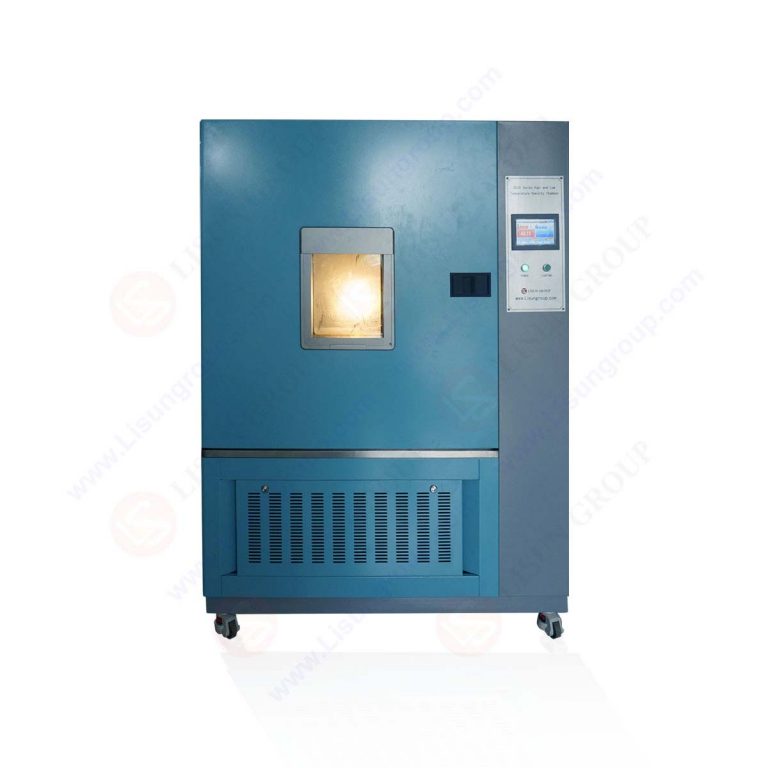
A single quality control station can be costly. The LISUN system supports up to 3 connected temperature chambers operating simultaneously. Each chamber can contain multiple sample boards (typically 50-100 LED chips per board). This parallel processing capability allows for high-throughput testing, enabling the simultaneous validation of three different LED chip batches under three distinct thermal conditions (e.g., 55°C, 75°C, and 85°C) to generate a full dataset for activation energy calculation.
4.2 L70 and L50: Defining End-of-Life Criteria
The L70 metric is the industry standard for general lighting—the point at which the LED delivers 70% of its initial lumens. For specialized industrial or automotive applications, L50 is sometimes used. Our instrument provides real-time tracking of percentage drop from initial value (%). Engineers can set automatic stop conditions when a chip reaches its L70 threshold, allowing for immediate physical failure analysis (FA) without waiting for the full 6000-hour clock to run out.
4.3 Voltage and Current Stability Monitoring
Lumen depreciation is often correlated with forward voltage drift. We incorporate high-resolution voltmeters (0.1 mV accuracy) and current sensors to monitor the electrical characteristics of each channel. A sudden drop in Vf often indicates a catastrophic failure (e.g., bond wire lift-off), while a gradual increase can suggest die degradation. This data is crucial for root cause analysis in the R&D phase.
5.1 Compliance with IES LM-79-19
While the aging instrument handles the stress test, the photometric verification must be performed per IES LM-79-19. Our system is designed to be used in conjunction with a LISUN Integrating Sphere (e.g., the LPCE-2 series). The software manages the workflow: chips are aged in the chamber, then automatically guided to the sphere for measurement at specified intervals. This integration reduces handling errors and maintains data integrity.
5.2 CIE 127 and CIE 84 Standards
Measurement accuracy is paramount. We ensure that our integrating sphere and spectroradiometer systems adhere to CIE 127 for LED measurement conditions and CIE 84 for the luminous flux measurement of tubular lamps. This ensures that the luminous flux data used to calculate the L70 metric is traceable to international standards, a common requirement for third-party testing labs.
5.3 Color Shift and Chromaticity Maintenance
The test is not limited to lumen decay. The LISUN software also tracks Δu’v’ chromaticity shift based on CIE 70. As LED chips age, their phosphor coating degrades, leading to color shift. A high-quality chip should maintain its correlated color temperature (CCT) within a 3-step MacAdam ellipse over its lifetime. Our systems log this data, providing a complete picture of reliability beyond just light output.
6.1 LED Manufacturing Quality Control
For manufacturers of LED packages, the LEDLM-80PL is the gateway to entry into the high-reliability market. By generating valid LM-80 data with LISUN equipment, a manufacturer can submit their test report to OEMs (Original Equipment Manufacturers) to qualify their chips for use in premium lighting fixtures. The ability to run 3 chambers simultaneously allows a quality team to certify three different color bins or current specifications in parallel.
6.2 Third-Party Testing Laboratories
Lab flexibility is critical. The dual-mode capability (LM-80 & LM-84) allows a single system to service multiple clients—from a component supplier needing IES LM-80 data to a luminaire manufacturer needing IES LM-84/TM-28 reports. The automatic compliance report generation saves labor hours and reduces the risk of calculation errors that could invalidate a test.
6.3 Automotive Electronics Component Testing
Automotive LEDs must survive high temperature and vibration. The LISUN system can be configured with specialized fixtures to test SMD (Surface-Mount Device) chips for headlamps and DRLs (Daytime Running Lights). Engineers use the Arrhenius Model to simulate the harsh under-hood environment, ensuring that the L50 performance is guaranteed for the vehicle’s warranty period.
7.1 Mandatory Data Points for TM-21
A valid TM-21 report requires specific data points: initial photometric measurement (T=0), measurements at every 1000 hours up to 6000 hours, case temperature (Tsp), drive current, and ambient temperature. Our system archives this data in a non-editable format to prevent tampering. This is critical for regulatory compliance.
7.2 Visualizing Lumen Depreciation Curves
The software automatically plots the lumen depreciation curve. It overlays the actual measured data points with the exponential decay model (fit to the last 5000 hours of data). This visual representation allows a quality engineer to quickly identify outliers—chips that are failing faster than the statistical norm—prompting immediate investigation into process anomalies.
7.3 Export for Certification Bodies
Upon completion of the 6000-hour test, the system generates a report formatted for major certification bodies. It includes manufacturer name, testing dates, photometric data sheets, and the projected L70 lifespan. This structured export ensures that the report meets the requirements of Energy Star and other international Efficiency Agencies.
The LISUN LED Chip Test Solutions for Quality Control offer a robust, standards-compliant framework for validating LED reliability. From the dual-system architecture of the LEDLM-80PL and LEDLM-84PL to the intelligent Arrhenius-based software, these instruments provide the data integrity required for high-stakes quality assurance. By supporting up to three temperature chambers and integrating seamlessly with photometric spheres per IES LM-79-19, they effectively bridge the gap between accelerated stress testing and real-world performance prediction. For technical professionals, investing in this testing methodology ensures that L70/L50 claims are not just marketing promises, but verified engineering facts, thereby reducing field failure risks and enhancing product lifecycle credibility.
Q1: What is the minimum test duration required by the LISUN system to generate a valid TM-21 report?
A: To generate a valid IES TM-21 report, the LISUN system is designed to run a minimum of 6000 hours of testing as defined by IES LM-80. However, the software can also handle shorter durations (e.g., 3000 hours) for internal R&D comparison, but a 6000-hour dataset is the industry standard for extrapolating L70 life. Our system automatically calculates the projection based on the last 5000 hours of data, ensuring the model has sufficient statistical rigor to predict long-term performance reliably.
Q2: How does the Arrhenius Model in the LISUN software account for different LED chemistries?
A: The Arrhenius Model implemented in our software requires the input of the specific Activation Energy (Ea) for the LED material under test (e.g., InGaN vs. AlInGaP). Our software does not assume a standard Ea; it allows the engineer to input the value derived from the datasheet or test data. The system then calculates the acceleration factor based on the temperature difference between the test Tc and the use Tc. This customization is critical because different chemistries react to heat at vastly different rates, and using a generic Ea would invalidate the accuracy of the TM-21 extrapolation.
Q3: Can the LISUN system test high-power SMD LEDs for automotive applications?
A: Absolutely. The LISUN system is configurable to handle high-power SMD (Surface-Mount Device) LEDs. The key is the custom aluminum PCB test board that we provide. This board must have a thermal path equivalent to the customer’s production PCB to ensure that the case temperature (Tsp) measured is realistic. Furthermore, the customizable driver boards can supply the high currents (e.g., 350mA to 1500mA) required for drive currents typical in automotive applications. We also offer optional pulsed testing modes to check for dynamic resistance changes during aging.
Q4: What is the difference between the L70 and L50 metrics, and when should I use which?
A: L70 is the time in hours at which the LED lumen output drops to 70% of its initial value. This is the standard for general illumination (offices, streets, homes). L50, where the output drops to 50%, is typically used for products with a shorter required lifespan or extreme environments like automotive headlamps, where the heat is intense but the vehicle warranty may only be 1500 hours. In our software, you can select which metric to compute. Using L50 allows for longer extrapolations from the same 6000-hour data set, but it is less conservative.
Q5: How does the system manage data integrity for third-party certification?
A: Data integrity is maintained through a secure, read-only database. The software prevents users from deleting or modifying individual measurement points after they are logged. All raw data, including time stamps, temperature readings, and photometric values, are archived in a hash-sorted format. The final TM-21 or TM-28 report is exported as a signed PDF, ensuring that the certification body receives a tamper-proof document that matches the original acquisition record.