









This technical article provides a comprehensive analysis of Environmental Test Chambers: LISUN Compliance with IEC 60068 Standards, focusing on the LEDLM-80PL and LEDLM-84PL LED Optical Aging Test Instruments. These systems integrate dual testing methodologies—the LEDLM-80PL supporting IES LM-80/TM-21 protocols for lumen maintenance testing and the LEDLM-84PL designed for IES LM-84/TM-28 standards. Leveraging the Arrhenius Model-based software, these chambers enable accelerated aging validation across 6000-hour test durations with precise L70/L50 metric calculations. The article examines hardware customization options, multi-chamber connectivity supporting up to 3 temperature chambers, and compliance with critical industry standards including CIE 084, CIE 70, and CIE 127. Engineers and laboratory technicians will gain actionable insights into optimizing LED reliability testing workflows while ensuring IEC 60068 compliance for global regulatory acceptance.
1.1 The Role of Environmental Test Chambers in LED Reliability
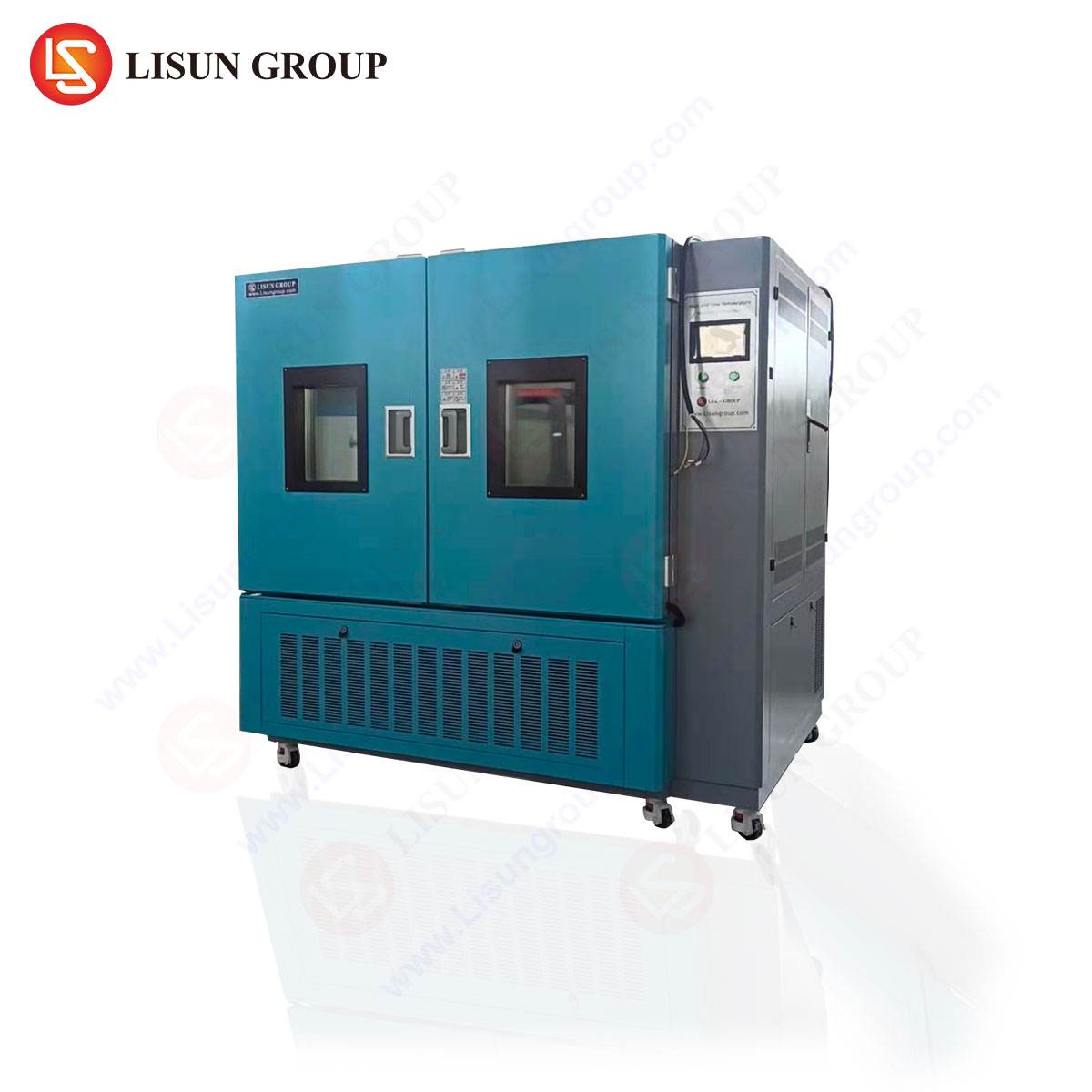
Environmental test chambers serve as foundational tools for evaluating LED performance under controlled temperature and humidity conditions. These systems simulate real-world operational stressors to predict long-term lumen depreciation, color shift, and catastrophic failure modes. For LED manufacturers, compliance with IEC 60068—the international standard for environmental testing—is mandatory for market access in Europe, Asia, and North America. LISUN’s approach integrates IEC 60068-2-1 (cold), IEC 60068-2-2 (dry heat), and IEC 60068-2-78 (damp heat) protocols directly into the chamber control architecture.
1.2 The LEDLM Series Architecture
The LISUN LEDLM-80PL and LEDLM-84PL systems represent a dual-platform strategy for addressing distinct testing requirements. The LEDLM-80PL targets SSL product qualification per IES LM-80-15, requiring 6000-hour minimum test durations with data points every 1000 hours. Conversely, the LEDLM-84PL aligns with IES LM-84-14 for LED light engines and modules, supporting TM-28 extrapolation methodologies. Both systems feature modular temperature chambers that can be configured as standalone units or daisy-chained to accommodate up to 3 connected chambers for simultaneous multi-temperature testing.
2.1 Temperature Chamber Performance Parameters
LISUN environmental chambers deliver a temperature range of -40°C to +150°C with ±0.5°C uniformity across the workspace. The humidity control system spans 20% to 98% RH with ±2.5% RH accuracy. These specifications ensure compliance with IEC 60068-3-5 for temperature variation limits. The chamber interior dimensions—typically 600mm x 600mm x 600mm—accommodate standard LED modules and luminaire samples without compromising airflow distribution.
2.2 Customizable Hardware Options
Engineers can select from multiple hardware configurations tailored to specific testing needs:
- Sample mounting fixtures: Adjustable racks for PCB-based LED arrays, individual LED packages, or complete luminaire assemblies
- Photometric measurement ports: Integrating sphere interfaces for real-time luminous flux measurement without sample removal
- Data acquisition modules: 16-channel thermocouple inputs with 24-bit resolution for precise temperature monitoring at junction points
- Safety interlocks: Over-temperature protection with redundant thermal cutoffs meeting IEC 61010-1 requirements
2.3 Multi-Chamber Connectivity Architecture
The system supports synchronous operation of up to 3 temperature chambers through a centralized control unit. This configuration enables simultaneous testing at multiple temperature setpoints—for example, 55°C, 85°C, and 105°C—as required by IES LM-80 for determining activation energy via Arrhenius analysis. Each chamber maintains independent PID control loops while sharing a common data logging infrastructure.
3.1 Dual Testing Mode Implementation
The LEDLM series offers two primary operational modes:
| Mode | Measurement Type | Frequency | Typical Duration | Key Outputs |
|---|---|---|---|---|
| Lumen Maintenance Test | Luminous flux via integrating sphere | Every 1000 hours | 6000+ hours | L70, L50, Lx values |
| Electrical Parameter Test | Voltage, current, power factor | Continuous or intermittent | 1000-10000 hours | Drift rates, failure thresholds |
| Combined Mode | Both above | Synchronized | As specified | Full degradation profile |
3.2 Accelerated Aging Protocols
The Arrhenius Model-based software calculates activation energy (Ea) from multi-temperature test data. For typical phosphor-converted white LEDs, Ea values range from 0.4 eV to 1.2 eV, enabling TM-21 extrapolation to 6000 hours based on 6000 hours of actual test data. The system automatically applies the following equation for lifetime prediction:
Lx = C * exp(Ea / (k * T))Where Lx is the time to reach x% lumen maintenance, C is a constant, k is Boltzmann’s constant, and T is absolute temperature in Kelvin.
3.3 Real-Time Data Visualization
The control software provides graphical trending of lumen depreciation curves, color temperature shifts (ΔCCT), and chromaticity coordinate migration (Δu’v’) per CIE 127 guidelines. Historical data exports in CSV and XML formats facilitate integration with enterprise quality management systems.
4.1 IES LM-80 and TM-21 Implementation
The LEDLM-80PL system strictly follows IES LM-80-15 requirements for LED package, array, and module testing. Key compliance features include:
- Data collection at 0, 1000, 2000, 3000, 4000, 5000, and 6000 hours
- Minimum 20 samples per test condition with 5 units per temperature
- Lumen maintenance reporting with 90% confidence intervals
- TM-21 extrapolation using exponential decay models for L70 and L50 calculations
4.2 IES LM-84 and TM-28 for Light Engines
The LEDLM-84PL variant addresses IES LM-84-14 requirements for LED light engines and integrated LED modules. TM-28 extrapolation differs from TM-21 by utilizing a power-law model rather than exponential decay, which better represents degradation patterns in phosphor-converted systems.
4.3 CIE Standards Integration
- CIE 084: Measurement of luminous flux using the integrating sphere method—the system incorporates a 2-meter sphere with 4π geometry
- CIE 70: Absolute spectral response calibration using standard lamps traceable to NIST
- CIE 127: Guidelines for LED optical radiation measurement, including pulsed current operation for thermal stabilization
5.1 Activation Energy Calculation Methodology
The built-in software automatically computes activation energy from multi-temperature test data using linear regression on the Arrhenius plot. The system validates results against expected ranges for LED technologies:
| LED Type | Typical Ea (eV) | Application |
|---|---|---|
| InGaN (blue) | 0.4 – 0.8 | General lighting |
| AlGaInP (red) | 0.6 – 1.2 | Automotive, signage |
| Phosphor-converted white | 0.5 – 1.0 | Commercial, residential |
5.2 L70/L50 Metric Generation
The software calculates L70 (time to 70% lumen maintenance) and L50 (time to 50% lumen maintenance) using both TM-21 and TM-28 methodologies. Results are presented with 90% lower confidence bounds as required by ENERGY STAR and DesignLights Consortium specifications.
5.3 Custom Reporting Templates
Engineers can generate reports meeting the formatting requirements of regulatory bodies including:
- IEC 60068-2 testing summaries
- IES LM-80/TM-21 full data packages
- CIE 127 measurement certificates
- Internal reliability validation reports
6.1 Product Qualification Workflows
For manufacturers qualifying new LED products, the LEDLM series supports the following workflow:
- Sample preparation: 20-30 units per test condition with electrical and thermal characterization
- Preconditioning: 100-hour burn-in at rated current (per CIE 127)
- Accelerated testing: 6000 hours at 3 temperatures (e.g., 55°C, 85°C, 95°C)
- Data analysis: L70/L50 calculation with TM-21 extrapolation
- Report generation: IEC 60068-compliant documentation
6.2 Third-Party Laboratory Validation
Independent testing laboratories leverage the multi-chamber capability to validate manufacturer claims. The system’s traceable calibration to IEC 60068 standards ensures test results are accepted by regulatory agencies globally.
6.3 Automotive Electronics Reliability
For automotive LED applications subject to AEC-Q102 requirements, the chambers provide temperature cycling profiles ranging from -40°C to +125°C with dwell times programmable per IEC 60068-2-14.
7.1 Precision and Reproducibility
The LEDLM series achieves measurement reproducibility within ±1% for luminous flux and ±0.3% for correlated color temperature (CCT) across multiple test runs. This precision enables reliable detection of lumen depreciation rates as low as 0.1% per 1000 hours.
7.2 Energy Efficiency and Operational Cost
Compared to traditional chamber designs, LISUN systems incorporate variable-refrigerant-flow compressors that reduce energy consumption by up to 35%. The modular architecture allows users to expand testing capacity incrementally without replacing existing infrastructure.
7.3 Global Regulatory Acceptance
Chambers are pre-configured with compliance templates for:
- IEC 60068-2-1 (Cold test)
- IEC 60068-2-2 (Dry heat)
- IEC 60068-2-78 (Damp heat)
- IEC 60068-2-14 (Temperature change)
- IEC 60068-2-30 (Damp heat cyclic)
LISUN’s LEDLM-80PL and LEDLM-84PL environmental test chambers represent a comprehensive solution for LED manufacturers and testing laboratories requiring Environmental Test Chambers: LISUN Compliance with IEC 60068 Standards. The dual-platform architecture addresses both IES LM-80/TM-21 and IES LM-84/TM-28 testing protocols, while the Arrhenius Model-based software provides industry-standard lifetime predictions for L70 and L50 metrics. With support for up to 3 connected temperature chambers, customizable hardware configurations, and integration with CIE 084, CIE 70, and CIE 127 standards, these systems deliver the precision, flexibility, and regulatory compliance necessary for accelerating LED product validation. Engineers can confidently rely on LISUN chambers to meet IEC 60068 requirements while optimizing testing throughput and operational costs. The combination of 6000-hour test capabilities, multi-temperature testing, and robust data analysis tools ensures that LED reliability data meets global market acceptance criteria for automotive, general lighting, and specialty applications.
Q1: How does the LEDLM-80PL ensure compliance with IES LM-80 test duration requirements?
A: The LEDLM-80PL system is designed to execute 6000-hour test durations as specified by IES LM-80-15, with mandatory data collection at 0, 1000, 2000, 3000, 4000, 5000, and 6000 hours. The chamber maintains ±0.5°C temperature stability throughout the entire testing period, ensuring that data points are collected under consistent thermal conditions. The system automatically logs luminous flux measurements via the integrated integrating sphere (per CIE 084) without requiring sample removal, eliminating measurement uncertainties caused by repositioning. For accelerated testing, the Arrhenius Model-based software enables TM-21 extrapolation to project L70 and L50 metrics beyond the 6000-hour test window, using activation energy calculations derived from multi-temperature data. This approach satisfies ENERGY STAR requirements for lifetime projections while maintaining traceability to IEC 60068 environmental testing protocols.
Q2: What is the maximum number of temperature chambers that can be operated simultaneously with the LEDLM series?
A: The LEDLM-80PL and LEDLM-84PL systems support synchronous operation of up to 3 temperature chambers connected to a single control unit. Each chamber can be programmed with independent temperature setpoints—typically 55°C, 85°C, and 105°C for LM-80 testing—while sharing a common data acquisition and logging infrastructure. This multi-channel capability enables engineers to conduct simultaneous testing at three different temperatures as required for calculating activation energy via the Arrhenius model. Each chamber maintains its own PID control loop with ±0.5°C uniformity, ensuring that thermal conditions are independently controlled. The centralized software interface displays real-time data from all connected chambers, allowing operators to monitor temperature, humidity, and sample status from a single workstation. This architecture significantly reduces testing time by eliminating the need to run sequential temperature tests.
Q3: How does the Arrhenius Model-based software calculate L70 and L50 metrics?
A: The software first collects lumen maintenance data at three temperature setpoints (e.g., 55°C, 85°C, and 105°C) over 6000 hours. Using linear regression on the natural logarithm of maintenance versus inverse absolute temperature, the system calculates activation energy (Ea) with typical values ranging from 0.4 eV to 1.2 eV for LED technologies. The Arrhenius equation (Lx = C exp(Ea / (k T))) is then applied to extrapolate lifetime at the rated operating temperature (usually 55°C or 25°C). L70 is calculated as the projected time when lumen maintenance reaches 70% of initial values, while L50 represents the time to 50% maintenance. Results include 90% lower confidence bounds as required by TM-21 and ENERGY STAR programs. The software automatically validates that extrapolation does not exceed 6x the test duration per TM-21 guidelines, ensuring statistical validity of predictions.
Q4: What specific CIE standards does the LEDLM series comply with for optical measurement?
A: The LEDLM series integrates compliance with three critical CIE standards. CIE 084 specifies the measurement of luminous flux using integrating sphere methods—the system incorporates a 2-meter diameter sphere with 4π geometry and baffled detector port. CIE 70 provides guidance for absolute spectral response calibration, using standard lamps traceable to NIST for establishing measurement traceability. CIE 127 covers LED optical radiation measurement protocols, including pulsed current operation for thermal stabilization and angular uniformity assessment. These standards ensure that luminance, illuminance, and chromaticity measurements are reproducible within ±1% across different laboratories. The system’s spectrometer covers 350nm to 1050nm spectral range with 0.5nm resolution, enabling accurate determination of CCT, CRI, and chromaticity coordinates per CIE 13.3 and CIE 15.2004.
Q5: How does the system handle humidity control during damp heat testing per IEC 60068-2-78?
A: The environmental chambers incorporate a steam injection system with PID-controlled vapor generators to maintain humidity levels from 20% to 98% RH with ±2.5% RH accuracy. For IEC 60068-2-78 damp heat tests (typically 85°C/85% RH), the system pre-conditions the chamber to the target temperature before introducing humidity to prevent condensation on test samples. A chilled mirror hygrometer provides primary reference measurement with ±0.5% RH accuracy, while capacitive sensors offer secondary verification. The control software automatically logs temperature, humidity, and dew point at configurable intervals (default: every 10 seconds). For cyclic damp heat tests per IEC 60068-2-30, the system executes programmable profiles with temperature ramps between 25°C and 55°C at 95% RH, maintaining condensation on samples during cooling phases. Emergency humidity cutoffs activate if levels exceed safety thresholds, protecting sensitive LED samples.