









Here is the comprehensive technical article based on your detailed instructions.
Abstract
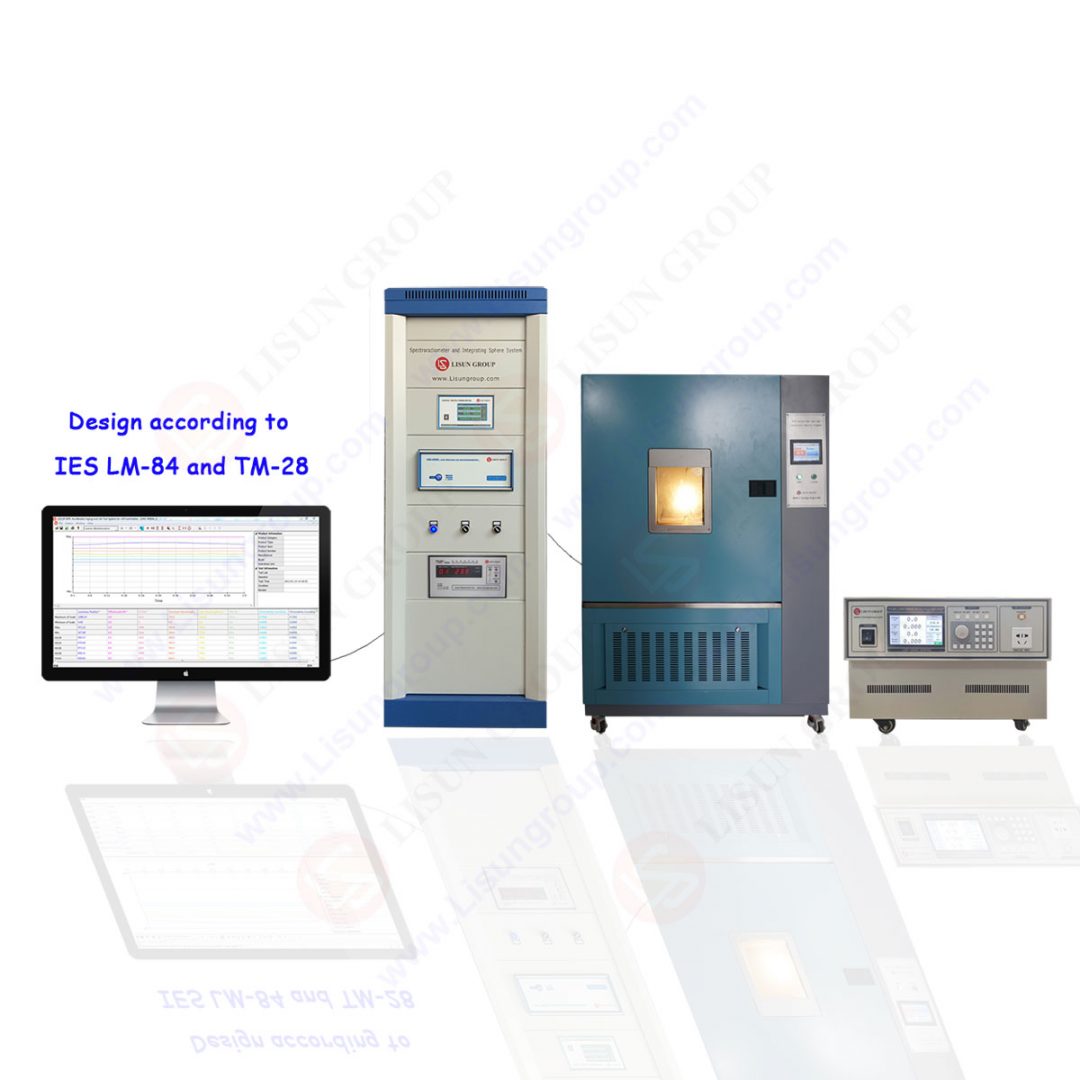
Accurate lumen depreciation modeling is critical for predicting LED lifespan and ensuring compliance with global energy regulations. The LISUN LED Life Test Oven: Precise Lumen Maintenance & Aging Tests provides a turnkey solution for performing both LM-80 and LM-84 standards. This article details the instrument’s dual-system architecture, the integration of the Arrhenius Model for accelerated aging, and its advanced software capabilities. By supporting up to three connected temperature chambers and providing real-time L70/L50 projections, this system enables engineers to validate product reliability with high confidence. Readers will gain technical insights into optimizing test workflows, interpreting TM-21 extrapolations, and meeting regulatory requirements for solid-state lighting qualification.
1.1 Dual System Variants for Specific Standards
The LISUN platform is engineered with two distinct hardware and firmware configurations to address the unique demands of different lighting technologies. The LEDLM-80PL variant is purpose-built for testing on individual LED components, packages, or modules, strictly following the IES LM-80-15 protocol. Conversely, the LEDLM-84PL variant is optimized for full LED luminaires and lamps, providing the measurement headroom and thermal management required per IES LM-84-14. This division prevents configuration errors and streamlines data collection for quality control teams.
1.2 Hardware Customization and Thermal Management
A defining feature of the LISUN LED Life Test Oven: Precise Lumen Maintenance & Aging Tests is its modular thermal construction. Each of the three connectable chambers can be set to independent temperature levels, typically ranging from 55°C to 125°C. The system employs forced air convection with precision PID controllers, maintaining temperature stability within ±0.5°C. This is crucial for accurately applying the Arrhenius Model for accelerated aging, as small thermal deviations can exponentially skew activation energy calculations and subsequent life predictions.
1.3 Dual Test Mode Flexibility
The instrument supports both constant current and constant voltage operation, accommodating the drive requirements of different LED topologies. This flexibility is critical for testing drivers and integrated luminaires where voltage drift can indicate failure modes separate from lumen depreciation. The system automatically logs drive current, forward voltage, and case temperature (Tc) at user-defined intervals, typically every 30 minutes, creating a comprehensive dataset for failure analysis.
2.1 IES LM-80 and TM-21: The Foundation of LED Reliability
The IES LM-80-15 standard specifies a minimum of 6,000 hours of testing at three case temperatures. The LISUN system is designed to run this test without manual intervention, automatically collecting data at 1,000-hour intervals. The integrated software utilizes the TM-21-19 projection algorithm to extrapolate the 6,000-hour dataset to predict L70 (time to 70% lumen maintenance), often exceeding 36,000 or 50,000 hours. This is achieved by fitting the data to an exponential decay curve, with the software providing confidence intervals for the extrapolation.
2.2 IES LM-84 and TM-28: Full Luminaire Performance
For complete luminaires, the LEDLM-84PL system follows the photometric measurement protocols of LM-84. Unlike component testing, this standard accounts for the thermal interaction between the driver, optics, and heat sink. The software supports TM-28-14 projection, which uses a quadratic decay model better suited for luminaire behavior. The LISUN system’s ability to test up to 60 luminaires simultaneously across multiple chambers ensures statistically significant sample sizes per IES recommendations.
2.3 Integration with CIE Standards and Spectral Considerations
The system’s measurement chain is calibrated traceable to CIE 127:2007 and CIE 84:1989 standards for photometry and goniophotometry. By utilizing a high-speed spectrometer (typically 350-800nm range), the system can also monitor chromaticity shift, a requirement under CIE 70 and TM-30. This ensures that not only is lumen maintenance tracked, but color maintenance is validated, preventing common failures like blue-pump shift in phosphor-converted LEDs.
3.1 System Performance Parameters
The following table provides a technical comparison between the two primary LISUN system variants, highlighting their operational boundaries.
| Parameter | LEDLM-80PL (Component Test) | LEDLM-84PL (Luminaire Test) |
|---|---|---|
| Primary Standard | IES LM-80-15, TM-21-19 | IES LM-84-14, TM-28-14 |
| Test Voltage Range | 0 – 300V (AC/DC) | 100 – 277V (AC) |
| Max Sample Capacity (per chamber) | 48 LED modules/components | 20 Luminaires (up to 500W each) |
| Chamber Temperature Range | Ambient +10°C to 125°C (±0.5°C) | Ambient +10°C to 100°C (±1.0°C) |
| Measurement Methodology | 2-meter Integrating Sphere | 1.5-meter or 2-meter Integrating Sphere |
| Data Acquisition Rate | 30-minute intervals (typical) | 30-minute intervals (typical) |
| Internal Software Model | Single & Dual Exponential Decay | Quadratic Decay (TM-28) |
3.2 Arrhenius Model and Activation Energy Calculation
The software embedded within the LISUN LED Life Test Oven: Precise Lumen Maintenance & Aging Tests automates the Arrhenius Model calculations. By utilizing data from three temperature sets (e.g., 55°C, 85°C, and 105°C), the system solves for the activation energy (Ea) of the lumen depreciation failure mechanism. A typical Ea for LED phosphor degradation is around 0.4eV to 0.7eV. The software provides a statistical fit report, allowing engineers to verify if the acceleration factor is consistent across the test matrix.
4.1 Real-Time Lumen Maintenance Tracking
The proprietary LISUN software provides a live dashboard showing normalized luminous flux vs. time for every sample. Engineers can apply filters to view the average performance of a batch or flag outliers. The system calculates the L70 and L50 metrics in real-time, updating the projected lifespan as new data points are collected. This dynamic analysis is vital for early detection of manufacturing anomalies.
4.2 TM-21 Extrapolation and Report Generation
Upon completion of the mandatory 6,000-hour (or longer) aging period, the software generates a compliant TM-21 report. This report includes the measured data points, the fitted exponential curve, the projected L70 value, and the 90% lower confidence bound. The software also checks the validity of the data per TM-21 rules, such as ensuring the root mean square error (RMSE) of the fit is below acceptable thresholds, preventing invalid projections from being reported.
4.3 Data Integrity and Traceability
All raw data is stored in a non-editable SQL database. The system logs chamber temperature, humidity, and power line fluctuations. This traceability is critical for third-party testing labs seeking ISO 17025 accreditation. The software supports user-defined pass/fail criteria and can automatically trigger alarms if the lumen maintenance of a critical sample drops below a specified threshold.
5.1 Designing Accelerated Life Tests (ALT)
For R&D teams, the LISUN LED Life Test Oven allows for aggressive ALT. By raising the case temperature to 105°C or 125°C, engineers can compress a typical 6,000-hour test into a shorter timeframe, seeing significant degradation in 2,000 hours. The Arrhenius Model is then used to translate these accelerated failures back to use-case conditions. This is particularly useful for qualifying phosphor or encapsulant materials before a full LM-80 test.
5.2 Identifying Failure Mechanisms
The continuous monitoring of forward voltage (Vf) history provides clues to failure mechanisms. A sudden increase in Vf often indicates a bond wire failure. A gradual decrease in Vf coupled with lumen loss suggests phosphor degradation. The system’s ability to store spectral data allows engineers to correlate lumen loss with specific wavelength shifts, helping to pinpoint the root cause of the failure.
6.1 Managing a Matrix of Test Conditions
A single LISUN system controller can manage up to three connected temperature chambers simultaneously. This allows for running an entire LM-80 matrix (three temperatures x 20 samples each) from a single user interface. The software synchronizes data collection across all chambers, ensuring that time stamps align for accurate cross-comparison.
6.2 Scalability for High-Speed Production Labs
To meet high-volume throughput demands, multiple LISUN oven systems can be networked via a single LAN server. This is ideal for large LED manufacturers who need to test hundreds of samples for internal qualification. The central database allows for powerful data mining, enabling correlation between production lot parameters (e.g., specific phosphor batch) and long-term lumen maintenance performance.
7.1 Setting Up a Standard LM-80 Test
The user interface follows a step-by-step wizard. The user sets the target temperature, current, and test duration (typically 6,000 hours). Pre-programmed profiles exist for IES LM-80-15 and LM-84-14. The system automatically handles the required photometric measurements at 0, 1,000, 2,000, 3,000, 4,000, 5,000, and 6,000 hours without opening the chamber, ensuring thermal equilibrium is maintained.
7.2 Remote Monitoring and Alerts
The software includes a web-based remote monitoring module. Engineers can receive daily summary emails or SMS alerts if a sample fails or if the chamber temperature deviates. This is a critical feature for long-duration tests spanning several months, allowing the laboratory manager to respond to equipment issues proactively rather than losing valuable test data.
The LISUN LED Life Test Oven: Precise Lumen Maintenance & Aging Tests stands as a comprehensive solution for validating LED reliability. By integrating dual-system compatibility for IES LM-80/TM-21 and LM-84/TM-28 standards, it eliminates ambiguity between component and luminaire testing. The advanced software automates the complex Arrhenius Model calculations, providing accurate L70 and L50 projections with statistical confidence. The hardware’s ability to control three independent temperature chambers enables efficient execution of accelerated aging matrices, while real-time data logging supports deep failure analysis. For LED manufacturing engineers, this instrument ensures that products not only meet regulatory requirements but also exceed customer expectations for lifespan. It represents a balance of rigorous standard compliance and practical, data-driven engineering.
Q1: What is the minimum testing time required to get a valid L70 projection using the LISUN LED Life Test Oven?
A: According to IES LM-80-15, the minimum test duration for component evaluation is 6,000 hours. The LISUN system is capable of running this test continuously. For a valid TM-21 projection, the software requires that the data pass specific statistical criteria, including a goodness-of-fit test on the exponential decay model. The extrapolation length is limited to 6x the measured data duration. Therefore, with 6,000 hours of data, you can project up to 36,000 hours. However, for more accurate predictions, longer test durations (10,000 hours) provide a higher confidence level in the projection.
Q2: Can the LISUN system test both LEDs and laser diodes (LDs) for reliability?
A: Primarily, the system is optimized for phosphor-converted and monochromatic LEDs. However, with proper heatsinking and current source configuration, it can be adapted for laser diode testing, particularly for low-power LDs used in Li-Fi or automotive sensors. The crucial factor is ensuring the chamber’s thermal load is suitable. The LEDLM-80PL variant is best suited for small COBs and SMD LEDs. For high-power LDs, we recommend consulting LISUN engineering to design a custom adapter plate that ensures proper thermal transfer to the heatsink.
Q3: How does the system ensure that measurements are taken without disturbing the thermal environment of the sample?
A: The LISUN LED Life Test Oven incorporates a fiber-optic cable routing system that passes through the chamber wall. A multiplexer positions the integrating sphere or a goniometer probe at the measurement port. The system is programmed to only move the measurement apparatus into position when data is being collected. This prevents the operator from opening the door, which would cause a thermal shock to the samples and invalidate the life test for that specific hour. The entire measurement sequence is automated and pre-programmed.
Q4: What is the significance of the 90% lower confidence bound in the TM-21 report generated by your software?
A: The 90% lower confidence bound (LCB) is a critical statistical parameter. It represents the value at which we are 90% confident that the true L70 value lies above this threshold. For example, if the projected L70 is 50,000 hours but the 90% LCB is 45,000 hours, you should quote the lower value in your specifications. The LISUN software automatically calculates this, preventing overstatement of lifespan. This is a key requirement for ENERGY STAR and DLC certification reports.
Q5: Can the system run a constant voltage test on a luminaire that has an external driver?
A: Yes, the LEDLM-84PL system is designed to operate in constant voltage mode for testing luminaires that require an external AC-to-DC driver. The system can be programmed to maintain a stable mains voltage (e.g., 120VAC or 230VAC). The data logging will monitor the current draw of the luminaire. A drop in current combined with lumen loss can indicate driver failure, while lumen loss with stable current (with a slight voltage increase) suggests LED chip degradation. This dual-mode testing provides a holistic view of the luminaire’s robustness.