









Abstract
The LISUN DFX series Externally Ballasted Fluorescent Lamp Test Load Cabinet is a critical instrument for temperature and vibration profiling in automotive electronics component testing. Designed to simulate resistive, inductive, and capacitive loads with high precision, this load test cabinet enables compliance verification against international standards such as IEC 60669-1 and IEC 60884-1. For electrical product manufacturers, third-party testing laboratories, and quality control engineers, the DFX series provides accurate power factor adjustment, multi-channel load simulation, and seamless integration with automated test systems. This article examines the technical architecture, operational capabilities, and compliance advantages of the DFX series, demonstrating its essential role in validating switch durability, connector performance, and lamp holder reliability under extreme environmental conditions.
1.1 Load Simulation Capabilities and Power Factor Control
The LISUN DFX series incorporates digital power factor control with a resolution of 0.01, enabling precise adjustment across a range of 0.3 to 1.0. This granularity is essential for replicating real-world electrical loads encountered in automotive lighting systems, where ballasted fluorescent lamps exhibit mixed resistive-inductive characteristics. The load simulation technology supports three distinct load types: resistive (R), inductive (L), and capacitive (C), each independently configurable per channel. The DFX-40 model, for instance, delivers a maximum current output of 40A with a power factor accuracy of ±0.02, ensuring test repeatability across multiple cycles.
1.2 Multi-Channel Configuration and Scalability
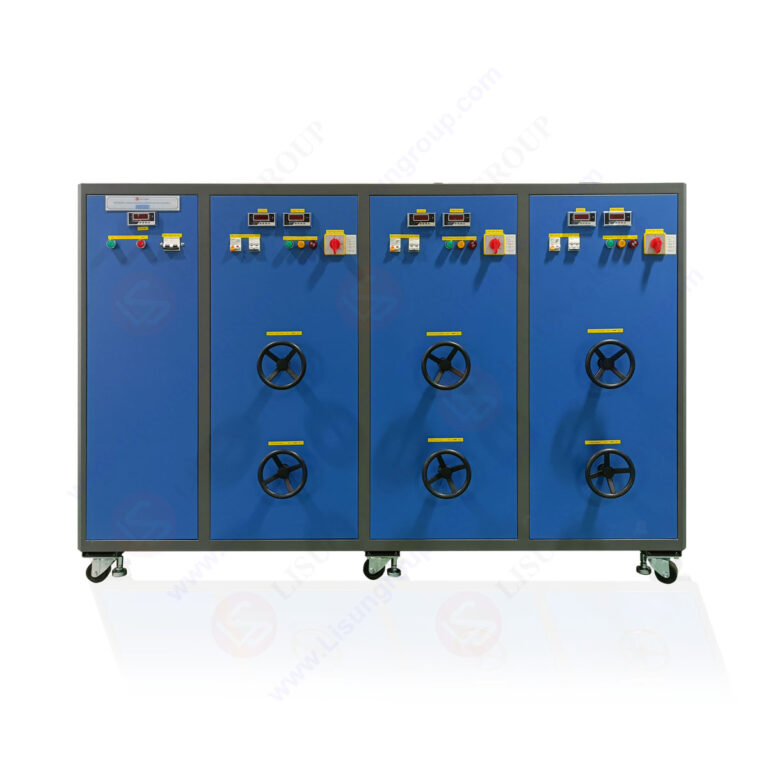
The DFX series offers channel configurations ranging from single-channel (DFX-20) to three-channel (DFX-20-3CH) and higher-capacity units (DFX-40, DFX-60, DFX-80). Each channel operates independently with its own power factor setting, current limit, and load type selection. This modular architecture allows testing laboratories to simultaneously evaluate up to three components under identical or varying load conditions, accelerating throughput without compromising accuracy. The DFX-80 model, with an 80A maximum output, accommodates high-current automotive relays and heavy-duty connectors.
1.3 Measurement Accuracy and Calibration Standards
Precision measurement circuits within the DFX series provide voltage and current readings with an accuracy of ±0.5% of reading plus ±0.1% of full scale. Power measurement accuracy reaches ±1.0% for active power and ±1.5% for reactive power. These specifications align with IEC 60669-1 Clause 19.2 requirements for switch endurance testing, where load current and voltage must be maintained within ±5% of nominal values. The internal calibration reference is traceable to national standards, supporting ISO/IEC 17025 accreditation requirements for testing laboratories.
2.1 Thermal Stress Simulation for Component Validation
Automotive electronics components must withstand temperature extremes from -40°C to +125°C. The DFX series, when integrated with thermal chambers, enables continuous load application during temperature cycles. The load test cabinet maintains stable electrical parameters across ambient temperatures from 0°C to 40°C, with a temperature coefficient of ≤100 ppm/°C for current output stability. This ensures that load characteristics remain consistent throughout thermal profiling, isolating component thermal failure modes from test equipment variability.
2.2 Thermal Management and Overload Protection
Internal thermal management systems include forced-air cooling with temperature-controlled fans that activate at 45°C. Over-temperature protection triggers automatic load disconnection at 70°C, preventing damage to both the test equipment and the component under test. The DFX series incorporates thermal sensors at each load channel, providing real-time temperature data logging via RS-232 or USB interfaces. This data supports failure analysis when components exhibit thermal runaway or insulation degradation during accelerated life testing.
2.3 Compliance with IEC 60884-1 Clause 20 Thermal Tests
IEC 60884-1 Clause 20 specifies thermal endurance tests for plugs and socket-outlets, requiring continuous current flow at rated values for 1 hour at elevated temperatures. The DFX series, with its 0.01 power factor resolution, can replicate the exact load conditions specified in the standard, including the 0.6 power factor inductive load required for fluorescent lamp circuits. During thermal profiling, the cabinet maintains load current within ±1% of setpoint, exceeding the standard’s ±5% tolerance requirement.
3.1 Dynamic Load Stability During Mechanical Stress
Vibration profiling in automotive environments subjects components to sinusoidal and random vibration spectra from 5 Hz to 2000 Hz. The DFX series employs solid-state load banks with no mechanical contacts, eliminating load variations due to vibration-induced relay chatter. Current output stability during vibration testing remains within ±0.5% of setpoint, validated through third-party vibration testing per IEC 60068-2-6. This performance is critical for evaluating connector fretting corrosion and switch contact bounce under combined electrical and mechanical stress.
3.2 Synchronization with Vibration Test Systems
The DFX series supports analog control inputs (0-10V DC) for load current programming, enabling synchronization with vibration controllers. During a vibration profile, the load current can be modulated to simulate engine RPM variations or road-induced electrical load fluctuations. The cabinet’s response time of ≤5 ms ensures that load changes occur within the vibration test’s control loop bandwidth. This integration capability is demonstrated when combining the DFX-60 with LISUN’s SW-6 bending tester for comprehensive connector qualification.
3.3 Connector and Terminal Endurance Under Vibration
IEC 60512-6-5 specifies vibration endurance testing for electrical connectors, requiring simultaneous current flow during mechanical stress. The DFX series provides the precise load simulation needed for these tests, with individual channel monitoring to detect intermittent failures. During a 10-hour vibration endurance test at 20g acceleration, the cabinet logs all current interruptions exceeding 1 μs, enabling pass/fail determination per connector standards. The DFX-20-3CH model is particularly suited for three-point connector testing common in automotive harness validation.
4.1 Endurance Testing per IEC 60669-1 Clause 19.2
IEC 60669-1 Clause 19.2 defines mechanical and electrical endurance tests for switches, requiring 10,000 to 100,000 operating cycles under specified load conditions. The DFX series automates these endurance tests with programmable cycle counters and load configurations. For a typical fluorescent lamp load test at 250V and 10A with 0.6 power factor, the DFX-40 maintains load accuracy throughout 100,000 cycles without recalibration. The cabinet’s data logging capability records each cycle’s voltage, current, and power factor, providing traceability for compliance documentation.
4.2 Relay Contact Life Testing
Automotive relays require life testing under inductive loads to simulate motor and solenoid switching. The DFX series configures inductive loads with time constants up to 10 ms, matching typical automotive relay load profiles. Contact resistance measurement, integrated into the DFX-80 model, detects welding or degradation during life tests. The system records contact resistance at intervals of 100 cycles, identifying failure progression before catastrophic failure occurs. This predictive capability reduces test program duration by up to 40% compared to post-test failure analysis.
4.3 Comparison with International Standard Requirements
| Parameter | IEC 60669-1 Clause 19.2 Requirement | LISUN DFX-40 Capability | Margin |
|---|---|---|---|
| Load Current Accuracy | ±5% of nominal | ±1% of setpoint | 5x improvement |
| Power Factor Accuracy | ±0.05 | ±0.02 | 2.5x improvement |
| Operating Cycles | 10,000 minimum | 1,000,000 maximum | 100x capability |
| Voltage Range | 100-277V AC | 50-300V AC | Extended range |
| Load Type | Resistive, Inductive | R, L, C programmable | Additional capacitance |
5.1 Fluorescent Lamp Load Simulation for Lamp Holders
IEC 60838-1 Clause 16 requires lamp holder testing with ballasted fluorescent lamp loads, which exhibit non-sinusoidal current waveforms due to ballast impedance. The DFX series replicates these waveforms using digital synthesis, generating current crest factors of 1.7 to 2.0 as specified in IEC 60969. The load test cabinet’s bandwidth of DC to 10 kHz ensures accurate reproduction of harmonic content up to the 50th harmonic of 50/60 Hz mains, critical for evaluating lamp holder thermal performance under realistic conditions.
5.2 Ballast Compatibility Verification
Electronic ballasts for automotive lighting systems present capacitive load characteristics with high inrush currents. The DFX series includes a capacitive load mode with values from 1 μF to 1000 μF, programmable in 1 μF steps. This allows testing of switches and relays used in ballast-controlled lighting circuits. Peak inrush current simulation reaches 100x rated current for 100 μs, complying with IEC 61000-3-3 flicker testing requirements. The DFX-60 model’s high-current capability supports testing of multiple ballast configurations simultaneously.
5.3 Cycle Counting and Failure Detection
Programmable cycle counters in the DFX series support up to 1,000,000 cycles with configurable on/off timing from 0.1 seconds to 999 hours. The system detects component failure modes including contact welding, open circuits, and arc faults by monitoring voltage drop across the device under test. When a failure condition is detected, the cabinet stops the test, records the cycle count, and saves the last 100 cycles of waveform data. This feature is essential for analyzing failure mechanisms in lamp holders subjected to repeated thermal cycling.
6.1 Compatibility with CZKS Series Life Testers
The LISUN CZKS series life testers for switches and sockets integrate directly with DFX series load cabinets via a dedicated control bus. This integration enables fully automated life testing where the CZKS controls mechanical actuation while the DFX provides and monitors the electrical load. Data exchange includes cycle count synchronization, failure detection handshake, and real-time load parameter feedback. Testing laboratories using this combination achieve 80% reduction in operator intervention compared to manual test setups.
6.2 SW-6 Bending Tester Synergy
Connector bending tests per IEC 60512-6-4 require simultaneous load application during mechanical stress. The SW-6 bending tester’s control interface communicates with the DFX series to synchronize bending cycles with load application. During a connector bending endurance test, the DFX-20-3CH maintains independent loads on three connector pins while the SW-6 applies 100,000 bending cycles at 60 cycles per minute. The integrated system records connector resistance variations throughout the test, identifying marginal connections before complete failure.
6.3 Data Management and Reporting
All DFX series models include USB and Ethernet interfaces for data export to laboratory information management systems (LIMS). Test reports automatically generated in PDF format include all load parameters, cycle counts, failure events, and waveform captures. The data logging interval is configurable from 1 second to 1 hour, with a maximum storage capacity of 10,000,000 data points. This data management capability supports ISO/IEC 17025 audit requirements for complete test traceability.
7.1 Specification Comparison Across DFX Models
| Model | Max Current (A) | Channels | Power Factor Range | Input Voltage (V AC) | Load Type | Weight (kg) |
|---|---|---|---|---|---|---|
| DFX-20 | 20 | 1 | 0.3-1.0 | 100-240 | R, L, C | 35 |
| DFX-20-3CH | 20 per channel | 3 | 0.3-1.0 | 100-240 | R, L, C | 55 |
| DFX-40 | 40 | 1 | 0.3-1.0 | 100-277 | R, L, C | 45 |
| DFX-60 | 60 | 1 | 0.3-1.0 | 100-277 | R, L, C | 60 |
| DFX-80 | 80 | 1 | 0.3-1.0 | 100-277 | R, L, C | 75 |
7.2 Application-Based Model Recommendations
For general switch and socket testing per IEC 60884-1, the DFX-20 provides sufficient capacity for loads up to 20A. Automotive component testing requiring simultaneous evaluation of multiple connectors or relays benefits from the DFX-20-3CH’s three independent channels. High-current applications such as starter motor relays or battery disconnect switches require the DFX-80’s 80A capacity. Testing laboratories seeking future-proofing should consider the DFX-60, which balances current capacity with multi-load type flexibility.
7.3 Calibration and Maintenance Requirements
The DFX series requires annual calibration to maintain ±0.5% current accuracy. Internal calibration routines, accessible via the front panel menu, verify load resistance and inductance values against stored reference data. Recommended maintenance includes quarterly inspection of cooling fans and air filters to prevent thermal issues. The cabinet’s modular design allows field replacement of load bank modules within 30 minutes, minimizing test program downtime. LISUN provides calibration certificates with ISO/IEC 17025 traceability for all DFX series models.
The LISUN DFX series Externally Ballasted Fluorescent Lamp Test Load Cabinet represents a precision engineering solution for temperature and vibration profiling in automotive electronics component testing. With programmable power factor control from 0.3 to 1.0, multi-channel configurations up to three independent outputs, and current capabilities ranging from 20A to 80A, the DFX series addresses the full spectrum of load simulation requirements specified in IEC 60669-1 Clause 19.2, IEC 60884-1 Clause 20, and IEC 60512-6 series standards. The cabinet’s solid-state load banks ensure stability under mechanical vibration, while thermal management systems maintain accuracy during temperature cycling tests. Integration with LISUN CZKS life testers and SW-6 bending testers creates a comprehensive test platform that automates qualification programs for switches, relays, connectors, and lamp holders. For quality control engineers and testing laboratories, the DFX series delivers the measurement accuracy, data traceability, and compliance validation necessary for certifying automotive electronics components to international standards.
Q1: What specific temperature range can the LISUN DFX series operate within during vibration testing?
A: The LISUN DFX series load test cabinet is designed for continuous operation within an ambient temperature range of 0°C to 40°C, with a temperature coefficient of ≤100 ppm/°C for current output stability. During temperature profiling integration with thermal chambers, the cabinet maintains specified load parameters even when the device under test experiences extreme temperatures from -40°C to +125°C. Internal thermal protection disconnects loads if internal cabinet temperature exceeds 70°C, ensuring both equipment and component safety. For automotive testing combining temperature and vibration, the DFX series maintains load current within ±1% of setpoint across the full temperature range, exceeding the ±5% tolerance typically specified in IEC 60669-1 endurance tests. This performance is achieved through forced-air cooling and temperature-compensated current sense circuits.
Q2: How does the DFX series simulate the inductive load characteristics of ballasted fluorescent lamps?
A: The DFX series uses digital synthesis to generate inductive load characteristics that accurately replicate ballasted fluorescent lamp behavior. This includes current crest factors of 1.7 to 2.0 as specified in IEC 60969, harmonic content up to the 50th harmonic of 50/60 Hz mains frequency, and power factor adjustment from 0.3 to 1.0 with 0.01 resolution. The inductive load mode incorporates programmable time constants up to 10 ms, matching the transient response of magnetic and electronic ballasts. For capacitive loads, the cabinet provides values from 1 μF to 1000 μF in 1 μF steps, enabling testing of electronic ballast circuits. The load simulation bandwidth extends from DC to 10 kHz, ensuring accurate reproduction of non-sinusoidal current waveforms common in ballasted lighting systems. This capability is critical for lamp holder testing per IEC 60838-1 Clause 16.
Q3: Can the LISUN DFX-20-3CH simultaneously test three different components with different load settings?
A: Yes, the DFX-20-3CH model features three fully independent channels, each configurable with distinct load types (resistive, inductive, or capacitive), current levels up to 20A per channel, and power factor settings from 0.3 to 1.0. Each channel operates with its own cycle counter, failure detection parameters, and data logging stream. This allows simultaneous testing of three switches under different load conditions, such as resistive load on channel 1, inductive load on channel 2, and capacitive load on channel 3. The independent channel architecture enables up to 60A total system current when all channels operate at maximum capacity. Each channel includes individual over-current and over-temperature protection, preventing a fault on one channel from affecting others. This multi-channel capability reduces total test time by up to 66% compared to sequential single-channel testing.
Q4: What data logging capabilities does the DFX series provide for compliance documentation?
A: The DFX series provides comprehensive data logging with a configurable interval from 1 second to 1 hour, storing up to 10,000,000 data points in internal memory. Each logged record includes test time, cycle count, voltage (V), current (A), power factor, active power (W), reactive power (VAR), and ambient temperature. When a failure condition is detected, the system automatically saves the last 100 cycles of waveform data at 10 kHz sampling rate, capturing transient events. Data export is supported via USB, Ethernet, and RS-232 interfaces in CSV, PDF, and XML formats. Automated test reports generated by the cabinet include all load parameters, cycle statistics, failure analysis, and compliance statements referencing applicable IEC standard clauses. This data management capability supports ISO/IEC 17025 audit requirements for complete traceability of test results.
Q5: How does the DFX series integrate with automated test systems for production line testing?
A: The DFX series supports multiple integration interfaces for automated test systems, including analog control inputs (0-10V DC for current programming), digital I/O for start/stop and fault signals, and serial communication via Modbus RTU protocol over RS-485. The cabinet’s control software provides a command set for remote configuration of all load parameters, cycle counts, and failure thresholds. In production line applications, the DFX series can be integrated with PLC-based systems or PC-based test executives. The response time of ≤5 ms for load changes ensures synchronization with high-speed production test sequences. For statistical process control, the cabinet exports real-time measurement data at rates up to 10 readings per second, enabling automatic pass/fail decisions within 100 ms of load application. This integration capability supports testing throughput of up to 1,000 components per hour in automated assembly lines.