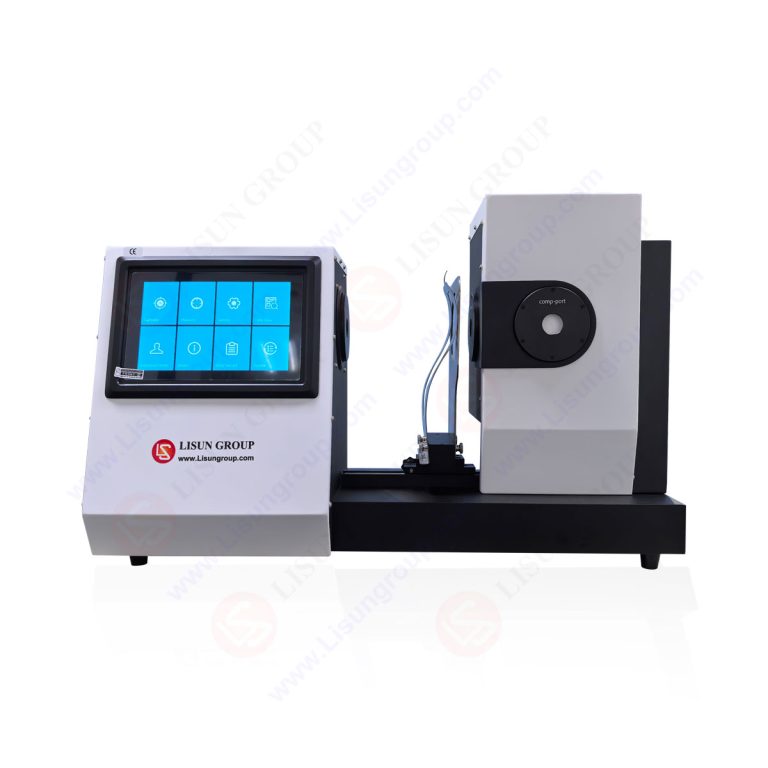



Optimizing Dust Chamber Investment for Environmental Testing
The relentless pursuit of product reliability across diverse industrial sectors necessitates rigorous validation under simulated environmental stressors. Among these, the ingress of particulate matter—dust, sand, and other fine solids—poses a significant threat to product longevity, functional integrity, and safety. Dust chamber testing, therefore, transcends mere compliance; it is a critical engineering tool for failure mode analysis, design refinement, and risk mitigation. Selecting and optimizing the investment in a dust test chamber requires a strategic alignment of technical specifications, testing standards, operational efficiency, and long-term adaptability to evolving product portfolios and regulatory landscapes.
Defining the Particulate Ingress Challenge Across Industries
Particulate ingress failure mechanisms are multifaceted and industry-specific. In Electrical and Electronic Equipment and Industrial Control Systems, conductive dust accumulation can lead to short circuits, increased contact resistance in switches and sockets, or insulation breakdown in cable and wiring systems. For Automotive Electronics and Aerospace and Aviation Components, the abrasive nature of sand and dust can degrade optical sensors, impair cooling fan operation, and compromise connector integrity under vibration. Household Appliances and Lighting Fixtures exposed to domestic or industrial environments may suffer from lumen depreciation, overheating due to clogged vents, or mechanical jamming. Medical Devices and Telecommunications Equipment demand absolute operational certainty; dust ingress can disrupt sensitive optical or electrical connections, leading to data loss or critical system failure. Office Equipment like printers and Consumer Electronics such as outdoor speakers must resist particulate buildup that affects moving parts and acoustic performance. A comprehensive test chamber must, therefore, replicate these diverse real-world conditions with repeatable precision.
Core Principles and Methodologies of Dust Ingress Testing
Dust testing chambers operate on standardized principles to evaluate the sealing effectiveness of enclosures (as per IP5X and IP6X codes in IEC 60529) or the operational resilience of components under dust-laden conditions (e.g., ISO 20653, SAE J575). The primary methodologies include the blowing dust test and the dust fall test.
The blowing dust test, often used for higher IP ratings, fluidizes a specified quantity of fine talcum powder or Arizona Test Dust via controlled airflow within a sealed chamber. The test specimen, either powered on or undergoing operational cycles, is exposed to this turbulent dust cloud for a prescribed duration. Post-test examination involves internal inspection for dust penetration, assessment of functional performance degradation, and measurement of any particulate weight inside the enclosure.
The dust fall test, typically for lower-level validation, assesses the ability of an enclosure top surface to prevent the settlement of dust from a calm, concentrated dust cloud over an extended period. The key to valid, reproducible results lies in precise control over critical parameters: dust concentration (e.g., 2 kg/m³ to 10 kg/m³ as per standard), air velocity, temperature, humidity, and the uniformity of dust distribution throughout the test volume. Inconsistency in any parameter invalidates comparative analysis and undermines the engineering value of the test.
Strategic Considerations for Chamber Specification and Selection
Investment optimization requires moving beyond a checklist of standards. A strategic specification framework should encompass:
1. Chamber Volume and Load Capacity: The internal dimensions must accommodate the largest anticipated product or multiple smaller units for batch testing, improving throughput. Consideration for fixtures, robotic manipulators for moving parts testing, and cable ports is essential. Undersizing leads to immediate obsolescence; oversizing incurs unnecessary capital and operational energy costs.
2. Parameter Control Fidelity and Range: The system must offer precise, programmable control over temperature (often ambient to +60°C or broader), relative humidity, and airflow velocity. For automotive and aerospace applications, the ability to integrate thermal cycling with dust exposure is a significant advantage, simulating desert day-night transitions.
3. Dust Handling and Recovery System: A high-quality chamber employs a closed-loop dust circulation system with a cyclone separator and fine filtration to maintain consistent concentration and minimize wasteful, hazardous operator exposure. The ease of dust loading, recovery, and chamber cleaning directly impacts operational downtime and maintenance costs.
4. Instrumentation and Compliance Verification: Integrated particle counters, airflow anemometers, and data logging systems are not luxuries but necessities for audit trails and standard compliance. The system should facilitate easy calibration and verification of internal conditions against ISO/IEC 17025 requirements.
5. Future-proofing and Flexibility: Modularity for future upgrades, software that allows custom test profiles beyond rigid standards, and compatibility with other environmental stress factors (like vibration platforms) extend the asset’s useful life and scope.
The LISUN SC-015 Dust Sand Test Chamber: A Technical Analysis
The LISUN SC-015 represents a engineered solution designed to address the core strategic requirements for reliable dust ingress testing. Its design philosophy centers on reproducible condition generation, operator safety, and adherence to international standards including IEC 60529, ISO 20653, and GB/T 4208.
Specifications and Testing Principles:
The chamber features a standardized testing volume with a transparent viewing window for real-time observation. It utilizes a negative pressure principle combined with a mechanical vibration system for dust fluidization. A dedicated circulating blower ensures the talcum powder (or specified test dust) is uniformly suspended within the test space at the required concentration. The integrated dust recovery system separates particulate from the airflow post-test, collecting it for reuse or safe disposal, thereby enhancing efficiency and containment.
Key technical specifications include:
- Test Dust: Fine talcum powder (typically ≤ 75μm, with specific distribution per standard).
- Dust Concentration: Programmatically adjustable to meet standard-specific requirements (e.g., 2 kg/m³, 4 kg/m³, 10 kg/m³).
- Airflow Velocity: Controllable to simulate various environmental conditions.
- Sieve Mesh: Standard 75μm sieve, with options available.
- Control System: Digital programmable controller with PID logic for stable condition maintenance, featuring a user interface for test profile setup, including test duration, blow/intermittent cycles, and parameter monitoring.
Industry Use Cases and Application:
The SC-015 is deployed across the previously cited sectors. An automotive electronics supplier uses it to validate the IP6X rating of an ECU housing before field deployment in off-road vehicles. A lighting fixture manufacturer tests the ingress protection of outdoor LED luminaires against long-term dust settlement. A producer of industrial control systems subjects programmable logic controller enclosures to combined dust and elevated temperature cycles to uncover potential sealing weaknesses. In aerospace, it validates the resilience of avionics cooling vents to airborne particulate. For consumer electronics, it ensures the tactile feel and longevity of buttons and ports on a ruggedized tablet.
Competitive Advantages in Context:
The SC-015’s advantages lie in its integrated design approach. The closed-loop dust recovery system is a significant operational advantage, reducing material consumption and laboratory contamination—a critical factor in cleanroom-adjacent facilities. Its emphasis on uniform dust dispersion via controlled airflow and vibration addresses a common pitfall in lower-tier chambers, where stratification leads to inconsistent exposure. The programmability of test cycles allows for the creation of accelerated life tests that go beyond pass/fail compliance, providing valuable data on failure rates over time. Furthermore, its construction with corrosion-resistant materials and accessible service points lowers the total cost of ownership by extending service intervals and simplifying maintenance.
Quantifying Return on Investment and Operational Efficiency
The true cost of a dust chamber is not its purchase price but its total cost of ownership (TCO) and the value of the data it generates. An optimized investment minimizes TCO through energy efficiency, low maintenance, and high reliability, reducing unplanned downtime. More critically, it maximizes data value by producing accurate, repeatable results that prevent two costly errors: the release of a product prone to field failure (which incurs warranty costs, recalls, and brand damage) and the over-engineering of a product with excessive sealing (which increases unit cost and material use).
Implementing a chamber like the SC-015, with robust calibration and data logging, transforms testing from a qualitative gate-check to a quantitative engineering process. The data generated can be used in failure analysis, supplier quality audits, and design simulation correlation, creating a feedback loop that continuously improves product robustness.
Integration into a Broader Reliability Testing Regime
A dust chamber is seldom a standalone asset. Its greatest value is realized when integrated into a broader reliability testing strategy. Sequential testing—where a unit undergoes thermal cycling, followed by vibration, and then dust exposure—can uncover synergistic failure modes that single-factor tests miss. For instance, thermal expansion may slightly compromise a gasket, which vibration then exacerbates, finally allowing dust ingress in a combined environmental test. The selection of a chamber should therefore consider its physical and software compatibility with other test equipment in the laboratory ecosystem.
Navigating Evolving Standards and Material Science
International standards for particulate ingress testing are periodically revised to reflect new materials, technologies, and field data. A future-proof investment is one supported by a manufacturer committed to providing updates and guidance on new testing methodologies. Furthermore, as new materials like advanced polymers and nano-coatings are developed for dust resistance, test chambers must be capable of validating their performance under realistic, accelerated conditions.
Conclusion
Optimizing the investment in a dust test chamber is a strategic decision with direct implications for product quality, market competitiveness, and corporate liability. It requires a thorough analysis of current and future testing needs against a framework of technical capability, operational efficiency, and data integrity. Equipment such as the LISUN SC-015 Dust Sand Test Chamber exemplifies the integration of precise environmental control, standardized compliance, and user-centric design, serving as a tool not just for validation, but for proactive design enhancement. In an era where product reliability is inseparable from brand reputation, a sophisticated approach to particulate ingress testing is an indispensable component of modern quality assurance and engineering practice.
Frequently Asked Questions (FAQ)
Q1: What is the difference between IP5X and IP6X testing, and can the LISUN SC-015 perform both?
A1: IP5X (Dust Protected) testing allows for limited dust ingress that does not interfere with equipment operation. IP6X (Dust Tight) permits no dust ingress. The key difference often lies in the test duration and the vacuum or pressure differential applied to the specimen. The LISUN SC-015 is designed to meet the requirements for both levels of testing by allowing programmable control over test duration, dust concentration, and airflow conditions, enabling it to be configured for the specific protocols outlined in IEC 60529 for each IP rating.
Q2: How is dust concentration calibrated and verified within the chamber to ensure standard compliance?
A2: Calibration is a multi-step process. Initially, a known mass of test dust is introduced into the chamber. Using the chamber’s airflow and circulation system, the dust is fluidized. Verification is typically performed using gravimetric analysis or, in more advanced setups, laser particle counters at designated sample ports. The chamber’s control system is then adjusted to achieve and maintain the specified mass per unit volume (e.g., 2 kg/m³) as mandated by the relevant standard. Regular calibration checks are part of a proper quality management system.
Q3: Can the chamber accommodate products that have moving parts or require operational testing during exposure?
A3: Yes. Many test standards require the specimen to be operating (e.g., a cooling fan cycling) during dust exposure. The LISUN SC-015 and similar chambers are equipped with electrical feed-through ports that allow power and signal cables to enter the sealed test volume without compromising the test conditions. This enables functional monitoring and dynamic testing of products like household appliances, automotive sensors, or industrial motors under dust load.
Q4: What type of test dust is used, and are alternatives permissible for specific industry standards?
A4: The standard dust specified in IEC 60529 and related standards is fine talcum powder, with a defined particle size distribution (typically > 75% by weight between 50μm and 75μm). However, other industry standards may call for different media, such as Arizona Road Dust (ISO 12103-1) for automotive applications or specialized powders for aerospace. A competent chamber supplier should provide guidance on configuring the system, including sieve mesh options and circulation settings, to accommodate these alternative test dusts while maintaining valid test conditions.
Q5: How critical is temperature and humidity control during dust testing, as some standards only call for ambient conditions?
A5: While some basic compliance tests run at ambient conditions, controlling temperature and humidity is critical for advanced reliability engineering. Many sealing materials (elastomers, gaskets) have properties that vary significantly with temperature. Testing at elevated temperatures can accelerate aging and reveal failure modes that would occur over a longer period in the field. Combining dust with thermal stress provides a much more realistic and severe assessment for products destined for environments like engine compartments, desert climates, or industrial settings, making this control a valuable feature for a comprehensive testing program.