


A Technical Examination of IPX Rating Test Chambers: Principles, Implementation, and Validation of Ingress Protection Testing
Introduction to Ingress Protection (IP) Rating Standards
The Ingress Protection (IP) rating system, codified under international standard IEC 60529, provides a systematic and universally recognized classification for the degree of protection an enclosure offers against the intrusion of solid foreign objects (including body parts like hands and fingers) and water. This alphanumeric designation, such as IP67 or IP54, is not merely a marketing term but a critical specification derived from rigorous laboratory testing. The first numeral (0-6) indicates protection against solids, while the second numeral (0-9K) defines protection against water under specific, controlled conditions. The integrity of this rating hinges entirely on the precision, repeatability, and calibration of the test equipment used—namely, IPX Rating Test Chambers. These specialized environmental simulators are engineered to replicate the conditions stipulated by the standard with exacting accuracy, ensuring that a product’s claimed performance under adverse environmental conditions is empirically validated before it reaches the field.
Architectural Design and Operational Principles of Modern Test Chambers
Contemporary IPX test chambers are sophisticated electromechanical systems designed to isolate and control the variables of water ingress testing. Their architecture typically integrates a test chamber proper, a water storage and conditioning system, a precision pumping and nozzle assembly, a specimen mounting table with programmable motion, and an integrated control and data acquisition unit. The core operational principle involves subjecting the device under test (DUT) to a calibrated water spray or jet of defined pressure, flow rate, droplet size, and duration. The DUT is mounted on a table that may rotate or oscillate at a specified angular velocity to ensure uniform exposure from all relevant angles, as required by the test code (e.g., IPX3 and IPX4). For higher ratings like IPX7 (temporary immersion) or IPX8 (continuous immersion under pressure), the chamber transforms into a sealed tank capable of submersion at controlled depths and durations. The scientific rigor of the test lies in the chamber’s ability to maintain these parameters—water temperature, pressure, flow, and mechanical movement—within the tight tolerances mandated by IEC 60529 and its derivative standards (e.g., ISO 20653 for automotive).
Critical Parameters and Calibration for Test Fidelity
The validity of any IP rating test is contingent upon the precise control and verification of multiple interdependent parameters. A deviation beyond allowable tolerances can render a test result non-compliant and potentially invalidate the product certification. Key parameters include:
- Water Pressure and Flow Rate: For jet tests (IPX5, IPX6), the pressure at the nozzle must be maintained within a narrow band (e.g., 100 kPa ± 5% for IPX5) to ensure the correct impact energy. This is typically governed by a variable frequency drive pump and monitored via calibrated pressure transducers.
- Nozzle Geometry and Spray Characteristics: The design of the spray nozzle is meticulously specified. For example, the IPX3/IPX4 oscillating tube test uses a sprinkler with 0.4mm diameter holes spaced 50mm apart, while the IPX5/IPX6 test employs a 6.3mm diameter smooth-bore jet nozzle. The resultant droplet size distribution and spray pattern are critical and must be verified periodically.
- Water Quality and Temperature: The standard specifies that water used for testing must be of drinking quality. Furthermore, for tests where thermal shock is a consideration, a significant temperature differential between the DUT and the water may be required (as per some automotive OEM specifications), necessitating water chilling or heating systems.
- Mechanical Motion Control: The speed of the oscillating tube (for IPX3/IPX4) or the rotation of the test table (for IPX5/IPX6) must be controlled and reproducible. An incorrect angular velocity can lead to uneven exposure or an insufficient number of spray passes.
Calibration of these systems is not optional; it is a foundational requirement. Traceable calibration of flow meters, pressure gauges, timers, and thermometers against national standards is performed at regular intervals to maintain the laboratory’s accreditation and the test data’s integrity.
The JL-XC Series: A Modular Platform for Comprehensive Waterproof Validation
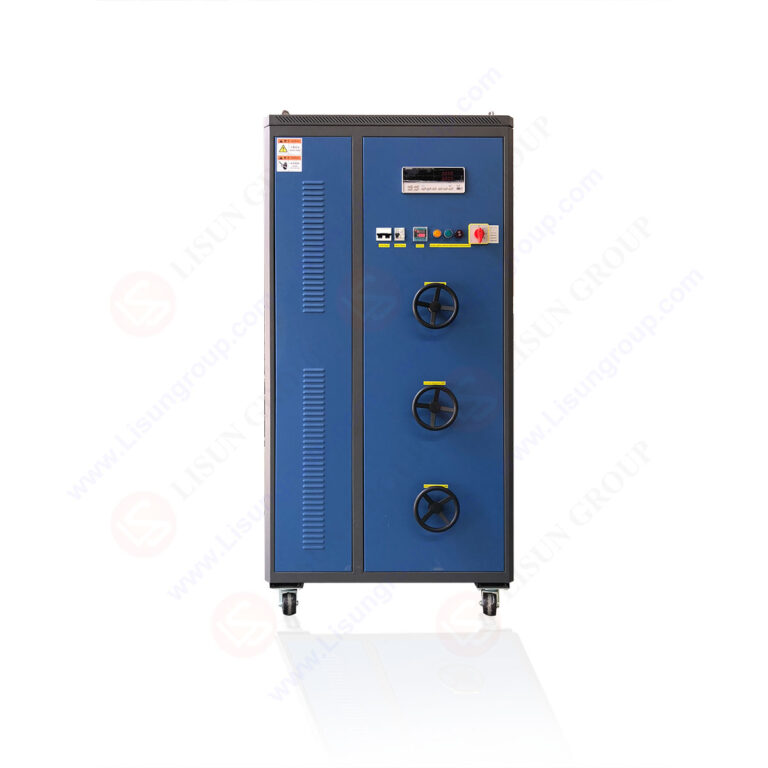
Within the landscape of ingress protection testing equipment, the LISUN JL-XC Series Waterproof Test Chamber represents a modular, high-precision platform engineered to address the full spectrum of IPX1 through IPX8 testing requirements. Its design philosophy emphasizes flexibility, accuracy, and user operational efficiency, catering to the diverse needs of R&D and quality assurance laboratories across multiple industries.
The JL-XC Series is constructed from high-grade stainless steel (SUS304) for corrosion resistance and long-term durability. Its core innovation lies in a modular cabinet design that can be configured with various interchangeable test apparatuses. A single base unit can be outfitted with an IPX1/X2 drip rain system, an IPX3/X4 oscillating tube or spray ring assembly, and a high-pressure jet nozzle system for IPX5/X6 testing. For immersion testing, a separate but compatible deep immersion tank is available for IPX7 and pressurized IPX8 evaluations. This modularity allows a laboratory to expand its testing capabilities incrementally without redundant capital expenditure.
The system is governed by a programmable logic controller (PLC) interfaced with a color touchscreen Human-Machine Interface (HMI). This allows for the creation, storage, and automatic execution of complex test profiles. Users can input the test standard (e.g., IPX4), and the system auto-configures parameters such as water flow, oscillation angle (e.g., ±60° or ±180°), test duration (e.g., 10 minutes), and table rotation speed. The integration of a high-resolution digital flow meter and pressure sensor provides real-time feedback and closed-loop control, ensuring parameter stability throughout the test cycle. For demanding applications like IPX8 testing, the system can be specified with a pneumatic pressure control system to accurately maintain depths corresponding to pressures up to several bar, as specified by the manufacturer.
Industry-Specific Applications and Testing Protocols
The application of the JL-XC Series and similar chambers is vast, with testing protocols often tailored to sector-specific standards.
- Automotive Electronics (ISO 20653): Components like electronic control units (ECUs), sensors, lighting assemblies, and connectors are tested not only to IP codes but often to OEM-specific sequences that combine vibration, thermal cycling, and water spray. The JL-XC’s programmability is essential for executing these complex, multi-stage durability tests.
- Lighting Fixtures (IP66/IP68): Outdoor luminaires, street lights, and underwater pool lights require validation against powerful jets (IPX6) or prolonged immersion (IPX7/8). The chamber’s ability to mount large, heavy fixtures and subject them to a 12.5mm nozzle jet at 100 kPa from 2.5-3 meters distance is critical.
- Telecommunications Equipment (IP65/IP67): Outdoor base station antennas, fiber optic terminal enclosures, and ruggedized handheld devices are tested to ensure functionality during heavy rainfall or temporary flooding. The IPX4 oscillating tube test simulates rain from all angles, while IPX7 validates survival if submerged in a shallow puddle.
- Medical Devices (IEC 60601-1): Surgical tools, diagnostic equipment, and bedside monitors may require splash resistance (IPX4) for cleaning or fluid exposure. Testing must be precise and documented for regulatory submissions to bodies like the FDA or CE.
- Aerospace and Aviation Components: While often governed by RTCA/DO-160 or MIL-STD, the principles align. Equipment must withstand condensation, rain, and spray. Test chambers must accommodate unusual form factors and interface with broader environmental stress screening (ESS) sequences.
Advantages of Integrated, Programmable Testing Systems
The transition from manual, bespoke test setups to integrated systems like the JL-XC Series offers several tangible advantages that extend beyond basic compliance. First is improved test repeatability and reproducibility (R&R). Automated control eliminates human error in timing, pressure adjustment, and spray coverage. Second is enhanced laboratory throughput. Once a test profile is loaded, the chamber operates autonomously, freeing technicians for other tasks and enabling overnight testing. Third is superior data integrity and traceability. The digital HMI logs all test parameters, environmental conditions, and operator actions, creating an immutable audit trail essential for ISO 17025 accreditation and customer audits. Finally, operator safety is increased by enclosing high-pressure jets and water within a robust stainless-steel cabinet with safety interlocks, containing spray and preventing slip hazards.
Considerations for Laboratory Integration and Compliance
Implementing an IPX test chamber is a strategic laboratory decision. Key considerations include facility requirements (adequate floor space, drainage, clean water supply, and electrical capacity for pumps), calibration and maintenance schedules, and operator training. Crucially, the chamber itself does not grant a product an IP rating. It is a tool that generates data. The final rating is assigned by a competent body, often based on testing performed in an accredited laboratory. Therefore, selecting equipment from a manufacturer that provides comprehensive calibration certificates, operational manuals aligned with current standards, and technical support is paramount. The chamber must be viewed as part of a larger quality ecosystem that includes calibrated measurement devices, controlled environmental conditions, and standardized post-test inspection procedures (e.g., checking for water ingress via visual inspection or functional testing).
Future Trends in Ingress Protection Testing
The evolution of IP testing is being shaped by several trends. The proliferation of Internet of Things (IoT) devices and electric vehicles (EVs) is driving demand for testing smaller, more complex assemblies with integrated sensors and batteries. This may require chambers with more sophisticated fixturing and in-situ functional monitoring during the test. Furthermore, there is a growing emphasis on combining ingress protection with other environmental stresses, such as temperature, humidity, and vibration, in a single sequential test to better simulate real-world conditions—a process known as combined environmental testing. Advanced test chambers are beginning to integrate these capabilities, moving beyond standalone water spray apparatuses towards comprehensive environmental simulation platforms.
Frequently Asked Questions (FAQ)
Q1: Can the JL-XC Series test a product to both IPX5 and IPX6 ratings sequentially?
Yes, the modular design of the JL-XC Series allows for the integration of both test nozzles. A typical configuration would include the 6.3mm nozzle for IPX5 (12.5 L/min at 100 kPa) and the 12.5mm nozzle for IPX6 (100 L/min at 100 kPa). The PLC program can be set to run one test after the other, following the required preconditioning and recovery periods specified in the standard, providing a complete evaluation against pressurized jet ingress.
Q2: How is the water temperature controlled and why is it important?
The JL-XC Series can be equipped with an optional water temperature control unit, typically a chiller or heater. Controlling water temperature is vital for two reasons: First, some test standards (e.g., certain automotive OEM specifications) require a specific temperature differential between the DUT and the water to induce thermal shock and stress potential sealants. Second, maintaining a consistent water temperature (often at ambient) ensures test repeatability, as water viscosity and flow characteristics can slightly vary with temperature.
Q3: What is the significance of the “K” in ratings like IPX9K, and can the JL-XC perform this test?
The IPX9K rating, defined initially by DIN 40050-9 for road vehicles, involves high-pressure, high-temperature spray cleaning. It uses water at 80°C ±5°C, sprayed at 8-10 MPa (80-100 bar) pressure from a specific 0-degree nozzle at set distances and angles. This is a distinct and severe test. The standard JL-XC Series is designed for IPX1-IPX8. Testing to IPX9K requires a dedicated, specially reinforced high-pressure, high-temperature test chamber, which is a separate product category within manufacturers’ lineups.
Q4: How do we verify that our test setup, using a chamber like the JL-XC, is compliant with IEC 60529 before submitting a product for certification?
Compliance is ensured through a multi-step process. First, the chamber itself must be installed and calibrated by qualified personnel using traceable instruments. Second, a “blank” or verification test should be performed. This involves using a calibrated water collection gauge (e.g., for IPX3/X4, a gauge with 80mm diameter circles) placed at the position of the DUT. The spray is activated for one minute, and the collected water per square meter per minute is measured and must fall within the flow rate specified by the standard (e.g., 0.07 L/min ±5% for IPX4). This practical verification confirms the entire system—pump, nozzles, pressure, and timing—is operating within the required tolerances.