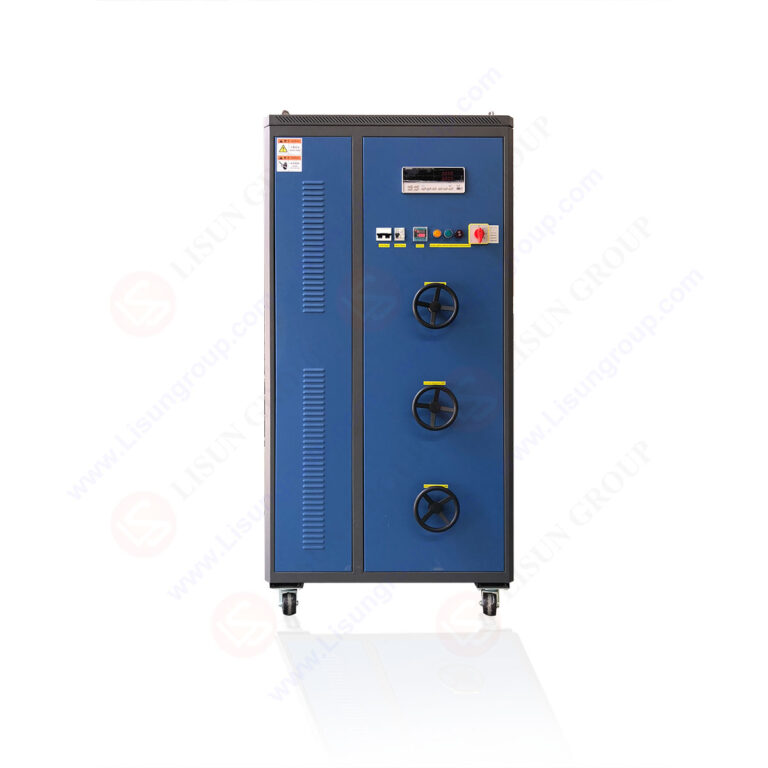



Evaluating Fire Hazard Through Controlled Ignition: A Technical Examination of IEC 60695-11-5 Needle-Flame Test Apparatus
The imperative to mitigate fire risks in electrotechnical products is a foundational principle of modern safety engineering. As devices become more compact, integrated, and ubiquitous across domestic, industrial, and critical infrastructure environments, the potential for ignition from small internal faults—such as overheated components, arcing contacts, or failed insulation—demands rigorous preemptive evaluation. The International Electrotechnical Commission (IEC) standard 60695-11-5, “Fire hazard testing – Part 11-5: Test flames – Needle-flame test method – Apparatus, confirmatory test arrangement and guidance,” provides a standardized methodology to assess the flammability of materials and the ability of components to contain or resist ignition from such small, simulated fault conditions. This technical analysis delves into the specification, operational principles, and critical application of compliant needle-flame test equipment, with particular reference to the implementation exemplified by the LISUN ZY-3 Needle Flame Test Apparatus.
The Simulated Fault Condition: Rationale for the Needle-Flame Test
Unlike tests that evaluate a material’s response to large-scale ignition sources, the needle-flame test is specifically engineered to simulate a low-energy, localized fire hazard. Its primary objective is to investigate the ignition susceptibility of electrotechnical equipment, sub-assemblies, and insulating materials when exposed to a small flame that may result from an electrical malfunction. Typical fault scenarios include overheating due to poor connections, leakage currents across polluted surfaces, or the failure of small components like resistors or capacitors. The test flame, with a nominal power output of approximately 45W, is not intended to replicate a fully developed fire but rather the incipient stage of ignition. The assessment criteria focus on several key outcomes: the duration of any combustion after flame removal, the extent of flame spread, whether burning debris falls and ignites a specified tissue below, and the degree of damage inflicted. This allows engineers to determine if a localized fault could lead to a propagating fire, thereby informing material selection, enclosure design, and internal layout.
Architectural and Functional Specifications of Compliant Apparatus
A fully compliant IEC 60695-11-5 test apparatus is a precision instrument integrating several subsystems to ensure repeatable and reproducible results. The core component is the burner assembly, which utilizes a hypodermic needle (typically 0.5-0.6 mm nominal diameter) as an orifice to produce a stable, laminar flame. This needle is fed by a regulated supply of combustible gas, usually methane or propane with a purity of at least 98%, at a controlled pressure and flow rate to generate the specified 45W ± 5W flame. The burner is mounted on a movable assembly, allowing precise positioning of the flame at the required 45-degree angle relative to the horizontal plane of the test specimen.
The specimen support and positioning system is equally critical. It must allow for the mounting of products or test pieces in their intended service orientation or in a worst-case configuration as defined by the product standard. A standardized confirmatory test block, often made of laminated sheet material, is used to validate the apparatus’s calibration by ensuring the flame produces a consistent temperature profile when applied to a copper calorimeter. The apparatus must also include a draught shield or enclosure to protect the flame and specimen from ambient air currents exceeding 0.2 m/s, which could distort the flame application. Timing devices with an accuracy of at least ±0.5 seconds are mandatory for controlling the application period (typically 5, 10, 20, 30, 60, or 120 seconds as per the relevant specification) and for measuring after-flame and after-glow times. A key safety feature is the presence of a layer of surgical cotton or specified tissue paper positioned 200 mm ± 5 mm below the test specimen to detect the ignition of falling burning particles.
Operational Protocol and Calibration Verification
The test procedure follows a strict sequence to ensure methodological integrity. Prior to testing, the apparatus must undergo a confirmatory test to verify the flame’s energy output. This involves applying the flame to a copper calorimeter for a set duration (e.g., 23.5 seconds) and measuring the resultant temperature rise. The apparatus is deemed calibrated if the temperature increase falls within the range specified in the standard (e.g., from 15°C ± 5°C to 520°C ± 20°C for a Grade B gas), confirming the 45W nominal power.
For product testing, the specimen is mounted according to the relevant end-product standard (e.g., IEC 60950 for IT equipment, IEC 60335 for household appliances). The pre-heated flame (burned for at least 10 minutes to stabilize) is applied to the predetermined point on the specimen for the stipulated time. Upon removal, observations are meticulously recorded: after-flame time (t1), after-glow time (t2), and whether flaming or glowing particles fall and ignite the cotton indicator. The extent of damage, measured from the point of flame application, is also documented. A test is typically repeated on multiple samples to achieve a statistically valid assessment of the product’s fire hazard under the simulated fault condition.
The LISUN ZY-3 Needle Flame Test Apparatus: Implementation and Technical Merits
The LISUN ZY-3 apparatus embodies a practical and precise implementation of the IEC 60695-11-5 requirements, designed for reliability in laboratory environments. Its construction addresses the key demands of the standard while incorporating user-centric features for operational efficiency and safety.
Core Specifications and Design Features:
The ZY-3 utilizes a high-precision stainless steel needle valve and flow meter system to regulate gas flow, ensuring a consistent and repeatable flame. The gas supply is typically propane, meeting the purity requirements. The burner mounting assembly allows for smooth, adjustable positioning in three dimensions, facilitating accurate alignment with the test specimen. The apparatus is housed within a transparent polycarbonate draught shield, providing full visibility while eliminating interference from laboratory air movements. An integrated digital timer controls the flame application duration with high accuracy and automatically records after-flame and after-glow times via photoelectric sensors, reducing observer error. The specimen table is adjustable and includes a calibrated scale for precise placement relative to the burner tip. The standard package includes the confirmatory test block and copper calorimeter for routine apparatus validation.
Testing Principle and Automation:
The ZY-3 operates on the fundamental principle defined by IEC 60695-11-5 but enhances procedural consistency through semi-automation. The user positions the specimen and aligns the flame. Upon initiation, the gas solenoid valve opens, and the igniter activates the flame. The digital timer counts down the application period before automatically shutting off the gas supply. The photoelectric sensors then monitor the test area for visible flames and glow, electronically recording the combustion times. This automation minimizes variability introduced by manual timing and observation, leading to more reproducible results across different operators and test sessions.
Industry Application Spectrum:
The ZY-3 is deployed across industries where compliance with fire hazard standards is mandated for safety certification (e.g., UL, CSA, TUV, CCC). Its applications are extensive:
- Electrical and Electronic Equipment & Industrial Control Systems: Testing printed circuit boards (PCBs), relay housings, terminal blocks, and plastic enclosures for control panels.
- Household Appliances and Consumer Electronics: Evaluating the flammability of internal wiring, motor housings, switchgear, and external casings for devices like coffee makers, power adapters, and gaming consoles.
- Automotive Electronics and Aerospace Components: Assessing connectors, wire harness insulation, sensor housings, and interior control modules where faults could pose severe risks.
- Lighting Fixtures and Electrical Components: Testing lamp holders, switch bodies, socket housings, and the plastic components of LED drivers.
- Medical Devices and Telecommunications Equipment: Verifying that enclosures and internal materials for patient monitors, routers, and switches will not propagate a flame from an internal electrical fault.
- Cable and Wiring Systems: Performing tests on small-diameter cable insulation and jacketing materials.
Competitive Advantages in Laboratory Practice:
The ZY-3 differentiates itself through several key attributes that translate to operational efficacy. Its emphasis on measurement accuracy and repeatability is paramount, achieved through precise gas flow control and automated timing/sensing systems. Enhanced operational safety is addressed via features like flame-out automatic gas shut-off, a sturdy draught shield, and clearly marked controls. User-centric efficiency is improved with an intuitive control interface, easy specimen mounting, and integrated calibration tools, reducing setup time and training overhead. Furthermore, its robust construction ensures long-term stability and reliability in a quality control or certification laboratory setting, minimizing downtime and maintenance costs.
Interpretation of Results and Integration into Safety Engineering
Data generated from the needle-flame test are not merely pass/fail metrics but are integral to the product safety engineering process. A “pass” generally indicates that any combustion is self-extinguishing within a specified time, flame spread is limited, and no ignition of the indicator cotton occurs. This informs the designer that the material or assembly configuration presents a low risk of fire propagation from a small internal fault.
Conversely, a “fail” result—characterized by prolonged burning, extensive damage, or ignition of falling particles—triggers a redesign imperative. Mitigation strategies may include substituting materials with higher comparative tracking index (CTI) or better flame-retardant properties (e.g., switching from ABS to V-0 rated polycarbonate), adding flame-retardant barriers or potting compounds, redesigning enclosures to isolate heat-producing components, or incorporating metallic shields. The test thus serves as a critical iterative tool in the design-for-safety loop, enabling engineers to quantify fire hazards and validate countermeasures empirically before product release.
Conclusion
The IEC 60695-11-5 needle-flame test represents a targeted and essential methodology in the broader landscape of fire hazard assessment. By accurately simulating the thermal insult from a small electrical fault, it provides invaluable data on the ignition resistance and flame propagation characteristics of materials and components. Apparatus like the LISUN ZY-3, through its faithful adherence to the standard’s specifications and incorporation of precision automation, provides the reliable and repeatable means necessary to execute this testing effectively. As technological convergence continues to pack greater functionality into smaller form factors across all electrotechnical sectors, the role of such precise, small-scale fire testing will remain indispensable in safeguarding lives, property, and the continuity of critical systems.
FAQ: IEC 60695-11-5 Needle-Flame Testing
Q1: What is the primary purpose of the needle-flame test compared to other flame tests, such as the glow-wire or horizontal/vertical tests?
The needle-flame test specifically simulates a small, localized ignition source representative of an internal electrical fault (e.g., an overheated small component or a tracking current), with a low-energy (~45W) flame. In contrast, the glow-wire test simulates thermal stresses from overloaded or glowing components, and the horizontal/vertical flame tests assess the inherent flammability of materials under larger, more sustained ignition sources. The needle test is more about the product’s ability to contain a small, incidental fire.
Q2: How often should the needle-flame test apparatus be calibrated, and what does calibration involve?
Calibration should be performed at regular intervals as dictated by laboratory quality procedures (e.g., annually), after any maintenance on the gas or burner system, or if suspect results are obtained. The calibration, or confirmatory test, involves applying the flame to a standardized copper calorimeter mounted on the confirmatory test block for a precise duration. The resulting temperature rise must fall within the range specified in IEC 60695-11-5 (e.g., to 520°C ± 20°C) to verify the correct flame energy output of 45W ± 5W.
Q3: Can the LISUN ZY-3 test specimens that are not flat or are irregularly shaped?
Yes. The standard requires testing products in their end-use orientation or a worst-case position as defined by the product family standard. The ZY-3’s adjustable specimen table and three-dimensional burner positioning allow for the flame to be accurately applied to curved surfaces, edges, or joints of irregularly shaped components, such as connectors, switch housings, or wire harness assemblies, provided they can be securely mounted within the draught shield.
Q4: What specific criteria determine a “pass” or “fail” for a test specimen?
The pass/fail criteria are not defined in IEC 60695-11-5 itself, which is an apparatus and method standard. The criteria are specified in the relevant end-product or material standard (e.g., IEC 60950-1, IEC 60601-1). Common criteria include limits on after-flame time (e.g., ≤ 30 seconds), a requirement that flames do not spread to the specimen’s edges, and that no flaming debris ignites the surgical cotton indicator placed below. The extent of burned area may also be limited.
Q5: Is the test applicable to all plastic materials used in electronics?
While broadly applicable, the test’s suitability depends on the material’s intended function and the specific requirements of the end-product standard. It is highly relevant for insulating materials, enclosures, and parts that could be exposed to electrical faults. However, some standards may exempt materials or may require different tests based on the material’s thickness, composition, or distance from live parts. The product safety standard governing the final device is the authoritative document for determining test applicability.