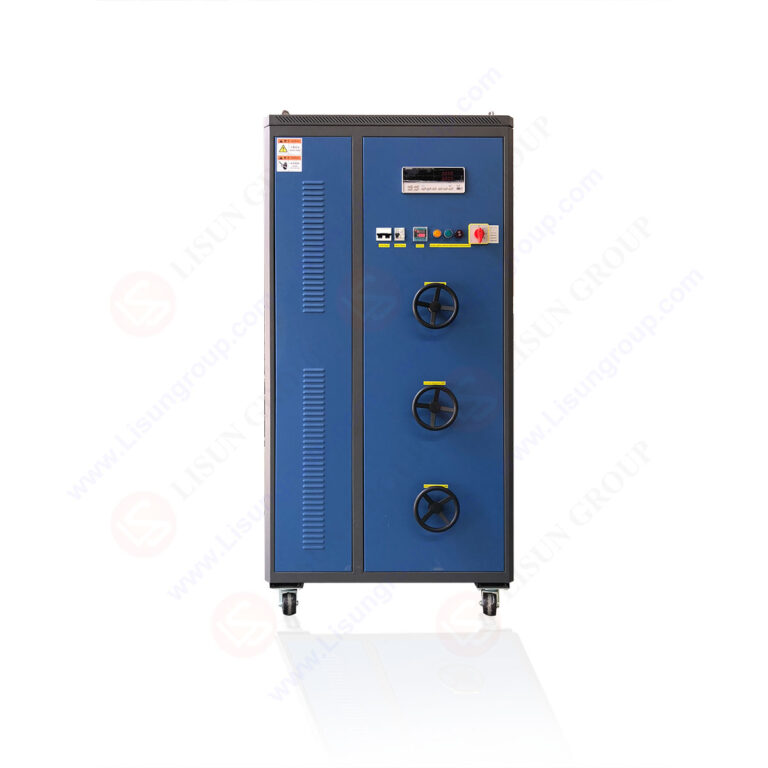



Optimizing Environmental Testing with LISUN ACS Climatic Chambers
The Imperative of Precision in Accelerated Reliability Testing
In the contemporary landscape of product development and qualification, the ability to accurately simulate and assess a component’s performance under environmental stress is not merely an advantage—it is a fundamental requirement. The convergence of miniaturization, increased functional density, and global market deployment across diverse climatic zones has rendered traditional, time-based field testing insufficient. Industries ranging from automotive electronics to medical devices demand a methodology that can compress years of potential field exposure into a controlled, repeatable laboratory timeframe. This is the domain of advanced climatic testing, where precision, reproducibility, and adherence to international standards form the cornerstone of product reliability. Environmental test chambers, specifically those engineered for rigorous thermal and humidity cycling, serve as the critical apparatus in this endeavor. Their operational fidelity directly correlates with the validity of test data, influencing design decisions, warranty forecasts, and ultimately, brand reputation.
Foundational Principles of Combined Environmental Stress Testing
The underlying scientific premise of climatic testing is the acceleration of failure mechanisms through the controlled application of environmental stresses. Key degradation processes such as corrosion, intermetallic growth, delamination, and crack propagation are exponentially influenced by temperature and humidity. The Arrhenius equation models the rate of many chemical reactions, including those leading to failure, as a function of temperature. Introducing humidity, particularly in a condensing or high relative humidity (RH) state, introduces electrochemical corrosion pathways and hygroscopic swelling in polymers and composite materials. A high-performance test chamber does not merely alter temperature and humidity; it orchestrates these variables with precise trajectories, minimal gradients, and rapid transition rates to simulate real-world conditions like diurnal cycles, geographic seasonal shifts, or operational thermal loads. The chamber must maintain parameter uniformity throughout the test volume to ensure that all specimens, regardless of placement, experience an identical stress profile, eliminating positional bias from test results.
Introducing the LISUN GDJS-015B Temperature Humidity Test Chamber
As a representative paradigm of this engineering philosophy, the LISUN GDJS-015B Temperature Humidity Test Chamber embodies the technical specifications necessary for comprehensive reliability assessment. This chamber is designed to deliver a broad spectrum of temperature and humidity conditions, facilitating tests from basic steady-state dwells to complex cyclic profiles.
Core Specifications and Capabilities:
- Temperature Range: -70°C to +150°C
- Humidity Range: 20% to 98% Relative Humidity
- Interior Volume: 150 Liters
- Temperature Fluctuation: ≤ ±0.5°C
- Temperature Uniformity: ≤ ±2.0°C
- Humidity Deviation: ±2.5% RH (for conditions >75% RH; ±3% RH for conditions ≤75% RH)
- Heating Rate: Approximately 3°C/min (ambient to +150°C, under full load)
- Cooling Rate: Approximately 1°C/min (ambient to -70°C, under full load)
The chamber employs a cascade refrigeration system to achieve its extended low-temperature range, ensuring stable performance at sub-zero conditions. Humidity generation is typically achieved via a boiler system for clean steam, preventing mineral contamination on test specimens, while dehumidification is accomplished through a dedicated refrigeration coil. A critical feature is the chamber’s control system, which manages the intricate interplay between heating, cooling, humidifying, and dehumidifying subsystems to follow programmed profiles with high fidelity, avoiding overshoot and ensuring linear transitions.
Industry-Specific Application Protocols and Standards Compliance
The utility of a chamber like the GDJS-015B is realized through its application to industry-specific test protocols. Compliance with international standards is non-negotiable for product certification and market access.
- Electrical & Electronic Equipment / Automotive Electronics: Testing per IEC 60068-2-1 (Cold), IEC 60068-2-2 (Dry Heat), and IEC 60068-2-30 (Damp Heat, Cyclic) is fundamental. For automotive components, ISO 16750-4 (Climatic loads) mandates specific temperature/humidity cycles to simulate under-hood and in-cabin environments. Electronic control units (ECUs), sensors, and infotainment systems undergo cyclic damp heat tests (e.g., 40°C, 93% RH, 10 cycles of 24 hours) to identify corrosion on printed circuit board assemblies (PCBAs) or connector failures.
- Medical Devices: Adherence to ISO 13485 for quality management necessitates rigorous environmental verification. Standards like IEC 60601-1 (General safety) require testing for operational and storage conditions. Devices such as portable diagnostic equipment or implantable component sub-assemblies are tested for robustness against condensation and thermal cycling that may occur during transport or in varied clinical settings.
- Lighting Fixtures & Consumer Electronics: Products certified to IEC 60598-1 (Luminaires) or IEC 62368-1 (Audio/Video & IT Equipment) must withstand humidity conditioning to evaluate insulation resistance, creepage and clearance distances, and material integrity. LED drivers, for instance, are subjected to high-temperature, high-humidity tests to assess the longevity of electrolytic capacitors and the potential for sulfur corrosion on silver-plated components.
- Aerospace and Aviation Components: While often requiring more specialized chambers, preliminary qualification for commercial avionics may reference RTCA DO-160, Sections 4 (Temperature) and 6 (Humidity), which define procedures for equipment exposed to pressurization cycles and moisture.
- Cable and Wiring Systems: Materials are tested per IEC 60811-401 for thermal aging and IEC 60811-402 for water absorption tests, evaluating the long-term stability of insulation and sheathing polymers under hot and humid conditions.
Operational Advantages in a Comparative Context
The competitive differentiation of a chamber like the GDJS-015B lies in the integration of its subsystems and control architecture, which directly impacts test quality and operational efficiency.
1. Enhanced Data Fidelity through Spatial Uniformity: The specified temperature uniformity of ≤ ±2.0°C and humidity deviation of ±2.5% RH are critical metrics. In a poorly designed chamber, gradients can lead to a situation where specimens in one location pass while identical specimens in another fail, rendering the test invalid. The chamber’s air circulation design, sensor placement, and insulation quality work in concert to minimize these gradients, ensuring that the applied stress is consistent and the resulting failure data is attributable to product variance, not chamber artifact.
2. System Responsiveness and Profile Accuracy: The ability to follow a programmed ramp or cycle accurately is governed by the power of the heating/cooling systems and the sophistication of the PID (Proportional-Integral-Derivative) control algorithm. Rapid but controlled transitions prevent “soak” times at unintended intermediate conditions. For a test standard requiring a specific ramp rate between setpoints, the chamber’s performance in meeting that rate without overshoot is essential for protocol compliance.
3. Long-Term Stability and Reduced Maintenance Downtime: The use of a cascade refrigeration system for extended low-temperature operation is more energy-efficient and stable at deep temperatures compared to single-stage systems pushed to their limits. Furthermore, features like stainless-steel construction, hermetically sealed compressors, and clean-steam humidification reduce corrosion and scaling within the chamber’s plumbing, leading to greater long-term calibration stability and reduced frequency of disruptive maintenance.
4. Usability and Integration: A modern chamber is not an isolated device. Capabilities such as programmable logic for complex multi-segment test profiles, remote monitoring via Ethernet, and data logging in standard formats (e.g., .CSV) facilitate integration into laboratory information management systems (LIMS) and enable unattended operation for lengthy cyclic tests, optimizing laboratory personnel time.
Implementing a Strategic Testing Regimen
To fully leverage the capabilities of an advanced climatic chamber, a strategic testing regimen must be deployed. This begins with a Failure Mode and Effects Analysis (FMEA) to identify the most environmentally sensitive aspects of the product. Test profiles are then designed to accelerate these specific failure modes. A common strategy is the Highly Accelerated Life Test (HALT), which uses a chamber’s full range to rapidly identify design limits and weaknesses in the prototype phase. This is followed by more standardized Qualification Testing (e.g., per IEC standards) on pre-production units to verify reliability under specified life-cycle conditions. Finally, ongoing Reliability Demonstration Testing (RDT) on production samples can provide continuous quality assurance. The chamber serves as the constant, reliable platform across all these phases, its data forming a traceable thread from initial design validation to ongoing manufacturing quality control.
Conclusion: The Chamber as a Foundational Risk Mitigation Tool
In essence, a precision instrument like the LISUN GDJS-015B Temperature Humidity Test Chamber transcends its role as mere laboratory equipment. It functions as a critical risk mitigation and knowledge-generation tool. By providing a controlled, repeatable, and standards-compliant environment, it allows engineers to substitute uncertainty with empirical data. The optimization of environmental testing is, therefore, inextricably linked to the selection of a chamber whose performance characteristics—uniformity, accuracy, range, and stability—are meticulously engineered to match the rigorous demands of modern product validation across the electrical, electronic, automotive, and medical industries. The resultant data not only informs design improvements but also builds a defensible case for product durability, safety, and compliance, ultimately protecting both the end-user and the manufacturer.
Frequently Asked Questions (FAQ)
Q1: What is the significance of the humidity range starting at 20% RH? Why not 10% or lower?
A1: A lower limit of 20% RH is practical for most electronic and material testing standards. Extremely low humidity (<10% RH) is a specialized condition primarily relevant to certain military or aerospace standards (e.g., for dry heat storage). Generating and controlling very low humidity reliably requires additional, complex desiccant-based systems, which increase cost and maintenance. The 20-98% RH range of the GDJS-015B covers the vast majority of industrial, consumer, and automotive test protocols, including those for condensation (damp heat) testing.
Q2: How does the cascade refrigeration system benefit testing compared to a single-stage system?
A2: A single-stage refrigeration system struggles to achieve and maintain temperatures below approximately -40°C efficiently. It must work against an extremely high compression ratio, leading to poor energy efficiency, higher thermal stress on components, and potential instability at the target low temperature. A cascade system uses two separate refrigeration circuits. The first stage cools the condenser of the second stage, allowing the second stage to operate at a much more efficient pressure ratio to achieve temperatures as low as -70°C reliably and with greater long-term stability, which is crucial for extended thermal cycling tests.
Q3: For testing automotive components, is the cooling rate of 1°C/min sufficient to meet relevant standards?
A3: Yes, it is generally sufficient. Key automotive standards like ISO 16750-4 specify temperature setpoints and dwell times, not mandated ramp rates between them. The standard requires the component’s monitored temperature to be within a tolerance band of the setpoint. A controlled, reproducible ramp rate like 1°C/min is often preferable to an extremely rapid shift, as it allows the thermal mass of the test specimen to equilibrate more evenly with the chamber air, preventing internal condensation and thermal shock that may not be representative of real-world conditions and could induce non-relevant failures.
Q4: Can the chamber perform thermal shock testing?
A2: No, the GDJS-015B is designed for combined temperature and humidity cycling within a single workspace. Thermal shock testing, which requires rapidly transferring specimens between independently controlled hot and cold zones, is a different test methodology performed by a dedicated three-zone or two-zone thermal shock chamber, such as the LISUN HLST series. The GDJS-015B is optimized for precise, controlled ramps and soaks of both temperature and humidity in unison.
Q5: How critical is the “clean steam” humidification system for testing electronic assemblies?
A5: It is highly recommended. Traditional atomizing humidifiers can introduce minerals and impurities from the water supply into the chamber atmosphere as an aerosol. These contaminants can settle on test specimens, particularly sensitive electronic assemblies, potentially causing electrical leakage, corrosion, or providing a site for electrochemical migration. A boiler-based clean steam system vaporizes distilled or de-ionized water, introducing pure water vapor into the air stream, thereby eliminating this source of contamination and ensuring that any moisture-related failures observed are intrinsic to the product and not induced by chamber-generated contaminants.