


Understanding IP Ratings for Enclosure Protection: A Technical Analysis
The Imperative of Standardized Ingress Protection
In the engineering and design of electrical and electronic equipment, the long-term reliability and operational safety of components are intrinsically linked to their environmental resilience. Uncontrolled ingress of solid foreign objects, dust, or moisture can precipitate catastrophic failures, ranging from short circuits and corrosion to complete system malfunctions. To mitigate these risks and provide a universal language for specifying environmental protection, the International Electrotechnical Commission (IEC) developed the standard IEC 60529, commonly known as the Ingress Protection (IP) rating system. This classification provides a codified, reproducible method for defining the degree of protection an enclosure offers against intrusion from solids and liquids. Its adoption is pervasive across global industries, forming a critical component of product specifications, procurement requirements, and safety certifications.
Deconstructing the IP Code: A Two-Digit Designation
The IP code is structured as “IP” followed by two characteristic numerals, and optionally, supplementary and auxiliary letters. The first digit, ranging from 0 to 6, specifies the level of protection against access to hazardous parts and the ingress of solid foreign objects. The second digit, ranging from 0 to 9, denotes the enclosure’s protection against harmful ingress of water. It is crucial to interpret these digits independently; a high second-digit rating does not imply a correspondingly high first-digit rating, and vice-versa.
First Characteristic Numeral: Solid Particle Protection
A rating of 0 indicates no special protection. Progressing to 1 protects against large surfaces of the body, such as the back of a hand, and solid objects over 50mm in diameter. Rating 2 safeguards against fingers or similar objects and objects over 12.5mm. Rating 3 protects against tools, wires, or objects greater than 2.5mm. Rating 4 is for protection against wires, strips, or objects exceeding 1.0mm. The most common ratings for dust-related protection are 5 and 6. An IP5X enclosure is “dust-protected,” where ingress of dust is not entirely prevented, but it cannot enter in sufficient quantity to interfere with satisfactory operation of the equipment. An IP6X enclosure is “dust-tight,” representing complete protection against dust ingress under defined test conditions, a critical requirement for components in arid, sandy, or industrial environments.
Second Characteristic Numeral: Liquid Ingress Protection
This scale is more nuanced, defining protection against various forms of water exposure. Rating 0 offers no protection. Ratings 1 through 3 protect against vertically falling drops (1), drops falling at up to 15° from vertical (2), and spraying water at up to 60° from vertical (3). Rating 4 is for protection against splashing water from all directions. Ratings 5 and 6 involve water jets: a 6.3mm nozzle for IPX5 and a 12.5mm nozzle for IPX6, both at specified pressures and distances. Rating 7 allows temporary immersion in water under defined pressure and time conditions (typically 1 meter for 30 minutes), while Rating 8 is for continuous immersion under conditions specified by the manufacturer. The highest standard rating, IPX9K, defined by ISO 20653 (and incorporated into IEC 60529), protects against close-range, high-pressure, high-temperature water jets, commonly required in automotive and industrial cleaning scenarios.
The Critical Role of Verification: Compliance Testing Apparatus
Specifying an IP rating is a declaration of design intent that must be empirically validated. This validation is performed using specialized test equipment that simulates the environmental challenges codified in the standard. The precision, repeatability, and compliance of this test equipment are paramount. Inaccurate testing can lead to non-conforming products reaching the market, posing safety risks and liability concerns, or conversely, to over-engineering and unnecessary cost.
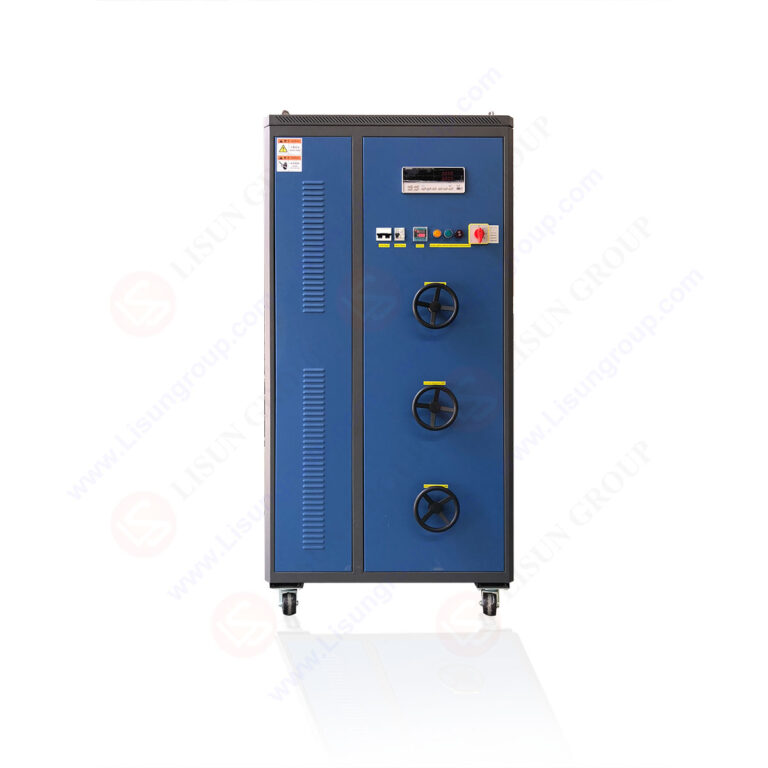
One instrument engineered for this precise purpose is the LISUN JL-XC Series Waterproof Test Chamber. This apparatus is designed to conduct comprehensive IPX1 through IPX9K testing in accordance with IEC 60529, ISO 20653, and other related standards such as GB 4208.
Specifications and Testing Principles: The JL-XC Series typically integrates multiple test functionalities into a single, controlled environment. Its core principle involves subjecting the device under test (DUT) to calibrated water exposure under strictly controlled parameters. For lower IP ratings (IPX1-IPX4), a drip or spray system with an oscillating tube or spray nozzle is used, with the water flow rate, pressure, and test duration meticulously regulated. For jet tests (IPX5, IPX6), the chamber employs specialized nozzles that produce water jets at a defined pressure (e.g., 100 kPa for IPX5, 1000 kPa for IPX6 at a specified distance). The IPX7 and IPX8 immersion tests require a water tank where the DUT is submerged at a prescribed depth for a set duration, with the capability to pressurize the tank for IPX8 testing.
The IPX9K test is particularly demanding, simulating high-pressure wash-downs common in automotive, agricultural, and heavy industrial settings. The JL-XC Series facilitates this by utilizing a high-pressure pump (typically 8-10 MPa) and a specialized 0-degree flat spray nozzle that delivers water at 80°C ±5°C from four angles (0°, 30°, 60°, and 90°) at a distance of 100-150mm, with a specific flow rate and dwell time per angle. The integration of temperature control for the test water is a critical feature for accurate IPX9K compliance.
Industry Use Cases and Competitive Advantages: The JL-XC Series finds application in the quality assurance laboratories of manufacturers across the spectrum of industries that mandate IP ratings. In Automotive Electronics, it validates the resilience of engine control units (ECUs), sensors, and lighting assemblies against road spray (IPX4-IPX6) and high-pressure underbody cleaning (IPX9K). For Lighting Fixtures, both indoor (IP20 for basic touch protection) and outdoor (IP65/66/67 for garden, street, or flood lighting) fixtures are verified. Telecommunications Equipment manufacturers use it to test outdoor cabinets and antennas for resistance to driving rain (IPX5/6). Medical Devices requiring cleaning or sterilization (IPX4-IPX7) and Aerospace and Aviation Components exposed to extreme conditions are also validated using such chambers.
The competitive advantage of a system like the JL-XC Series lies in its integrated design, precision, and compliance. A single, automated chamber capable of performing the full range of tests reduces laboratory footprint, minimizes DUT handling, and ensures consistent alignment with standard-mandated conditions. Advanced models feature programmable logic controllers (PLCs) and touch-screen interfaces for storing test protocols, ensuring repeatability and auditability—key factors in ISO 17025-accredited testing laboratories. Robust construction with corrosion-resistant materials (e.g., stainless steel) ensures the longevity of the test equipment itself, even under constant exposure to water and, for IPX9K, high temperatures.
Application Across Industrial Sectors
The interpretation and requirement of IP ratings vary significantly by application.
- Electrical and Electronic Equipment & Industrial Control Systems: Panel-mounted components in factory environments may require IP54 (dust-protected and protected against water splashes) to resist airborne particulates and incidental coolant spray. Outdoor variable frequency drives (VFDs) often demand IP66 to withstand hose-directed water and dust.
- Household Appliances and Consumer Electronics: A kitchen blender may be rated IPX4 for splash resistance. Smart speakers intended for bathroom use often target IPX7 for protection against temporary immersion. Outdoor security cameras typically require IP66 or IP67.
- Electrical Components: Switches and sockets for indoor residential use are commonly IP20 (finger-safe). Outdoor-rated sockets and industrial connectors must achieve at least IP44 or higher, with specialized marine or harsh-environment connectors reaching IP68 or IP69K.
- Cable and Wiring Systems: While individual conductors are not typically IP-rated, cable glands and junction boxes are critical points of ingress protection. A cable gland rated IP68 ensures the integrity of the enclosure seal where the cable enters.
Beyond the Digits: Supplementary Letters and Testing Nuances
The IP code can be extended with optional supplementary letters. For instance, letters like “A” (back of hand), “B” (finger), “C” (tool), and “D” (wire) provide more detail on protection against access to hazardous parts. Additional letters like “H” (high-voltage apparatus), “M” (device moving during water test), and “S” (device stationary during water test) convey specific test conditions or device features.
A critical nuance often overlooked is that IP ratings are awarded based on testing under specific, controlled laboratory conditions. An IP68 rating for a smartphone, tested in fresh water at 1.5 meters for 30 minutes, does not guarantee the same performance in chlorinated pool water or saltwater, which are more chemically aggressive. Manufacturers may specify these additional conditions. Furthermore, the tests are generally conducted on new, clean equipment. The long-term durability of seals, gaskets, and membranes under thermal cycling, UV exposure, and mechanical wear is not defined by the IP code, placing the onus on design engineers to select appropriate materials and validate product lifecycle performance.
Conclusion: A Foundational Element of Robust Design
The IP rating system is an indispensable engineering tool, providing a concise, standardized metric for environmental protection. Its correct interpretation and application are fundamental to product safety, reliability, and market acceptance. However, the specification is only as credible as the verification process behind it. Precision test equipment, such as the integrated waterproof test chambers exemplified by the LISUN JL-XC Series, provides the necessary empirical validation, ensuring that the declared protection levels are not merely aspirational but are demonstrably achieved. As technology permeates ever more challenging environments—from deep-sea sensors to desert-deployed telecommunications—the rigor of ingress protection specification and testing will remain a cornerstone of durable and dependable design.
Frequently Asked Questions (FAQ)
Q1: Can a product claim an IP rating based on its design alone, without formal testing?
A: No. An IP rating is a claim of compliance with a specific international standard (IEC 60529). This compliance must be verified through testing performed under the conditions stipulated in the standard, often in a certified laboratory. Self-certification without appropriate testing is not considered valid and may expose the manufacturer to significant liability.
Q2: What is the key difference between IP67 and IP68 ratings?
A: Both offer dust-tight protection (6). The difference lies in the liquid immersion test. IP7 specifies temporary immersion (typically 30 minutes) at a depth of 1 meter. IP8 is for continuous immersion, but the test conditions—depth, duration, and pressure—are defined by the manufacturer and should be more severe than those for IP7. An IP68 rating must always be accompanied by the manufacturer-specified conditions (e.g., “IP68, 2 meters for 1 hour”).
Q3: How does the IPX9K test differ from the IPX5 and IPX6 jet tests?
A: While all involve directed water streams, IPX9K is significantly more severe. It uses water at a high temperature (80°C), at a much higher pressure (8-10 MPa vs. 100 kPa for IPX5 and 1 MPa for IPX6), and from a very close distance (0.1-0.15m) with a specific flat spray nozzle. It is designed to simulate high-pressure, high-temperature wash-downs in industrial and automotive settings, whereas IPX5/6 simulate lower-pressure hosing.
Q4: When testing a device for immersion (IPX7 or IPX8), does it need to be functioning during the test?
A: The standard IEC 60529 does not universally require the equipment to be operational during the test. The primary criterion is that no harmful quantity of water enters the enclosure. However, many product-specific standards or manufacturer’s internal specifications may require functional testing during or immediately after immersion to verify operational integrity. The test report should clearly state the conditions under which the test was performed.
Q5: Can an integrated test chamber like the LISUN JL-XC Series be used for production-line testing?
A: While its primary design is for engineering validation and quality assurance sampling in a laboratory setting, its programmability and robustness can allow for high-volume sample testing. For 100% production-line testing, simpler, single-function fixtures dedicated to a specific IP rating (e.g., an IPX5 spray station) are typically more cost-effective and faster-cycle solutions. The JL-XC Series is ideal for the comprehensive testing required during product development and periodic quality audits.