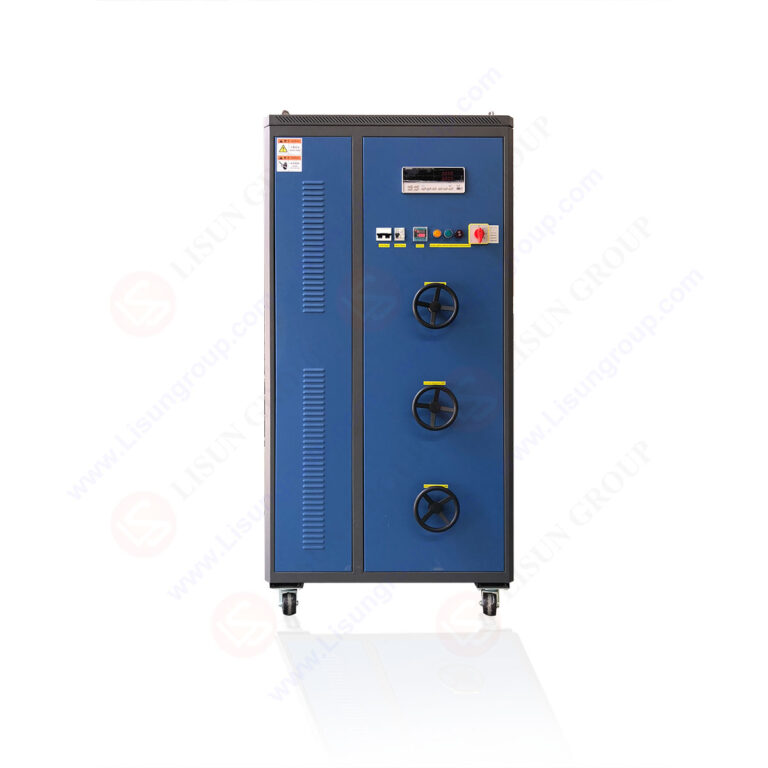



Understanding Corrosion Testing: Methodologies, Standards, and Technological Implementation
Corrosion represents a pervasive and economically significant degradation mechanism affecting metallic and composite materials across virtually every industrial sector. The electrochemical reaction between a material and its environment leads to diminished structural integrity, impaired functionality, and potential safety hazards. Consequently, rigorous corrosion testing forms an indispensable component of quality assurance, product development, and failure analysis. This article delineates the fundamental principles of accelerated corrosion testing, examines prevalent methodologies and governing standards, and explores the practical implementation of testing technology within modern manufacturing and validation workflows.
The Electrochemical Foundations of Metallic Degradation
At its core, corrosion is an electrochemical process involving anodic and cathodic reactions. The anodic reaction entails the oxidation of metal, releasing ions and electrons. The complementary cathodic reaction consumes these electrons, typically through the reduction of oxygen or hydrogen ions. The presence of an electrolyte, often a thin film of moisture containing ionic species, completes the circuit, facilitating sustained corrosive attack. Environmental variables such as relative humidity, temperature, chloride concentration, pH, and the presence of pollutants (e.g., SO₂) dramatically accelerate these reactions. Accelerated corrosion testing chambers are engineered to replicate and intensify these environmental conditions in a controlled, reproducible manner, thereby compressing years of field exposure into a manageable test duration. The objective is not to precisely replicate natural aging but to provide a consistent, comparative assessment of a material’s or coating’s relative resistance to corrosive forces.
Prevalent Accelerated Corrosion Test Methodologies
Industry employs several standardized accelerated test methods, each designed to simulate specific environmental stressors. The Neutral Salt Spray (NSS) test, per ISO 9227 and ASTM B117, remains a foundational benchmark. It involves exposing specimens to a continuous, indirect fog of a 5% sodium chloride solution at a pH near neutral, maintained at 35°C ± 2°C. This method is particularly effective for evaluating the porosity and uniformity of metallic and organic coatings, such as zinc plating on electrical connectors or powder coatings on appliance housings.
The Acetic Acid Salt Spray (AASS) test modifies the NSS procedure by acidifying the salt solution with glacial acetic acid to a pH of 3.1–3.3. This increased acidity accelerates the corrosion process and is often specified for testing decorative coatings like nickel-chromium or copper-nickel-chromium on automotive trim and consumer electronics.
The Copper-Accelerated Acetic Acid Salt Spray (CASS) test introduces an additional acceleration agent, adding copper(II) chloride to the acidified salt solution. Operating at 50°C ± 2°C, it induces rapid corrosion and is primarily utilized for evaluating very thin decorative coatings on components like lighting fixture bezels or telecommunications equipment faceplates.
Cyclic Corrosion Tests (CCT) represent a more sophisticated approach, seeking to better simulate real-world conditions by cycling specimens through various environmental phases. A typical cycle may include periods of salt spray, controlled humidity, dry-off, and ambient conditions. Standards such as ASTM G85, ISO 11997-1, and automaker-specific protocols (e.g., SAE J2334, Ford CETP 00.00-L-467) employ this methodology. CCT is considered more correlative to service performance for automotive electronics, aerospace components, and coated structural parts, as it incorporates wet/dry transitions that influence corrosion product formation and underfilm creep.
Governing Standards and Industry-Specific Compliance
Adherence to internationally recognized standards is critical for test validity and comparability. These standards meticulously define parameters including solution composition, chamber temperature, collection rate of spray, pH, air pressure, and specimen orientation. Key standards include:
- ASTM B117: Standard Practice for Operating Salt Spray (Fog) Apparatus.
- ISO 9227: Corrosion tests in artificial atmospheres – Salt spray tests.
- IEC 60068-2-11: Environmental testing – Part 2-11: Tests – Test Ka: Salt mist.
- JIS Z 2371: Methods of salt spray testing.
- MIL-STD-810: Environmental Engineering Considerations and Laboratory Tests (Method 509.6).
Industry-specific applications dictate the choice of standard. Electrical and electronic equipment, governed by IEC standards, often requires testing to validate the durability of conformal coatings on printed circuit boards (PCBs) used in industrial control systems or medical devices. Automotive electronics suppliers must comply with OEM-specific CCT protocols that simulate the harsh under-hood or roadside environment. Aerospace components, subjected to rapid pressure and temperature cycles at altitude, frequently undergo testing per DO-160 or Airbus/ Boeing process specifications.
System Architecture and Operational Principles of Modern Test Chambers
A contemporary salt spray test chamber is an integrated system of precision subsystems. The core chamber, constructed from chemically inert materials like polypropylene or glass-reinforced polyester, houses the specimens. A reservoir holds the prepared electrolyte solution, which is pumped to a nozzle system where compressed, humidified, and conditioned air atomizes it into a fine fog. Sophisticated temperature control, achieved via heaters and air circulation fans, ensures uniform thermal distribution. Advanced chambers incorporate programmable logic controllers (PLCs) to manage complex multi-phase cyclic tests, logging critical data such as temperature, humidity, and test duration for audit trails.
A representative example of such engineered testing apparatus is the LISUN YWX/Q-010 Salt Spray Test Chamber. This unit is designed for rigorous compliance with neutral salt spray (NSS), acid salt spray (AASS), and copper-accelerated (CASS) test methodologies.
Key Specifications and Testing Principles of the YWX/Q-010:
- Chamber Volume: 1080 Liters, providing ample capacity for large or批量 specimens from industries such as automotive (e.g., ECU housings, sensor clusters) or household appliances (e.g., washing machine control panels, refrigerator compressor housings).
- Temperature Control: Utilizes a PID-controlled heating system with an air-saturated barrel (饱和桶) design. This ensures precise and stable regulation of chamber temperature and solution temperature, critical for maintaining consistent saturation and spray characteristics as per ASTM B117.
- Construction: Features a triple-layer structure comprising an outer powder-coated steel shell, a middle insulation layer, and an inner chamber made of imported polypropylene (PP) plate. PP offers superior resistance to thermal expansion and corrosion from acidic or saline environments compared to PVC.
- Spray System: Employs a tower-type (塔式) spray nozzle, which generates a fine, uniform, and non-settling salt fog. The system includes adjustable spray pressure and a built-in fog collector with a graduated cylinder for verifying the settlement rate (1.0 to 2.0 ml/80cm²/h per standard).
- Control Interface: A digital programmable controller allows for the setting of test duration, temperature, and spray cycles. This programmability is essential for conducting customized cyclic tests relevant to telecommunications outdoor units or aerospace component validation.
Industry Use Cases and Competitive Advantages:
The YWX/Q-010 finds application across the specified sectors. In automotive electronics, it tests the corrosion resistance of connector housings, PCB assemblies, and lighting fixture reflectors. For electrical components like switches and sockets, it validates the durability of silver or tin plating. Cable and wiring system manufacturers use it to assess the jacket materials and metallic shielding. Its key competitive advantages lie in its material durability (PP inner chamber), thermal stability afforded by the PID and saturated barrel design, and operational consistency from the precision-engineered spray tower. These features reduce test variability, a critical factor when comparing coating formulations or qualifying a new supplier of medical device enclosures or office equipment chassis.
Evaluation Metrics and Post-Test Analysis
Following exposure, quantitative and qualitative evaluation is performed per relevant product specifications. Common metrics include:
- Time to First Corrosion: The duration before red rust appears on ferrous substrates or base metal corrosion on coated parts.
- Corrosion Rate: Measured via mass loss per unit area (ASTM G1).
- Creepage from a Scribe: The distance corrosion propagates underneath a coating from a deliberate defect, measured in millimeters (ISO 4628).
- Blister Density and Size: Assessed according to standardized pictorial standards (ISO 4628-2).
- Functional Verification: For electronic assemblies, post-test functionality is critical. This may involve insulation resistance testing (e.g., per IEC 60512), continuity checks for cables, or operational testing of switches and relays.
A thorough analysis often requires cross-sectional microscopy to examine coating thickness and underfilm corrosion morphology, or spectroscopic techniques to identify corrosion products.
Integrating Corrosion Testing into the Product Development Lifecycle
Effective corrosion testing is not merely a final quality gate but an integral part of a holistic design-for-reliability philosophy. During the Material Selection phase, comparative salt spray tests guide the choice of substrate alloys, platings, and coatings. In Prototype Validation, testing uncovers design flaws such as crevices, poor drainage, or galvanic couples between dissimilar metals in an assembly. For Process Control, routine testing monitors the consistency of pre-treatment lines, electroplating baths, and painting processes. Finally, in Quality Assurance, lot sampling provides ongoing verification that finished products—from implantable medical device casings to aerospace avionics boxes—meet their specified durability requirements. This integrated approach mitigates field failures, reduces warranty costs, and safeguards brand reputation.
Frequently Asked Questions (FAQ)
Q1: What is the primary difference between the NSS test and a Cyclic Corrosion Test (CCT), and when should each be used?
A1: The NSS test is a continuous, steady-state exposure to a salt fog environment. It is a useful comparative and quality control tool for coating porosity and uniformity. CCT introduces environmental cycles (salt spray, humidity, drying), which more closely simulate the wet/dry transitions experienced in real-world service. CCT is generally considered more correlative to outdoor performance and is preferred for automotive, aerospace, and other high-reliability applications where underfilm creep and cyclic stress are concerns.
Q2: How does the air-saturated barrel (饱和桶) design in a chamber like the LISUN YWX/Q-010 improve test accuracy?
A2: The air-saturated barrel pre-heats and humidifies the compressed air used to atomize the salt solution before it reaches the nozzle. This prevents a cooling effect at the nozzle, which could alter droplet size and settlement rate. More importantly, it ensures the air is fully saturated, maintaining a consistent concentration of the salt fog and preventing evaporation of droplets in flight, which would lead to higher salinity and non-compliant test conditions.
Q3: Can a single test chamber perform NSS, AASS, and CASS tests?
A3: Yes, a well-designed chamber like the YWX/Q-010 is capable of performing all three standard tests. However, the change between test types requires meticulous chamber cleaning to prevent cross-contamination of solutions. The electrolyte reservoir, lines, and chamber interior must be thoroughly purged. For AASS and CASS tests, all components exposed to the acidified solution must be constructed of materials resistant to acidic attack.
Q4: What are the critical factors when preparing specimens for salt spray testing?
A4: Specimen preparation is paramount. Key factors include: ensuring the test surface is clean and free of contaminants; properly masking edges or non-test areas if necessary; orienting specimens per the standard (typically 15-30° from vertical) to allow condensate to run off but not drip onto other samples; and maintaining a consistent coating thickness. For scribed panels, the scribe must penetrate to the substrate using a standardized tool.
Q5: How is the corrosivity of the test environment verified in a salt spray chamber?
A5: Corrosivity is routinely verified using control specimens. Standardized steel panels (e.g., cold-rolled steel per ISO 3574) with a known surface finish are exposed alongside production samples. The mass loss of these control panels over a standard duration (e.g., 24 or 48 hours) is measured and must fall within a range specified by the test standard (e.g., in ISO 9227). This confirms the chamber is generating an environment of the required aggressiveness.