


Understanding IP Ratings for LED Luminaires: A Guide to Waterproof Testing
Introduction to Ingress Protection and Its Critical Role in LED Luminaire Reliability
The long-term performance, safety, and reliability of LED luminaires are intrinsically linked to their ability to withstand environmental ingress. The International Protection (IP) rating system, codified in standards such as IEC 60529, provides a globally recognized framework for classifying the degree of protection an enclosure offers against the intrusion of solid foreign objects and liquids. For manufacturers across the electrical and electronic equipment spectrum—from lighting fixtures and automotive electronics to telecommunications equipment and medical devices—validating these ratings through rigorous, standardized testing is not merely a compliance exercise but a fundamental component of product integrity and risk mitigation. This article delineates the technical nuances of IP waterproof testing, with a specific focus on its application to LED luminaires, and examines the instrumentation required to execute these tests with precision.
Deconstructing the IP Code: A Numerical Taxonomy of Protection
An IP code, typically expressed as “IP” followed by two characteristic numerals, conveys specific, test-defined information. The first digit, ranging from 0 to 6, denotes protection against solid particles. For luminaires, common ratings include IP5X (dust-protected) and IP6X (dust-tight), the latter requiring a vacuum or pressure differential test to ensure no harmful dust ingress occurs. The second digit, spanning 0 to 9K, defines protection against water under various conditions and orientations. It is this second digit that is most critical for assessing waterproof performance. Common ratings for LED luminaires include IPX4 (splash water from all directions), IPX5 (water jets), IPX6 (powerful water jets), IPX7 (temporary immersion up to 1 meter), and IPX8 (continuous immersion beyond 1 meter, as specified by the manufacturer). The rating IPX9K, defined by high-pressure, high-temperature washdown, is increasingly relevant for industrial and automotive applications. It is imperative to understand that these are discrete tests; a product rated IPX7 is not necessarily proven against jet spray (IPX5/6), and vice versa, unless both ratings are explicitly declared (e.g., IPX5/IPX7).
The Physics of Water Ingress and Failure Modes in LED Assemblies
Water ingress precipitates multiple, often cascading, failure mechanisms within an LED luminaire. Electrically, it can create leakage currents, short circuits, and corrosion of metallic contacts on drivers, control systems, or LED packages themselves. Thermally, water can disrupt the carefully engineered thermal management path, leading to localized overheating and accelerated lumen depreciation. Optically, condensation on lenses or reflectors scatters light, reducing efficacy and creating undesirable visual artifacts. Chemically, dissolved ions can promote galvanic corrosion and electrochemical migration, particularly on printed circuit boards (PCBs) found in drivers and smart lighting modules. The objective of waterproof testing is to simulate real-world hydraulic conditions—be it wind-driven rain, cleaning procedures, or submersion—to provoke these failure modes in a controlled laboratory environment before product deployment. This is especially critical for luminaires in applications such as roadway lighting, architectural floodlighting, marine navigation lights, and surgical lighting where failure carries significant operational or safety consequences.
Methodological Framework for IP Waterproof Testing: From Drip to High-Pressure Washdown
Standardized test methodologies prescribe precise conditions for each IP water rating. IPX1 and IPX2 tests utilize a drip box or oscillating tube to simulate vertically falling or tilted dripping water, respectively. IPX3 and IPX4 employ oscillating spray nozzles or a sprinkler ring to generate water spray and splashing from multiple angles. The IPX5 and IPX6 tests represent a significant escalation, using a nozzle with a 6.3mm or 12.5mm orifice, respectively, to deliver high-velocity water jets at a distance of 2.5 to 3 meters. The test duration, water flow rate (12.5 L/min for IPX5, 100 L/min for IPX6), and pressure are strictly defined. IPX7 and IPX8 involve full immersion, with IPX7 requiring the sample’s lowest point to be 1 meter below the water surface for 30 minutes, while IPX8 parameters are defined by the manufacturer for more severe continuous immersion. The IPX9K test, detailed in standards like IEC 60529 and ISO 20653, subjects the product to close-range, high-pressure (8-10 MPa), high-temperature (80°C ±5°C) water jets from four specific angles, simulating industrial or vehicle washdown conditions.
Instrumentation for Validated Compliance: The Role of Specialized Test Chambers
Accurate and repeatable IP testing necessitates specialized environmental test equipment. A comprehensive waterproof test chamber must reliably generate the required water conditions—controlling pressure, flow rate, temperature, nozzle distance, and sample motion—while withstanding corrosive and high-pressure environments. The instrumentation must also facilitate easy mounting of test samples of varying sizes and shapes, from small electrical components like sealed connectors to large assemblies such as automotive headlamp units or outdoor telecommunications cabinets. Data acquisition systems for monitoring test parameters, along with robust construction from materials like stainless steel, are essential for laboratory accreditation and audit trails. The choice of test equipment directly impacts the validity of the certification claims.
The JL-XC Series: A Technical Paradigm for Comprehensive Waterproof Verification
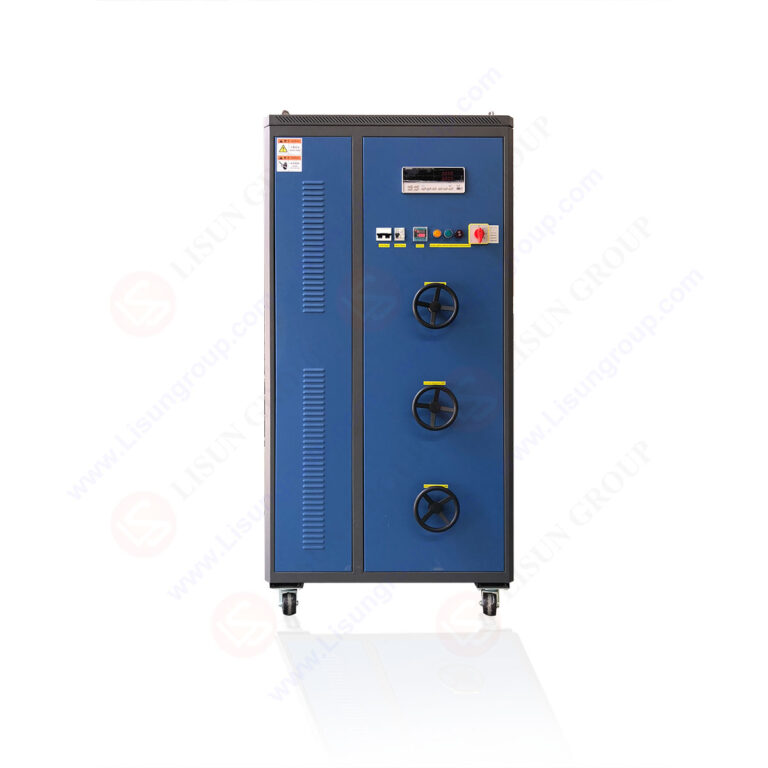
The LISUN JL-XC Series of multi-function waterproof test chambers exemplifies the integrated instrumentation required for modern compliance testing. Engineered to perform tests from IPX1 to IPX9K within a single, unified platform, it eliminates the need for multiple discrete test setups, enhancing laboratory efficiency and consistency. The chamber’s core principle involves a programmable logic controller (PLC) and touch-screen Human Machine Interface (HMI) that precisely orchestrate the test parameters for each standard.
For IPX1 to IPX4 tests, the system integrates a drip/splash water system with an adjustable sample table. For IPX5 and IPX6 jet tests, it employs a pressure-regulated pump system and standardized nozzles, ensuring the exact flow rates and distances are maintained. The immersion test capability for IPX7 and IPX8 is facilitated by a dedicated tank. Most notably, for the demanding IPX9K test, the JL-XC Series incorporates a high-pressure rotary spray system with four oscillating nozzles, a water heating and temperature control unit to maintain the 80°C requirement, and a separate high-pressure pump capable of achieving the 8-10 MPa pressure. The sample is mounted on a motorized turntable that rotates at 5 ±1 rpm, ensuring all specified angles (0°, 30°, 60°, and 90°) are exposed as per the standard.
Industry Use Cases and Competitive Advantages:
The JL-XC Series’ versatility makes it applicable across a broad industrial landscape. In automotive electronics, it validates the resilience of LED headlamps, taillights, electronic control units (ECUs), and exterior sensors against high-pressure car washes (IPX9K) and heavy rain (IPX5/6). For lighting fixtures, it tests outdoor luminaires for street lighting, architectural accent lighting, and industrial high-bay lights against storms and hose-directed cleaning. Household appliance manufacturers use it to verify the splash resistance of LED-lit control panels on washing machines or dishwashers. In telecommunications equipment, it ensures outdoor 5G radio units and junction boxes can withstand monsoon conditions. Its precision and programmability offer a competitive advantage by reducing test cycle time, minimizing manual configuration errors, and providing auditable test logs—critical for certification bodies like TÜV, UL, and Intertek.
Correlation Between IP Ratings and Application-Specific Environments
Selecting the appropriate IP rating is a risk-based engineering decision correlated to the operational environment. The following table illustrates typical correlations:
| Application Industry | Example Product | Typical IP Rating Requirement | Simulated Environmental Challenge |
|---|---|---|---|
| Lighting Fixtures | Indoor office LED panel | IP20 | Protection against finger contact only. |
| Lighting Fixtures | Outdoor garden path light | IP44/IP65 | Splashing water, light jet spray for cleaning. |
| Automotive Electronics | Exterior LED signal lamp | IP67/IP69K | Road spray, immersion in puddles, high-pressure wash. |
| Medical Devices | Surgical lighting in an OR | IP24/IP34 | Splashes of fluids during procedures. |
| Industrial Control | Factory floor control panel | IP65/IP66 | Dust and hose-down for cleaning. |
| Aerospace Components | Exterior aircraft navigation light | IP67 | In-flight rain and pressure differentials. |
| Consumer Electronics | Outdoor Bluetooth speaker | IP67 | Accidental drop in water, poolside splashes. |
Beyond Compliance: Integrating Waterproof Testing into the Product Development Lifecycle
Progressive manufacturers integrate IP testing not as a final gate but throughout the product development lifecycle. During the design phase, prototype testing identifies sealing weaknesses in gasket interfaces, lens assemblies, or cable glands. In design validation testing (DVT), samples undergo full IP sequence testing alongside thermal cycling and vibration to uncover synergistic failure modes. During production, sampling-based IP testing serves as a key quality control checkpoint to monitor manufacturing process drift, such as inconsistencies in gasket application or screw torque. This holistic approach, supported by reliable equipment like the JL-XC Series, transforms waterproofing from a compliance cost into a core reliability and brand integrity metric. It is particularly vital for safety-critical systems in medical devices, where a fluid ingress could cause a device malfunction, or in industrial control systems, where failure could lead to costly production downtime.
Challenges and Future Directions in Environmental Testing for LEDs
The evolution of LED technology presents new testing challenges. The proliferation of smart, connected luminaires with integrated sensors and wireless communication modules creates more potential ingress points. The use of novel materials for weight reduction or optical design may have different coefficients of thermal expansion, affecting seal integrity over temperature cycles. Future directions in testing may involve more combined-stress sequences, such as IPX9K testing immediately followed by extreme temperature exposure, to better simulate real-world conditions like a hot vehicle being washed in cold weather. Test equipment must therefore evolve towards greater programmability, data integration, and the ability to handle these complex, multi-stress profiles.
Frequently Asked Questions (FAQ)
Q1: Can a product rated IP68 also be assumed to meet the requirements for IP65, IP66, and IP67?
No. The IP ratings are distinct and must be individually tested and declared. IP68 defines continuous immersion under conditions specified by the manufacturer, which may not involve the high-velocity water jets specified in IP65 and IP66. A product can be dual-rated (e.g., IP66/IP68) only if it has successfully passed all relevant tests independently.
Q2: What is the significance of water temperature in the IPX9K test, and how is it controlled in equipment like the JL-XC Series?
The 80°C ±5°C water temperature in the IPX9K test is critical for simulating high-temperature washdowns used in industrial and automotive cleaning. It also stresses seals and materials thermally. Chambers like the JL-XC Series integrate a closed-loop heating system with a temperature sensor and controller, often using an inline water heater, to maintain the specified temperature at the nozzle outlet throughout the test duration.
Q3: How often should waterproof test equipment be calibrated, and what parameters are most critical?
Calibration intervals should follow laboratory accreditation guidelines (e.g., ISO/IEC 17025), typically annually. Critical parameters for calibration include water flow rate (for IPX5, IPX6), water pressure (for IPX9K), nozzle orifice diameter, turntable rotation speed, immersion tank dimensions (for IPX7/8), and water temperature (for IPX9K). Regular verification using calibrated flow meters and pressure gauges is also recommended.
Q4: For a large LED luminaire that exceeds the size of the test chamber’s turntable, how can IPX9K testing be performed?
The standard allows for a manual test method in such cases. The luminaire is fixed, and the high-pressure, high-temperature nozzle is manually moved to target the four specified angles (0°, 30°, 60°, 90°) for the prescribed time per angle. Equipment like the JL-XC Series often provides a handheld test gun accessory specifically for this manual testing protocol to maintain pressure and temperature control.
Q5: What preparatory steps are essential for a luminaire before subjecting it to IP immersion testing (IPX7/8)?
Prior to immersion, the luminaire should be conditioned in a thermal chamber to create a negative pressure differential inside the enclosure. Typically, it is placed in a chamber at a temperature 5-10°C below the test water temperature for a period (e.g., 1-2 hours). This “vacuum” effect inside the housing during immersion more aggressively tests the integrity of seals, as it encourages water ingress if any path exists.