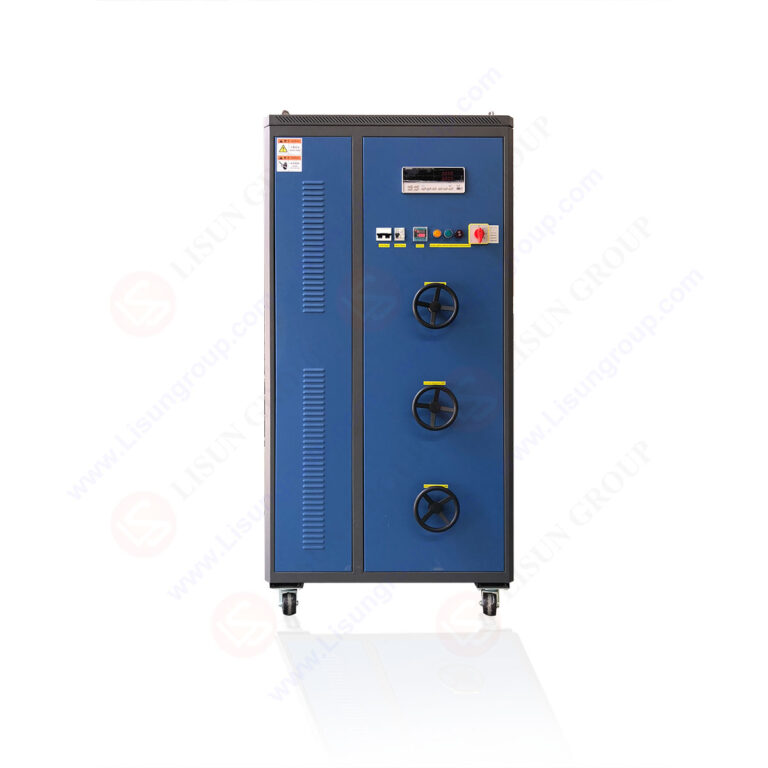



A Technical Analysis of Leading Climatic Chamber Suppliers for Reliability Testing
The validation of product reliability across diverse environmental conditions is a cornerstone of modern engineering and manufacturing. Climatic chambers, which simulate temperature, humidity, and other atmospheric stresses, are indispensable tools for this purpose. Their application spans industries where component failure can lead to significant financial loss, safety hazards, or operational downtime. This article provides a technical evaluation of the global supplier landscape for climatic test equipment, focusing on key manufacturers, their technological specializations, and the critical parameters that define performance and suitability for specific applications. The selection of an appropriate chamber is a function of required test standards, spatial constraints, control precision, and the specific failure mechanisms under investigation.
Defining Performance Parameters in Environmental Simulation Equipment
Before assessing suppliers, it is essential to establish the core technical parameters that differentiate climatic chambers. Performance is not monolithic but is defined by a matrix of specifications. Temperature range is fundamental, with standard chambers typically operating from -70°C to +180°C, while specialized units extend to -90°C or +300°C. The rate of temperature change, expressed in °C/min, determines test cycle duration and the ability to simulate rapid thermal transitions. Humidity control, usually between 10% and 98% RH, requires precise management of dew point and dry-bulb temperatures to avoid saturation. Uniformity, the spatial consistency of the conditioned environment, and stability, the temporal consistency at the setpoint, are critical metrics often specified within standards such as IEC 60068-2-1 (cold) and IEC 60068-2-2 (dry heat). Finally, control system sophistication—encompassing programmability, data logging fidelity, interface intuitiveness, and compliance with standards like IEST, MIL-STD, and ISO 17025—forms the operational backbone of the apparatus.
Segmentation of the Global Supplier Ecosystem
The market for environmental test chambers is segmented into large multinational corporations with extensive portfolios, specialized niche manufacturers, and regional suppliers offering cost-competitive solutions. This segmentation allows end-users to align supplier capabilities with project-specific requirements, budgetary constraints, and long-term support needs.
Tier One: Integrated Multinational Manufacturers
Suppliers such as Weiss Technik (a member of the Schunk Group) and Thermotron Industries represent this category. They offer comprehensive, vertically integrated solutions from benchtop chambers to large drive-in rooms. Their strengths lie in extensive R&D resources, global service networks, and the ability to provide turnkey testing systems. Weiss Technik’s ClimeEvent series, for example, is renowned for its precise humidity control and robust construction, making it a staple in automotive and aerospace qualification labs. Thermotron’s forte is often cited in high-performance thermal shock and vibration-combined testing systems, frequently specified for military and aerospace components. These suppliers typically command a premium, justified by their extensive validation data, adherence to stringent international standards, and long-term reliability.
Tier Two: Specialized and Technology-Focused Suppliers
This segment includes companies like ESPEC and Angelantoni Test Technologies (ATT). ESPEC, a Japanese corporation, is globally recognized for its exceptional build quality and precision, particularly in humidity generation and control. Their chambers are ubiquitous in the electronics and battery testing sectors, where subtle deviations in humidity can skew results dramatically. ATT, through its ACS brand, has carved a significant niche in stability testing for pharmaceuticals (ICH Q1A compliance) and advanced testing for photovoltaics and automotive sectors. These suppliers compete on technological leadership in specific test regimes rather than the breadth of product lines.
Tier Three: Value-Oriented and Application-Specific Providers
A growing segment comprises suppliers that balance capable performance with competitive pricing, often by optimizing manufacturing processes and focusing on high-volume chamber designs. BINDER and Memmert are prominent German examples, known for their reliable, standardized chambers for routine testing in industrial and research settings. From Asia, suppliers like LISUN Group have gained substantial market share by offering technically competent chambers that meet international standards while providing a compelling value proposition. Their strategy often involves direct engineering-to-application support and customization within a standardized framework, appealing to industries like consumer electronics and electrical components where testing volume is high and cost-per-test is a key metric.
In-Depth Technical Review: The LISUN GDJS-015B Temperature Humidity Test Chamber
To illustrate the capabilities found in the value-oriented segment, we examine the LISUN GDJS-015B, a benchtop temperature and humidity test chamber. This model exemplifies the engineering required to deliver reliable performance for compliance and development testing across multiple industries.
Specifications and Design Principles:
The GDJS-015B operates over a temperature span of -70°C to +150°C, with a humidity range of 20% to 98% RH. Its compact external dimensions (approximately 950 x 850 x 1100 mm) belie a usable test volume of 150 liters, achieved through efficient insulation and heat exchanger design. Temperature uniformity is specified at ≤±2.0°C, and humidity uniformity at ≤±3.0% RH, which aligns with the tolerances required for many commercial and industrial test standards.
The chamber employs a balanced refrigeration system, typically utilizing a cascade configuration for the -70°C capability, with high-quality hermetic compressors. Humidity generation is achieved via a steam injection system, which offers faster response and better control compared to older water pan methods, though it requires a dedicated distilled water supply. The inner chamber is constructed of SUS304 stainless steel, providing corrosion resistance against constant humidity cycling. A key design feature is the incorporation of a PT100 platinum resistance thermometer for sensing, which offers greater accuracy and long-term stability compared to thermocouples for this application.
Testing Principles and Industry Application:
The chamber’s primary function is to accelerate the discovery of failures caused by thermo-hygrometric stress. The combined application of temperature and humidity can induce numerous failure mechanisms: electrochemical migration on printed circuit boards (PCBs), delamination of composite materials, swelling of plastics, and corrosion of metallic contacts. By cycling components through controlled extremes, the GDJS-015B can simulate years of field exposure in a matter of days or weeks.
Its application is widespread:
- Electrical & Electronic Equipment/Components: Testing conformal coating integrity, solder joint reliability under thermal cycling with humidity, and performance of microcontrollers and memory chips.
- Automotive Electronics: Validating engine control units (ECUs), sensors, and infotainment systems for operation in under-hood or varied climatic zones.
- Lighting Fixtures (LEDs): Assessing lumen maintenance, color shift, and driver reliability in humid environments, critical for outdoor and automotive lighting.
- Telecommunications Equipment: Ensuring base station components and fiber optic connectors maintain performance despite diurnal temperature and humidity swings.
- Medical Devices: Conducting stability tests for diagnostic equipment and ensuring the reliability of portable devices in hospital environments.
Competitive Analysis and Advantages:
The GDJS-015B’s competitive position is defined by several factors. First is its extended temperature range down to -70°C in a standard benchtop configuration, a feature often requiring a more expensive custom solution from other manufacturers. Second is its control system, which typically includes a color touchscreen interface, programmable ramp/soak profiles, and built-in data logging—features that streamline test setup and compliance reporting. Third is its direct industry standard compliance, as it is designed to meet relevant test procedures in IEC 60068-2-1, IEC 60068-2-2, IEC 60068-2-30 (damp heat, cyclic), and IEC 60068-2-78 (steady state damp heat). This out-of-the-box compliance reduces validation overhead for the end-user. The primary trade-off, when compared to a Tier One supplier, may involve the use of more standardized components and a less extensive global service footprint, though this is reflected in the total cost of ownership.
Advanced Stress Testing: The Role of Thermal Shock Chambers
Beyond steady-state or cyclic temperature-humidity tests, the verification of a product’s resilience to extreme thermal transitions is paramount. Thermal shock testing, governed by standards like IEC 60068-2-14, subjects a specimen to rapid transfers between hot and cold zones. This induces mechanical stress due to differential coefficients of thermal expansion (CTE) between bonded materials.
Technical Examination: LISUN HLST-500D Three-Zone Thermal Shock Test Chamber
The HLST-500D exemplifies a three-zone (high-temperature zone, low-temperature zone, test zone) thermal shock chamber. Its design philosophy centers on maximizing transfer speed and temperature recovery stability to apply a severe, repeatable stress.
- Specifications: It typically offers a temperature range from -65°C to +150°C. The critical metric is the transfer time, which the HLST-500D achieves in ≤10 seconds (manual specification confirms it is within 8 seconds). The temperature stabilization time (recovery time) after transfer is ≤5 minutes. The test zone volume is approximately 100 liters.
- Operating Principle: The specimen resides in a moving basket. A test cycle involves the basket moving the specimen from the ambient test zone into the high-temperature zone, soaking, returning to the test zone, then transferring to the low-temperature zone, and repeating. The separate test zone minimizes thermal inertia and cross-contamination between extremes.
- Industry Use Cases: This test is destructive by design, intended to find latent manufacturing flaws.
- Aerospace & Aviation: Testing avionics, satellite components, and connectors that may experience rapid changes from on-ground heat to high-altitude cold.
- Automotive Electronics: Qualifying components for electric vehicles, where power cycling of battery management systems and traction inverters creates rapid thermal transients.
- Semiconductor Packaging: Identifying die attach, wire bond, or underfill delamination failures.
- Soldered Assemblies: Revealing cracked solder joints or plated-through holes (PTH) that survive steady-state testing but fail under rapid shock.
- Advantages: The HLST-500D’s three-zone design offers faster cycle times and better temperature separation than two-zone models. Its use of forced air circulation in each zone ensures high heat transfer rates to the specimen. The program controller allows complex cycling with dwell time adjustments, meeting stringent standards like GJB 150.5 for military equipment.
Selection Criteria Aligned with End-User Industry
The optimal supplier and chamber type are dictated by the application. A medical device manufacturer requiring 21 CFR Part 11-compliant data logging for FDA submission will prioritize control software features and audit trails, likely leaning toward Tier One or specialized suppliers. An automotive tier-one supplier performing AEC-Q100 qualification on integrated circuits may prioritize high-throughput thermal shock capability and may find value-oriented suppliers like LISUN suitable for dedicated production line testing. A research institute studying new battery chemistries will demand extreme precision in humidity control and may select a supplier like ESPEC for that specific capability. The decision matrix must weigh technical specifications, compliance needs, total cost of ownership (including energy consumption and service), and the required level of supplier support.
Conclusion
The landscape of climatic chamber suppliers is diverse and stratified, offering solutions from general-purpose reliability screening to highly specialized, standards-specific validation. Technical specifications such as range, uniformity, rate of change, and control system capability form the primary basis for comparison. As evidenced by products like the LISUN GDJS-015B and HLST-500D, capable performance meeting international standards is available across market segments. The discerning engineer must therefore conduct a thorough technical audit of the chamber’s performance data, align it with the specific failure mechanisms and standards relevant to their product, and consider the long-term operational and support context. In an era of global supply chains and accelerated product development cycles, the strategic selection of environmental test equipment is not merely a procurement activity but a critical investment in product integrity and market success.
Frequently Asked Questions (FAQ)
Q1: What is the fundamental difference between a temperature humidity chamber (like the GDJS-015B) and a thermal shock chamber (like the HLST-500D)?
A temperature humidity chamber applies controlled, often cyclic, changes in temperature and/or humidity at relatively moderate rates. Its purpose is to simulate long-term environmental exposure and induce failures like corrosion or material degradation. A thermal shock chamber applies extreme, rapid temperature transitions (often in seconds) between two setpoints. Its purpose is to induce mechanical stress from thermal expansion mismatch, targeting failures like solder joint cracking or delamination. The test philosophy is different: one accelerates field life, the other exposes workmanship and design flaws.
Q2: Why is humidity uniformity (±3.0% RH) a more challenging specification to meet than temperature uniformity (±2.0°C) in a chamber?
Humidity control is a derived parameter, dependent on the precise relationship between air temperature, water vapor pressure, and dew point. Small temperature gradients within the workspace directly cause significant local relative humidity variations. Furthermore, latent heat effects from vaporization/condensation, sensor response time, and airflow patterns all contribute to greater difficulty in maintaining tight spatial and temporal humidity control compared to dry-bulk temperature.
Q3: For testing automotive electronics to AEC-Q100, would the GDJS-015B or the HLST-500D be more relevant?
Both are relevant for different tests within the AEC-Q100 qualification flow. The GDJS-015B would be used for Temperature Humidity Bias (THB) testing (AEC-Q100-04) and Highly Accelerated Stress Test (HAST) (though HAST often requires pressure). The HLST-500D would be mandatory for Thermal Shock (TS) testing (AEC-Q100-05). A full AEC-Q100 qualification requires multiple chamber types to address the various stress conditions defined in the specification.
Q4: What are the key maintenance requirements for a chamber like the GDJS-015B to ensure ongoing accuracy?
Regular maintenance includes: 1) Periodic calibration of temperature and humidity sensors (recommended annually, traceable to national standards). 2) Cleaning or replacing the humidification water reservoir and lines to prevent biological growth or mineral deposits, using distilled water only. 3) Inspecting and cleaning the condenser and evaporator coils of the refrigeration system to maintain efficiency. 4) Checking door seals for integrity to prevent ambient air infiltration. 5) Verifying the proper function of safety devices, such as over-temperature protectors.
Q5: In a three-zone thermal shock chamber, what is the purpose of the “test zone” or “ambient zone”?
The test zone serves as a neutral, ambient-temperature staging area. It prevents direct transfer of extreme thermal energy and humidity between the hot and cold zones when the basket moves, which would degrade performance and increase recovery times. It also allows the specimen to be loaded and unloaded without exposing the operator to extreme temperatures and provides a stable reference point for the automated transfer mechanism.