


Understanding IPX34 Testing Standards: A Technical Analysis of Water Ingress Protection for Modern Electronics
Introduction to Ingress Protection (IP) Codification
The Ingress Protection (IP) rating system, defined by the International Electrotechnical Commission standard IEC 60529, provides a standardized classification for the degree of protection offered by enclosures against the intrusion of solid foreign objects and water. This codification is critical for engineers, designers, and quality assurance professionals across a multitude of industries. The IP code, typically expressed as “IP” followed by two characteristic numerals, delivers precise information regarding an enclosure’s defensive capabilities. The first digit (0-6) denotes protection against solid particles, while the second digit (0-9K) specifies protection against water under defined test conditions. The IPX3 and IPX4 ratings, often combined as IPX34, represent a crucial benchmark for products expected to withstand water spray and splashing from various angles, a common environmental challenge for consumer and industrial devices.
Defining the Scope of IPX3 and IPX4 Test Criteria
IPX3 and IPX4 are distinct but sequentially related ratings for water ingress from spraying and splashing. An IPX3 rating signifies that an enclosure can endure water sprayed at an angle up to 60° from the vertical. The test is conducted using a oscillating tube or spray nozzle, delivering water at a defined flow rate (e.g., 0.07 l/min per hole for the tube, or 10 l/min for the nozzle) for a minimum duration of 5 minutes per square meter, with a total test time of at least 5 minutes. This simulates exposure to rain falling at a vertical angle of up to 60°.
An IPX4 rating offers a higher degree of protection, indicating the enclosure is resistant to water splashed from all directions. The test methodology typically employs an oscillating tube or a spray nozzle with a broader coverage, ensuring a thorough drenching. The water volume is increased (e.g., 0.07 l/min per hole for the tube, or 10 l/min for the nozzle) and the test duration mirrors that of IPX3. The key differentiator is the apparatus motion, which ensures no direct spray for the IPX3 test, whereas the IPX4 test ensures splashing from all practicable angles. A product claiming an IPX34 rating must successfully pass both individual test protocols without exhibiting any harmful ingress of water.
The Critical Role of IPX34 Compliance in Product Design and Validation
Compliance with IPX34 standards is not merely a regulatory checkbox; it is a fundamental aspect of product reliability, safety, and lifecycle cost. For electrical and electronic equipment, water ingress can lead to immediate failure, latent corrosion, short circuits, and compromised insulation resistance, posing significant safety hazards. In the automotive electronics sector, components within door panels, underbody modules, and engine compartments are routinely subjected to road spray and wheel splash. An IPX34 rating validates their resilience in these environments.
Lighting fixtures, both indoor and outdoor, require protection against cleaning splashes and weather exposure. Industrial control systems and telecommunications equipment deployed in factories or outdoor cabinets must operate reliably despite ambient moisture and incidental water exposure. For medical devices and aerospace components, where failure is not an option, ingress protection testing forms a cornerstone of environmental stress screening (ESS). Even office equipment and consumer electronics, such as smart speakers, routers, or outdoor sensors, benefit from IPX34 testing to ensure durability against accidental spills or humid conditions.
Principles and Methodologies of Laboratory-Based IPX34 Testing
Accurate IPX34 testing requires controlled laboratory conditions that precisely replicate the standard’s specifications. The core principle involves subjecting the device under test (DUT) to calibrated water sprays from defined apparatuses while monitoring for water penetration. The DUT is mounted on a turntable to simulate exposure from various angles. Key parameters under strict control include:
- Water pressure: Regulated to ensure consistent droplet size and impact energy.
- Flow rate: Precisely measured to comply with the l/min requirements of the standard.
- Spray angle and oscillation: Mechanically controlled to the degrees specified in IEC 60529.
- Test duration: Timed accurately per the standard and scaled relative to the DUT’s surface area.
- Water resistivity: Often controlled to avoid misleading results due to conductive impurities.
Post-test evaluation involves a thorough visual inspection for water traces inside the enclosure and functional testing of the DUT. Any ingress of water that does not compromise safe operation may be permitted per the standard’s definitions, but for most electronic applications, any ingress is considered a failure.
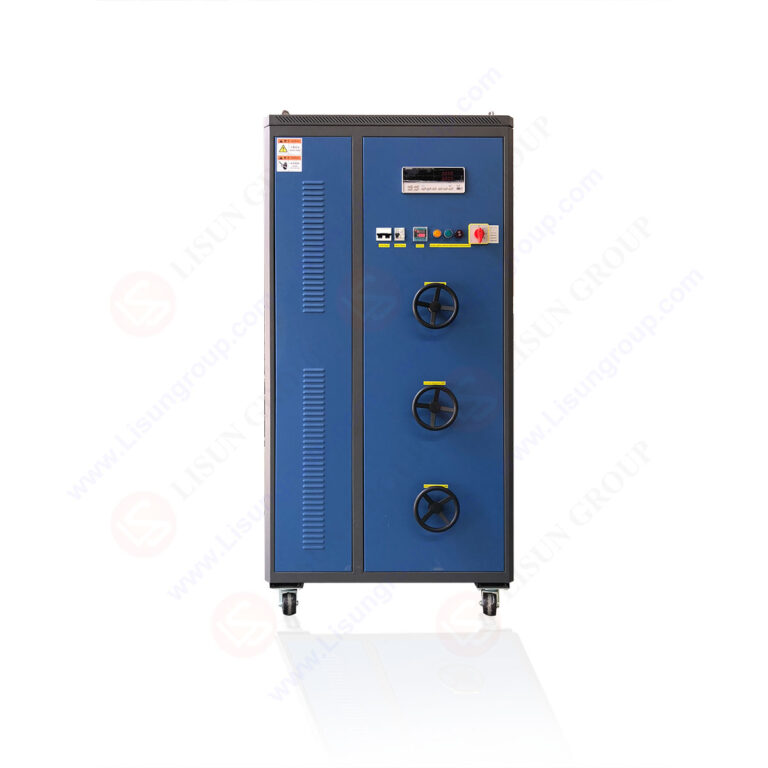
The LISUN JL-34 Waterproof Test Chamber: Engineered for Precision Compliance
To execute reproducible and standards-compliant IPX3 and IPX4 testing, specialized instrumentation is required. The LISUN JL-34 Waterproof Test Chamber is engineered specifically for this application, providing a fully integrated solution for IPX1 through IPX6 testing. Its design focuses on delivering the exacting conditions mandated by IEC 60529, UL, and other derivative standards.
Specifications and Testing Principles:
The JL-34 features a stainless-steel test chamber with a tempered glass viewing window and integrated water circulation and filtration system. For IPX3 and IPX4 testing, it utilizes a precision-engineered oscillating tube apparatus. The tube is perforated with holes of a specific diameter and spacing, calibrated to deliver the required 0.07 l/min per hole flow rate. A variable-speed motor controls the oscillation over a 0-180° range (adjustable to the 60° limit for IPX3), while a separate turntable rotates the DUT at 1-3 rpm to ensure comprehensive coverage. The system includes a flow meter and pressure gauge for real-time parameter verification. The test duration is programmable via a digital timer, and the entire system is designed for easy drainage and maintenance.
Industry Use Cases:
The JL-34 is deployed in R&D and quality labs across the spectrum of relevant industries. An automotive electronics manufacturer uses it to validate the resilience of a new infotainment control module against simulated rain and car wash spray. A producer of industrial Ethernet switches subjects its products to IPX34 testing in the JL-34 to guarantee performance in humid, washdown-prone factory environments. A lighting manufacturer tests its IP44-rated bathroom fixtures to ensure no moisture penetrates the diffuser during the splashing test.
Competitive Advantages:
The JL-34’s advantages lie in its integrated design, calibration fidelity, and operational robustness. Unlike makeshift setups, it guarantees repeatable test conditions critical for comparative analysis and certification. Its corrosion-resistant construction ensures long-term reliability despite constant exposure to water. The precise control over oscillation angle, turntable speed, and water pressure reduces test uncertainty. Furthermore, its capability to also perform IPX1, IPX2, IPX5, and IPX6 tests with accessory nozzles offers laboratories exceptional versatility from a single platform, optimizing capital investment and bench space.
Interpreting Test Results and the Certification Pathway
A successful IPX34 test concludes with no ingress of water that would impair the device’s functionality or violate safety standards. Following a positive test, manufacturers often seek formal certification from an accredited third-party laboratory. This certification provides an objective validation for marketing claims and regulatory submissions. The test report will detail the standard used, the specific test parameters (pressure, duration, angle), the condition of the DUT, and the pass/fail outcome. It is crucial to note that an IP rating is awarded for the complete assembled product under test conditions; a change in seal design, assembly process, or housing material can invalidate the rating, necessitating re-testing.
Beyond IPX34: Comparative Analysis with Adjacent IP Ratings
Understanding IPX34 is enhanced by contrasting it with adjacent ratings. IPX2, for instance, protects only against dripping water at a tilted angle, while IPX5/IPX6 involve powerful water jets (6.3mm or 12.5mm nozzles) at high pressure (30 kPa at 3m distance for IPX5, 100 kPa at 3m for IPX6), representing a fundamentally different, more aggressive type of exposure. IPX7 and IPX8 involve temporary or continuous immersion, a separate test regime altogether. The IPX34 rating occupies a vital middle ground, protecting against pervasive, low-pressure water exposure rather than directed jets or full submersion. This makes it ideally suited for the majority of real-world splash and spray scenarios.
Implications for Product Lifetime and Field Reliability
The correlation between rigorous IPX34 testing in the development phase and field reliability is strongly positive. Products that pass these tests demonstrate robust sealing design, effective gasket or adhesive selection, and proper assembly. This directly translates to reduced warranty claims, lower field failure rates, and enhanced brand reputation. In industries like telecommunications or industrial control, where mean time between failures (MTBF) is a key metric, validating ingress protection is a non-negotiable step in achieving operational targets. The data derived from testing also feeds into failure mode and effects analysis (FMEA), allowing engineers to proactively address potential points of vulnerability.
Frequently Asked Questions (FAQ)
Q1: Can a product be rated IP34 instead of IPX34?
A1: Yes. The “X” in IPX34 simply indicates that the solid particle protection (first digit) was not formally tested or is not specified. A rating of IP34 means the product was also tested and certified for protection against solid objects larger than 2.5mm (digit “3”). The water protection levels (3 and 4) are identical in both cases.
Q2: How long does an IPX34 certification remain valid?
A2: The certification itself does not expire, but it is valid only for the specific product model and manufacturing configuration tested. Any change to the enclosure design, sealing methodology, or assembly process that could affect ingress protection invalidates the existing certification and requires re-testing.
Q3: What is the typical water temperature used in IPX34 testing, and does it matter?
A3: IEC 60529 specifies that the water temperature should be within 5°C of the DUT’s temperature at the start of the test, to minimize thermal shock. Typically, tests are run with ambient temperature water. For specialized applications, the standard allows for agreement on different temperatures, but this is not the norm for general compliance testing.
Q4: Can the LISUN JL-34 chamber test for both IPX3 and IPX4 automatically in one sequence?
A4: While the JL-34 is equipped to perform both tests, they are distinct procedures with different required oscillation angles (up to 60° for IPX3, full coverage for IPX4). A complete IPX34 validation would typically involve two separate programmed test sequences: one configured for IPX3 parameters, followed by another configured for IPX4 parameters. The chamber’s controls facilitate easy switching between these setpoints.
Q5: After passing an IPX34 test, is a product considered waterproof for outdoor use?
A5: Not necessarily. “Waterproof” is a non-technical term. IPX34 certifies resistance to spraying and splashing water. It does not guarantee protection against high-pressure jets (IPX5/6), prolonged heavy rain from all directions (which may exceed test conditions), or immersion (IPX7/8). Product specifications must be matched to the specific environmental conditions of the intended application.