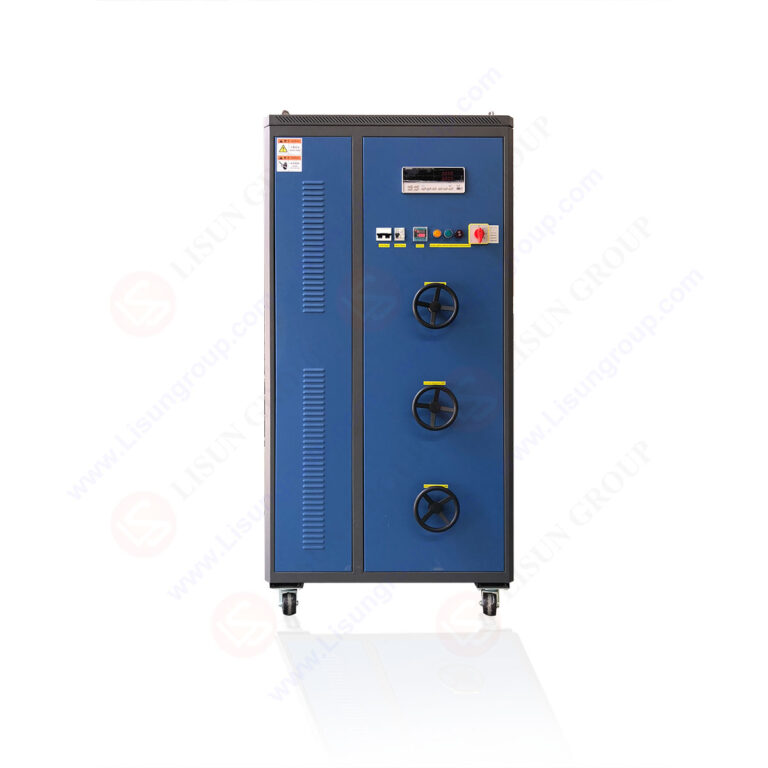



Advanced SAL Spray Chamber Technology for Enhanced Sample Introduction in Corrosion Testing
Introduction to Modern Corrosion Simulation Methodologies
The relentless pursuit of product reliability across technologically intensive sectors necessitates accelerated environmental testing protocols that accurately simulate years of field exposure within controlled laboratory conditions. Among these, Salt Spray (Fog) testing, standardized under methods such as ASTM B117 and ISO 9227, remains a cornerstone for evaluating the corrosion resistance of materials and surface coatings. The efficacy and repeatability of this testing are fundamentally governed by the technology responsible for generating, conditioning, and introducing the corrosive aerosol into the test chamber—the spray chamber system. This article provides a technical examination of Advanced Spray Chamber (SAL) technology, a sophisticated evolution in sample introduction that enhances testing precision, reproducibility, and alignment with real-world failure modes for critical components.
Fundamental Principles of Aerosol Generation and Conditioning
At its core, a salt spray test requires the consistent production of a finely dispersed, homogeneous saline mist. Traditional systems often rely on simple nozzle-based atomization, which can produce droplets with a wide size distribution and inconsistent settling rates. Advanced SAL technology refines this process through a multi-stage conditioning pathway. Compressed air and a saline solution are precisely metered and combined in a primary atomization stage. The resultant aerosol is then immediately routed through a series of baffles and conditioning plenums within the spray chamber. These internal structures serve to remove oversized droplets via inertial impaction, allowing only a calibrated spectrum of droplet sizes—typically within the 1 to 5 micron range—to proceed into the main test cabinet. This droplet size conditioning is critical, as it directly influences the deposition rate, surface wetting behavior, and the electrochemical corrosion mechanisms on the test specimens. A uniform, fine mist ensures each sample, regardless of position within the chamber’s working volume, is subjected to an identical corrosive environment, thereby eliminating a primary source of inter-laboratory variance.
Architectural Integration of the YWX/Q-010 Salt Spray Test Chamber
The application of Advanced SAL technology is exemplified in the LISUN YWX/Q-010 Salt Spray Test Chamber. This apparatus integrates the spray chamber as a core, optimized subsystem. The chamber is constructed from robust, corrosion-resistant polymeric materials, ensuring long-term stability against the saline environment. Its design incorporates a large-capacity, temperature-controlled reservoir for the sodium chloride solution, coupled with a pneumatic atomization system with precise pressure regulation (typically adjustable between 0.07 to 0.17 MPa). The generated spray is thermostatically controlled, with the chamber maintaining a consistent temperature of 35°C ± 2°C, as mandated by standard test protocols. The internal volume of the YWX/Q-010 is designed to provide a uniform spatial distribution of the salt fog, a parameter validated through collector placement tests as per ISO 9227. The chamber features a transparent lid for continuous visual inspection without disturbing the test environment, a critical factor for long-duration tests that may run for hundreds or thousands of hours.
Quantifying Performance: Specifications and Metrological Validation
The technical superiority of a system like the YWX/Q-010 is quantified through its specifications and adherence to metrological principles. Key operational parameters include a temperature stability of ±0.5°C within the saturation tower (if equipped) and the main chamber, a pH range of the collected solution between 6.5 to 7.2, and a consistent salt settlement rate of 1.0 to 2.0 ml/80cm² per hour. These parameters are not arbitrary; they are meticulously calibrated to replicate specific environmental severities. The chamber’s construction allows for testing across a broad spectrum of standards, including but not limited to ASTM B117, ISO 9227, JIS Z 2371, and IEC 60068-2-11. Data logging capabilities, often interfaced with modern control systems, enable the continuous monitoring of temperature, spray pressure, and test duration, creating an auditable trail for quality assurance and compliance reporting. This level of control transforms the test from a qualitative “pass/fail” exercise into a quantitative, data-rich analysis of material performance.
Industry-Specific Applications and Failure Mode Analysis
The enhanced sample introduction provided by Advanced SAL technology finds critical application across industries where corrosion-induced failure carries significant safety, financial, or operational risk.
- Automotive Electronics & Electrical Components: Connectors, engine control units (ECUs), sensor housings, and switchgear are tested for resistance to road salt exposure. Advanced SAL technology ensures that creeping corrosion across printed circuit boards (PCBs) and the degradation of plated contacts (e.g., tin, silver, or gold plating) are reliably accelerated and observed.
- Aerospace and Aviation Components: For components such as avionics housings, electrical harness connectors, and landing gear electrical systems, testing must simulate not only ground-based salt environments but also atmospheric conditions. The precise conditioning of the aerosol is vital for testing to standards like MIL-STD-810, Method 509.
- Medical Devices and Telecommunications Equipment: Implantable device housings, surgical instrument coatings, and outdoor telecommunications enclosures require absolute reliability. The uniform corrosion attack facilitated by this technology helps identify pitting, galvanic corrosion between dissimilar metals, and coating delamination that could compromise sterility or signal integrity.
- Lighting Fixtures and Consumer Electronics: For outdoor LED luminaires, automotive lighting, and portable electronic device chassis, salt spray testing evaluates the integrity of anodized layers, powder coatings, and sealants. Consistent fog deposition is key to predicting aesthetic degradation and functional failure from salt ingress.
- Industrial Control Systems & Cable/Wiring Systems: Terminal blocks, PLC housings, and cable gland seals are subjected to tests to ensure they can withstand corrosive industrial atmospheres. The technology helps verify that protective conformal coatings on PCBs remain effective and that cable insulation does not become brittle or conductive due to salt permeation.
Comparative Advantages Over Conventional Spray Systems
The transition from conventional atomizers to Advanced SAL spray chambers confers several distinct competitive advantages that directly impact testing ROI and product development cycles.
Enhanced Reproducibility: By standardizing droplet size and distribution, the technology minimizes a major variable in corrosion testing. Results become less dependent on specific chamber geometry or daily ambient laboratory conditions, fostering greater confidence in comparative studies between material batches or coating suppliers.
Reduced Maintenance and Downtime: The conditioning baffles in the SAL system prevent the accumulation of large salt droplets and precipitates in the main chamber air lines and nozzles. This reduces clogging events, minimizes the frequency of nozzle cleaning or replacement, and ensures more consistent operation throughout prolonged unattended tests.
Improved Correlation to Field Performance: A heterogeneous spray with large droplets can create localized pools of electrolyte, leading to corrosion patterns that do not accurately reflect real-world, thin-film atmospheric corrosion. The fine, uniform mist generated by advanced systems promotes a more representative, evenly distributed corrosion layer, yielding failure modes that better correlate with actual service life data.
Operational Efficiency and Control: Integrated systems like the YWX/Q-010 offer programmable controllers that automate test cycles, including spray periods, dwell times, and drying phases (for cyclic corrosion tests). This automation, built upon a stable spray generation core, reduces operator intervention and potential for human error.
Standards Compliance and Regulatory Frameworks
Implementing Advanced SAL technology is intrinsically linked to compliance with international standards. These standards rigorously define the test environment. For instance, ISO 9227 specifies the requirements for the salt solution concentration, pH, air pressure, and collection rate. A chamber employing this advanced technology is engineered to meet these parameters not as a nominal target, but as a sustained, verifiable condition. This is particularly crucial for industries governed by stringent regulatory frameworks. Medical device manufacturers must demonstrate compliance with ISO 13485 and various pharmacopeial standards, while automotive suppliers operate within IATF 16949 quality management systems, where capable and reliable test equipment is a fundamental requirement. The data generated by a precisely controlled YWX/Q-010 chamber provides defensible evidence for material qualification and component approval processes.
Future Trajectories: Integration with Cyclic and Multi-Stress Testing
The evolution of corrosion testing is moving beyond continuous salt spray towards more sophisticated cyclic tests that combine salt fog with periods of humidity, drying, and temperature variation (e.g., ASTM G85, IEC 60068-2-52). These protocols aim to provide a better acceleration of real-world corrosion, particularly for coated systems. Advanced SAL technology forms the essential foundation for these complex tests. Its rapid, reliable, and clean initiation and termination of the salt spray phase allow for seamless integration into automated multi-stress profiles. The next generation of chambers will likely feature even tighter integration between the spray chamber subsystem, environmental conditioning, and data analytics platforms, enabling predictive corrosion modeling based on accelerated test data.
Conclusion
Advanced SAL Spray Chamber Technology represents a significant technical refinement in the field of accelerated corrosion testing. By delivering a precisely conditioned, homogeneous saline aerosol, it addresses key limitations of traditional systems in reproducibility, maintenance, and field correlation. As implemented in instruments such as the LISUN YWX/Q-010 Salt Spray Test Chamber, this technology provides engineers and quality assurance professionals across the electrical, electronic, automotive, and aerospace sectors with a more reliable and authoritative tool for assessing material durability. In an era where product longevity and reliability are paramount competitive differentiators, the adoption of such enhanced sample introduction methodologies is not merely an operational improvement but a strategic necessity for robust design validation and risk mitigation.
Frequently Asked Questions (FAQ)
Q1: How does the Advanced SAL technology in the YWX/Q-010 chamber ensure a consistent salt settlement rate, and why is this critical?
The technology utilizes a calibrated atomization nozzle coupled with a series of conditioning baffles within the spray chamber. These baffles coalesce and drain away oversized droplets, allowing only a fine, consistent mist to enter the test zone. This process is governed by precisely regulated air pressure and solution feed. Consistency is critical because the salt settlement rate (e.g., 1-2 ml/80cm²/hour) is a primary controlled variable in standards like ASTM B117. Variation in this rate would alter the corrosivity of the test, leading to non-comparable and unreliable results between tests or laboratories.
Q2: Can the YWX/Q-010 chamber be used for testing beyond simple neutral salt spray (NSS)?
Yes. While expertly configured for standard Neutral Salt Spray (NSS) tests, the chamber’s fundamental design supports modified testing. With appropriate preparation of the electrolyte solution, it can be adapted for Acetic Acid Salt Spray (AASS, per ASTM G85 Annex A1) or Copper-Accelerated Acetic Acid Salt Spray (CASS, per ASTM B368) tests, which are more aggressive and used for evaluating decorative copper-nickel-chromium or nickel-chromium platings. The chamber’s corrosion-resistant construction is suitable for these acidic environments.
Q3: What is the importance of the pH level of the collected solution, and how is it maintained?
The pH of the salt solution is a fundamental parameter affecting corrosion kinetics. A neutral pH (6.5-7.2) is required for NSS tests. Deviations can accelerate or inhibit corrosion in non-standard ways. The pH is maintained by using high-purity water (deionized or distilled) and sodium chloride with low levels of impurities. The YWX/Q-010 chamber’s use of non-reactive polymeric materials for the reservoir and spray chamber prevents the introduction of contaminants that could alter pH during the test.
Q4: For a product with both metallic and non-metallic components (e.g., an automotive sensor), what should be considered when placing it in the chamber?
Specimen placement is crucial. Components should be positioned so that all critical surfaces are exposed to the free flow of fog, typically at an angle between 15° and 30° from vertical. Metallic and non-metallic parts should not contact each other, as this could create unintended galvanic corrosion cells that would not exist in service. Different materials on the same assembly may also need to be isolated or masked to assess their individual performance if that is the test objective.
Q5: How does the chamber’s design prevent cross-contamination between tests?
The YWX/Q-010 features a sealed, cleanable interior. Between tests, the chamber should be thoroughly rinsed with deionized water to remove salt residues. The solution reservoir should be drained and cleaned. The air saturator (if used) should also be purged. Proper procedural hygiene, enabled by the chamber’s accessible design, ensures that residual contaminants from a previous test do not affect the chemistry of a subsequent test, preserving result integrity.