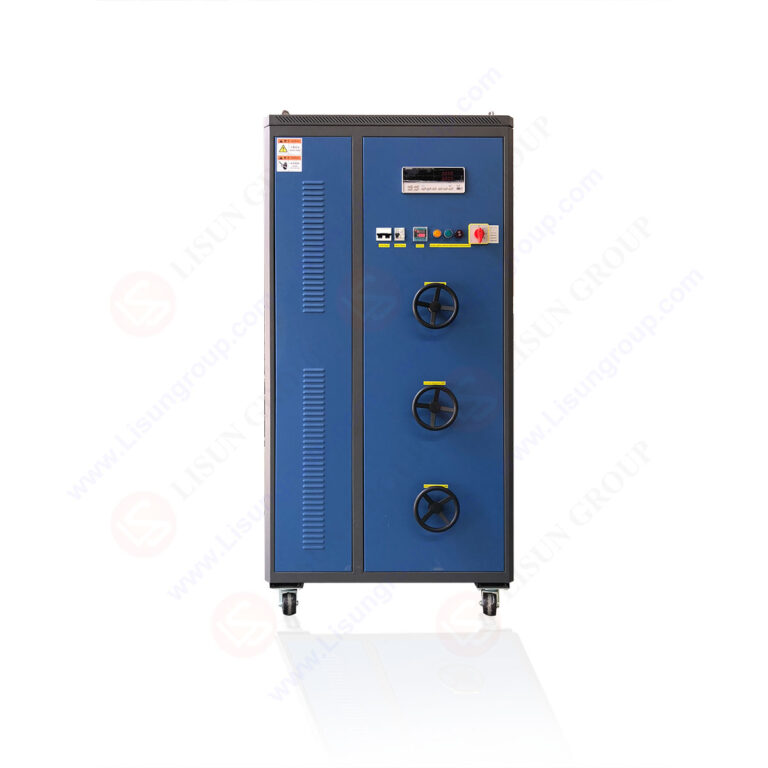



Evaluating Fire Hazard: The IEC 60695 Glow-Wire Test Methodology and Its Critical Role in Product Safety
The proliferation of electrical and electronic equipment across domestic, commercial, and industrial environments has necessitated the development of rigorous safety standards to mitigate fire risks. Among the most pivotal of these is the IEC 60695-2 series, which details fire hazard testing procedures. Specifically, the Glow-Wire Test, codified primarily in IEC 60695-2-10, IEC 60695-2-11, IEC 60695-2-12, and IEC 60695-2-13, serves as a fundamental benchmark for assessing the ignition resistance and flame retardancy of materials and end products. This test simulates thermal stresses that may arise from malfunctioning or overloaded components, such as overheated conductors, resistors, or poor electrical contacts, which can act as ignition sources. Compliance is not merely a regulatory formality but a critical engineering requirement to prevent catastrophic failures and ensure user safety.
Fundamental Principles of the Glow-Wire Ignition Test
The core principle of the Glow-Wire Test involves applying a specified thermal energy source—a heated element shaped as a standardized “glow-wire”—to a test specimen under controlled laboratory conditions. The glow-wire, typically constructed from nickel/chromium (80/20) wire with a diameter of 4.0 mm, is heated electrically to a precise temperature, which can range from 550°C to 960°C depending on the severity required by the end-product standard. This temperature is maintained within a tolerance of ± 10°C for the duration of the application, which is usually 30 seconds.
The test apparatus forces the glow-wire, held in a ceramic guide tube, against the test specimen with a defined force of 1.0 N ± 0.2 N. The subsequent observations are meticulously recorded: the time to ignition (if any), the duration of any subsequent flames, whether glowing or flaming particles drip from the specimen, and the extent of burning or damage. The pass/fail criteria are explicitly defined in the relevant end-product standard (e.g., IEC 60335 for household appliances, IEC 60598 for lighting fixtures). Common criteria include that flames or glowing of the specimen extinguish within 30 seconds after removal of the glow-wire, and that no flaming or glowing drips ignite a specified tissue paper placed beneath the specimen. This last criterion is crucial for assessing the potential for a secondary fire to start from falling debris.
Distinguishing Between Material and End-Product Testing
A critical distinction within the IEC 60695-2 series lies between testing materials for comparative data and testing finished end-products for compliance certification. IEC 60695-2-12, “Glow-wire flammability test method for materials,” is intended for the preliminary assessment of materials (GWIT – Glow-Wire Ignition Temperature). The GWIT is the highest temperature at which a material does not ignite, or ignites for less than 5 seconds, when tested with the glow-wire. This provides valuable data for material selection during the design phase.
Conversely, IEC 60695-2-11, “Glow-wire flammability test method for end-products,” and IEC 60695-2-13, “Glow-wire ignition temperature test method for materials,” are applied to the final product or its representative parts. The end-product test (often referred to by the GWT – Glow-Wire Test rating) subjects the product in its actual use configuration to the glow-wire at a severity temperature mandated by its safety standard. This evaluates not just the material properties but also the effects of geometry, wall thickness, assembly methods, and the presence of other components. For instance, a thin-walled socket housing may behave differently from the raw polymer pellet from which it was molded. Therefore, while material data is informative, ultimate compliance is always determined by testing the end-product or a representative section thereof.
Application Across Industrial Sectors: A Risk-Based Approach
The selection of test severity—the glow-wire application temperature—is intrinsically linked to the perceived fire risk associated with the product’s intended use and operational environment. Regulatory bodies and standards committees assign severity levels based on factors such as the likelihood of an internal fault, the potential energy available, and the consequences of a fire.
- Household Appliances & Consumer Electronics: Products like food processors, televisions, and power supplies are tested typically at 550°C, 650°C, or 750°C, as per IEC 60335-1. The risk assessment considers that these devices are often left unattended and are in close proximity to combustible household materials.
- Electrical Components: Switches, circuit breakers, socket outlets, and connectors, governed by standards like IEC 60884 and IEC 60669-1, frequently require testing at 750°C, 850°C, or even 960°C. These components are points of electrical connection where poor contact and high resistance can generate significant localized heat.
- Lighting Fixtures: Luminaires, especially those incorporating plastic housings or diffusers near hot light sources (e.g., halogen lamps), are tested per IEC 60598-1. The severity level (e.g., 650°C) is chosen based on the fixture’s classification and the temperature of parts accessible in normal use.
- Automotive Electronics & Industrial Control Systems: Components in these sectors, referenced in standards like ISO 20653 and IEC 61131-2, must withstand harsh environments. Glow-wire testing at 850°C or 960°C is common for control units, relay housings, and sensor bodies, where a fire could lead to loss of control, significant downtime, or endangerment.
- Medical Devices & Telecommunications Equipment: For patient-connected medical equipment (IEC 60601-1) and critical network infrastructure, preventing ignition is paramount to avoid life-threatening situations or widespread service disruption. Testing ensures that enclosures and internal supports resist ignition from overheated components.
- Aerospace and Aviation Components: While often governed by more stringent proprietary specifications, the principles of the glow-wire test are analogous to tests required for materials and components used in aircraft cabins and electronic bays, where fire containment is a non-negotiable safety imperative.
Instrumentation for Compliance: The LISUN ZY-3 Needle Flame Test Apparatus
While distinct in its direct simulation of a small flame rather than a hot element, the needle flame test (IEC 60695-11-5) complements the glow-wire methodology by assessing resistance to small ignition sources like faulty electrical connections producing small flames. The LISUN ZY-3 Needle Flame Test Apparatus is engineered to perform this test with high precision, forming an essential part of a comprehensive fire hazard evaluation suite alongside glow-wire testers.
The ZY-3 apparatus generates a consistent 12mm ± 1mm high test flame from a specified burner, fueled by propane, with a heating power calibrated to approximately 50W. Its design incorporates critical features for reproducible and standards-compliant testing. A key specification is its precise flame application timer, programmable from 0 to 99.99 seconds, which allows for the exact application durations mandated by various standards. The specimen holder is adjustable in three dimensions, enabling accurate positioning of the flame relative to the test sample—be it a vertical edge, a horizontal surface, or a drilled hole, as required by the test protocol.
Industry Use Cases for the ZY-3: This apparatus is indispensable for testing non-metallic materials and components in the aforementioned industries where small flame ignition is a credible risk. Examples include:
- Electrical Components: Testing the bases of miniature fuses or the plastic shrouds of terminal blocks.
- Household Appliances: Evaluating small internal wiring harnesses or low-current switch assemblies.
- Office Equipment: Assessing the flammability of plastic paper guides or internal chassis parts in printers and scanners.
- Lighting Fixtures: Testing small plastic light guides or diffuser retaining clips in LED luminaires.
Competitive Advantages: The LISUN ZY-3 distinguishes itself through enhanced operational stability and measurement accuracy. Its integrated flowmeter and pressure stabilizer ensure a consistent flame profile throughout testing, a variable that directly impacts results. The use of high-temperature resistant stainless steel and ceramic components in critical areas improves durability and reduces maintenance. Furthermore, its design prioritizes operator safety with integrated flame-out protection and clear, logical control interfaces, reducing procedural errors during testing.
Interpreting Test Data and Advancing Material Science
The data yielded from glow-wire testing transcends simple pass/fail metrics. Advanced analysis of ignition times, flame durations, and burn lengths provides engineers with comparative insights into material performance. This data feeds into computational models for fire safety and guides the development of next-generation flame-retardant compounds. For polymer formulators, achieving a higher GWIT or passing a more severe GWT rating without compromising mechanical properties or cost is a key research and development target.
The relationship between material composition—such as the use of halogenated vs. halogen-free flame retardants, mineral fillers, or intumescent systems—and its behavior under glow-wire exposure is complex. Testing provides the empirical evidence needed to validate theoretical models. For example, a material that chars effectively may not ignite but may produce prolonged glowing combustion, while a material that melts and drips may pass if the drips are non-igniting but fail if they ignite the tissue paper. This nuanced understanding is critical for selecting the right material for the right application.
Integration into a Holistic Safety Engineering Framework
It is imperative to recognize that the Glow-Wire Test is one instrument in a broader safety orchestra. It is specifically designed to assess resistance to heat from thermally stressed components. Other tests in the IEC 60695 series, such as the needle flame test (simulating small flames), the horizontal/vertical flame test (assessing general flammability), and the hot-wire coil test (simulating overloaded windings), address different ignition scenarios. A comprehensive safety strategy, as embodied in standards like IEC 62368-1 for audio/video and ICT equipment, employs a hazard-based safety engineering (HBSE) approach. This methodology first identifies potential energy sources within a product, then prescribes appropriate tests—which may include one or more severity levels of the glow-wire test—to verify that safeguards are adequate to prevent ignition or fire spread.
Ultimately, adherence to the IEC 60695 Glow-Wire Test protocols represents a commitment to quantified risk reduction. By subjecting products to this simulated fault condition, manufacturers, certification bodies, and standards authorities collaboratively establish a verifiable defense against one of the most prevalent causes of electrical fires, thereby protecting property, infrastructure, and human life.
Frequently Asked Questions (FAQ)
Q1: What is the primary functional difference between the Glow-Wire Test and the Needle Flame Test performed by an apparatus like the LISUN ZY-3?
The Glow-Wire Test (IEC 60695-2-11/12) simulates the effect of heat from an overloaded or glowing electrical component (a solid heat source). The Needle Flame Test (IEC 60695-11-5) simulates the effect of a small flame, such as that from an ignition due to a faulty electrical contact. They address different but related ignition hazard scenarios, and a product standard may require one or both depending on the identified risks.
Q2: For a new plastic housing design, should we first conduct material (GWIT) tests or proceed directly to an end-product (GWT) test?
The recommended engineering practice is to conduct material-level GWIT testing during the design and material selection phase. This provides comparative data and helps screen unsuitable materials efficiently and cost-effectively. However, final compliance certification for a safety standard always requires testing on the end-product or a representative section (GWT), as the final molded part’s behavior can differ from standardized material plaques due to wall thickness, ribs, and assembly stresses.
Q3: The LISUN ZY-3 specifies a 50W flame. How does this correlate to real-world fault conditions?
The 50W (approximately) needle flame is a standardized, reproducible simulation. It correlates to the energy output of small flames that can be produced by short circuits in low-energy circuits, arcing in connectors, or the ignition of insulating materials in faulty transformers. Its purpose is not to replicate a specific fault exactly but to provide a consistent and severe enough challenge to allow for comparative assessment of a material or component’s resistance to small flame ignition.
Q4: Can a product pass the Glow-Wire Test but fail a related flammability test, or vice-versa?
Yes, this is possible and underscores the need for a multi-test safety approach. A material with high thermal mass and conductivity might resist ignition from the glow-wire (pass GWT) but could support sustained combustion if ignited by a larger flame (fail a horizontal flame test). Conversely, a material that chars and insulates might perform well against a brief flame but could ignite when subjected to prolonged contact with a high-temperature glow-wire. Each test model serves a distinct purpose.