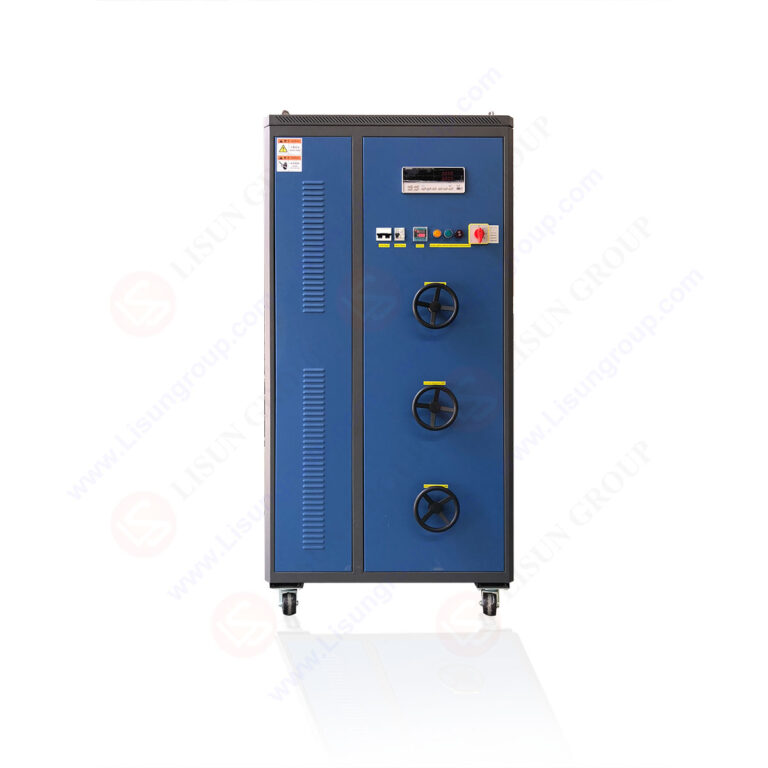



A Comprehensive Framework for Chamber Performance Analysis in Accelerated Reliability Testing
The validation of product reliability across diverse industrial sectors necessitates rigorous environmental simulation. Chamber performance analysis transcends mere operational verification; it constitutes a systematic methodology for evaluating the precision, stability, and reproducibility of environmental test equipment. This analytical framework is paramount for ensuring that accelerated life tests yield data that is both scientifically credible and directly correlative to real-world failure mechanisms. Inadequate chamber performance—manifesting as spatial gradient deviations, control loop instability, or recovery time latency—can invalidate weeks of testing, leading to flawed design conclusions, costly field failures, and compromised regulatory compliance. This treatise delineates the core principles of chamber performance analysis, employing the LISUN HLST-500D Thermal Shock Test Chamber as a primary exemplar to illustrate the application of these principles within stringent industrial validation protocols.
Foundational Principles of Thermal Shock Testing
Thermal shock testing, distinct from steady-state temperature cycling, subjects a test specimen to extreme, rapid transitions between high and low temperature extremes. The objective is to induce and identify failures stemming from coefficients of thermal expansion (CTE) mismatch, solder joint fatigue, material embrittlement, and hermetic seal degradation. The efficacy of this test is intrinsically tied to the chamber’s ability to achieve specified transition rates and maintain temperature uniformity within tolerance bands defined by standards such as IEC 60068-2-14, MIL-STD-202G, and JESD22-A104.
The fundamental challenge lies in managing thermal mass and energy transfer. A chamber must rapidly displace the ambient air surrounding the unit under test (UUT) with air at the target temperature, without introducing significant overshoot or undershoot that could apply non-specification stress. The transfer mechanism—typically a vertical or horizontal moving basket that shuttles between independently controlled hot and cold zones—must execute with minimal mechanical delay and thermal cross-contamination.
Architectural Analysis of a Two-Zone Thermal Shock System
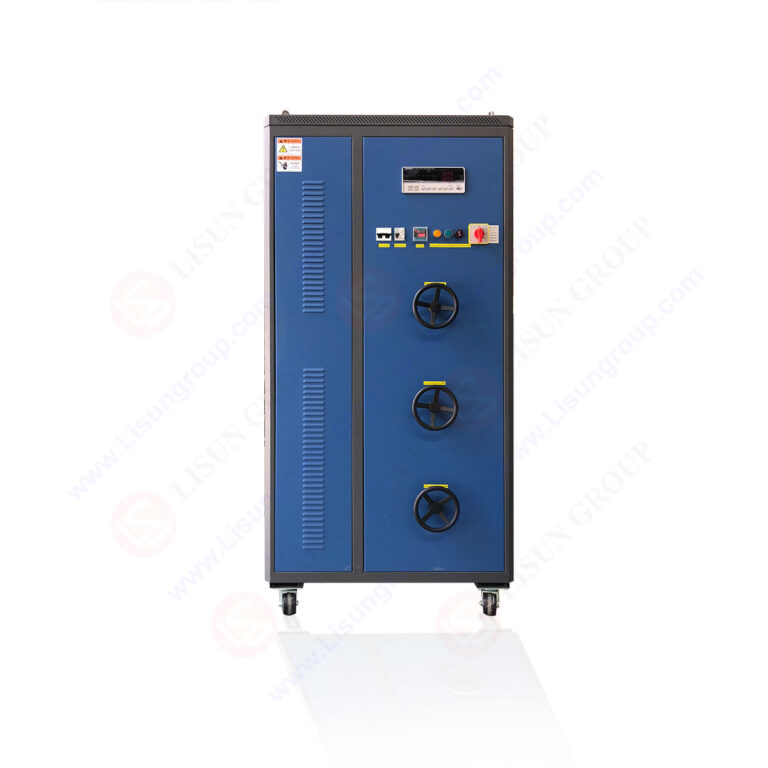
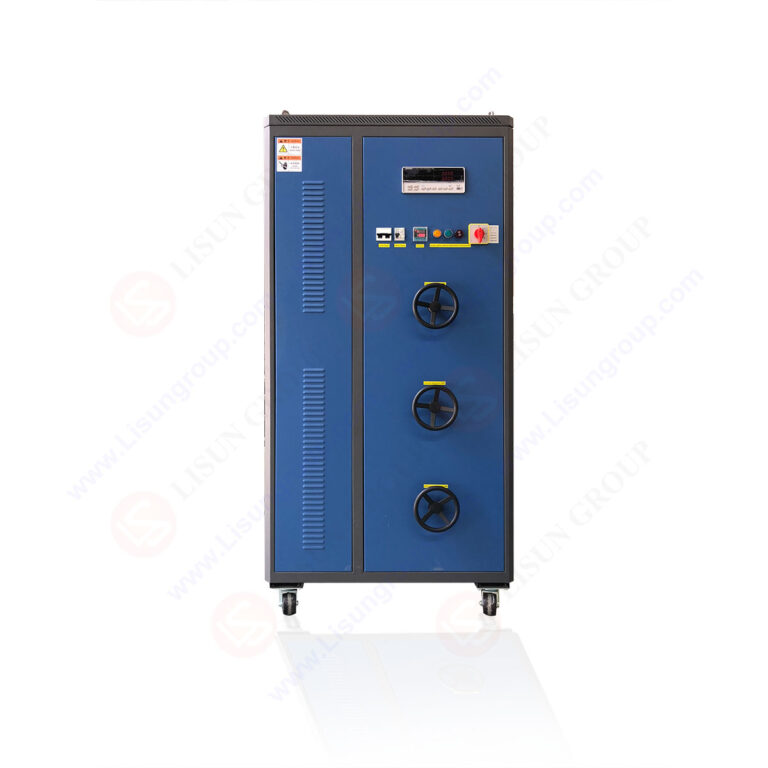
The LISUN HLST-500D employs a vertical basket transfer system, a design favored for its compact footprint and efficient airflow segregation. Performance analysis of such a system decomposes into several interdependent subsystems: the high-temperature chamber, the low-temperature chamber, the transfer device, and the integrated control and data acquisition system.
The high-temperature zone typically utilizes finned tubular electric heaters coupled with a centrifugal blower to ensure vigorous horizontal airflow across the workspace. Performance metrics here include maximum attainable temperature (commonly +200°C to +220°C), heating rate, and spatial uniformity at stabilization. The low-temperature zone integrates a mechanical refrigeration circuit, often employing cascade compression for temperatures down to -65°C or lower. Key performance indicators are the minimum temperature, cooldown rate, and again, uniformity. The refrigeration system’s capacity must be sufficient not only to cool the chamber volume but also to absorb the thermal load introduced by the pre-heated basket and UUT upon each transfer from the hot zone.
The transfer system’s performance is quantified by its transfer time—the duration from the basket’s initiation of movement until it is fully seated and the new zone has begun recovery. The HLST-500D specifies a transfer time of ≤10 seconds, a critical parameter for applying the rapid transition stress. Furthermore, the seal integrity between zones during dwell periods is vital to prevent moisture migration and parasitic thermal loads.
Quantitative Metrics for Chamber Performance Evaluation
A robust chamber performance analysis relies on quantified, measurable metrics. These are typically validated during installation qualification (IQ) and operational qualification (OQ) protocols.
- Temperature Recovery Time: Defined as the interval from the completion of the transfer until all monitoring sensors within the workspace (or on a load dummy) re-stabilize within the specified tolerance (e.g., ±2°C) of the target setpoint. Prolonged recovery indicates insufficient heating/cooling capacity or airflow design flaws.
- Spatial Temperature Uniformity: Measured via a multi-sensor array (e.g., 9 or 12 thermocouples) distributed throughout the empty workspace during stabilized dwells. Compliance with standards like ±2.0°C at +150°C and ±3.0°C at -55°C is common for high-performance chambers.
- Temperature Rate of Change: While thermal shock prioritizes transfer speed, the rate of change within a zone during ramp phases is analyzed for other test types. It is calculated between setpoint percentages (e.g., -25°C to +25°C).
- Temporal Stability & Control Accuracy: The long-term fluctuation of the chamber’s controlling sensor against a traceable reference, and its ability to maintain setpoint without oscillation.
- Load Impact Analysis: The most critical test involves characterizing performance degradation when a defined thermal mass (e.g., an aluminum dummy load of specified weight and surface area) is introduced. A superior chamber will exhibit minimal deviation in recovery time and uniformity under load.
Table 1: Exemplary Performance Specifications for Analysis
| Performance Metric | Test Condition | Acceptance Criterion (Example) | Relevant Standard |
| :— | :— | :— | :— |
| High Temp Uniformity | +150°C, Stabilized | ≤ ±2.0°C | IEC 60068-3-5 |
| Low Temp Uniformity | -55°C, Stabilized | ≤ ±3.0°C | IEC 60068-3-5 |
| Transfer Time | Basket Movement | ≤ 10 seconds | Manufacturer Spec |
| Recovery Time (to ±2°C) | After transfer to -55°C | ≤ 5 minutes | In-house OQ Protocol |
| Maximum Temperature | Empty Chamber | +200°C | HLST-500D Specification |
| Minimum Temperature | Empty Chamber | -65°C | HLST-500D Specification |
Industry-Specific Application and Failure Mode Induction
The value of chamber performance is realized through its ability to reliably induce field-relevant failure modes.
- Automotive Electronics & Aerospace Components: Modules like engine control units (ECUs) or avionics are subjected to thermal shock (e.g., -55°C to +125°C) to test solder interconnects (e.g., BGA packages), laminated substrates, and conformal coating integrity. A chamber with fast recovery ensures the component’s internal materials experience the full thermal strain rate.
- Telecommunications Equipment & Electrical Components: Connectors, switches, and fiber-optic transceivers are tested for contact resistance stability and plastic housing cracking. Precise uniformity ensures every sample in a batch test experiences identical conditions, enabling valid statistical life data analysis.
- Medical Devices & Industrial Control Systems: Implantable device seals or industrial sensor housings undergo shock testing to validate hermeticity. Chamber performance directly impacts the test’s acceleration factor; poor performance leads to under-testing and potential field leakage.
- Lighting Fixtures (LEDs) & Consumer Electronics: Rapid thermal cycling of LED arrays accelerates thermal interface material degradation and bond wire fatigue, predicting lumen maintenance failure. High-performance chambers enable accurate prediction of useful life.
Competitive Advantages Embodied in Advanced Chamber Design
Analyzing the LISUN HLST-500D reveals design choices that directly address core performance metrics. The use of a dual-zone independent air circulation system minimizes thermal lag and cross-talk. The high-efficiency insulation between zones reduces parasitic energy loss. The programmable logic controller (PLC) with multi-channel data logging allows for real-time performance monitoring and historical traceability of every test parameter—a critical requirement for ISO 17025 accredited laboratories and automotive (IATF 16949) or aerospace (AS9100) quality management systems.
Furthermore, the chamber’s structural integrity, using stainless steel interiors and robust basket mechanisms, ensures consistent performance over millions of transfer cycles, reducing downtime and maintenance-related performance drift. The inclusion of safety interlocks, refrigerant pressure monitoring, and backup cooling functions are not merely safety features but contribute to sustained performance reliability by preventing fault conditions that could alter test outcomes.
Integration with Broader Quality Assurance Ecosystems
Chamber performance data is not an isolated dataset. It feeds into a broader product reliability engineering ecosystem. Data from the HLST-500D’s loggers can be integrated with product failure data from in-situ monitoring (e.g., daisy-chained resistance monitoring for intermittent opens) to build precise mathematical models, such as the Coffin-Manson relationship, that correlate test cycles to field life. Consistent chamber performance is the foundational constant in these models, turning qualitative “pass/fail” tests into quantitative predictive tools for design-for-reliability (DfR) initiatives.
Conclusion
Chamber performance analysis is a discipline of applied engineering thermodynamics and control theory. It moves beyond the basic specifications of range and size to interrogate the dynamic behavior of the test system under simulated operational loads. As product lifecycles compress and reliability expectations escalate, the demand for characterized, high-fidelity test equipment like the LISUN HLST-500D intensifies. Investing in chambers with validated, superior performance metrics—and maintaining them through periodic requalification—is not a capital expense but a risk mitigation strategy. It ensures that the significant investment in accelerated testing yields actionable, trustworthy intelligence, ultimately preventing costly recalls and safeguarding brand reputation across the most demanding industrial sectors.
FAQ: Thermal Shock Testing & Chamber Performance
Q1: What is the primary difference between thermal shock testing and temperature cycling?
A1: Thermal shock testing emphasizes an extreme rate of temperature change, typically achieved by physically transferring the test item between two pre-conditioned extreme chambers in seconds. Temperature cycling, often conducted in a single chamber, involves slower, controlled ramps between extremes. Shock testing is more aggressive and targets failure mechanisms sensitive to rapid thermal strain.
Q2: Why is spatial temperature uniformity within a chamber zone important if the transfer is so fast?
A2: Uniformity is critical during the dwell periods at the high and low temperature extremes. The specimen must soak at a stable, uniform temperature to ensure the entire component reaches thermal equilibrium, applying consistent stress to all internal materials. Non-uniformity can lead to varying stress levels across a batch of samples or within a single large assembly, invalidating the test’s comparability.
Q3: How does the thermal mass of our product affect the required chamber performance?
A3: The product’s mass and specific heat capacity constitute a thermal load that the chamber must overcome. A chamber’s stated performance (recovery time, uniformity) is often specified “empty.” A robust performance analysis includes testing with a dummy load representing your product. Chambers with higher cooling/heating capacity and airflow (like the HLST-500D) will show less performance degradation under load, ensuring your actual tests run to specification.
Q4: What standards typically govern the performance verification of thermal shock chambers?
A4: While test methods are covered by standards like IEC 60068-2-14, the chamber performance verification itself is often guided by IEC 60068-3-5 (guidance for climatic test chambers) and ASTM E2935 (Standard Practice for Conducting Equivalence Testing in Laboratory Applications). However, most compliance is driven by user-defined Installation/Operational Qualification (IQ/OQ) protocols based on manufacturer specifications and internal quality requirements.
Q5: Can a two-zone thermal shock chamber like the HLST-500D be used for other types of tests?
A5: While specialized for shock testing, the independent control of its two zones allows for some flexibility. Each zone can often be used as a standalone temperature or temperature-humidity chamber (if equipped) for simpler tests. However, its primary and optimized function remains rapid transfer thermal shock.