


Understanding IPX5 Certification: A Technical Examination of Water Jet Protection Standards
Defining the Scope and Application of IPX5 Ingress Protection
The International Protection (IP) rating system, as delineated in standards such as IEC 60529, provides a codified methodology for classifying the degree of protection offered by enclosures for electrical equipment against the intrusion of foreign bodies and moisture. Within this framework, the IPX5 rating holds specific and critical significance. It denotes a product’s resilience against water jets projected from a nozzle under defined conditions, without the ingress of harmful quantities of water. This rating is not an indicator of protection against submersion, high-pressure cleaning, or prolonged exposure; rather, it addresses a specific environmental stressor common in numerous operational contexts. The designation “X” in IPX5 signifies that the rating does not specify a level of protection against solid particle ingress, allowing manufacturers to focus validation on liquid ingress resilience where particulate protection is not a primary design constraint.
The application of IPX5 certification spans industries where equipment is subject to incidental water exposure from directed sources. This includes outdoor electrical cabinets exposed to weather, automotive electronics in wheel wells or underbodies susceptible to road spray, industrial control panels in environments where washdowns occur, and portable consumer electronics that may encounter rain or splashes. The certification provides engineers, specifiers, and end-users with a quantifiable and repeatable benchmark for reliability, reducing field failure rates and mitigating safety risks associated with water-induced short circuits or corrosion.
Technical Parameters and Testing Methodology for IPX5 Compliance
Achieving IPX5 certification requires adherence to a strictly controlled laboratory test procedure. The core objective is to subject the equipment enclosure to a sustained, direct spray of water without allowing detrimental ingress. The key technical parameters mandated by the standard are precise and non-negotiable.
The test utilizes a nozzle with an internal diameter of 6.3 millimeters. The water flow rate must be calibrated to 12.5 liters per minute (±5%). The water pressure required to achieve this flow is approximately 30 kPa at the nozzle orifice. The test duration is a minimum of 1 minute per square meter of the enclosure’s surface area, with a mandatory minimum of 3 minutes. The distance from the nozzle to the enclosure under test (EUT) is fixed at 2.5 to 3 meters. During testing, the nozzle is directed at the EUT from all practicable angles, typically achieved by mounting the EUT on a rotating table that turns at approximately 5 revolutions per minute while the nozzle is stationary, or by manually manipulating the nozzle to cover all surfaces.
Post-test evaluation is critical. Following the exposure, the enclosure is opened and inspected for traces of water ingress. Compliance is verified if no water has penetrated in quantities that could interfere with normal operation or impair safety. This includes examination for droplets on live parts, insulation, or within internal wiring compartments. The test is conducted with the equipment in a non-operational state unless otherwise specified by the product standard, though functional testing after exposure is often required to confirm operational integrity.
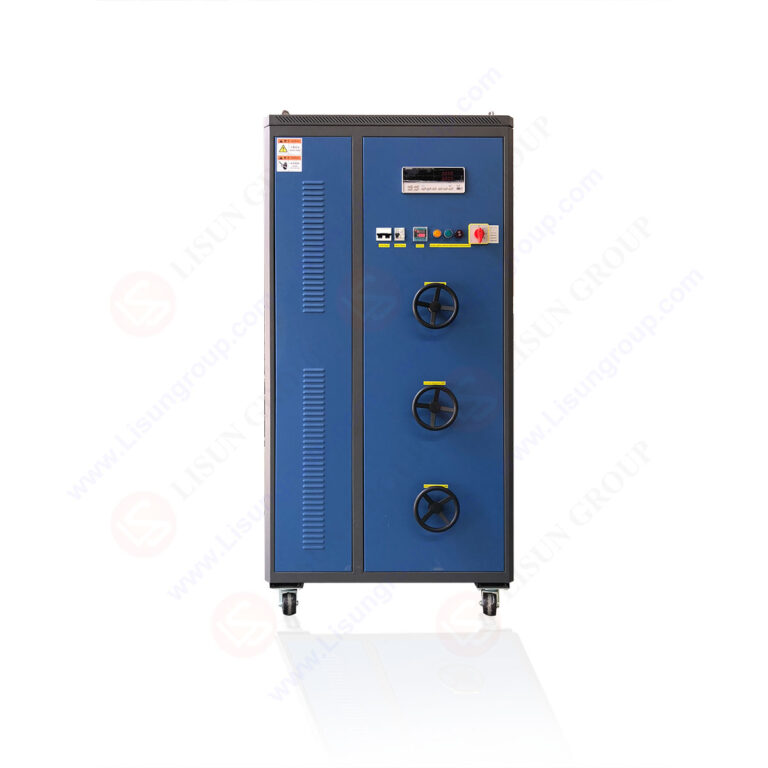
The Role of Specialized Testing Apparatus: Introducing the LISUN SC-015 Dust & Sand Test Chamber
While IPX5 specifically addresses liquid ingress, comprehensive product validation often necessitates concurrent or sequential testing for solid particle protection (the first digit in the IP code). For devices requiring dual certification, such as IP65, integrated testing solutions offer significant efficiency and reliability. The LISUN SC-015 Dust & Sand Test Chamber is engineered to fulfill the rigorous demands of combined environmental testing, providing a unified platform for validating protection against both dust/sand (IP5X/IP6X) and water jets (IPX5/IPX6).
The SC-015 operates on the principle of creating a controlled, high-concentration environment of test dust within a sealed chamber. A recirculating blower system suspulates fine talcum powder or other specified test dust, simulating conditions of blowing sand or dense, dry dust. For IPX5/IPX6 testing, the chamber integrates a water spray system with the requisite nozzles, pumps, and pressure gauges, allowing for sequential dust and water testing without transferring the specimen. This integrated approach ensures testing consistency and reduces handling-induced variables.
Key Specifications of the LISUN SC-015:
- Test Chamber Volume: Customizable, with standard models designed to accommodate a wide range of product sizes.
- Dust Concentration: Programmatically controllable to meet the requirements of IP5X (dust-protected) and IP6X (dust-tight).
- Water Jet System: Includes 6.3mm nozzle for IPX5 and 12.5mm nozzle for IPX6 testing, with precision flow meters and pressure regulators to maintain standard-compliant parameters.
- Control System: Features a programmable logic controller (PLC) with a touch-screen HMI for setting test parameters, including test duration, dust suspension cycles, water flow duration, and rotation sequences.
- Construction: The chamber is fabricated from corrosion-resistant stainless steel, with reinforced viewing windows and sealed electrical conduits to ensure long-term durability in a laboratory environment.
Industry-Specific Applications and Validation Imperatives
The necessity for IPX5 validation permeates modern engineering disciplines. In each sector, the implications of failure extend beyond simple malfunction to encompass safety, regulatory compliance, and brand integrity.
Automotive Electronics: Components such as electronic control units (ECUs) for braking or engine management, sensors in exterior locations, and lighting assemblies must withstand high-pressure spray from wet roads and automated vehicle washes. An IPX5 rating for a wheel speed sensor, for example, validates its ability to function reliably despite direct exposure to road spray, a critical factor for anti-lock braking system (ABS) performance.
Telecommunications Equipment: Outdoor broadband units, 5G small cells, and junction boxes are perpetually exposed to the elements. IPX5 certification ensures that driving rain or water spray from adjacent surfaces will not compromise signal integrity or cause catastrophic failure, maintaining network uptime.
Medical Devices: Portable diagnostic monitors, handheld scanners, and certain external therapeutic devices used in clinical or field settings require protection against accidental spills or cleaning procedures. IPX5 validation provides a benchmark for designers to ensure devices can tolerate directed liquid exposure without risking patient safety or data loss.
Industrial Control Systems: Panel-mounted interfaces, motor drives, and sensor hubs in food processing, pharmaceutical, or chemical plants may be subject to periodic washdown for hygiene or maintenance. An IPX5-rated enclosure guarantees that control systems remain operational after exposure to directed water jets used in cleaning protocols.
Lighting Fixtures: Outdoor area lighting, architectural facade lighting, and industrial high-bay fixtures demand robust ingress protection. IPX5-rated fixtures ensure that water ingress from rain or sprinkler systems will not lead to electrical shorts, lamp failure, or degradation of the optical assembly.
Comparative Analysis: IPX5 in the Context of Adjacent IP Ratings
A clear understanding of IPX5 is bolstered by contrasting it with neighboring classifications. IPX4, for instance, protects against water splashes from any direction but does not specify the force or volume of a sustained jet. The transition from IPX4 to IPX5 represents a significant increase in hydrodynamic stress. Conversely, IPX6 offers protection against powerful water jets (12.5mm nozzle, 100 L/min at 100 kPa), representing an even more severe condition, often relevant for shipboard equipment or components on heavy machinery.
It is crucial to note that IPX5 is not cumulative with lower ratings in terms of test severity; a product certified to IPX6 is automatically deemed to comply with IPX5 and IPX4 requirements. However, the reverse is not true. Furthermore, IPX5 is distinct from IPX7 (temporary immersion) and IPX8 (continuous immersion); a device resistant to a water jet may not be sealed against submersion, as the mechanisms of ingress—pressure and duration—differ fundamentally.
Implementing a Conformity Assessment: From Design to Certification
Securing IPX5 certification is a systematic process that begins at the product design phase. Engineers must consider gasket selection, seal geometry, fastener placement, and vent design to manage potential water paths. Prototypes are then subjected to pre-compliance testing using apparatus like the LISUN SC-015 to identify failure modes prior to formal submission.
The formal certification process involves testing by an accredited laboratory. The EUT is prepared per standard requirements—typically in its most vulnerable configuration with removable covers fitted. It is then mounted and subjected to the exacting test parameters. Data from the test, including flow rate, pressure, duration, and environmental conditions, is meticulously recorded. The post-test inspection forms the basis for the certification body’s decision. Upon successful completion, a test report is issued, and the product may be marked with the IPX5 designation, providing a credible claim verifiable by supply chain partners and end-users.
The Economic and Reliability Rationale for IPX5 Validation
Beyond technical compliance, IPX5 certification carries substantial economic and reliability implications. For manufacturers, it de-risks the product development cycle by providing an objective performance threshold, reducing costly field retrofits and warranty claims stemming from water damage. It streamlines component selection for system integrators, who can specify IPX5-rated parts with confidence in their environmental performance.
From a lifecycle perspective, products validated to IPX5 standards typically demonstrate extended mean time between failures (MTBF) in humid or wet environments. This translates to lower total cost of ownership for industrial and commercial clients through reduced maintenance downtime and replacement frequency. In consumer markets, the IPX5 rating has become a valuable differentiator, signaling durability and quality, particularly for portable electronics, wearables, and home appliances intended for use in kitchens, bathrooms, or outdoors.
FAQ Section
Q1: Can the LISUN SC-015 chamber perform both dust and water jet tests sequentially on the same sample without manual intervention?
Yes, the integrated design of the LISUN SC-015 allows for fully programmable test sequences. A typical combined IP65 test cycle would initiate with a dust exposure phase (meeting IP6X requirements), followed by the IPX5 water jet test, all within the sealed chamber environment. This automation minimizes handling, ensures consistent specimen orientation between tests, and improves laboratory throughput.
Q2: For a product with external heat sinks or ventilation grilles, how is IPX5 testing conducted given the intentional openings?
The standard tests the product in its “as-used” configuration. If vents or heat sinks are part of the design, they are tested as such. The IPX5 test will determine if the design of these openings allows harmful water ingress. Many designs use labyrinthine paths or hydrophobic membranes to allow airflow while meeting IPX5 criteria. The test validates whether this design strategy is effective.
Q3: What is the required calibration interval for the water flow and pressure systems in an IPX5 test apparatus like the SC-015?
Calibration intervals are typically dictated by laboratory accreditation standards (e.g., ISO/IEC 17025) and internal quality procedures. Critical components such as the flow meter, pressure gauge, and nozzle orifice diameter should be calibrated at least annually, or more frequently based on usage rates. A certificate of calibration traceable to national standards is required for accredited testing.
Q4: Does IPX5 certification require the product to be functional during the test?
IEC 60529 generally specifies that the test is performed on the enclosure alone, with the equipment not operating. However, many end-product standards (e.g., for automotive components or household appliances) may prescribe a functional test after the water exposure to verify that no ingress has impaired operation. The specific requirement depends on the overarching product safety and performance standard being applied.
Q5: How does the SC-015 ensure even dust concentration during the IP5X/IP6X portion of a combined test?
The chamber employs a recirculating air system with a controlled blower and a dust injection mechanism. The turbulent airflow within the sealed chamber is designed to keep the standardized test dust (such as talcum powder) in a homogenous suspension for the duration of the test. The design and validation of the chamber ensure the concentration meets the minimum requirements specified in the standard across the entire working volume where the specimen is placed.