


A Comparative Analysis of FMVSS 302 and UL 94: Foundational Standards for Material Flammability Assessment
Introduction: The Imperative of Material Fire Safety Evaluation
Within the engineering and manufacturing sectors, the selection of materials extends beyond mechanical and electrical properties to encompass critical fire safety performance. Regulatory compliance and risk mitigation necessitate rigorous flammability testing, a field governed by distinct standards tailored to specific end-use environments and failure modes. Two preeminent benchmarks in this domain are the Federal Motor Vehicle Safety Standard 302 (FMVSS 302) and Underwriters Laboratories Standard 94 (UL 94). While both assess the burning characteristics of materials, their philosophical underpinnings, methodologies, and application scopes diverge significantly. FMVSS 302 is a vertically integrated, pass/fail regulation designed for a singular, high-consequence application: passenger compartment materials in road vehicles. In contrast, UL 94 is a horizontally applied, tiered classification system employed across a vast spectrum of electrical and electronic equipment to mitigate fire initiation and propagation risks. This article provides a detailed technical dissection of these two standards, elucidating their key differences in testing philosophy, procedural execution, and resultant data interpretation. Furthermore, it examines the role of advanced testing instrumentation, such as the LISUN ZY-3 Needle Flame Test apparatus, in addressing the nuanced requirements of modern material evaluation, particularly for components where localized ignition is a primary concern.
Philosophical and Regulatory Divergence: Prescriptive Regulation vs. Hazard-Based Classification
The most fundamental distinction lies in the normative nature of each standard. FMVSS 302 is a federal regulation issued by the National Highway Traffic Safety Administration (NHTSA). Its authority is legally binding for all motor vehicles sold in the United States. The standard is prescriptive and absolute; a material either passes or fails the stipulated test. Its objective is singular: to provide a minimum level of burn resistance for materials in the passenger compartment to afford occupants additional escape time in the event of a fire. The test does not seek to rank materials by performance but to establish a definitive safety threshold.
Conversely, UL 94 is a safety standard developed by Underwriters Laboratories, an independent safety science organization. While not a federal law, its adoption is often mandated by product safety standards (e.g., UL 60950-1 for IT equipment, UL 60730 for automatic controls), building codes, and OEM specifications. It functions as a hazard-based classification system. Materials are tested and assigned a rating (e.g., HB, V-0, V-1, V-2, 5VA, 5VB) that indicates their performance under specific ignition and burning conditions. This rating system enables designers to select materials appropriate for the perceived fire risk of a given component within a final assembly, facilitating a more nuanced approach to fire safety engineering.
Test Methodology and Specimen Configuration: Horizontal Burn vs. Vertical Flame Impingement
The physical execution of the tests highlights their tailored applications. FMVSS 302, formally titled “Flammability of Interior Materials,” employs a horizontal burn test. A specimen, standardized at 102 mm wide by 356 mm long, is mounted horizontally in a U-shaped specimen holder. A specified Bunsen burner flame is applied to one end of the specimen for 15 seconds. The primary measured criterion is the burn rate. To pass, the material must not burn at a rate exceeding 102 mm per minute, or it must self-extinguish before a reference mark 381 mm from the point of ignition is consumed. This simulates a scenario where a dropped cigarette or incidental contact with a small flame ignites a horizontal surface like seat upholstery, carpeting, or headliner material.
UL 94 encompasses multiple test procedures, the most common being the “Tests for Flammability of Plastic Materials for Parts in Devices and Appliances.” The foundational tests are the vertical burn (V-0, V-1, V-2) and horizontal burn (HB). For vertical testing, specimens (typically 127 mm long by 12.7 mm wide) are clamped vertically. A calibrated 20 mm high methane flame is applied twice to the bottom of the specimen (10 seconds per application). The test measures after-flame time, after-glow time, and whether dripping particles ignite a cotton indicator. This configuration assesses a material’s propensity to sustain a flame after the ignition source is removed, which is critical for vertically oriented components in electronic enclosures, connectors, and internal supports.
Ignition Source and Failure Criteria: Burn Rate vs. Temporal and Behavioral Metrics
The metrics for failure and performance grading are fundamentally different. As noted, the sole quantitative failure criterion for FMVSS 302 is a burn rate exceeding 102 mm/min. The test is conclusive and binary.
UL 94 ratings are determined by a matrix of qualitative and quantitative observations:
- After-flame time (t1, t2): The duration the specimen continues to flame after each removal of the ignition source.
- Total after-flame time (t1 + t2): Aggregate flaming time across both flame applications.
- After-glow time: Time the specimen continues to glow after cessation of flaming.
- Dripping behavior: Whether burning drips occur and if they ignite a dry cotton indicator placed below the specimen.
- Specimen consumption: Whether the flame consumes the entire specimen.
A material seeking a V-0 rating, for instance, must exhibit after-flame times of ≤10 seconds after each flame application, a total after-flame time of ≤50 seconds for a set of five specimens, no dripping that ignites the cotton, and no complete consumption of the specimen. The HB rating, while also a horizontal test, differs from FMVSS 302 in specimen dimensions, flame application time, and pass/fail criteria, which are based on burn rate over a 75 mm span or self-extinguishment before a 100 mm mark.
Application Scope and Industry Relevance: Automotive Interiors vs. Electrotechnical Products
The application domains are distinctly segregated. FMVSS 302 is exclusively applied to materials used in the passenger compartments of cars, trucks, buses, and motorcycles. This includes, but is not limited to: seat fabrics and foam, interior trim panels, headliners, floor coverings, sun visors, and other decorative or functional polymeric materials within the occupant cabin. Its relevance is confined to the automotive and transportation industries.
UL 94 is ubiquitous across industries where plastics and other materials are used in electrical and electronic equipment. Its ratings are a common specification for:
- Electrical and Electronic Equipment: Enclosures, chassis, and internal components of servers, power supplies, and control units.
- Household Appliances: Housings for televisions, kitchen appliances, power tool bodies, and switchgear.
- Automotive Electronics: Connectors, sensor housings, control module cases, and battery management components (note: these are electronic components, not interior trim covered by FMVSS 302).
- Lighting Fixtures: Lens diffusers, reflector housings, and socket bodies for LED and traditional luminaires.
- Industrial Control Systems: Motor starters, relay housings, operator interface terminals.
- Telecommunications Equipment: Router and switch housings, fiber-optic distribution panels.
- Medical Devices: Housings for diagnostic, monitoring, and therapeutic equipment.
- Aerospace and Aviation Components: Connectors, cable clamps, and non-critical interior components (often to more stringent aerospace-specific versions).
- Electrical Components: Switches, sockets, circuit breaker cases.
- Cable and Wiring Systems: Cable insulation and jacketing materials (often tested per UL 1581, which references UL 94 principles).
- Office Equipment & Consumer Electronics: Printer housings, laptop shells, mobile device components.
The Role of Needle Flame Testing: Simulating Fault-Induced Ignition Sources
While UL 94 vertical/horizontal tests and FMVSS 302 address exposure to small, standardized flames, they may not adequately simulate all real-world fault conditions. A critical scenario in electrical equipment involves overheating or arcing from faulty components (e.g., overloaded resistors, poor connections, failed capacitors) that can act as a small, persistent ignition source. To assess a material’s resistance to such a threat, the needle flame test was developed, standardized in IEC 60695-11-5 (and analogous standards like GB/T 5169.5).
This test uses a smaller, precise flame (typically 12mm ± 2mm high) from a 0.5mm diameter nozzle, applied at a 45-degree angle to the specimen or, more importantly, to a complete assembly or mock-up. The flame is applied for a specified duration (e.g., 30s, 60s, 120s). The evaluation criteria include the specimen’s ability to self-extinguish, the extent of damage (burned length), and whether dripping particles ignite a tissue paper indicator. This method is crucial for validating the fire safety of final products or sub-assemblies in the industries listed above.
The LISUN ZY-3 Needle Flame Test Apparatus: Precision for Fault Condition Simulation
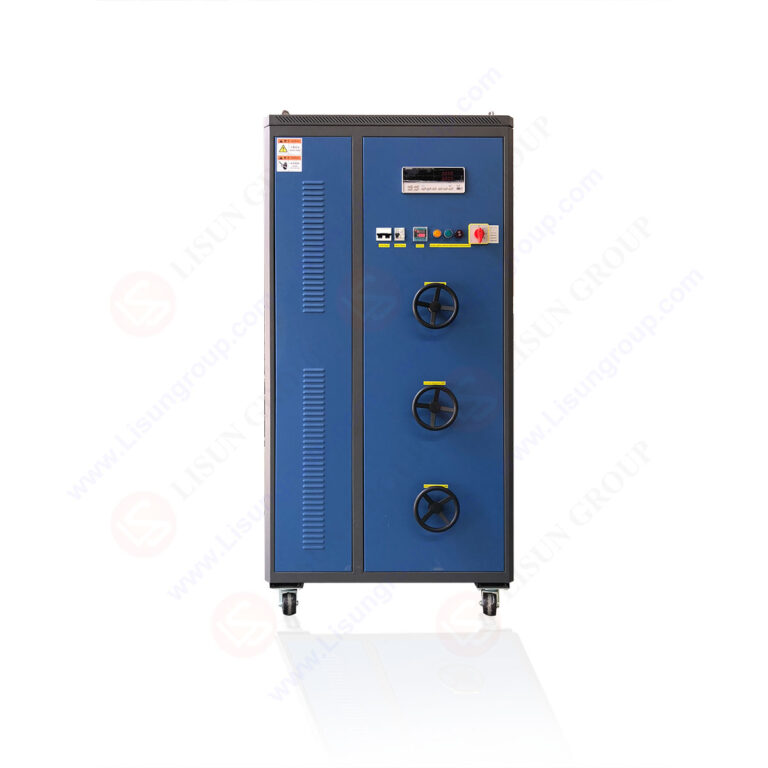
To conduct compliant and repeatable needle flame testing, specialized apparatus is required. The LISUN ZY-3 Needle Flame Test Apparatus is engineered to meet the exacting requirements of IEC 60695-11-5, GB/T 5169.5, and related standards. Its design facilitates the simulation of localized ignition from electrical faults within equipment.
The apparatus operates on a defined principle: a controlled flow of combustible gas (typically 99% purity butane) is fed to a precision swaged nozzle with a 0.5mm ± 0.1mm diameter orifice. The gas flow rate and burner geometry are calibrated to produce a stable needle flame with a nominal height of 12mm. A key feature is the integrated flame height gauge and temperature verification system using a calibrated thermocouple, ensuring the flame’s thermal output (approximately 1000°C at the tip) conforms to standard specifications before each test. The specimen holder and burner mounting assembly allow for precise positioning of the flame at the required 45-degree angle relative to the test sample, which can be a standardized plaque or a representative section of an end-product.
Specifications and Competitive Advantages of the LISUN ZY-3 System
The LISUN ZY-3 is characterized by several technical specifications that ensure testing rigor:
- Flame Height Adjustment: Precise mechanical control for setting the 12mm ± 2mm flame.
- Timer Accuracy: Digital timer with 1-second resolution for accurate application times (0-999.9s).
- Gas Flow Control: Precision needle valve and pressure gauge for consistent gas flow regulation.
- Calibration Thermocouple: Included for periodic verification of flame temperature.
- Construction: Robust metal and refractory material construction for durability and operator safety, featuring a viewing window and ventilation.
Its competitive advantages lie in its integration of calibration and verification tools into a single, user-friendly platform. The built-in flame height gauge and thermocouple mount eliminate the need for separate, often cumbersome, calibration jigs. This enhances repeatability and reduces setup time between tests. Furthermore, the design prioritizes operator safety with enclosed testing areas and secure gas line fittings, while its compliance with major international standards makes it a viable tool for global product development and certification laboratories serving the electrical, electronic, and appliance industries.
Interpreting Results and Material Selection Strategy
Understanding the output of these tests is essential for material engineers. An FMVSS 302 result is a simple pass/fail determination, often documented in a material datasheet for automotive interior suppliers.
A UL 94 rating, however, becomes a key material property. A designer selecting a plastic for an external server housing might specify a 5VA rating (the highest for vertical testing, resistant to severe flame impingement), while an internal, non-current-carrying support bracket might only require a HB rating. The needle flame test result, often reported as a “PASS” based on maximum burned length and absence of indicator ignition, provides critical evidence that a finished assembly can contain a fault without propagating fire.
It is paramount to recognize that these standards are not interchangeable. A material passing FMVSS 302 is not guaranteed to achieve a UL 94 V-0 rating, as the test orientation and failure criteria are radically different. Conversely, a high-performance UL 94 5VA material would easily pass FMVSS 302, but its use in an automotive interior would be driven by cost and other properties, not the regulatory requirement.
Conclusion: Complementary Paradigms for Integrated Fire Safety
FMVSS 302 and UL 94 represent two complementary paradigms in material flammability assessment. The former is a focused, regulatory-driven horizontal burn test for a specific high-volume application. The latter is a flexible, hazard-classification system centered on vertical flame resistance for the broad electrotechnical world. The needle flame test, as implemented by apparatus like the LISUN ZY-3, addresses a more severe, fault-condition scenario not covered by the basic tests. A comprehensive product safety strategy, particularly for complex electrical devices used in automotive electronics, industrial controls, or medical systems, may require validation against multiple standards. The informed selection of materials, grounded in an understanding of these distinct test philosophies and their associated performance data, remains a cornerstone of responsible engineering and effective regulatory compliance across the manufacturing landscape.
FAQ Section
Q1: Can the LISUN ZY-3 apparatus be used for testing complete product assemblies, or only standardized material plaques?
A1: The LISUN ZY-3 is designed to test both standardized specimen sizes (e.g., 60mm x 60mm) and, more importantly, complete end-product assemblies or representative mock-ups. The test bench provides the flexibility to position the needle flame source against complex geometries, such as a seam on an enclosure, a wire harness connection, or a specific component, as mandated by product safety standards like IEC 62368-1 for audio/video and IT equipment.
Q2: How frequently does the needle flame burner nozzle require calibration or replacement?
A2: The precision of the 0.5mm orifice is critical. Nozzle inspection should be part of a routine maintenance schedule. Replacement is recommended if the orifice shows any sign of damage, corrosion, or carbon buildup that cannot be carefully cleaned. Regular calibration of the flame height and temperature using the built-in gauge and supplied thermocouple should be performed before each testing session or series of tests to ensure ongoing compliance with the standard’s tolerances.
Q3: Our product contains both plastics and metals. Is the needle flame test still applicable?
A3: Yes, absolutely. The test is intended to evaluate the fire hazard of the final product or sub-assembly, not just individual materials. The flame is applied to the product in its worst-case, fault-simulating location. The test assesses whether the entire assembly—including the interaction of plastic housings, metal brackets, printed circuit boards, and wires—can withstand the localized flame without producing excessive burning, dripping, or flame spread that could ignite surrounding materials.
Q4: What is the key difference between the UL 94 vertical flame test and the needle flame test in terms of simulated hazard?
A4: The UL 94 vertical test (V-0, V-1, V-2) simulates exposure to an external, incidental flame (e.g., from a match or lighter). The needle flame test simulates a more severe and persistent internal ignition source arising from an electrical fault, such as an overheated component or a sustained arc. The fault-simulating flame is applied for a longer duration (often 30-120 seconds) and is intended to test the product’s ability to contain a fire that originates within its own boundaries.