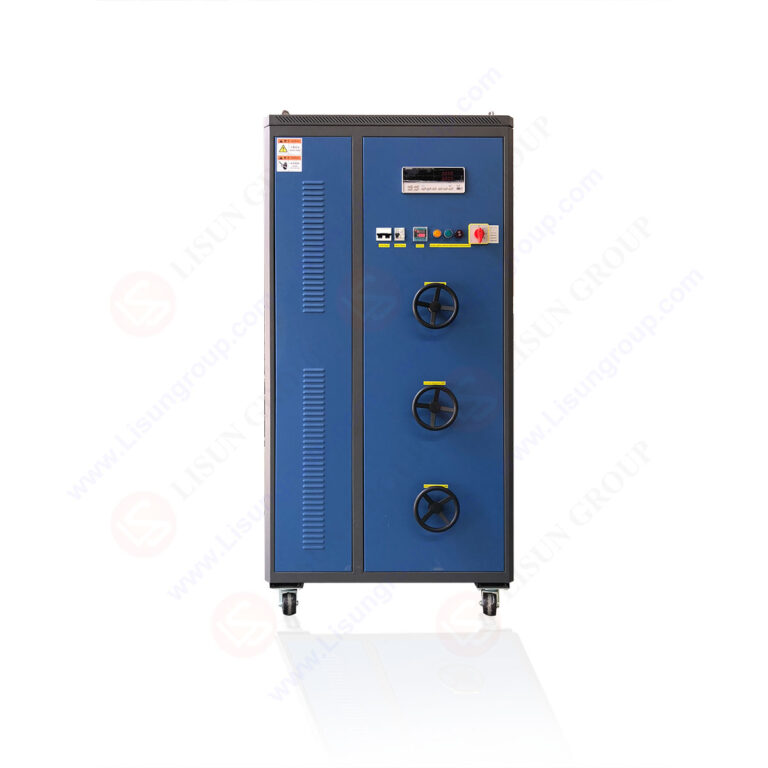



Advanced Temperature and Humidity Chambers: Engineering Reliability Through Controlled Environmental Stress
The validation of product reliability and performance under diverse climatic conditions represents a fundamental pillar of modern engineering and quality assurance. Advanced temperature and humidity chambers, sophisticated environmental simulation instruments, are indispensable for replicating the complex atmospheric stresses products encounter throughout their lifecycle. These chambers facilitate accelerated life testing, qualification to international standards, and the identification of latent design or material flaws before market release. This technical examination delves into the operational principles, critical design considerations, and industrial applications of these systems, with a focused analysis on a representative high-performance model.
Fundamental Principles of Combined Environmental Stress Testing
The core objective of a temperature and humidity chamber is to impose precisely controlled thermal and hygrometric conditions upon a test specimen. The scientific premise is rooted in the understanding that many failure mechanisms are accelerated by the synergistic effects of temperature and moisture. Key physical processes induced include thermal expansion and contraction of dissimilar materials, condensation, hygroscopic swelling, corrosion, electrochemical migration, and the alteration of polymer properties. By cycling or holding specimens at specified setpoints—such as 85°C and 85% relative humidity (RH), a common accelerated stress condition—engineers can observe failures that might take years to manifest in field use. Testing is governed by standards including IEC 60068-2-1 (cold), IEC 60068-2-2 (dry heat), IEC 60068-2-30 (damp heat, cyclic), and MIL-STD-810 for defense applications, which define rigorous profiles for product evaluation.
Architectural and Subsystem Design of Precision Chambers
A modern chamber is an integration of several interdependent subsystems. The thermally insulated test volume, typically constructed from stainless steel, is serviced by a refrigeration circuit for cooling, often employing cascade systems for achieving deep temperatures below -40°C. Heating is achieved via electric resistance elements. Humidity generation is primarily accomplished through a steam injection system, where deionized water is vaporized and introduced into the airstream; humidity removal is managed by the refrigeration evaporator coil, which condenses moisture from the air when its dew point is lowered. Precise control is maintained by a programmable logic controller (PLC) or sophisticated touch-screen interface, which modulates these subsystems based on feedback from platinum resistance temperature detectors (RTDs) and capacitive polymer humidity sensors. Uniformity of conditions within the workspace is critical and is ensured by a forced air circulation system designed to minimize thermal gradients, often achieving uniformity within ±0.5°C and ±2.5% RH.
The Critical Role of the GDJS-015B Temperature Humidity Test Chamber in Component Validation
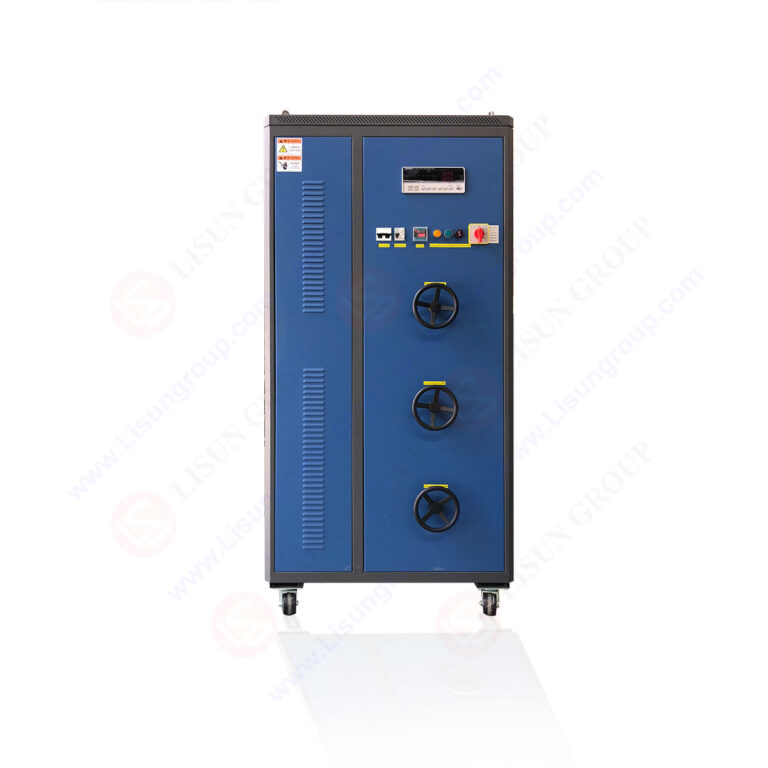
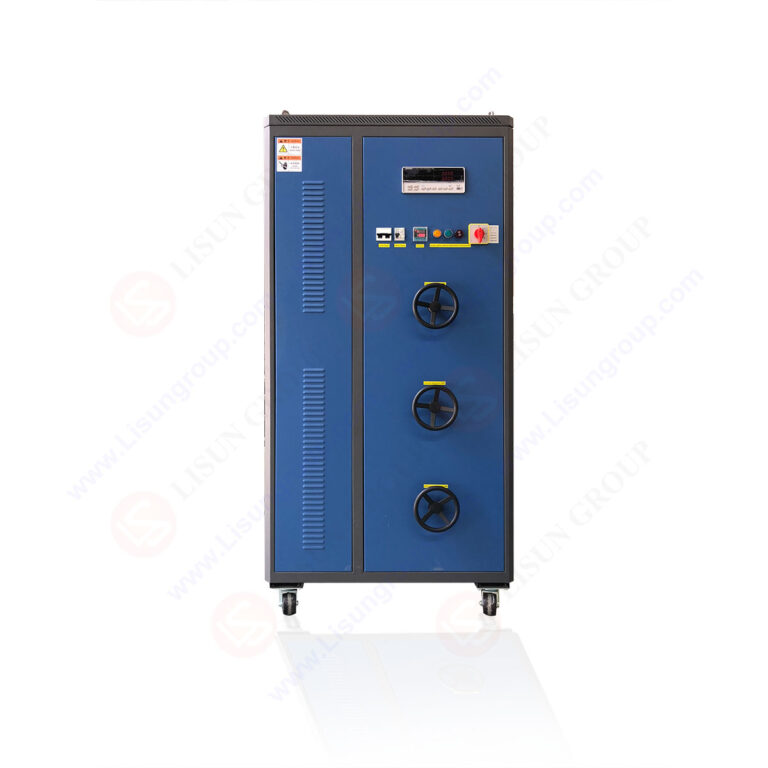
As a paradigm of a standard yet highly capable bench-top chamber, the LISUN GDJS-015B exemplifies the application of these principles for component and small assembly testing. This model provides a controlled volume for subjecting specimens to a broad spectrum of conditions, making it a versatile tool in R&D and QA laboratories.
Core Specifications and Operational Parameters:
- Temperature Range: -70°C to +150°C
- Humidity Range: 20% to 98% RH
- Temperature Fluctuation: ≤±0.5°C
- Temperature Uniformity: ≤±2.0°C
- Humidity Deviation: ±2.5% RH (above 75% RH conditions)
- Heating Rate: Approx. 3°C/min (ambient to +150°C)
- Cooling Rate: Approx. 1°C/min (ambient to -70°C, under specific load conditions)
- Internal Dimensions (W x H x D): 500 x 600 x 500 mm
- Refrigeration System: Cascade refrigeration with air-cooled condenser.
Testing Principles Embodied: The GDJS-015B utilizes a balanced cascade refrigeration system to achieve its extended low-temperature range. The humidity system employs a boiler for steam generation, allowing for rapid humidity ramping without causing excessive thermal load on the specimen. Its control system manages the complex interaction between cooling dehumidification and steam injection to maintain stable high-humidity setpoints, even at sub-ambient temperatures—a technically demanding scenario.
Industry-Specific Application Protocols and Use Cases
The GDJS-015B and similar chambers are deployed across industries to address unique failure modes.
- Automotive Electronics: Testing electronic control units (ECUs), sensors, and infotainment systems for operation from arctic cold to desert heat with high humidity, ensuring functionality per ISO 16750 and SAE J1211.
- Telecommunications Equipment: Validating base station components, fiber optic transceivers, and routers against cyclic damp heat (IEC 60068-2-30) to prevent condensation-induced short circuits and signal degradation.
- Medical Devices: Performing stability testing (informed by ICH Q1A guidelines) on diagnostic equipment and implantable component materials to guarantee performance and sterility barrier integrity under varying storage climates.
- Aerospace and Aviation Components: Subjecting avionics to rapid temperature and humidity cycles simulating ascent, cruise, and descent profiles, critical for DO-160 compliance.
- Electrical Components & Cable Systems: Evaluating switches, connectors, and insulation materials for resistance to tracking, corrosion, and embrittlement caused by thermal cycling in humid environments.
Comparative Analysis of Chamber Performance Metrics
When selecting a chamber, engineers evaluate key performance indicators beyond basic range. The following table contrasts general performance tiers, with the GDJS-015B positioned as a high-performance bench-top solution.
| Performance Metric | Entry-Level Chamber | High-Performance Bench-top (e.g., GDJS-015B) | Large Walk-in Chamber |
|---|---|---|---|
| Typical Temp Range | -40°C to +150°C | -70°C to +150°C | -70°C to +180°C |
| Humidity Range | 30% to 98% RH | 20% to 98% RH | 10% to 98% RH |
| Temp Uniformity | ≤±3.0°C | ≤±2.0°C | ≤±2.5°C |
| Cooling Rate (Avg.) | 0.5-1.0°C/min | ~1.0°C/min | Program-dependent |
| Primary Use Case | Basic compliance testing | R&D, rigorous component qualification | Full-system, bulk product testing |
The GDJS-015B’s primary competitive advantages lie in its extended temperature range down to -70°C, which allows testing to the limits of many commercial and automotive standards without requiring a larger floor-standing unit, and its precise control stability. This offers a favorable balance of performance, footprint, and operational cost for component-focused testing.
Integration with Thermal Shock Testing for Comprehensive Evaluation
While steady-state and cyclic temperature/humidity testing is essential, many products face rapid transition stresses. This is the domain of the thermal shock test chamber, such as the LISUN HLST-500D. This two- or three-zone system rapidly transfers a basket of specimens between independently controlled high-temperature and low-temperature chambers. This induces severe mechanical stress from differential expansion, revealing flaws in solder joints, bonded components, and encapsulated materials. The HLST-500D, with its vertical transfer mechanism and temperature range spanning -65°C to +150°C, is particularly relevant for Electrical and Electronic Equipment, Aerospace Components, and Industrial Control Systems where rapid deployment from a controlled environment to an extreme one is a risk factor. Used in conjunction with a humidity chamber like the GDJS-015B, a comprehensive environmental stress screening (ESS) regimen can be developed.
Calibration, Maintenance, and Data Integrity Protocols
The validity of test data is contingent upon measurement traceability. Regular calibration of chamber sensors against NIST-traceable references is mandatory, typically performed annually. Key maintenance involves ensuring the refrigeration system’s condenser is clean, replacing humidification water with deionized water to prevent mineral scaling, and verifying door seal integrity. Modern chambers often include self-diagnostic functions and data logging capabilities that record the full test profile alongside chamber parameters, creating an immutable audit trail for compliance with quality management systems like ISO 17025.
Future Trajectories in Environmental Simulation Technology
The evolution of these chambers is directed towards greater connectivity, intelligence, and sustainability. Integration with Industrial Internet of Things (IIoT) platforms enables remote monitoring, predictive maintenance based on compressor performance analytics, and direct synchronization with Laboratory Information Management Systems (LIMS). Advances in refrigerant technology are improving efficiency and reducing global warming potential (GWP). Furthermore, there is increasing demand for multi-axis combined environmental testing, where vibration or altitude (low pressure) stress is synchronized with temperature and humidity cycles in a single test profile, providing an even more accurate simulation of real-world operating environments for sectors like Aerospace and Automotive Electronics.
Frequently Asked Questions (FAQ)
Q1: What is the significance of the cooling rate specification, and how is it measured?
The cooling rate indicates how quickly a chamber can pull down the internal temperature, which is critical for defining test cycle duration. It is typically measured under a defined load condition (often empty or with a specified aluminum mass) from a stable +25°C setpoint to the minimum temperature. It is an average rate; instantaneous rates will vary through the temperature band. A faster rate, like the ~1°C/min of the GDJS-015B, improves testing throughput.
Q2: When is a cascade refrigeration system required, as opposed to a single-stage system?
A cascade system, employing two separate refrigeration circuits thermally linked via a heat exchanger, is necessary to achieve temperatures below approximately -40°C. Single-stage systems using common HFC refrigerants are limited by their thermodynamic properties and compressor limitations at very low evaporation temperatures. The GDJS-015B utilizes a cascade system to attain its -70°C capability.
Q3: Can a temperature and humidity chamber accurately simulate long-term outdoor aging?
Yes, through accelerated testing protocols. Conditions like 85°C/85% RH are not meant to replicate a specific outdoor environment literally, but to accelerate the diffusion of moisture and chemical reactions that cause corrosion, delamination, and other failures. A few hundred hours in such a chamber can correlate to years of field exposure, depending on the failure mechanism and materials involved.
Q4: What are the primary considerations for preparing specimens and loading the test chamber?
Specimens should be arranged to allow free airflow on all surfaces, avoiding obstruction of the chamber’s air circulation ducts. Cables or wiring for in-situ monitoring must pass through dedicated ports. The total mass and thermal capacity of the load must be considered, as a large mass will slow temperature transition rates and may introduce spatial gradients. Non-operational tests often require specimens to be powered off and cooled to ambient temperature before introduction to prevent condensation.
Q5: How does thermal shock testing differ from rapid temperature cycling in a single chamber?
Thermal shock testing, as performed in a dedicated two-zone chamber like the HLST-500D, achieves much higher transition rates (often within 10 seconds) by physically moving the specimen between extreme hot and cold zones. A single chamber performing a temperature cycle is limited by the thermal mass of its entire workspace and refrigeration capacity, resulting in slower ramp rates. Thermal shock induces more severe mechanical stress and is used to test for different, often more catastrophic, failure modes.