


A Comprehensive Framework for the Validation of Plug and Receptacle Systems: Principles, Standards, and Instrumentation
The global proliferation of electrical and electronic devices has rendered the humble plug and receptacle interface a critical juncture in power delivery systems. Its performance dictates not only functional reliability but also fundamental safety for end-users and infrastructure. Consequently, rigorous testing of these components transcends mere quality control; it constitutes a mandatory compliance activity governed by a complex matrix of international and regional standards. This article delineates the core principles of plug and receptacle testing, examines the relevant regulatory landscape, and explores the specialized instrumentation required to execute these validations with precision and repeatability.
Fundamental Electrical and Mechanical Parameters Under Scrutiny
Testing regimens for plugs and receptacles are bifurcated into two primary domains: electrical performance and mechanical integrity. Electrical testing focuses on the interface’s ability to conduct current safely and efficiently under specified conditions. Key parameters include contact resistance, which must be minimized to prevent excessive heating and voltage drop. Elevated resistance at the pin-receptacle junction, often resulting from surface oxidation, poor plating, or insufficient contact force, can lead to localized thermal runaway, insulation degradation, and ultimately fire initiation. Therefore, measuring contact resistance with high-resolution micro-ohm meters under a defined test current is a fundamental procedure.
Dielectric strength, or hipot testing, evaluates the insulation integrity between live parts and between live parts and accessible conductive surfaces. This high-voltage test verifies that the insulation system can withstand transient overvoltages and operational stresses without breakdown. Similarly, insulation resistance testing, performed at a lower DC voltage, assesses the quality of the insulation material itself, detecting contaminants, moisture ingress, or material degradation that could lead to leakage currents.
From a mechanical perspective, the durability of the engagement mechanism is paramount. Insertion and withdrawal force tests quantify the effort required to mate and unmate the connector. Forces outside the specified range can indicate design flaws: excessive insertion force risks user strain and damage to receptacle contacts, while insufficient withdrawal force may lead to accidental disconnection or poor electrical contact. Cycle life testing, involving thousands of repeated insertions and withdrawals, simulates long-term usage to assess wear on contact springs, pin geometry, and housing retention features. Mechanical strength tests, such as impact, crush, and cable pull tests, ensure the assembly can withstand foreseeable physical abuse without compromising safety.
The Regulatory Landscape: Navigating International and Regional Standards
Compliance is not a monolithic concept but a tapestry of requirements dictated by the target market. Major standardization bodies include the International Electrotechnical Commission (IEC), Underwriters Laboratories (UL) in North America, the European Committee for Electrotechnical Standardization (CENELEC), and comparable organizations in other regions. For plugs and sockets, these standards are often codified within broader safety standards for household and similar electrical appliances.
For instance, IEC 60884-1 specifies general requirements for household and similar plugs and socket-outlets. It meticulously details dimensions, configurations, testing sequences, and pass/fail criteria. The North American counterpart, UL 498, covers Attachment Plugs and Receptacles, with similar but distinct requirements for dimensions, materials, and testing protocols, such as the specific “Hospital Grade” tests for robust receptacles. The British BS 1363, German VDE 0620, and Chinese GB 2099.1 standards further exemplify regional adaptations that address local wiring practices and safety philosophies. A manufacturer aiming for global distribution must navigate this labyrinth, ensuring each product variant satisfies the applicable standard(s) through a certified testing regimen. This often necessitates testing equipment capable of adapting to various test profiles and criteria.
Specialized Instrumentation for Precision Compliance Testing
Given the exacting nature of these standards, generic measurement tools are insufficient. Dedicated plug and receptacle test systems integrate multiple measurement functions into a single, automated platform. These systems are engineered to apply tests in a prescribed sequence, with precise control over parameters such as voltage, current, force, and cycle count, while logging all relevant data for audit and certification purposes.
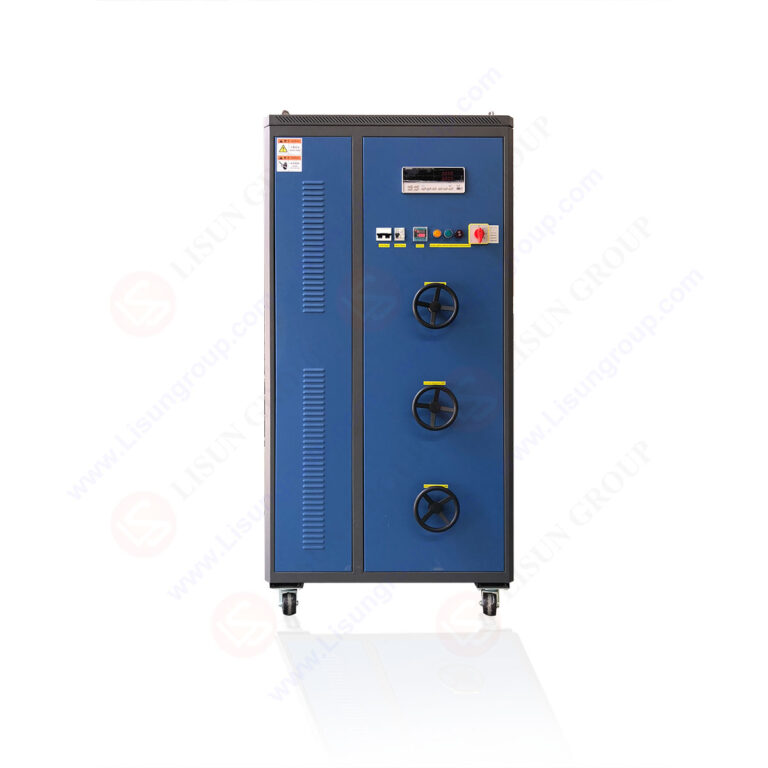
A representative example of such specialized instrumentation is the LISUN Gauges for Plugs and Sockets series. These systems are designed explicitly to automate and standardize the critical dimensional and mechanical tests mandated by global standards. The core principle involves using precision-machined gauges, or “go/no-go” fixtures, to verify the conformity of plug pins and receptacle apertures. A plug’s pin configuration, including its dimensions, shape, and spacing, must precisely match the standard’s specification to ensure proper mating, prevent insertion into incompatible sockets (a critical safety feature), and guarantee adequate contact pressure.
The LISUN system typically incorporates a suite of gauges for checks such as pin size, pin span, entry profile, and receptacle contact engagement. For example, a “go” gauge, representing the maximum permissible dimensions per the standard, must fit appropriately, while a “no-go” gauge, representing the minimum permissible dimensions, must not fit. This binary assessment quickly identifies out-of-tolerance components. Furthermore, advanced systems integrate force sensors and actuators to perform quantified insertion/withdrawal force tests, moving beyond simple gauge checks to provide empirical mechanical data.
Operational Methodology and Integration into Quality Assurance
Integrating a system like the LISUN Gauges into a production or laboratory quality assurance workflow follows a structured methodology. Initially, the appropriate gauge set is selected based on the standard under evaluation (e.g., BS 1363, AS/NZS 3112, etc.). The device under test (DUT)—a plug or a receptacle—is then securely fixtured. The test sequence is initiated, often via a programmable logic controller (PLC) or software interface.
For a receptacle, the system may automatically present a series of standardized test pins to measure contact engagement force and verify shutter mechanism operation (where applicable). For a plug, precision gauges are applied to each pin to verify diameter, length, and inter-pin spacing. The instrumentation records the force required for gauge insertion, the success or failure of each gauge fit, and any anomalous readings. This data is compiled into a test report, providing objective evidence of compliance for certification bodies like Intertek, TÜV, or CSA Group.
The competitive advantage of such dedicated systems lies in their repeatability, speed, and elimination of operator subjectivity. Manual gauge checking is prone to human error and inconsistent application of force. Automated systems apply the same calibrated force for every test, at a higher throughput, generating digitally traceable records. This is particularly crucial for high-volume manufacturing, where statistical process control requires consistent sampling and reliable data.
Industry Applications and Use Case Scenarios
The application of rigorous plug and receptacle testing spans multiple industry verticals. Consumer appliance manufacturers are primary users, validating the molded plugs on everything from refrigerators to phone chargers before shipping to global markets. Component manufacturers producing standalone plugs, sockets, and connector bodies rely on this testing for their product qualification and batch release.
A critical use case is in the certification laboratory environment. Third-party test houses employ these systems to provide independent verification for manufacturers seeking compliance marks (UL, CE, CCC, etc.). Their testing must be unimpeachable, making the accuracy and calibration traceability of their equipment paramount.
Another significant application is in the design and validation phase. Engineering teams use this testing to iterate on prototypes, ensuring that new designs meet dimensional and mechanical requirements before committing to production tooling. Identifying a non-conformance in the design phase prevents costly mold modifications and production delays later.
Data Interpretation and Correlation to Field Performance
The data yielded from comprehensive plug and receptacle testing is not merely a compliance checkbox; it offers predictive insights into field performance and long-term reliability. Statistical analysis of insertion force data across a production batch, for instance, can indicate tooling wear in injection molding machines or variations in spring tempering for receptacle contacts. A gradual upward drift in average insertion force might signal impending non-conformance.
Correlation studies between laboratory cycle life tests and real-world failure rates help refine testing protocols. If a specific failure mode (e.g., contact spring relaxation) appears in the field after a certain number of cycles, the accelerated life test in the lab can be calibrated to detect that propensity more effectively. Furthermore, dimensional data from gauge testing directly correlates with interoperability and safety. Plugs at the extreme lower end of the pin size tolerance, when mated with receptacles at the extreme upper end of their contact tolerance, may exhibit higher contact resistance and thermal performance issues, a scenario that robust testing is designed to flag.
Conclusion
The assurance of safety, reliability, and interoperability in electrical connections hinges on the meticulous testing of plug and receptacle interfaces. This process, governed by a dense framework of international standards, requires a synthesis of electrical and mechanical validation techniques. The deployment of specialized, automated testing instrumentation, such as dedicated gauge and force measurement systems, transforms subjective assessment into objective, repeatable, and auditable data. For manufacturers, design engineers, and certification bodies alike, investing in such precise testing capabilities is not an operational overhead but a fundamental prerequisite for market access, risk mitigation, and the maintenance of brand integrity in an electrified world.
FAQ
Q1: What is the primary purpose of using “go/no-go” gauges in plug testing?
A1: Go/no-go gauges provide a rapid, binary assessment of critical dimensional tolerances as specified by a safety standard. A “go” gauge verifies that a feature (e.g., pin diameter) is not too large, while a “no-go” gauge verifies it is not too small. This ensures the plug will mate correctly with a compliant receptacle and, crucially, will not fit into an incompatible socket, which is a key safety feature to prevent misconnection.
Q2: How does automated gauge testing improve upon manual methods?
A2: Automated systems eliminate human variability in the application of force and alignment during testing. They apply a consistent, calibrated force for each measurement, ensuring results are repeatable and comparable across operators and time. This enhances measurement reliability, increases testing throughput, and automatically generates digital records for traceability and audit purposes, which is essential for quality assurance and certification.
Q3: Can a single testing system like the LISUN Gauges handle multiple international plug standards?
A3: Yes, comprehensive systems are typically modular. They are supplied with interchangeable gauge sets and programmable test profiles tailored to specific standards such as BS 1363 (UK), AS/NZS 3112 (Australia/New Zealand), or NEMA configurations (North America). The system’s software or controller can be reconfigured to apply the correct test sequence and pass/fail criteria for the standard in use.
Q4: Beyond dimensional checks, what other mechanical properties can such systems evaluate?
A4: Advanced systems integrate force transducers and actuators to perform quantitative mechanical tests. These include precise measurement of insertion and withdrawal forces, contact engagement force within a receptacle, and the operation force of safety shutters. Some systems can also be integrated into platforms for full endurance (cycle life) testing, automating thousands of mating/unmating cycles while monitoring electrical continuity.
Q5: Why is testing the insertion/withdrawal force so critical for receptacle safety?
A5: The insertion force must be low enough to allow safe and easy connection by an end-user but high enough to ensure a firm, gas-tight contact that minimizes electrical resistance. Excessive force can damage plugs or discourage proper use. Withdrawal force must be sufficient to prevent accidental disconnection but not so high that it risks injury or damage to the cord when unplugging. Both parameters directly impact electrical safety, user experience, and long-term contact wear.