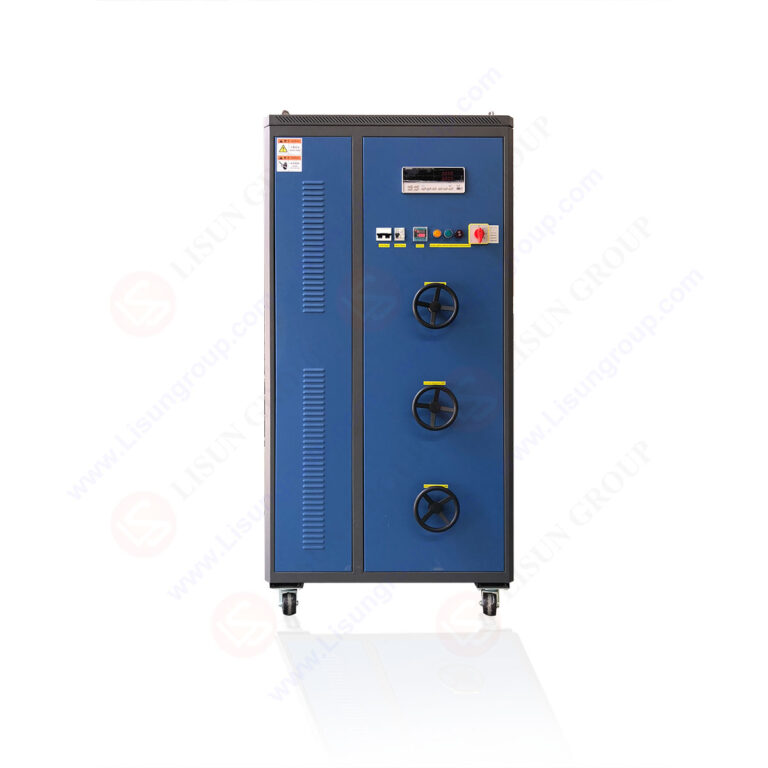



Advancing Reliability: High-Performance Environmental Stress Screening for Battery Systems
The proliferation of electrochemical energy storage systems across diverse industrial sectors has precipitated an unprecedented demand for rigorous, standardized safety and reliability validation. Battery failures, ranging from performance degradation to catastrophic thermal events, pose significant risks to product integrity, user safety, and brand reputation. Consequently, the implementation of sophisticated, high-performance environmental testing solutions is not merely a quality assurance step but a fundamental engineering imperative. This article delineates the critical role of advanced climatic and thermal stress testing, with a focused examination on integrated chamber systems, in de-risking battery-integrated products throughout their development and qualification lifecycle.
The Multifaceted Threat Environment for Modern Battery Packs
Batteries are intrinsically sensitive to environmental extremes. Their complex electrochemistry, coupled with mechanical and electronic control systems, must maintain stability across a wide operational envelope. Key failure modes are often precipitated or accelerated by specific climatic conditions. Elevated temperatures can accelerate electrolyte decomposition, promote solid-electrolyte interphase (SEI) layer growth, and induce separator shrinkage, leading to increased internal resistance, capacity fade, and potential internal short circuits. Conversely, sub-zero temperatures drastically increase ionic resistance, reducing available power and potentially causing lithium plating during charging—a primary mechanism for dendrite formation and subsequent internal shorts.
Humidity acts as a pervasive adversary. Ingress of moisture can hydrolyze electrolyte salts, such as LiPF₆, generating corrosive hydrofluoric acid (HF) that degrades internal components and current collectors. Furthermore, high relative humidity can compromise the integrity of sealing gaskets and housing, leading to internal condensation and electrical leakage paths. Rapid thermal transients, experienced during device power cycling or external environmental shifts, generate mechanical stress due to the differing coefficients of thermal expansion (CTE) among cell constituents, electrodes, welds, and module housings. This cyclical stress can fracture interconnects, delaminate electrodes, and ultimately breach containment.
Systematic Validation Through Controlled Environmental Stress Screening
To preemptively identify these vulnerabilities, a regimen of controlled environmental stress screening (ESS) is employed. This regimen moves beyond simple pass/fail tests to characterize performance boundaries, identify design margins, and validate safety mechanisms. The core philosophy involves subjecting battery packs or complete electronic assemblies to precisely controlled and often cyclically varying conditions that simulate or accelerate real-world exposure. This process is governed by a matrix of international standards, including but not limited to IEC 62133 (safety of portable sealed cells), UL 1642 (lithium batteries), IEC 60068-2-1/2 (cold and dry heat tests), IEC 60068-2-14 (change of temperature), and various automotive-specific standards like ISO 16750-4 (climate loads) and GB/T 31467 (Chinese standard for Li-ion traction battery packs).
Effective testing requires instrumentation that delivers not only extreme conditions but also exceptional uniformity, stability, and repeatability. The data gleaned from such tests—voltage, current, temperature, and impedance monitoring under stress—provides the empirical foundation for design iteration, failure analysis, and compliance certification.
The Critical Role of Integrated Temperature-Humidity Cycling Chambers
Among the most versatile tools in this validation arsenal is the combined temperature-humidity test chamber. These systems provide a holistic simulation of long-term storage, geographical deployment, and operational climatic exposure. A representative high-performance instrument in this category is the LISUN GDJS-015B Temperature Humidity Test Chamber.
The GDJS-015B is engineered to deliver precise, stable control over a broad spectrum of conditions, typically spanning from -70°C to +150°C in temperature and 20% to 98% relative humidity (RH). Its operational principle hinges on a cascade refrigeration system for deep temperature pull-down and a sophisticated steam humidification system for rapid, accurate humidity control. A critical design feature is the air circulation system, which ensures a temperature uniformity of ≤±0.5°C and humidity uniformity of ≤±2.5% RH within the workspace. This uniformity is non-negotiable; gradients within the test volume can lead to inconsistent stress application, rendering comparative data between samples invalid.
Specifications and Competitive Advantages:
- Extended Range: The capability to reach -70°C is particularly advantageous for testing aerospace components, high-altitude telecommunications equipment, and automotive batteries destined for arctic climates.
- Precision Control: Advanced programmable controllers allow for complex multi-segment profiles, including temperature-humidity cycling (THC) and steady-state damp heat tests. This enables simulation of diurnal cycles, seasonal changes, and accelerated life testing via the Arrhenius model.
- Robust Construction: The chamber utilizes SUS 304 stainless steel for the interior, ensuring corrosion resistance against potential off-gassing from stressed batteries. Safety interlocks and independent overtemperature protection are integral for unattended testing of energy-dense products.
- Data Integrity: Integrated ports for test leads allow for continuous in-situ monitoring of battery parameters during testing without compromising chamber integrity, a necessity for correlating environmental stress with electrical performance decay.
Industry Use Cases:
- Automotive Electronics: Validating battery management systems (BMS) and traction battery packs for electric vehicles against extended storage in humid environments and performance across continental temperature extremes.
- Telecommunications Equipment: Testing backup battery systems (e.g., for 5G RRUs) for base stations located in tropical or desert climates, ensuring reliability over a 10-15 year service life.
- Medical Devices: Qualifying batteries for portable ventilators, infusion pumps, and diagnostic tools that must operate reliably in varied hospital environments and during inter-facility transport.
- Aerospace and Aviation Components: Subjecting batteries for satellite subsystems or aircraft emergency locator transmitters (ELTs) to extreme low-temperature and vacuum-simulating dry conditions.
Simulating Abrupt Thermal Transients with Thermal Shock Testing
While temperature-humidity cycling simulates gradual environmental changes, many real-world scenarios involve abrupt thermal shocks. A device may be powered on in a cold car interior after overnight freezing, or a battery pack in industrial machinery may experience rapid heat generation from high-current discharge. Thermal shock testing is designed to evaluate the mechanical and electrical integrity of a product subjected to these extreme rate-of-change conditions.
The LISUN HLST-500D Thermal Shock Test Chamber employs a three-zone (high-temperature, low-temperature, and test) basket transfer system to facilitate this testing. The principle involves automatically shuttling test specimens between independently controlled high- and low-temperature zones with minimal transition time, typically less than 10 seconds. This rapid transfer induces severe thermal stress on materials and interconnections.
Specifications and Testing Principles:
- Two-Cell Design: The HLST-500D features separate high-temperature (+150°C to +200°C) and low-temperature (-10°C to -65°C) chambers flanking a central transfer mechanism.
- Rapid Transfer: The basket transfer system minimizes dwell time at ambient conditions, applying the maximum thermal gradient directly to the unit under test (UUT). This is crucial for activating failure modes related to CTE mismatch.
- High-Cycle Durability: Designed for continuous, automated cycling, it supports testing protocols like IEC 60068-2-14, Test Nb, which specifies a defined number of cycles with specified dwell times at temperature extremes.
- Precision Monitoring: The system allows for real-time temperature verification within the test basket to ensure the specified shock profile is accurately delivered to the samples.
Industry Use Cases:
- Electrical Components (Switches, Connectors): Testing for contact failure, housing cracking, or seal degradation in automotive fuse boxes or industrial control panels after repeated engine compartment heat/cool cycles.
- Consumer Electronics: Validating the structural integrity of solder joints and battery connectors in smartphones and laptops that may be left in a car, experiencing daily temperature swings.
- Lighting Fixtures (LED Drivers): Assessing the reliability of outdoor LED streetlight power supplies and their associated battery backups during sudden summer thunderstorms causing rapid cooldown.
- Industrial Control Systems: Qualifying programmable logic controller (PLC) power supplies and backup modules for factory environments near forging or casting operations.
Correlating Test Data to Field Failure Modes and Standards Compliance
The ultimate value of these testing solutions lies in the actionable intelligence derived from the data. During a GDJS-015B damp heat test (e.g., 85°C/85% RH for 1000 hours), a steady increase in a battery’s internal DC resistance, measured via hybrid pulse power characterization (HPPC) intervals, directly indicates corrosion at the current collectors. A sudden voltage drop may signal a micro-short. In the HLST-500D, a post-cycling check of insulation resistance in a cable and wiring system may reveal cracks in insulation caused by repeated contraction and expansion.
Compliance with standards such as UL 2054 requires specific thermal abuse tests, which can be precisely executed in these chambers. Furthermore, data from these tests feeds into failure mode and effects analysis (FMEA) and physics-of-failure (PoF) models, creating a closed-loop feedback system that elevates product design from empirically adequate to robustly engineered.
Integrating Testing into a Comprehensive Battery Validation Strategy
High-performance chambers like the GDJS-015B and HLST-500D are not standalone solutions but core components of a validation pyramid. They typically operate in conjunction with other equipment: vibration test systems for mechanical stress, altitude chambers for pressure simulation, and specialized nail penetration or overcharge testers for abuse tolerance. The sequencing of tests is also critical; often, thermal cycling is performed before and after vibration to identify latent weaknesses.
The selection of test parameters—temperature ranges, cycle counts, transition rates—must be informed by the product’s intended application geography, transport logistics, and operational duty cycle. A medical defibrillator battery for use in ambulances will have a profoundly different test profile than a stationary battery for an uninterruptible power supply (UPS) in a data center.
Conclusion
As the integration of battery systems permeates every facet of modern technology, the mandate for comprehensive safety and reliability validation intensifies. High-performance environmental testing solutions, exemplified by advanced temperature-humidity and thermal shock chambers, provide the controlled, reproducible, and data-rich environment necessary to de-risk products before they reach the market. By simulating years of environmental stress in a matter of weeks, these instruments enable engineers to probe design margins, uncover latent failure modes, and substantiate compliance with global safety standards. The resulting product confidence is essential for advancing technologies in automotive electrification, portable medical devices, resilient telecommunications, and beyond, ensuring that the energy storage foundation of our technological infrastructure is not only powerful but fundamentally safe and reliable.
FAQ Section
Q1: What is the primary distinction between temperature-humidity cycling and thermal shock testing, and when should each be specified?
Temperature-humidity cycling applies gradual, often combined, changes in climate to simulate long-term environmental exposure and assess chemical degradation, corrosion, and material hygroscopy. Thermal shock testing applies extreme, rapid temperature transitions to evaluate mechanical integrity, solder joint reliability, and material cohesion under high thermal stress. The former is specified for lifetime reliability and storage qualification; the latter is for validating robustness against sudden environmental changes or power cycling events.
Q2: For testing a complete automotive battery pack, can the HLST-500D accommodate the size and weight?
The HLST-500D’s capacity is defined by its workspace dimensions and load rating. While suitable for module-level testing, full automotive traction battery packs often require larger, custom-configured thermal shock systems or are tested using liquid-to-liquid thermal shock methods for faster heat transfer. Always verify the chamber’s internal dimensions and maximum load weight against the unit under test’s specifications.
Q3: How is safety managed when testing live, energy-dense battery packs inside a sealed chamber?
High-performance chambers incorporate several critical safety features: explosion-proof electrical fittings, reinforced construction, independent overtemperature protectors, and emergency exhaust vents. Furthermore, testing protocols mandate placing batteries in a state of charge (SOC) appropriate for the test (often 50% SOC for abuse tests), using protective containment boxes within the chamber, and employing continuous remote monitoring of voltage and temperature with automatic shut-off triggers.
Q4: Can the GDJS-015B’s humidity system accurately control low humidity levels at sub-zero temperatures?
Controlling relative humidity at very low temperatures is physically challenging, as the air’s moisture-holding capacity is minimal. The GDJS-015B typically specifies its full humidity range (e.g., 20-98% RH) for a defined temperature envelope above 0°C. At -40°C or below, the absolute humidity is exceedingly low, and the chamber effectively provides a controlled dry environment, which is critical for testing low-temperature performance and storage.
Q5: What data acquisition capabilities are typically integrated or compatible with these chambers?
Modern chambers feature programmable controllers with Ethernet or RS-232/485 communication ports. This allows them to be integrated with external data acquisition systems (DAQs) to log the chamber’s environmental parameters in sync with the unit under test’s performance data (voltage, current, temperature from internal probes). This synchronized logging is essential for establishing direct cause-effect relationships during test analysis.