


A Methodical Framework for Selecting Environmental Test Chambers in Product Validation
The relentless pursuit of product reliability across industrial sectors necessitates rigorous validation under simulated environmental stressors. Environmental test chambers are indispensable instruments in this endeavor, enabling engineers to accelerate time-to-failure, identify design weaknesses, and verify compliance with international standards before market deployment. The selection of an appropriate chamber, however, constitutes a critical technical decision with profound implications for testing validity, operational efficiency, and capital expenditure. This article delineates a systematic selection framework, emphasizing the correlation between test objectives, chamber capabilities, and the specific failure mechanisms pertinent to diverse industries.
Defining the Environmental Stress Profile and Test Objectives
The foundational step in chamber selection is an unambiguous definition of the environmental stress profile. This profile is not merely a list of conditions but a precise specification derived from product lifecycle analysis, intended use environments, and relevant compliance mandates. Engineers must differentiate between qualification testing, which validates a design against a fixed set of pass/fail criteria, and reliability or HALT (Highly Accelerated Life Testing) testing, which seeks to uncover failure modes through progressive stress escalation.
For electrical and electronic equipment, the stress profile often integrates temperature, humidity, and thermal shock. A household appliance, such as a dishwasher control board, must endure high-temperature, high-humidity environments while resisting condensation-induced corrosion. Automotive electronics, subjected to under-hood temperatures exceeding 125°C and cold starts as low as -40°C, require chambers capable of extreme thermal cycling. Telecommunications equipment in outdoor enclosures faces diurnal temperature swings and moisture ingress, necessitating combined temperature-humidity cycling. The stress profile must specify not only the extreme setpoints but also the rates of change, dwell times, and, for humidity, parameters like dew point or relative humidity.
Core Chamber Typologies and Their Operational Principles
Chambers are categorized by their ability to generate and control specific environmental stressors. The two primary typologies relevant to electronics validation are temperature/humidity chambers and thermal shock chambers, each employing distinct thermodynamic principles.
Temperature and Humidity Chambers operate on the psychrometric principle, controlling air temperature and water vapor concentration to achieve a target relative humidity. Precise humidity control, especially at sub-zero temperatures, is technologically challenging and often a key differentiator between chamber models. These chambers are used for steady-state damp heat tests (e.g., IEC 60068-2-78), temperature cycling (IEC 60068-2-14), and combined temperature/humidity cycling (IEC 60068-2-30).
Thermal Shock Chambers are designed to subject specimens to rapid transitions between extreme hot and cold environments. This induces mechanical stress due to the differential coefficients of thermal expansion (CTE) of assembled materials—a primary failure mechanism for solder joints, bonded components, and encapsulated packages. Two prevalent methodologies exist: two-zone (or transfer) systems, where a basket mechanically moves the test specimen between separate hot and cold zones, and three-zone systems, where the specimen remains stationary while the environmental air is rapidly switched. The rate of change in a thermal shock test is not a controlled ramp but an instantaneous transfer, with specifications focusing on the recovery time within the test zone.
Integrating Product-Specific Failure Mechanisms into Chamber Specifications
Chamber performance metrics must be mapped directly to the physical failure mechanisms under investigation. For a lighting fixture, the integrity of the LED driver’s potting compound under thermal cycling is critical; thus, chamber uniformity and temperature transition rates are key. For aerospace and aviation components, the ability to test under low-pressure (altitude) conditions may be required, adding complexity. Medical devices often demand validation per IEC 60601-1, which includes specific humidity and drip tests, necessitating chambers with precise humidity control and potentially integrated drip systems.
The selection of chamber size involves more than the specimen dimensions. It must account for airflow obstruction, ensuring the specimen load does not exceed 20-30% of the chamber’s free volume to maintain air circulation and specification compliance. For cable and wiring systems, a chamber with a port for feed-throughs may be required to perform live-load testing under temperature stress.
Analysis of a Representative Temperature-Humidity Test System
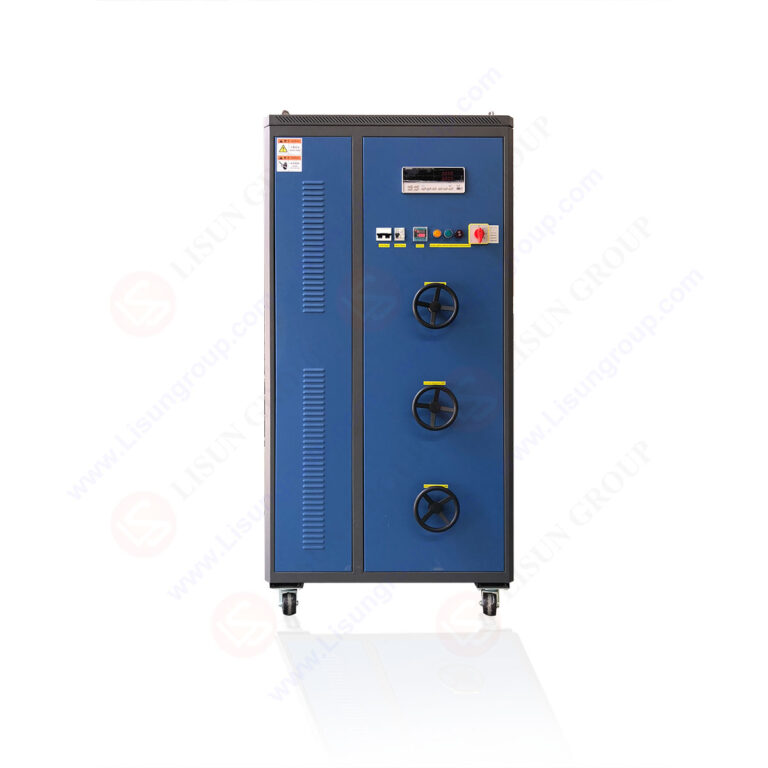
To illustrate the application of this selection framework, we examine the LISUN GDJS-015B Temperature Humidity Test Chamber. This model serves as a pertinent example of a benchtop-scale chamber designed for component and small assembly validation.
Specifications and Testing Principles: The GDJS-015B offers a temperature range of -70°C to +150°C and a humidity range of 20% to 98% RH. Its operational principle involves a cascade refrigeration system to achieve the low-temperature setpoint and a steam-generation humidification system to precisely inject moisture. Dehumidification is achieved by cooling the chamber air below its dew point via the refrigeration system, causing condensation. Control is managed through a programmable touchscreen controller, allowing for the creation of complex multi-segment profiles that simulate real-world diurnal cycles or accelerated test standards.
Industry Use Cases: This chamber’s capacity is suited for testing critical sub-assemblies across multiple sectors. In industrial control systems, it can validate the resilience of programmable logic controller (PLC) modules to condensation in unheated enclosures. For consumer electronics like wearable devices, it can execute cyclic humidity tests to assess corrosion resistance of internal connectors and switches. Manufacturers of electrical components (e.g., miniature circuit breakers, sockets) utilize such chambers to perform accelerated life testing per standards like IEC 60947, where electrical performance is monitored in-situ under damp heat stress.
Competitive Advantages: The technical merits of this chamber category include its compact footprint for lab integration, the energy efficiency of cascade refrigeration for extended low-temperature operation, and the precision of its humidity control system, which minimizes overshoot during setpoint transitions—a critical factor for repeatable testing. The programmability allows it to replicate not only standardized tests but also custom profiles based on field environmental data.
Evaluating Thermal Shock Testing for Rapid Stress Induction
For failure mechanisms driven by rapid thermal expansion mismatch, a dedicated thermal shock chamber is essential. As a case study, the LISUN HLST-500D Thermal Shock Test Chamber exemplifies a two-zone (transfer) system engineered for high-throughput component testing.
Specifications and Testing Principles: The HLST-500D typically features a high-temperature zone up to +200°C and a low-temperature zone down to -65°C (or -55°C, depending on configuration). The core principle involves an automated basket that transfers the test specimen between these two independently controlled zones within seconds. The specification emphasizes recovery time—the duration for the test zone to return to its setpoint after the basket transfer—which is often within 5 minutes. This rapid transition induces high mechanical stress, targeting failures in solder joints, wire bonds, and plastic encapsulation.
Industry Use Cases: This test is paramount in automotive electronics for validating engine control units (ECUs) and sensors against the shock of a cold start after heat soak. In aerospace and aviation components, it tests avionics for integrity after exposure to rapid altitude and temperature changes. For telecommunications equipment, it validates the robustness of surface-mount technology (SMT) on circuit boards against thermal fatigue from power cycling in base stations. Manufacturers of office equipment, such as high-speed printers, use thermal shock to ensure component reliability during warm-up cycles.
Competitive Advantages: The HLST-500D’s two-zone design offers a distinct advantage in test speed and temperature extremeness compared to a single chamber performing a rapid ramp. The separation of zones prevents thermal interference, ensuring both zones remain at stable setpoints, which improves test consistency. Its design prioritizes minimal transfer time and rapid temperature recovery, directly increasing the stress rate on the device under test (DUT) and providing a more accelerated and severe assessment of thermal-mechanical robustness.
Compliance with International Standards and Data Integrity
Chamber selection is inextricably linked to regulatory and standards compliance. Key standards include the IEC 60068 series (Environmental Testing), MIL-STD-810 (Environmental Engineering Considerations), and JESD22 (Solid State Technology Association). A chamber must not only achieve setpoints but also maintain uniformity and stability as defined in these standards. For instance, IEC 60068-2-1 specifies allowable temperature tolerances and gradients during steady-state conditions.
Data integrity features are non-negotiable for accredited laboratories. This necessitates chambers with detailed audit trails, calibration reminders, secure data logging, and the ability to integrate with laboratory information management systems (LIMS). The control system should prevent unauthorized parameter changes during an active test profile.
Total Cost of Ownership and Operational Considerations
The acquisition cost is a single component of the total cost of ownership (TCO). Operational costs encompass energy consumption (particularly significant for extreme temperature chambers), consumables like liquid CO2 or LN2 for ultra-fast cooling, preventive maintenance, and calibration services. Reliability and mean time between failures (MTBF) of chamber components, such as compressors and heaters, directly impact downtime and repair costs. Selecting a chamber with a robust design, accessible service points, and available local technical support mitigates long-term operational risk.
Frequently Asked Questions (FAQ)
Q1: What is the critical difference between a temperature cycling test in a single chamber and a thermal shock test?
A1: The fundamental difference lies in the rate of temperature change. Temperature cycling in a single chamber uses a controlled ramp rate (e.g., 10°C/min). Thermal shock utilizes a transfer system to achieve a near-instantaneous change between two extreme setpoints, producing a much higher thermal strain rate. This makes thermal shock more effective at precipitating failures related to CTE mismatch, such as solder joint cracking.
Q2: Why is humidity control particularly challenging at low temperatures, and how is it managed?
A2: As air temperature decreases, its capacity to hold water vapor diminishes exponentially. At temperatures near or below 0°C, maintaining stable relative humidity without causing frost or ice formation is difficult. Advanced chambers like the GDJS-015B use precise, low-mass steam generators and sophisticated refrigeration dehumidification cycles with anti-condensation strategies to navigate this psychrometric challenge.
Q3: For testing automotive electronics, is a two-zone or three-zone thermal shock chamber preferable?
A3: The choice depends on the test standard and specimen. Two-zone chambers (like the HLST-500D) generally provide faster transfer times and more extreme temperature differentials, which is suitable for component-level tests mimicking sudden environmental shifts. Three-zone chambers, where air is switched around a stationary specimen, are better for testing larger, more massive items or items with external connections that cannot be easily moved, as they eliminate mechanical movement stress.
Q4: How often should an environmental test chamber be calibrated, and what does calibration entail?
A4: Calibration frequency is typically annual, though it may be more frequent for intensive use or under specific accreditation requirements (like ISO 17025). Full calibration involves using NIST-traceable sensors to map temperature and humidity uniformity and stability across the entire workspace, verifying the chamber’s performance against its published specifications and relevant test standards.
Q5: Can a single chamber adequately perform both highly accelerated life testing (HALT) and standard compliance testing?
A5: While possible, it is suboptimal. HALT chambers are specifically designed for rapid, multi-axis stress application (temperature, vibration, voltage) with very high ramp rates (often >60°C/min) and broad temperature ranges. Standard compliance chambers prioritize precision, uniformity, and repeatability at defined rates. Using a compliance chamber for HALT may not provide sufficient stress rigor, while using a HALT chamber for compliance may not meet the strict tolerance requirements of standards like IEC 60068.