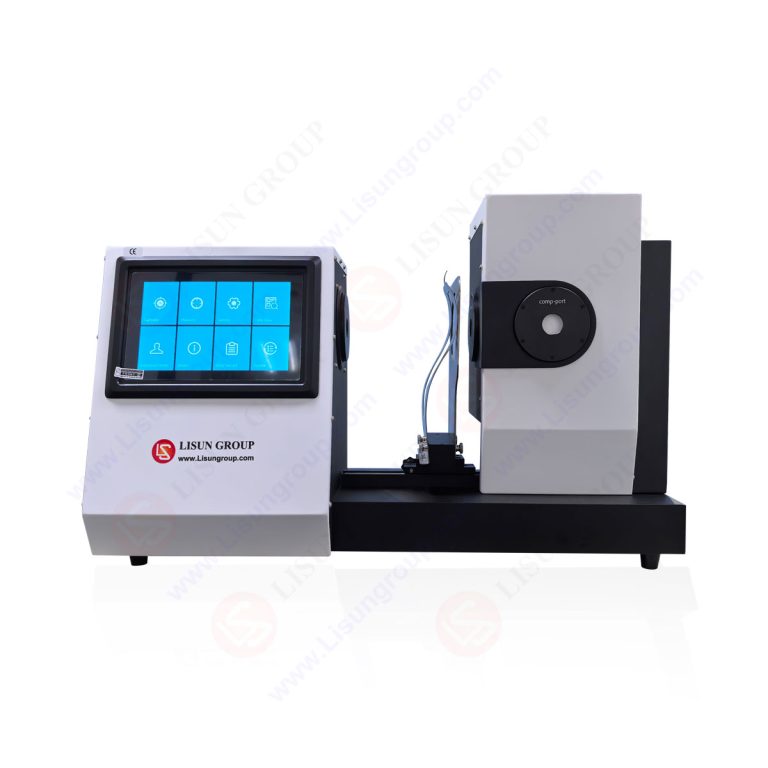



Advanced Salt Spray Test Chamber by LISUN: Ensuring Product Durability and Reliability
Introduction to Accelerated Corrosion Testing
In the globalized manufacturing landscape, product longevity and reliability are not merely desirable attributes but fundamental requirements for market success and regulatory compliance. Environmental factors, particularly corrosive atmospheres containing chlorides, pose a significant threat to the functional integrity and aesthetic quality of a vast array of materials and components. To preemptively evaluate and mitigate these risks, accelerated corrosion testing has become an indispensable element of the product development and quality assurance lifecycle. The salt spray (fog) test, standardized internationally, serves as a critical, reproducible methodology for assessing the corrosion resistance of metallic materials, protective coatings, and surface treatments under controlled, aggressive conditions. LISUN’s Advanced Salt Spray Test Chambers, epitomized by the YWX/Q-010 series, represent a sophisticated engineering solution designed to deliver precise, consistent, and standards-compliant testing environments, thereby enabling manufacturers to predict field performance and enhance product durability.
Fundamental Principles of the Salt Spray (Fog) Test Methodology
The core operational principle of a salt spray test chamber is the continuous or intermittent atomization of a prepared electrolyte solution—typically a 5% sodium chloride (NaCl) solution with a pH adjusted per relevant standards—into a fine, settled fog within a sealed testing compartment. This environment simulates and accelerates the corrosive effects of marine or industrial atmospheres. The test does not precisely replicate real-world corrosion rates or mechanisms but provides a controlled, comparative assessment. Components placed within the chamber are exposed to this corrosive mist, initiating electrochemical reactions that lead to oxidation, galvanic corrosion, and coating degradation. The test’s validity hinges on maintaining stringent control over critical parameters: chamber temperature, saturation tower temperature (for maintaining humidity), solution pH, sedimentation rate of the salt fog, and the purity of the compressed air used for atomization. Deviations in any of these parameters can lead to non-reproducible results, invalidating comparative analyses between production batches or material grades.
Architectural and Operational Specifications of the LISUN YWX/Q-010 Series
The LISUN YWX/Q-010 salt spray test chamber is engineered to meet and exceed the rigorous demands of international testing standards, including but not limited to ASTM B117, ISO 9227, JIS Z 2371, and GB/T 10125. Its design incorporates advanced features to ensure parameter stability and operational longevity.
Chamber Construction: The interior is fabricated from reinforced, thick-grade Polyvinyl Chloride (PVC) plate, offering exceptional resistance to the corrosive salt solution and high-temperature environment. The external housing utilizes powder-coated mild steel or stainless steel, providing structural robustness. The chamber incorporates a high-efficiency, fiber-reinforced cover seal to prevent fog leakage and ensure a consistent internal atmosphere.
Temperature Control System: Precise thermal management is achieved via a digital PID (Proportional-Integral-Derivative) controller paired with high-precision platinum resistance (PT100) sensors. The system independently regulates the temperature of the test chamber and the saturation tower (also known as the air tower). The saturation tower heats and humidifies the compressed air before it enters the atomizer, preventing a drop in solution concentration and ensuring a consistent fog output. Typical control ranges are ambient to +50°C for the test area and +47°C for the saturation tower, with fluctuations maintained within ±0.5°C.
Atomization and Air Supply System: The chamber employs an adjustable, nozzle-based atomizer. The compressed air supply is critical; it must be oil-free, clean, and humidified. The YWX/Q-010 integrates a multi-stage air pretreatment unit comprising an air filter, pressure regulator, and saturation tower to meet this requirement. The sedimentation rate—the amount of salt solution collected per unit area per unit time—is a key verification metric and is adjustable through fine control of air pressure and solution level, typically set to 1.0~2.0ml/80cm²·h as per standards.
Monitoring and Safety Features: A large-area transparent viewing window with internal heating elements prevents condensation, allowing for visual inspection without interrupting the test. The chamber includes low-solution and low-air-pressure automatic safety cut-offs, over-temperature protection, and a condensate collection funnel for easy drainage. Digital interfaces provide real-time monitoring of test duration, temperature, and system status.
Table 1: Key Specifications of the LISUN YWX/Q-010 Salt Spray Test Chamber
| Parameter | Specification |
| :— | :— |
| Internal Volume | 108 Liters (Standard) |
| Chamber Temperature Range | Ambient ~ +50°C |
| Temperature Fluctuation | ≤ ±0.5°C |
| Saturation Tower Temperature | +47°C (ASTM B117) |
| Test Solution | 5% NaCl, pH 6.5-7.2 (Neutral Spray) |
| Sedimentation Rate | 1.0 ~ 2.0 ml/80cm²·h (adjustable) |
| Air Supply Pressure | 0.7 ~ 1.4 Bar (Purified, Humidified) |
| Internal Material | Corrosion-Resistant Reinforced PVC |
| Compliance Standards | ASTM B117, ISO 9227, JIS Z 2371, GB/T 10125 |
Critical Applications Across Industrial Sectors
The utility of the YWX/Q-010 chamber spans industries where corrosion resistance is a critical failure mode determinant.
Automotive Electronics and Components: Electronic control units (ECUs), sensor housings, connector terminals, and wiring harnesses are subjected to salt-laden road spray. Testing ensures that conformal coatings on PCBs remain intact and that metallic contacts do not succumb to creep corrosion, which could lead to intermittent faults or short circuits.
Electrical & Electronic Equipment and Industrial Control Systems: Enclosures for programmable logic controllers (PLCs), switchgear, and motor drives must protect internal circuitry. Salt spray testing validates the performance of powder coatings, galvanized steel, and aluminum extrusions, assessing for the onset of white rust, red rust, or coating blistering.
Aerospace and Aviation Components: While more severe tests are often required, neutral salt spray serves as a baseline qualification for non-critical structural brackets, fastener coatings, and interior component finishes, ensuring they withstand the humid, saline conditions of coastal operations.
Lighting Fixtures and Telecommunications Equipment: Outdoor LED luminaires, streetlight housings, and 5G antenna radomes are exposed to decades of weathering. Testing evaluates the integrity of anodized layers, polycarbonate UV coatings, and gasket seals to prevent ingress of corrosive agents that could lead to optical degradation or electrical failure.
Medical Devices and Consumer Electronics: For devices used in coastal clinics or handheld electronics, testing assesses the durability of metallic finishes (e.g., on surgical tool housings or smartphone frames) and the efficacy of protective seals against sweat, which contains chlorides.
Advanced Testing Modalities: Beyond Neutral Spray
While the neutral salt spray (NSS) test per ASTM B117 is the most common, the YWX/Q-010 series is capable of facilitating more specialized test protocols critical for specific industries.
Acetic Acid Salt Spray (AASS) Test: By acidifying the salt solution with glacial acetic acid to a pH of approximately 3.1-3.3, this test accelerates the corrosion of decorative coatings like nickel-chromium or copper-nickel-chromium plating commonly found on automotive trim, plumbing fixtures, and consumer appliance exteriors. It is more aggressive and better correlates with certain industrial atmospheres.
Cyclic Corrosion Tests (CCT): Although a basic chamber, when used as part of a manual or automated test regimen, it can contribute to cyclic tests. These involve alternating periods of salt spray, humidity, drying, and sometimes freezing. This approach, such as defined in SAE J2334 or GM 9540P, provides a better correlation to real-world automotive corrosion by simulating wet/dry cycles that drive corrosion propagation.
Competitive Advantages in Precision and Reliability
The LISUN YWX/Q-010 distinguishes itself through several engineered advantages that directly impact test validity and operational efficiency.
Superior Thermal Uniformity and Stability: The integration of a digitally controlled saturation tower is not a universal feature in base-level chambers. This ensures the incoming air is fully saturated at the correct temperature, which is fundamental to maintaining a consistent droplet size, sedimentation rate, and chamber humidity—factors that if uncontrolled, lead to erratic corrosion rates.
Robust Corrosion-Resistant Fabrication: The use of thick, reinforced PVC for the entire inner liner, as opposed to thinner plastic or coated steel, provides a lifetime of resistance to the corrosive environment, eliminating a potential source of chamber degradation and test contamination.
Precision Atomization Control: The adjustable nozzle system, coupled with the purified air supply, allows technicians to finely tune and consistently reproduce the mandated sedimentation rate. This repeatability is paramount for comparative quality control, where tests run today must yield identical results to those run six months prior on a different production batch.
Comprehensive Safety and Diagnostic Systems: Automated safeguards protect both the specimen and the equipment. The low-solution cutoff prevents damage to the air compressor and atomizers, while over-temperature protection preserves sensitive polymer specimens. These features reduce operational risk and minimize downtime.
Integration into Quality Assurance and R&D Workflows
Implementing the YWX/Q-010 chamber into a quality management system requires a methodical approach. The test is typically destructive and used for qualification (pass/fail against a specified duration, e.g., 96 hours with no red rust), comparative evaluation (coating A vs. coating B), or periodic lot verification. In Research and Development, it is instrumental in screening new material alloys, innovative coating formulations, or novel sealing techniques. The quantitative data derived—time to first corrosion, extent of creep from scribe marks, percentage of surface area affected—provides engineers with actionable feedback to iterate designs and select optimal materials before committing to full-scale production.
Conclusion: A Foundational Tool for Durability Validation
In conclusion, the LISUN YWX/Q-010 Advanced Salt Spray Test Chamber represents a critical capital investment for any organization committed to product reliability. By providing a highly controlled, reproducible, and standards-compliant corrosive environment, it transforms the abstract threat of atmospheric corrosion into a quantifiable, manageable engineering parameter. Its application across diverse sectors—from automotive electronics to medical devices—underscores its fundamental role in validating material selections, manufacturing processes, and protective designs. As global supply chains demand ever-higher assurances of product longevity, instruments like the YWX/Q-010 provide the empirical evidence necessary to build trust, ensure compliance, and ultimately, deliver durable and reliable products to the end-user.
Frequently Asked Questions (FAQ)
Q1: What is the significance of maintaining the saturation tower at +47°C in the ASTM B117 neutral salt spray test?
A1: The saturation tower heats and humidifies the compressed air to 100% relative humidity at +47°C before it atomizes the salt solution. This prevents water evaporation from the droplets as they enter the test chamber (maintained at +35°C), ensuring the concentration of the settling fog remains at the specified 5% NaCl. If the air were not saturated, droplet evaporation would increase salinity, leading to more aggressive and non-standard corrosion.
Q2: Can the YWX/Q-010 chamber be used to test plastic or composite components?
A2: Yes, but with a clear understanding of the objective. Plastics themselves do not corrode, but they can be tested for the effects of the saline environment, such as chemical resistance, stress cracking potential, or the performance of any metallic inserts or conductive coatings applied to them. The chamber’s stable temperature is crucial for such tests to avoid thermal degradation confounding the results.
Q3: How often should the test solution and chamber interior be cleaned and maintained?
A3: The 5% NaCl solution should be prepared fresh for each test or at least weekly if the chamber runs continuously to prevent microbial growth or contamination. The chamber interior, including the water seal, should be thoroughly rinsed with deionized water and wiped down after each test to remove salt deposits. A more comprehensive maintenance check, including nozzle inspection and calibration of sensors, should be performed quarterly, depending on usage frequency.
Q4: Our automotive customer requires a GM 9540P cyclic test. Is the YWX/Q-010 suitable?
A4: The GM 9540P test involves a complex cycle of humidity, salt spray, and drying phases. The standard YWX/Q-010 is a dedicated salt spray chamber and cannot automatically perform the drying or humidity-only phases. It can, however, be used as the salt spray module within a larger, manually orchestrated cyclic test regimen or in conjunction with other environmental chambers. For fully automated cyclic corrosion testing, a specialized cyclic corrosion chamber would be required.
Q5: What is the difference between “red rust” and “white rust” in test evaluation, and how are they reported?
A5: Red rust refers to the corrosion of ferrous metals (iron and steel), characterized by reddish-brown iron oxide (Fe₂O₃). White rust is the corrosion of zinc coatings (e.g., galvanized steel), appearing as a white, powdery deposit of zinc hydroxide and carbonate. Evaluation standards provide rating systems (e.g., ASTM D610 for rust degree, ASTM D1654 for scribe creepage) to quantify the amount and type of corrosion. Reporting includes the test standard, duration, a descriptive rating, and often photographic evidence.