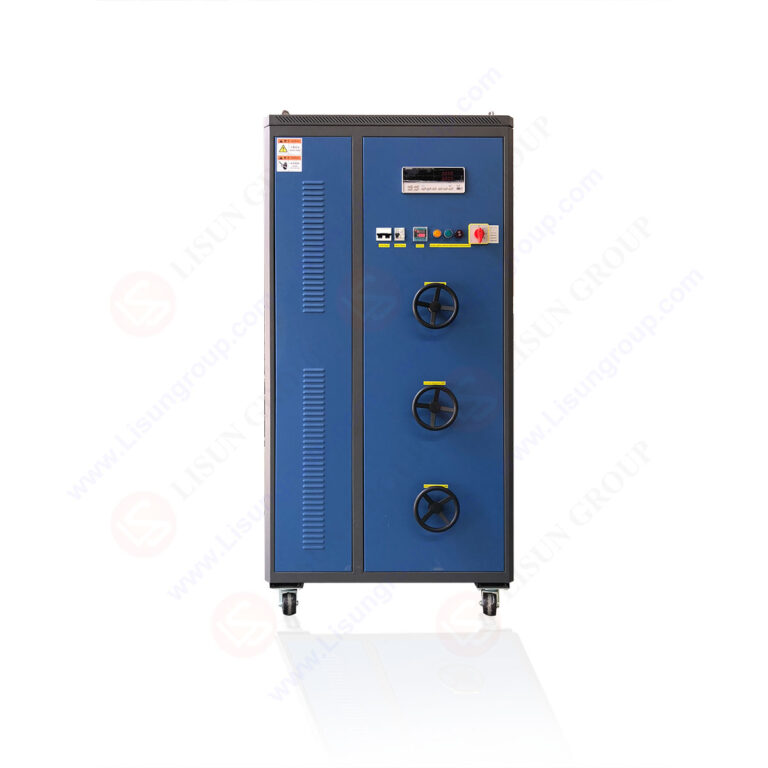



Title: The Critical Role of High-Quality Dust Ingress Testing Chambers in Indian Manufacturing and Quality Assurance
Abstract
The proliferation of sophisticated electronic and electromechanical systems across diverse industrial sectors has necessitated a rigorous focus on environmental reliability testing. Among these, dust ingress testing represents a fundamental evaluation of a product’s resilience against particulate contamination—a prevalent failure mode in many operational climates, including those found across the Indian subcontinent. This technical treatise examines the engineering principles, application imperatives, and selection criteria for high-performance dust test chambers within the Indian industrial context. A detailed analysis of a representative advanced system, the LISUN SC-015 Dust Sand Test Chamber, is provided to illustrate the integration of precise standards compliance, robust construction, and operational versatility required for contemporary quality validation protocols.
The Imperative for Particulate Ingress Protection in Indian Operational Environments
India’s geographical and industrial diversity presents a unique spectrum of particulate challenges, from fine silica dust in arid regions and construction sites to airborne fibers in textile manufacturing hubs and carbonaceous particulates in urban and industrial zones. For equipment deployed in such environments, the ingress of dust and sand can precipitate catastrophic failures through mechanisms including abrasive wear, electrical short-circuiting, connector interference, thermal insulation leading to overheating, and optical surface obscuration. Consequently, validating the integrity of enclosures as defined by the International Protection (IP) Code, specifically the IP5X and IP6X dust-tight ratings, transitions from a recommended practice to a non-negotiable requirement for product durability, safety, and market acceptance. The implementation of standardized, repeatable dust testing is therefore a cornerstone of design validation and production quality control for manufacturers targeting both domestic reliability and global export standards.
Fundamental Principles and Methodologies of Dust Ingress Testing
Dust testing chambers simulate concentrated particulate exposure under controlled laboratory conditions to accelerate and quantify failure modes. The core methodology, as prescribed by standards such as IEC 60529, GB/T 4208, and ISO 20653, involves the fluidization and circulation of standardized test dust within a sealed chamber. A key metric is the dust concentration, maintained within a specified range (typically 2 kg/m³ to 4 kg/m³) to ensure test severity. The test dust itself is precisely graded, often a mixture of silica sand or talcum powder with defined particle size distributions, commonly under 75 microns. The chamber creates a partial vacuum inside the test specimen, drawing dust-laden air towards potential ingress points. For IP5X (Dust Protected), a test duration of up to 8 hours is common, while IP6X (Dust Tight) requires a more prolonged exposure, often 8 hours or more, under a more significant vacuum differential. The post-test examination involves meticulous internal inspection for any trace of dust penetration, which constitutes a test failure for IP6X-rated devices.
Architectural and Functional Demands of Modern Dust Test Chambers
A high-quality dust chamber is an integrated system of several critical subsystems. The chamber body must be constructed from corrosion-resistant materials, such as stainless steel or powder-coated steel, with a seamless interior to prevent particulate accumulation and facilitate cleaning. A transparent viewing window, made of tempered glass or polycarbonate with effective wiper seals, is essential for real-time observation without interrupting the test environment. The dust circulation system is paramount; it typically employs a bottom-mounted fluidized bed or a mechanical blower system to maintain a homogeneous, turbulent cloud of dust throughout the chamber volume. Precise control of airflow, temperature, and humidity (if applicable) is managed by a programmable logic controller (PLC) or microprocessor-based interface. Safety interlocks, emergency stops, and dust filtration systems for operator protection and environmental control are mandatory features. The design must also accommodate a variety of test specimen sizes and shapes, often via adjustable shelves or custom fixtures, and include ports for electrical feed-throughs to power and monitor devices under test (DUTs) during the procedure.
Sector-Specific Applications and Failure Mode Analysis
The application of dust ingress testing spans virtually every sector manufacturing physical enclosures for sensitive components.
In Automotive Electronics and Aerospace and Aviation Components, connectors, sensors, and control units are tested against road dust and desert sand to prevent signal degradation and mechanical seizure. A failing steering angle sensor due to dust ingress, for instance, represents a critical safety hazard.
For Telecommunications Equipment and Industrial Control Systems deployed in outdoor or factory settings, dust can clog cooling fans, bridge high-voltage terminals, and degrade contact surfaces in relays and switches, leading to system downtime.
Lighting Fixtures, particularly high-bay industrial LEDs or outdoor streetlights, require IP6X ratings to maintain lumen output and prevent overheating caused by dust accumulation on heat sinks.
Medical Devices, such as portable diagnostic monitors or imaging equipment used in field hospitals, must remain fully operational in dusty environments, where contamination could also pose a biohazard risk.
Electrical Components like switches, sockets, and circuit breakers rely on dust-tight seals to prevent arcing and insulation breakdown, which are primary causes of electrical fires.
Household Appliances and Consumer Electronics, from air conditioners with external units to smartphones, are tested to ensure longevity and user safety against everyday domestic and environmental dust.
Analysis of the LISUN SC-015 Dust Sand Test Chamber: A Technical Benchmark
The LISUN SC-015 exemplifies the integration of rigorous standards compliance with user-centric design, making it a pertinent solution for Indian testing laboratories and manufacturing quality departments. Its architecture is engineered to facilitate precise, reproducible testing aligned with major international and national standards.
Key Specifications and Design Features:
- Test Volume: A standardized internal workspace sufficient for a range of product sizes.
- Dust Concentration: Controlled within the 2 kg/m³ to 4 kg/m³ range as per IEC 60529, using a calibrated talcum powder (circulated via a dedicated blower system).
- Sieve Mesh: Employs a metal wire sieve with a nominal mesh size of 75µm, ensuring correct particle size distribution.
- Airflow and Vacuum System: Incorporates a regulated vacuum pump and pressure relief valve to maintain the required pressure differential (up to 2 kPa or as per standard) inside the test specimen, driving the ingress mechanism.
- Construction: Features a stainless steel interior chamber for durability and easy decontamination, a large tempered glass observation window with internal wipers, and a robust outer casing.
- Control System: Utilizes an intuitive digital microcontroller for setting test duration (0-999 hours), monitoring chamber conditions, and automating the test cycle. Safety features include over-temperature protection and circuit breakers.
Testing Principle Implementation: The SC-015 operates by creating a homogeneous dust cloud within its sealed chamber. The Device Under Test (DUT), mounted inside, has its internal volume evacuated by the vacuum system to a pressure below atmospheric. This differential pressure forces the dust-laden air to attempt ingress through any available seals, gaskets, or orifices. The test continues for the programmed duration, after which the DUT is carefully extracted and inspected for any internal particulate presence.
Competitive Advantages in Context:
The SC-015’s advantages are multifaceted. Its adherence to multiple global standards (IEC, GB, ISO) ensures test reports are recognized in international supply chains, a critical factor for Indian exporters. The fully programmable logic allows for complex cyclic testing, simulating intermittent exposure and thermal cycling effects. The chamber’s construction quality minimizes downtime and maintenance, while its comprehensive safety suite protects both the operator and the often-expensive DUTs. For industries like Automotive Electronics and Aerospace, where component reliability is paramount, this level of controlled, auditable testing is indispensable for failure mode analysis and design iteration.
Standards Compliance and Certification: The Framework for Validation
The credibility of any dust ingress test is irrevocably tied to its adherence to published standards. In India, while the Bureau of Indian Standards (BIS) provides relevant guidelines, alignment with international norms is crucial for global market access. The IEC 60529 standard, “Degrees of protection provided by enclosures (IP Code),” is the global lingua franca for ingress protection testing. The LISUN SC-015 is explicitly designed to meet the dust testing clauses of this standard. Furthermore, compliance with ISO 20653 (Road vehicles – Degrees of protection) is vital for the automotive sector, while aerospace may reference specific DO-160 or MIL-STD test procedures. A high-quality chamber does not merely perform a test; it provides traceable, standards-based evidence that can be included in technical construction files for CE marking, UL certification, or other regulatory submissions, directly impacting a product’s time-to-market and compliance costs.
Selection Criteria and Operational Best Practices for Procurement
Selecting an appropriate dust chamber requires a systematic evaluation. Key criteria include the maximum physical dimensions and power requirements of the intended DUTs, the specific IP rating (5X or 6X) to be verified, and the required test standards. The chamber’s duty cycle, ease of dust loading and cleaning, and availability of local technical support and calibration services are critical operational considerations. Best practices mandate a controlled laboratory environment for the chamber itself, stable power supply, and trained personnel who follow strict procedures for specimen preparation, chamber operation, and post-test analysis. Regular calibration of the vacuum system, timer, and airflow sensors is essential to maintain the integrity of test results over time. Implementing a rigorous preventative maintenance schedule for the blower, filters, and seals ensures long-term reliability and repeatability of the testing apparatus.
Conclusion
The deployment of high-quality dust ingress test chambers represents a strategic investment in product reliability and brand integrity for Indian manufacturers. As products become more electronically dense and are deployed in increasingly harsh environments, the ability to empirically validate enclosure integrity against particulate contamination is a key differentiator. Systems like the LISUN SC-015 Dust Sand Test Chamber provide the technological foundation for this validation, embedding precise standards compliance, robust engineering, and operational reliability into the quality assurance workflow. By integrating such specialized testing equipment, industries from automotive and telecommunications to medical devices and consumer electronics can systematically mitigate failure risks, reduce warranty costs, and demonstrate a tangible commitment to product excellence in both domestic and international markets.
Frequently Asked Questions (FAQ)
Q1: What is the fundamental difference between an IP5X and an IP6X test, and can the same chamber perform both?
A1: The core difference lies in the test’s pass/fail criterion. IP5X (Dust Protected) allows a limited amount of dust ingress, provided it does not interfere with normal operation or safety. IP6X (Dust Tight) permits no ingress of dust whatsoever. The test method, involving dust concentration and vacuum differential, is similar but often more prolonged and stringent for IP6X. A competent chamber like the LISUN SC-015 is designed to be configured and programmed to meet the specific parameters required for both test levels, making it a versatile tool for comprehensive IP testing.
Q2: How often should the test dust be replaced, and what are the consequences of using degraded or non-compliant dust?
A2: Test dust should be replaced periodically, as defined by the chamber manufacturer’s guidelines and the volume of testing. Dust can absorb moisture, agglomerate, or break down over time, altering its particle size distribution and fluidization properties. Using non-compliant dust invalidates the test against the standard, as the specified particle size and concentration are critical controlled variables. Results would not be reproducible or recognized by certification bodies, rendering the test data useless for compliance purposes.
Q3: Can a device be powered and monitored functionally during a dust ingress test?
A3: Yes, and for many applications, this is a critical requirement. Functional monitoring allows engineers to observe not just physical ingress, but also performance degradation in real-time—such as a sensor drift, communication error, or thermal shutdown. High-quality chambers provide electrical feed-through ports or connectors that maintain the chamber’s seal while allowing cables to pass through to external power supplies and data loggers connected to the Device Under Test.
Q4: For a product like an automotive LED headlamp or an industrial connector, what constitutes a “failure” after an IP6X test?
A4: For an IP6X test, any visible accumulation of dust inside the enclosure, however minimal, constitutes a failure. The inspection post-test must be meticulous, often using magnifying lenses and controlled lighting. For the headlamp, dust on the reflector or lens interior would fail. For the connector, any dust on the pin or socket contacts would fail. The standard is binary: either dust-tight or not.
Q5: Is it necessary to control temperature and humidity inside a standard dust test chamber?
A5: Basic dust ingress tests per IEC 60529 do not mandate precise control of temperature and humidity within the chamber atmosphere, as the primary driver is the pressure differential. However, for more advanced combined environmental testing—simulating desert (hot/dry) or tropical (hot/humid) dusty environments—specialized chambers that integrate temperature, humidity, and dust cycling are required. These are used for more rigorous product validation, particularly in military, aerospace, and high-reliability automotive applications.