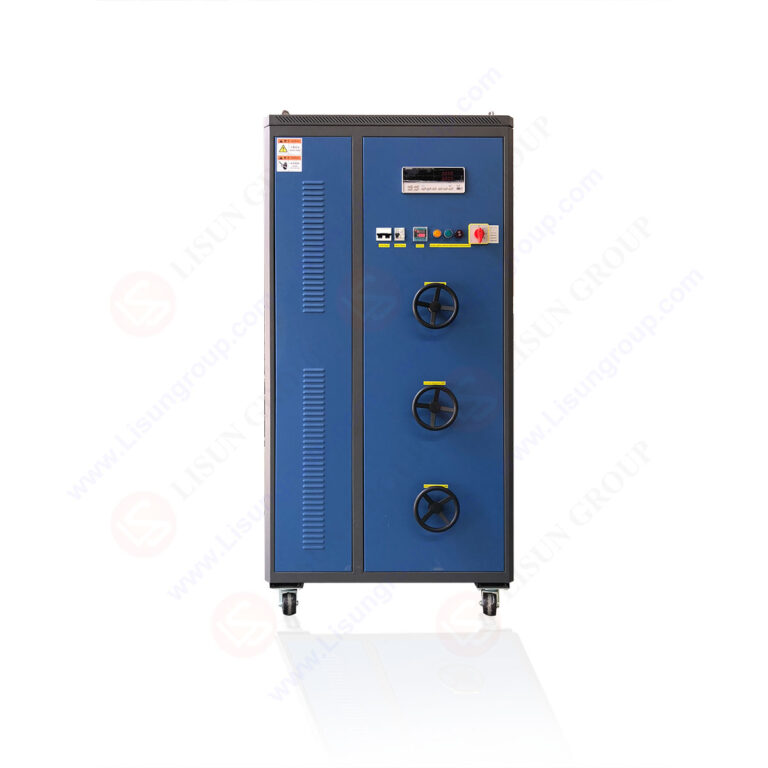



A Technical Framework for Selecting Salt Spray Chambers: Evaluating Key Features and Operational Benefits
Introduction to Accelerated Corrosion Testing
The assessment of material and component resistance to corrosive environments is a fundamental requirement across numerous manufacturing and engineering sectors. Salt spray (fog) testing, an accelerated corrosion test method, simulates and amplifies the degrading effects of saline atmospheres on surface coatings, base metals, and assembled products. The selection of an appropriate salt spray chamber is not a trivial exercise; it is a critical capital investment decision that directly influences test validity, repeatability, and compliance with international standards. This article provides a structured, technical analysis of the key features and benefits that must be evaluated during the selection process, with particular emphasis on chamber design, control systems, and adherence to standardized methodologies. The objective is to furnish engineers, quality assurance managers, and procurement specialists with a comprehensive framework for making an informed selection that aligns with specific testing protocols and long-term operational reliability.
Fundamental Principles and Governing Standards
Salt spray testing operates on the principle of creating a controlled corrosive environment within an enclosed chamber. A prepared saline solution—typically a 5% sodium chloride (NaCl) solution with a pH adjusted between 6.5 and 7.2 for neutral salt spray (NSS) tests—is atomized into a fine fog using compressed air. This fog settles uniformly onto test specimens positioned within the chamber at an angle specified by the relevant standard (commonly 15° to 30° from vertical). The test accelerates corrosion by maintaining constant temperature (usually 35°C ± 2°C for NSS) and high relative humidity (approaching 100%), providing a consistent, aggressive condition that allows for comparative evaluation of corrosion resistance.
Compliance with established international standards is non-negotiable for test validity. Key standards include:
- ASTM B117: Standard Practice for Operating Salt Spray (Fog) Apparatus
- ISO 9227: Corrosion tests in artificial atmospheres – Salt spray tests
- JIS Z 2371: Methods of salt spray testing
- IEC 60068-2-11: Environmental testing – Part 2-11: Tests – Test Ka: Salt mist
These standards meticulously define parameters for solution composition, chamber construction, temperature tolerances, fog collection rate, and specimen placement. A chamber’s design must inherently facilitate adherence to these rigorous specifications.
Critical Chamber Design and Construction Features
The physical construction of a salt spray chamber dictates its durability, safety, and ability to maintain a stable test environment. Primary materials of construction are paramount. Chambers fabricated from reinforced polymer composites, such as thick, fiber-reinforced Polypropylene (PP), offer superior resistance to the highly corrosive salt-laden atmosphere compared to metallic alternatives. This eliminates a primary failure mode—chamber body corrosion—which can contaminate tests and lead to premature equipment degradation. The interior should feature seamless, rounded corners to prevent salt accumulation and facilitate thorough cleaning, thereby minimizing cross-contamination between test cycles.
The atomization system is the core of the chamber’s function. It must generate a consistent, fine mist with droplet size and distribution conforming to standard specifications. A well-designed system employs a saturated tower (also known as a bubble tower) to heat and humidity the compressed air before it atomizes the salt solution. This prevents cooling of the solution during atomization, which is critical for maintaining precise chamber temperature. The fog dispersion should be engineered to ensure uniform distribution throughout the entire workspace, verified by standardized fog collection procedures.
Precision in Environmental Control and Monitoring
The value of a salt spray test lies in its repeatability and reproducibility. This is wholly dependent on the precision and stability of the chamber’s environmental controls. A microprocessor-based PID (Proportional-Integral-Derivative) controller is essential for maintaining chamber temperature within the narrow tolerances (±1°C to ±2°C) mandated by standards. The controller should manage both the chamber air temperature and, crucially, the temperature of the salt solution reservoir, as specified in methods like the CASS (Copper-Accelerated Acetic Acid Salt Spray) test.
Integrated data logging is a significant benefit, transitioning the chamber from a simple test appliance to a traceable instrument. The ability to automatically record temperature profiles over the entire test duration—often spanning hundreds or thousands of hours—provides an immutable audit trail for quality documentation and is frequently required for certification purposes. Advanced systems may offer remote monitoring capabilities via network connections, allowing for oversight without disturbing the test environment.
Operational Efficiency and Safety Considerations
Beyond core testing functions, features impacting daily operation and laboratory safety are critical for long-term usability. Chambers should incorporate large-capacity solution reservoirs to enable extended unattended operation, reducing technician intervention. Transparent, corrosion-resistant viewing windows with internal wipers allow for visual inspection of specimens without interrupting the test cycle or compromising the chamber environment.
Safety interlocks are mandatory. These include over-temperature protection to prevent damage to specimens or the chamber, low solution level alerts to prevent pump damage and test invalidation, and secure door locks that automatically halt the test when opened. Properly designed chambers also feature mist containment and neutralization systems in the exhaust path to prevent the release of corrosive salt fog into the laboratory environment, protecting other equipment and ensuring operator safety.
Application-Specific Considerations Across Industries
The selection criteria for a salt spray chamber must be informed by its intended application. Different industries and component types have varying requirements for test duration, standards compliance, and specimen configuration.
- Automotive Electronics & Aerospace Components: These sectors demand extreme reliability. Testing often follows stringent OEM specifications that may exceed basic ASTM B117, requiring chambers capable of modified cycles (e.g., humidity, drying, and salt spray phases) and precise control for tests like ASS (Acetic Acid Salt Spray) for decorative coatings or anodized layers on avionics housings.
- Electrical & Electronic Equipment, Telecommunications: For printed circuit board (PCB) assemblies, connectors, switches, and sockets, testing evaluates the effectiveness of conformal coatings and the corrosion resistance of plated contacts. Chambers must accommodate racks for high-density loading of small components.
- Lighting Fixtures & Outdoor Enclosures: Luminaires for street lighting or industrial floodlights are subjected to prolonged salt spray exposure to validate gasket integrity, housing coatings, and the corrosion resistance of heat sinks and mounting hardware.
- Medical Devices & Industrial Control Systems: Devices used in coastal or sterile environments require validation of material biocompatibility post-corrosion and the functionality of sealed enclosures protecting sensitive control electronics.
Analysis of the LISUN YWX/Q-010 Series Salt Spray Chamber
To contextualize the aforementioned selection criteria, we examine the LISUN YWX/Q-010 salt spray test chamber as a representative model engineered to meet these technical demands. This chamber is designed for rigorous neutral (NSS), acid (AASS), and copper-accelerated (CASS) salt spray tests.
Construction and Design: The chamber body is constructed from fiber-reinforced rigid Polypropylene (PP) plate, welded with German hot-air welding technology to ensure seam integrity and long-term resistance to deformation and corrosion under constant 35°C–50°C operation. The interior is seamless with rounded transitions to prevent salt accumulation.
Control and Monitoring System: It employs a digital PID temperature controller managing both chamber air and solution bath temperature via separate heaters. The system provides real-time display and logging of temperature data, a critical feature for audit compliance. The saturated tower air supply system ensures the compressed air is heated and humidified prior to atomization, maintaining solution concentration and chamber temperature stability.
Key Specifications and Testing Principle: The atomization system uses a pneumatic nozzle to create a consistent salt fog. The chamber operates within a temperature range of ambient +5°C to +55°C, with a uniformity of ≤2°C, directly supporting standards like ASTM B117 and ISO 9227. The principle of operation involves precise thermostatic control of the air-saturated tower and the test zone, ensuring the atomized salt solution is delivered under strictly controlled conditions of temperature and humidity.
Industry Use Cases and Competitive Advantages: For a manufacturer of automotive electronic control units (ECUs), the YWX/Q-010’s precise temperature control and data logging provide the traceability required for IATF 16949 quality documentation. A producer of marine-grade lighting fixtures benefits from its robust PP construction, which withstands continuous testing cycles without chamber degradation. Its compliance with multiple international standards makes it a versatile tool for a contract testing laboratory serving diverse clients from the consumer electronics and telecommunications sectors. Competitive advantages often cited include the corrosion-proof construction eliminating a key point of failure, the precision of the saturated tower atomization system for test consistency, and the integrated data recording functionality that elevates it above basic chambers.
Integrating Test Chambers into Quality Assurance Programs
The ultimate value of a salt spray chamber is realized through its integration into a formal quality assurance or research and development program. Selection must consider not only the initial purchase but also the total cost of ownership, which includes calibration requirements, maintenance ease, and availability of service support. Chambers should be calibrated periodically for temperature uniformity and fog collection rate. Features like large access doors, strategically placed drain valves, and accessible component layouts significantly reduce maintenance downtime.
The data generated must be actionable. Corrosion assessment is typically performed post-test using rating systems defined in standards such as ISO 10289 (method for rating of test specimens). The correlation between accelerated test hours and real-world service life is complex and material-dependent, but the chamber’s role is to provide a controlled, repeatable baseline for comparative analysis between material lots, coating formulations, or manufacturing processes.
Conclusion
Selecting a salt spray chamber is a technical decision with direct implications for product quality, durability claims, and regulatory compliance. A methodical evaluation focusing on corrosion-resistant construction, precision environmental control, adherence to standards, and operational safety will yield a capital asset that delivers reliable, repeatable data for years. By prioritizing these engineering fundamentals over initial cost alone, organizations can ensure their accelerated corrosion testing program serves as a robust pillar of their overall quality management strategy, ultimately contributing to enhanced product reliability in demanding environments across the electrical, electronic, automotive, and industrial sectors.
Frequently Asked Questions (FAQ)
Q1: What is the purpose of the saturated tower (bubble tower) in a salt spray chamber?
A: The saturated tower pre-heats and humidifies the compressed air used for atomization before it contacts the salt solution. This prevents cooling and evaporation of the solution at the nozzle, which would alter its concentration and lower the chamber temperature, thereby violating the strict thermostatic conditions required by standards like ASTM B117. It is essential for maintaining a consistent fog composition and temperature stability.
Q2: How often does a salt spray chamber like the YWX/Q-010 require calibration, and what is calibrated?
A: Calibration intervals are typically annual, though they may be dictated by internal quality procedures or accreditation requirements (e.g., ISO/IEC 17025). Key parameters for calibration include chamber temperature uniformity and stability across the workspace, the temperature of the salt solution reservoir, and the fog collection rate (which must be 1.0 to 2.0 ml/hour per 80cm² as per ASTM B117).
Q3: Can a standard neutral salt spray (NSS) chamber be used for Acidic Salt Spray (AASS) tests?
A: A chamber must be specifically designed and constructed from materials resistant to acetic acid to perform AASS tests reliably. While the basic mechanics may be similar, the acidic solution is more aggressive. Chambers like the YWX/Q-010, which are advertised for NSS, AASS, and CASS tests, use construction materials (e.g., specific polymers) and components (e.g., acid-resistant nozzles) compatible with all three test types.
Q4: What is the significance of data logging in salt spray testing?
A: Data logging provides a continuous, timestamped record of the chamber’s temperature throughout the entire test duration. This is critical for proving that the test was conducted within the specified tolerance ranges without interruption or deviation. This electronic record is indispensable for quality audits, failure analysis, and meeting the traceability requirements of many automotive, aerospace, and medical device standards.
Q5: How should test specimens be prepared and placed in the chamber?
A: Specimen preparation is defined by the relevant product standard but generally involves thorough cleaning to remove contaminants. Specimens are then placed on non-conductive, inert racks at an angle (usually 15°–30°) to ensure consistent fog settlement and prevent pooling of solution. They must not contact each other or metallic parts, and should be arranged to allow free flow of fog around all surfaces. The specific orientation is often critical to the test’s intent.