


The Critical Role of Thermal Shock Chambers in Accelerating Product Reliability and Failure Analysis
In the relentless pursuit of product durability and operational integrity across high-stakes industries, environmental stress screening (ESS) stands as a non-negotiable phase of the engineering lifecycle. Among the suite of tools employed for this purpose, the thermal shock test chamber represents a particularly severe and revealing methodology. Unlike gradual temperature cycling, thermal shock testing subjects components and assemblies to extreme, rapid transitions between hot and cold extremes. This process deliberately accelerates the thermo-mechanical stresses that products may encounter over years of service, compressing time-to-failure and exposing latent defects that other tests might miss. The benefits of employing such rigorous validation extend far beyond simple pass/fail metrics, influencing design philosophy, supply chain quality, warranty cost reduction, and ultimately, brand reputation in markets where failure is not an option.
Fundamental Principles of Thermal Shock Testing and Failure Mechanisms
Thermal shock testing operates on the foundational principles of differential thermal expansion and contraction. When an assembly composed of multiple materials with dissimilar coefficients of thermal expansion (CTE) is subjected to a rapid temperature change, these materials expand or contract at different rates. This mismatch induces significant shear and tensile stresses at material interfaces—solder joints, bonded seams, encapsulated units, and layered substrates. Repeated cycling leads to fatigue, culminating in failure modes such as solder joint cracking, delamination of printed circuit boards (PCBs), wire bond failure, seal breaches, and ceramic substrate fracturing.
The test’s efficacy lies in its two-chamber or lift-basket methodology. A device under test (DUT) is rapidly transferred between independently controlled hot and cold zones, achieving transition rates that can exceed 30°C per minute, far surpassing the capabilities of single-chamber temperature cycling systems. This rapid transition is critical; it prevents stress relaxation and ensures the maximum CTE mismatch stress is applied, effectively simulating real-world scenarios like a consumer electronic device being moved from a frozen car interior to a warm household, or an aerospace avionic module experiencing rapid altitude-related temperature shifts.
Quantifying Reliability: The Acceleration of Failure and MTBF Projections
A primary, calculable benefit of thermal shock testing is its role in quantifying and projecting product reliability metrics, such as Mean Time Between Failures (MTBF). By applying the Coffin-Manson or similar fatigue models, engineers can correlate the number of thermal shock cycles to equivalent field life. For instance, a single thermal shock cycle from -55°C to +125°C might equate to hundreds or thousands of less severe temperature fluctuations experienced in normal operation. This acceleration factor allows for the extrapolation of long-term reliability from relatively short, albeit intense, laboratory testing.
This data is indispensable for industries like Automotive Electronics and Aerospace and Aviation Components, where product lifetimes are measured in decades and operational environments are exceptionally harsh. A robust thermal shock test regimen provides empirical data to support reliability predictions, inform maintenance schedules, and justify component derating decisions. It transforms reliability from a theoretical goal into a statistically supported characteristic.
Uncovering Latent Defects in Manufacturing and Assembly Processes
Perhaps the most immediate industrial benefit is the chamber’s ability to act as a quality gate, uncovering process-induced defects before products leave the factory. Electrical Components such as switches, relays, and socket connectors are particularly susceptible to flaws introduced during molding, soldering, or plating. A thermal shock test will rapidly exacerbate weaknesses like micro-cracks in plastic housings, poor solder wetting, or insufficient conformal coating, causing early-life failures that would otherwise manifest in the field as intermittent faults or total breakdowns.
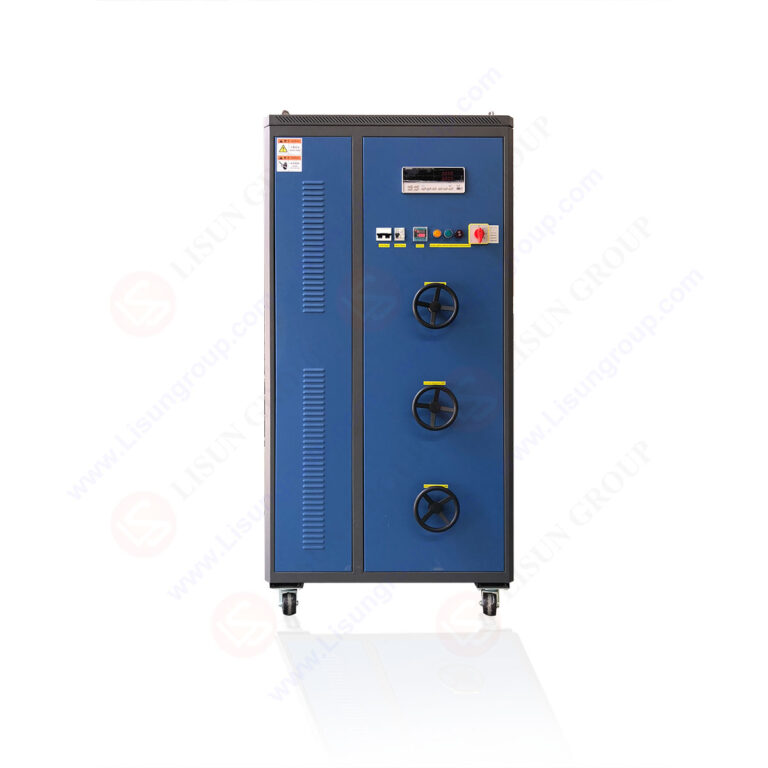
For Medical Devices and Telecommunications Equipment, where field failures can have critical consequences, this screening is paramount. A HLST-500D Thermal Shock Test Chamber, with its precise temperature extremes and rapid transfer time, is engineered specifically for this task. Its vertical lifting basket system ensures consistent, repeatable transfer of test specimens between chambers. By subjecting batches of production units to a defined number of cycles—a practice known as Highly Accelerated Stress Screening (HASS)—manufacturers can weed out the statistical “outliers” with latent defects, significantly improving the shipped product quality and reducing the potential for costly recalls or liability issues.
Validating Material Compatibility and Interface Integrity
The selection of materials in modern Electrical and Electronic Equipment is a complex compromise between electrical performance, mechanical strength, cost, and manufacturability. Thermal shock testing serves as the ultimate arbiter of these choices, particularly at material interfaces. It validates the long-term compatibility of adhesives used in Lighting Fixture assembly, the bond between silicone seals and metal casings in Industrial Control Systems, and the integrity of potted modules in under-hood Automotive Electronics.
A failure in any of these interfaces during testing is not merely a test failure; it is a vital piece of engineering data. It prompts a redesign—perhaps selecting an adhesive with a more flexible cured state or a sealant with a better-matched CTE. This iterative feedback loop between test and design, facilitated by the unforgiving environment of the thermal shock chamber, leads to more robust products. The HLST-500D, for example, with its broad temperature range (commonly -65°C to +150°C, depending on configuration), can stress these interfaces across the full spectrum of potential service environments, from arctic to desert conditions.
Ensuring Performance Under Extreme Operational Transients
Certain applications are defined by their extreme operational transients. Aerospace and Aviation Components must function after exposure to the cold soak of high altitude followed by the thermal load of high-power operation during landing. Consumer Electronics, like smartphones left in a car, face similar, if less severe, challenges. Thermal shock testing directly replicates these conditions in a controlled, measurable, and repeatable way.
Compliance with international standards is a key driver here. Standards such as MIL-STD-883 (Method 1010.9), IEC 60068-2-14, and JESD22-A104B define specific thermal shock test profiles. Utilizing a chamber like the HLST-500D, which is designed to meet these rigorous specifications, ensures that test results are recognized and accepted by regulatory bodies and major clients globally. Its features—including precise temperature control, low deviation, and a programmable controller with multi-segment profile editing—allow engineers to not only meet but tailor these standards to their specific product’s threat profile.
Case Study: The HLST-500D in Automotive Semiconductor Validation
Consider the validation of a power management integrated circuit (PMIC) for an electric vehicle. This component is housed in a QFN package soldered to a PCB, located near the vehicle’s battery pack. It may experience rapid warming from high current flow after a cold start. A tailored test profile on an HLST-500D Thermal Shock Test Chamber could involve cycling between -40°C (simulating a cold winter night) and +125°C (simulating junction temperature under peak load) with dwell times sufficient for thermal stabilization and a transfer time of less than 15 seconds.
After 500 cycles, cross-sectional analysis of failed units might reveal solder crack propagation from the package corners—a classic thermo-mechanical fatigue failure. This finding would directly inform design improvements: perhaps a switch to a more fatigue-resistant solder alloy, a modification of the PCB pad design, or an adjustment of the stencil aperture to increase solder joint volume. The chamber’s role transitions from a simple quality check to an integral part of the design-for-reliability (DfR) process.
Economic Impact: Reducing Warranty Costs and Enhancing Brand Equity
The financial implications of comprehensive thermal shock testing are profound. The cost of a field failure—encompassing warranty repair, logistics, customer service, and potential liability—often dwarfs the manufacturing cost of the unit itself. In sectors like Household Appliances and Office Equipment, a single widespread failure mode can trigger a brand-damaging recall. By investing in pre-emptive stress screening, companies effectively shift failure discovery from the field to the laboratory, where the cost of analysis and remediation is a fraction of that in the field.
This proactive approach directly strengthens brand equity. A reputation for reliability, proven through adherence to stringent testing protocols, becomes a powerful market differentiator, especially in crowded segments like Consumer Electronics and Electrical Components. It allows manufacturers to command price premiums, secure partnerships with tier-1 integrators, and reduce the total cost of ownership for their end customers.
Conclusion: An Indispensable Tool in the Modern Engineering Arsenal
The thermal shock test chamber is far more than a simple compliance tool. It is a catalyst for engineering insight, a gatekeeper for manufacturing quality, and a predictor of field performance. Its ability to rapidly induce and reveal failure mechanisms related to thermal stress provides invaluable data that drives material science, design innovation, and process control. As products continue to evolve, incorporating ever-more complex material systems and facing increasingly demanding operational environments, the role of precise, reliable thermal shock testing, as exemplified by instruments like the HLST-500D, will only grow in significance. It remains an indispensable investment for any organization committed to delivering durable, reliable, and safe products across the technological landscape.
FAQ: Thermal Shock Testing and the HLST-500D Chamber
Q1: What is the primary difference between temperature cycling and thermal shock testing?
A1: The key distinction lies in the rate of temperature transition. Temperature cycling typically involves slower, controlled ramps within a single chamber. Thermal shock testing utilizes two chambers (or a single chamber with a dual-zone basket system) to achieve near-instantaneous transfer between extreme high and low temperature set points, creating a much more severe rate of change that better simulates abrupt environmental shifts.
Q2: For the HLST-500D, what factors determine the required dwell time at each temperature extreme?
A2: Dwell time is not arbitrary; it is determined by the thermal mass of the device under test (DUT). The dwell must be sufficient for the entire DUT, not just its surface or the chamber air, to stabilize at the target temperature. This is often defined as the point where the DUT’s internal monitoring thermocouple reaches the set point and remains stable for a specified duration, ensuring the full thermal stress is applied. Standards like IEC 60068-2-14 provide guidance on stabilization criteria.
Q3: Can the HLST-500D be used for testing products that generate their own heat during operation?
A3: Standard thermal shock testing typically involves passive, non-operational units. Testing active, power-dissipating units introduces significant complexity, as the self-heating interacts with the chamber’s temperature profile. While the HLST-500D provides the temperature extremes, specialized fixturing and monitoring are required for active testing. The test profile would need to account for both the chamber environment and the device’s operational thermal cycle.
Q4: How does the vertical lift-basket design of the HLST-500D compare to a horizontal transfer system?
A4: The vertical lift-basket design offers several advantages. It generally provides a faster, more consistent mechanical transfer, minimizing the time the sample spends in transition (a critical parameter). It also often requires less floor space than a horizontal three-chamber layout. The vertical motion can be more reliable over long-term, high-cycle operation, with reduced risk of jamming or misalignment compared to some horizontal shuttle systems.
Q5: What industries most commonly require compliance with the MIL-STD-810 thermal shock test method?
A5: The MIL-STD-810 series is predominantly mandated for equipment designed for military applications. However, its rigorous profiles have been widely adopted as a benchmark for high-reliability sectors, including Aerospace and Aviation Components, certain Telecommunications Equipment (especially for field-deployed infrastructure), and Industrial Control Systems destined for extreme environments like oil rigs or mining operations. Compliance signals a product’s ability to withstand severe environmental stress.