


Understanding the IP65 Weatherproof Rating: A Technical Analysis of Ingress Protection for Electronic Enclosures
Introduction to Ingress Protection (IP) Codes
The Ingress Protection (IP) rating system, defined by the International Electrotechnical Commission standard IEC 60529, provides a standardized and internationally recognized classification for the degree of protection offered by mechanical casings and electrical enclosures against the intrusion of solid foreign objects, dust, accidental contact, and water. This codification is critical for engineers, specifiers, and end-users across a multitude of industries, as it delivers a concise, technical descriptor of an enclosure’s environmental resilience. The system employs a two-digit code following the prefix “IP,” where each digit conveys specific, tested protections. The first digit, ranging from 0 to 6, denotes protection against solid particle ingress. The second digit, ranging from 0 to 9K, quantifies protection against liquids, primarily water. A thorough comprehension of these ratings, particularly the widely specified IP65, is fundamental to ensuring product reliability, safety, and longevity in demanding operational environments.
Deciphering the IP65 Specification: Solid and Liquid Ingress Defined
An IP65 rating comprises two distinct but equally important protective assurances. The first numeral, ‘6’, represents the highest level of protection against solid objects. According to IEC 60529, a rating of 6 indicates “Dust tight.” This signifies that the enclosure undergoes testing where fine talcum powder is circulated in a dust chamber for 8 hours under a partial vacuum. No ingress of dust is permitted in a quantity that would interfere with satisfactory operation of the equipment or impair safety. This is a complete barrier against particulate matter, making it suitable for environments with high dust concentrations, such as workshops, agricultural settings, or construction sites.
The second numeral, ‘5’, defines protection against water projected by a nozzle from any direction. The test specification calls for a 6.3mm nozzle delivering a water flow rate of 12.5 litres per minute ±5% at a pressure of approximately 30 kPa at a distance of 3 meters. The test duration is a minimum of 3 minutes per square meter of the enclosure surface for at least 15 minutes total. Crucially, an IP65 rating provides protection against low-pressure water jets but does not guarantee functionality during immersion, high-pressure/steam cleaning (which typically requires IP66 or IP69K), or prolonged exposure to condensing humidity. It is the benchmark for outdoor equipment expected to withstand rain and temporary water spray.
The Imperative of Validated IP Testing: Beyond Theoretical Compliance
A manufacturer’s claim of an IP65 rating holds little technical or legal weight without empirical, third-party-verified testing. Self-certification, while common, introduces risks of inconsistent methodology, misinterpretation of standards, and unintentional oversight. Consequently, the use of specialized, calibrated test equipment within accredited laboratories is the de facto method for establishing compliance and generating defensible technical documentation. The testing process must simulate the exact conditions stipulated in IEC 60529, requiring precise control over environmental variables such as dust density, air pressure, water flow, pressure, nozzle distance, and exposure time. This rigorous validation is not merely a regulatory hurdle; it is a fundamental component of product development, risk mitigation, and quality assurance. It directly informs design choices regarding gasket materials, seal geometries, fastener types and spacing, and overall structural integrity.
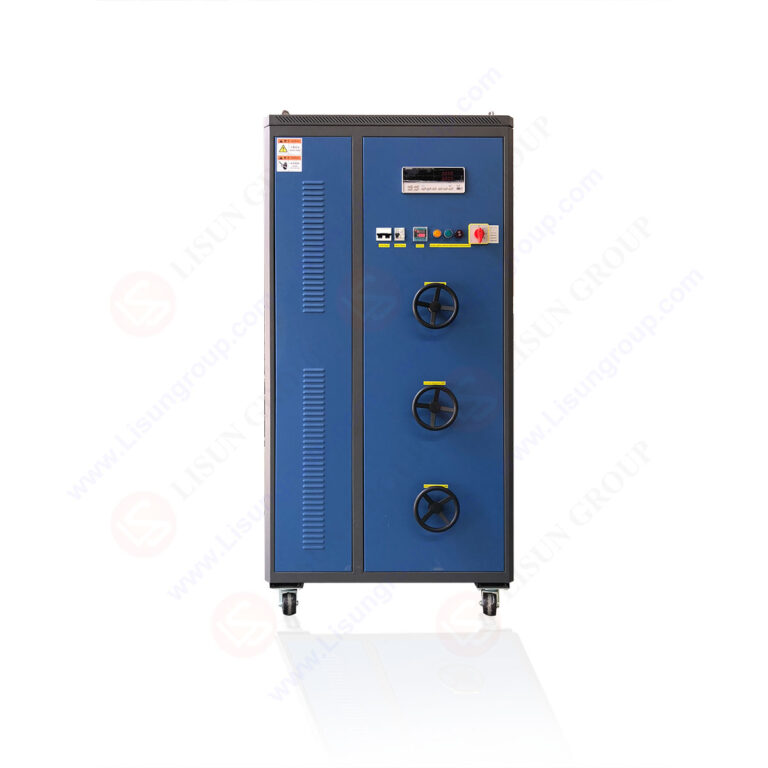
LISUN JL-XC Series: A System for Comprehensive Waterproof Testing
To meet the stringent demands of IP code verification, specialized instrumentation is required. The LISUN JL-XC Series Waterproof Test Equipment is engineered specifically for the accurate and repeatable testing of the second digit of the IP code (IPX5 to IPX9K). This integrated test system is designed to validate compliance with IEC 60529, as well as related standards including ISO 20653 (road vehicles) and GB 4208.
The core principle of the JL-XC Series involves the precise generation and control of water jets to the exact parameters mandated by the standard. The system typically comprises a high-precision pressure-regulated water supply system, a suite of interchangeable standard-compliant nozzles (e.g., 6.3mm for IPX5, 12.5mm for IPX6), a programmable turntable to rotate the device under test (DUT), and an enclosed test chamber with safety interlocks. The integration of a programmable logic controller (PLC) and human-machine interface (HMI) allows for the automated execution of test protocols, including control of water pressure, flow rate, test duration, and turntable rotation speed. This automation minimizes operator error and ensures each test is a perfect replica of the last, providing auditable and comparable results.
Specifications and Competitive Advantages: The JL-XC Series distinguishes itself through several key technical features. Its closed-loop pressure control system maintains water pressure within a tolerance of ±5%, a critical factor for test validity. The use of corrosion-resistant stainless steel and engineered polymers in fluid path components ensures long-term durability and prevents contamination. The system’s modular design allows for configuration to specific IPX ratings (e.g., a dedicated IPX5/X6 cabinet or a comprehensive IPX5-X9K system), providing scalability for laboratories with evolving needs. Furthermore, LISUN’s implementation includes detailed data logging capabilities, recording all test parameters and system status in real-time, which is invaluable for generating certified test reports and for forensic analysis in the event of a test failure.
Industry Applications of IP65 and the Role of Verification Testing
The IP65 rating finds critical application across a diverse spectrum of industries where equipment must operate reliably in the presence of dust and water spray.
- Electrical and Electronic Equipment & Industrial Control Systems: Outdoor control panels, motor drives, PLC housings, and sensor enclosures in manufacturing or processing plants require IP65 to prevent conductive dust from causing short circuits and to protect against wash-down procedures or incidental moisture.
- Lighting Fixtures: Outdoor luminaires for street lighting, architectural facades, and industrial high-bay lighting are almost universally rated IP65 or higher to ensure performance in all weather conditions and to prevent internal condensation.
- Automotive Electronics: While passenger compartments may use lower IP ratings, components in the engine bay, underbody, or external modules (e.g., LED headlights, environmental sensors, charging ports for electric vehicles) frequently mandate IP65 or IP67 to handle road spray, dust, and cleaning.
- Telecommunications Equipment: External antennas, base station modules, and junction boxes mounted on poles or rooftops rely on IP65 sealing to maintain signal integrity and prevent corrosion from rain and airborne contaminants.
- Household Appliances and Consumer Electronics: Kitchen appliances used near sinks, outdoor speakers, garden power tools, and drones designed for all-weather use incorporate IP65-rated elements to enhance durability and user safety.
- Medical Devices and Aerospace Components: While often requiring more specialized environmental testing (e.g., for sterilization or altitude), portable medical devices used in field settings or certain non-critical aerospace avionics housings may specify IP65 to guarantee resilience against contamination and incidental fluids.
In each case, the use of equipment like the LISUN JL-XC Series to validate the IP65 claim is a non-negotiable step in the product lifecycle. It provides the empirical evidence needed for regulatory submissions (e.g., CE, UL marks), reduces warranty claims due to environmental failure, and builds brand reputation for reliability.
Interpreting Test Results and the Limits of IP65
A successful IP65 test, verified by equipment such as the JL-XC Series, confirms that the enclosure survived the specific dust and water jet tests without harmful ingress. However, technical stakeholders must understand the rating’s boundaries. IP65 is not equivalent to corrosion resistance; a stainless steel IP65 enclosure will behave differently from a coated aluminum one in a saline environment. It does not account for UV degradation, thermal cycling, or mechanical impact (which is covered by a separate IK code). Perhaps most importantly, IP65 is a static test. It does not evaluate performance during or after thermal cycling, which can cause gaskets to compress and relax, potentially breaking the seal. Therefore, while a vital indicator, the IP rating should be one component in a broader suite of environmental stress screenings tailored to the product’s anticipated lifecycle.
Conclusion: IP65 as a Cornerstone of Design Assurance
The IP65 rating represents a precise, standardized benchmark for dust-tight and low-pressure water jet protection. Its importance in product design, specification, and procurement cannot be overstated for industries operating outside controlled indoor environments. However, the integrity of this rating is wholly dependent on the accuracy and repeatability of the testing process. Precision-engineered test systems, exemplified by the LISUN JL-XC Series, transform the IP code from a marketing term into a quantifiable, reliable, and defensible engineering characteristic. By investing in rigorous, standards-compliant verification, manufacturers safeguard product performance, ensure user safety, comply with international regulations, and ultimately deliver on the promise of durability that the IP65 rating signifies.
Frequently Asked Questions (FAQ)
Q1: Can a product certified as IP65 also be considered suitable for temporary immersion, such as a puddle?
A: No. The IP65 rating specifically tests for protection against water jets, not immersion. Temporary immersion is covered by ratings IPX7 (immersion up to 1m for 30 minutes) and IPX8 (continuous immersion as specified by the manufacturer). An IP65-rated product may or may not survive immersion; such performance would require separate testing and certification.
Q2: How often should a manufacturer re-test products to ensure ongoing IP65 compliance?
A: Re-testing should be conducted as part of a formal quality management process. Key triggers include: after any design change affecting the sealing system (gaskets, housings, fasteners), as a sampling check during ongoing production (e.g., quarterly or annually), and in response to the change of a critical component supplier. The frequency should be risk-based and documented in the quality plan.
Q3: What is the most common point of failure during an IPX5/IPX6 water jet test, and how can it be addressed in design?
A: The most prevalent failure points are at seal interfaces and fastener penetrations. This includes gasket joints that are improperly compressed, seams in molded housings, cable glands, and buttons/membranes. Design mitigation involves finite element analysis to ensure even gasket compression, specifying over-molded or ultrasonically welded seams, using properly rated cable glands, and implementing dual-seal designs for critical interfaces.
Q4: In the context of the LISUN JL-XC Series, what is meant by “programmable turntable” and why is it necessary?
A: The programmable turntable rotates the Device Under Test (DUT) at a controlled, slow speed during the water spray test. This is mandated by IEC 60529 to ensure the water jet impinges on all potential surfaces of the enclosure from the specified distance. Automation ensures consistent, repeatable exposure, eliminating the variability and safety concerns associated with manual spraying.
Q5: Does achieving an IP65 rating require the product to be fully sealed with no vents?
A: Not necessarily. While a completely sealed enclosure is one solution, it can lead to issues with pressure equalization and condensation. An alternative is to use hydrophobic vents or Gore-Tex® membranes. These micro-porous membranes allow air to pass for pressure equalization while blocking liquid water and particles, and they can be part of a design that successfully achieves an IP65 rating when integrated correctly.