


Corrosion Testing Chambers: A Technical Analysis of Features, Methodologies, and Cross-Industry Applications
Introduction to Accelerated Corrosion Evaluation
The degradation of materials through electrochemical or chemical reaction with their environment represents a fundamental challenge across manufacturing and engineering disciplines. Corrosion, in its myriad forms, compromises structural integrity, diminishes functional performance, and precipitates premature product failure, incurring significant economic and safety costs. To preemptively assess and mitigate these risks, accelerated corrosion testing within controlled laboratory chambers has become an indispensable component of material science, quality assurance, and product development protocols. These chambers simulate and intensify environmental stressors, enabling the reliable prediction of long-term material behavior and protective coating efficacy within a condensed timeframe. This technical analysis delineates the core features, operational principles, and specific applications of modern corrosion testing chambers, with particular emphasis on standardized salt spray (fog) testing as implemented in advanced instrumentation.
Fundamental Operational Principles and Chamber Architectures
At its core, a corrosion testing chamber creates a precisely controlled, aggressive environment to accelerate the corrosion processes that would occur naturally over extended periods. The most prevalent methodology, standardized under ASTM B117, ISO 9227, and JIS Z 2371, is the neutral salt spray (NSS) test. This technique involves the atomization of a 5% sodium chloride solution into a fine, settled fog within an enclosed chamber maintained at a constant elevated temperature, typically 35°C ± 2°C. The chamber architecture is engineered to ensure uniformity and reproducibility. A reservoir holds the test solution, which is fed to a compressed-air-driven atomizer. The compressed air is preconditioned through saturation and heating to prevent cooling of the fog and to maintain consistent solution concentration. The chamber workspace, constructed from chemically inert materials such as polypropylene or fiber-reinforced plastic, houses test specimens on non-conductive racks, angled to permit uniform condensate settlement.
More sophisticated chambers incorporate capabilities for Cyclic Corrosion Testing (CCT), which more accurately simulates real-world conditions by programming sequences of salt spray, humidity, drying, and static immersion phases. This cyclic approach often yields superior correlation to field performance compared to traditional continuous salt spray, as it replicates the wet/dry transitions that drive corrosion propagation. Chamber control systems have evolved from simple analog controllers to fully digital, programmable logic controllers (PLCs) with touch-screen interfaces, allowing for complex multi-phase test profiles, real-time monitoring of temperature, humidity, and solution pH, and data logging for audit trails.
Critical Technical Specifications and Performance Metrics
The validity of accelerated corrosion testing is contingent upon the chamber’s ability to maintain stringent environmental parameters. Key performance metrics include temperature uniformity, fog settlement rate, and solution chemistry consistency. Temperature stability across the entire workspace is paramount; a deviation exceeding ±2°C can significantly alter corrosion kinetics and produce non-representative results. Advanced chambers employ strategically placed heating elements and forced air circulation systems to minimize thermal gradients.
The fog settlement rate, measured in milliliters per hour per 80 square centimeters of horizontal collection area, must adhere to the 1.0 to 2.0 ml/hr range specified in standards. This is regulated by the atomizer nozzle design, air pressure, and saturation tower efficiency. Furthermore, the pH of the collected solution must remain within a narrow band (6.5 to 7.2 for NSS tests) to ensure test neutrality; automated pH monitoring and adjustment systems are now integrated into high-end models. Chamber construction materials must exhibit exceptional resistance to thermal deformation and chemical attack to ensure long-term integrity and prevent contamination of the test environment.
The YWX/Q-010 Series: A Case Study in Precision Salt Spray Testing
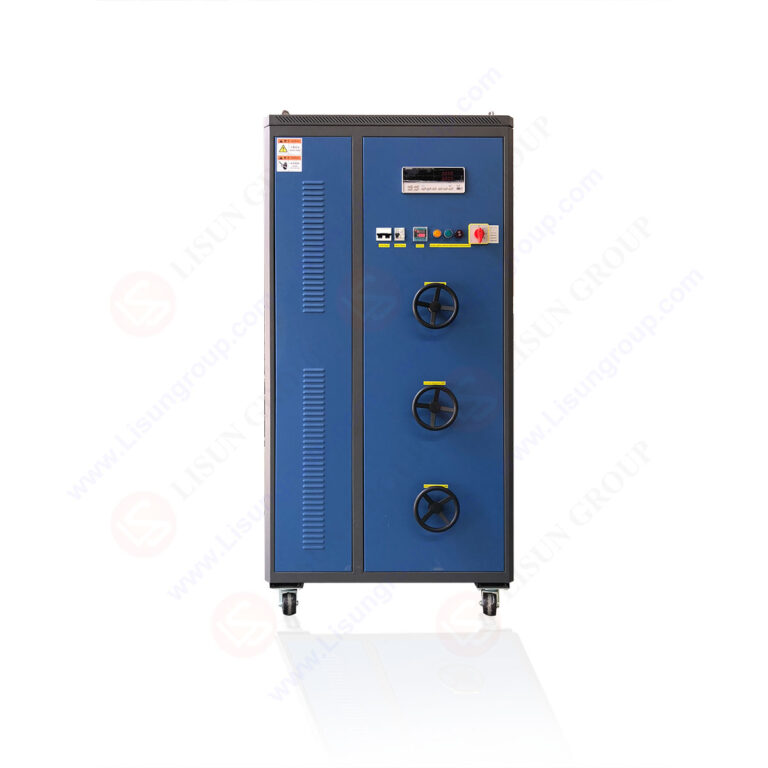
The LISUN YWX/Q-010 salt spray test chamber exemplifies the integration of these critical technical specifications into a robust testing platform. Designed for compliance with ASTM B117, ISO 9227, and analogous standards, this chamber is engineered for reliability and repeatability in quality control and research applications.
Key Specifications and Design Features:
- Test Chamber Volume: 108 liters, providing ample workspace for a variety of component sizes.
- Temperature Range: Ambient to +55°C, with a controlled NSS test temperature of 35°C ± 1°C.
- Temperature Uniformity: ≤ ±2°C, ensuring consistent exposure conditions for all specimens.
- Fog Settlement Rate: Adjustable between 1.0 to 2.0 ml/80cm²/h, compliant with international standards.
- Construction: The interior chamber is fabricated from imported polypropylene plate, offering superior corrosion resistance and thermal insulation. The outer housing utilizes powder-coated steel for structural durability.
- Control System: A digital PID controller manages temperature with high precision, while a transparent canopy allows for visual inspection without disturbing the test environment. The integrated air saturator (Beckman column) heats and humidifies compressed air to maintain solution concentration.
Testing Principle: The YWX/Q-010 operates on the standardized neutral salt spray principle. A 5% NaCl solution is pressurized and delivered to a spray nozzle located within the saturation tower. The compressed air, heated and humidified in the saturator, atomizes the solution, producing a dense, settled fog that uniformly envelops test specimens. The chamber’s heating system maintains a constant temperature, accelerating the electrochemical corrosion reactions on metallic surfaces and the degradation of organic coatings.
Competitive Advantages: The chamber’s primary advantages lie in its construction integrity and control stability. The use of molded polypropylene for the inner tank eliminates seam-related weak points and corrosion failures common in welded alternatives. The precise digital temperature control and standardized atomization system ensure that test parameters remain within specification for the duration of prolonged tests, which can extend to 1000 hours or more. This reliability reduces test variability and increases confidence in comparative material evaluations.
Industry-Specific Applications and Use Cases
The application of salt spray and corrosion testing chambers spans industries where product longevity and reliability are non-negotiable.
Automotive Electronics and Components: Electronic control units (ECUs), sensor housings, connector systems, and lighting assemblies are subjected to salt-laden road spray. Chambers like the YWX/Q-010 are used to validate the corrosion resistance of conformal coatings on printed circuit boards, the sealing integrity of housings (IP ratings), and the durability of plated contacts in electrical switches and sockets, ensuring functionality in harsh underhood and exterior environments.
Electrical & Electronic Equipment and Telecommunications: Outdoor telecommunications cabinets, base station components, and industrial control systems are exposed to varied atmospheric conditions. Testing evaluates the performance of galvanized steel enclosures, the efficacy of anti-corrosion treatments on heat sinks, and the resilience of cable gland seals. For consumer electronics and office equipment destined for global markets, testing assesses the durability of metallic finishes on external casings and internal chassis against humid, coastal climates.
Aerospace and Aviation Components: While subject to more specialized tests (e.g., exfoliation corrosion testing for aluminum alloys), standard salt spray testing is employed for evaluating non-critical metallic components, ground support equipment, and the protective coatings on electrical wiring systems within airframes.
Lighting Fixtures: Both interior and exterior lighting fixtures, particularly those for automotive, architectural, and roadway applications, must resist corrosion to maintain optical performance and safety. Testing is applied to aluminum alloy heat sinks, reflector coatings, and the protective finishes on fixture housings to prevent lumen depreciation and structural failure.
Medical Devices and Household Appliances: For medical devices, testing ensures that metallic surfaces, such as on surgical tool housings or movable parts on imaging equipment, can withstand repeated sterilization and cleaning without corroding. Household appliances like washing machines, dishwashers, and refrigerators with exterior or interior metallic components are tested to guarantee longevity against humid, detergent-rich, or saline environments.
Cable and Wiring Systems: The insulation and jacketing materials for cables, as well as the corrosion resistance of metallic braiding or conduits, are validated to prevent short circuits and signal degradation in applications ranging from industrial control systems to offshore wind farms.
Standards Compliance and Test Methodologies
Adherence to established international standards is critical for generating accepted and comparable data. The YWX/Q-010 chamber is explicitly designed to facilitate testing under the most widely referenced protocols.
| Standard Designation | Title | Primary Application Scope |
|---|---|---|
| ASTM B117 | Standard Practice for Operating Salt Spray (Fog) Apparatus | The foundational American standard for continuous NSS testing of metallic coatings and substrates. |
| ISO 9227 | Corrosion tests in artificial atmospheres – Salt spray tests | The international equivalent, detailing NSS, acetic acid salt spray (AASS), and copper-accelerated acetic acid salt spray (CASS) methods. |
| JIS Z 2371 | Methods of salt spray testing | The Japanese industrial standard, widely followed in automotive and electronics manufacturing in Asia. |
| IEC 60068-2-11 | Environmental testing – Part 2-11: Tests – Test Ka: Salt mist | A key standard for testing electrical and electronic equipment, often referenced in product-specific specifications. |
Test methodologies extend beyond simple continuous spray. Cyclic tests, such as those outlined in SAE J2334 or GM 9540P, which incorporate humidity and drying phases, are increasingly demanded for automotive validation. While the base YWX/Q-010 model is optimized for continuous tests, its stable environment serves as a core component in understanding material performance as part of a broader testing regimen.
Data Interpretation and Correlation to Service Life
A fundamental challenge in accelerated corrosion testing is correlating chamber exposure hours to real-world years of service. There is no universal conversion factor; correlation is highly dependent on material systems, geographic location (marine, industrial, or rural atmosphere), and specific failure modes under investigation. The test is primarily comparative, used to rank materials, processes, or suppliers against a known control specimen. Quantitative assessment involves post-test evaluation per standards such as ASTM D610 (rust grading), ASTM D1654 (evaluation of corroded coated specimens), or ISO 10289 (rating of specimens subjected to corrosion tests). For electrical components, functional testing—measuring contact resistance, dielectric strength, or insulation resistance after exposure—is often the critical pass/fail criterion, superseding aesthetic concerns.
Future Trends in Corrosion Testing Technology
The evolution of corrosion testing chambers is directed towards greater automation, enhanced realism, and integrated analytics. Future systems will feature more sophisticated multi-channel sensors for in-situ corrosion rate monitoring via electrochemical noise or linear polarization resistance. Integration with environmental chambers to create seamless transitions between temperature, humidity, UV, and corrosion cycles will become more prevalent, driven by the need for better acceleration factors. Furthermore, the incorporation of machine learning algorithms to analyze corrosion progression imagery and predict failure timelines based on historical data sets is an emerging frontier, promising to transform test data into actionable predictive maintenance insights.
Frequently Asked Questions (FAQ)
Q1: What is the primary difference between a standard salt spray test (ASTM B117) and a Cyclic Corrosion Test (CCT)?
A1: A standard salt spray test, such as that performed in a chamber like the YWX/Q-010, is a continuous, steady-state exposure to a salt fog at constant temperature. It is excellent for comparative screening and quality control. A Cyclic Corrosion Test alternates between different environmental phases—e.g., salt spray, high humidity, dry-off, and sometimes freezing. CCT aims to better replicate natural weathering cycles (like daily wet/dry transitions) and often provides improved correlation to real-world service performance, particularly for coated systems.
Q2: How often should the salt solution and chamber components be maintained during a long-term test?
A2: Maintenance frequency is critical for result consistency. The test solution in the reservoir should be checked and replenished regularly to prevent concentration shifts due to evaporation. The pH of the collected fog must be verified daily for NSS tests. Atomizer nozzles should be inspected weekly for clogging or wear, and the saturation tower water level monitored. A comprehensive chamber cleaning to remove salt deposits should be conducted between test runs to prevent contamination.
Q3: Can a salt spray chamber be used to test non-metallic materials, such as plastics or printed circuit boards (PCBs)?
A3: Yes, though the evaluation criteria differ. For plastics and polymer coatings, the test assesses the material’s resistance to environmental stress cracking, blistering, or adhesion loss under a corrosive atmosphere. For PCBs, the test is crucial for evaluating the effectiveness of conformal coatings in protecting copper traces and solder joints from ionic migration and dendritic growth, which can lead to short circuits.
Q4: What factors most significantly impact the reproducibility of test results between different laboratories?
A4: Key factors include: precise control and uniformity of chamber temperature; consistency of the salt solution concentration and pH; calibration and maintenance of the fog collection rate; the preparation of specimens (including cleaning and edge protection); and the orientation of specimens within the chamber. Strict adherence to the procedural details outlined in the relevant standard (ASTM, ISO, etc.) is paramount to minimizing inter-laboratory variation.
Q5: For a product intended for global markets, which corrosion testing standard should be prioritized?
A5: The priority is typically determined by the target market and end-customer specifications. Automotive suppliers often must comply with specific OEM standards (e.g., GM, Ford, Toyota), which may be based on ASTM, ISO, or JIS methods. For general electrical and electronic equipment, IEC 60068-2-11 is widely referenced. A robust strategy involves testing to the most stringent applicable standard among the target regions, which for many industries is ISO 9227 due to its broad international recognition.