


A Comprehensive Technical Guide to IP5X and IP6X Dust Ingress Protection Testing Standards
Introduction to Solid Particle Ingress Protection
The long-term reliability and operational safety of electrical and electronic equipment across diverse sectors are fundamentally contingent upon their ability to resist environmental contaminants. Among these, the ingress of solid particles—ranging from coarse dust to fine particulate matter—poses a significant threat to functional integrity, potentially leading to premature component failure, electrical shorts, mechanical blockages, and compromised performance. The International Electrotechnical Commission (IEC) standard 60529, “Degrees of protection provided by enclosures (IP Code),” provides a globally recognized classification system to quantify an enclosure’s effectiveness against such ingress. This guide provides a detailed examination of the two highest classifications for dust protection: IP5X (Dust Protected) and IP6X (Dust Tight). Understanding the nuanced distinctions between these levels, their rigorous testing methodologies, and their practical implications is essential for design engineers, quality assurance professionals, and procurement specialists in industries where equipment resilience is non-negotiable.
Defining the IP Code: Structure and Relevance for Dust Protection
The IP Code, as defined in IEC 60529 and its national derivatives (e.g., EN 60529, GB/T 4208), is structured as IPXY, where “X” denotes the numeral for protection against solid objects and “Y” for protection against liquids. Our focus resides exclusively with the first characteristic numeral, specifically levels 5 and 6. It is critical to note that an IP5X or IP6X rating does not imply any specific liquid ingress protection; the second numeral must be specified separately (e.g., IP65, IP68). The progression from IP5X to IP6X represents a substantial increase in protective assurance. IP5X, “Dust Protected,” indicates that while some dust may enter the enclosure, it shall not penetrate in a quantity sufficient to interfere with the satisfactory operation of the equipment or impair safety. IP6X, “Dust Tight,” represents the highest achievable level, mandating that no dust ingress is permitted under the defined test conditions. This absolute barrier is often a prerequisite in environments with conductive or abrasive dusts, or for equipment with sensitive optical or micro-mechanical components.
Comparative Analysis: IP5X vs. IP6X Testing Parameters and Acceptance Criteria
The divergence between IP5X and IP6X is not merely one of degree but of fundamental testing philosophy and acceptance criteria, as outlined in the table below.
| Parameter | IP5X (Dust Protected) | IP6X (Dust Tight) |
|---|---|---|
| Test Dust | Talcum powder, specified as finely ground limestone (Calcium carbonate) or equivalent. Particle size ≤ 75µm. | Identical to IP5X. |
| Dust Concentration | 2kg/m³ ± 10% within the test chamber. | Identical to IP5X. |
| Test Duration | 2 hours for non-rotating samples; 8 hours for samples tested under vacuum (Method 2). | Identical to IP5X. |
| Test Principle | Method 1 (Suction): Sample operates under negative pressure (≤ 20 kPa below ambient) to induce inward airflow. Method 2 (Circulation): Sample is placed in a chamber where dust is agitated and circulated without internal vacuum. | Method 1 (Suction) is mandatory. The enclosure must be subjected to an internal vacuum to create a sustained pressure differential, actively drawing dust towards potential ingress points. |
| Acceptance Criteria | Dust ingress is permitted, provided it does not deposit in a location where it could interfere with safe operation (e.g., on live parts, moving components, or insulating surfaces in a manner that could cause tracking). The quantity is not to impair performance. | No dust ingress is allowed. A visual inspection with normal or corrected vision must reveal no dust inside the enclosure. |
The mandatory use of the suction method for IP6X testing simulates a more severe, real-world condition where thermal cycling or external wind can create a partial vacuum inside an enclosure, actively pulling contaminants into any breach. The “zero ingress” criterion for IP6X is absolute, making it the standard for critical applications in medical, aerospace, and certain automotive or industrial control systems where any particulate contamination is unacceptable.
The Testing Apparatus: Principles of the Dust Test Chamber
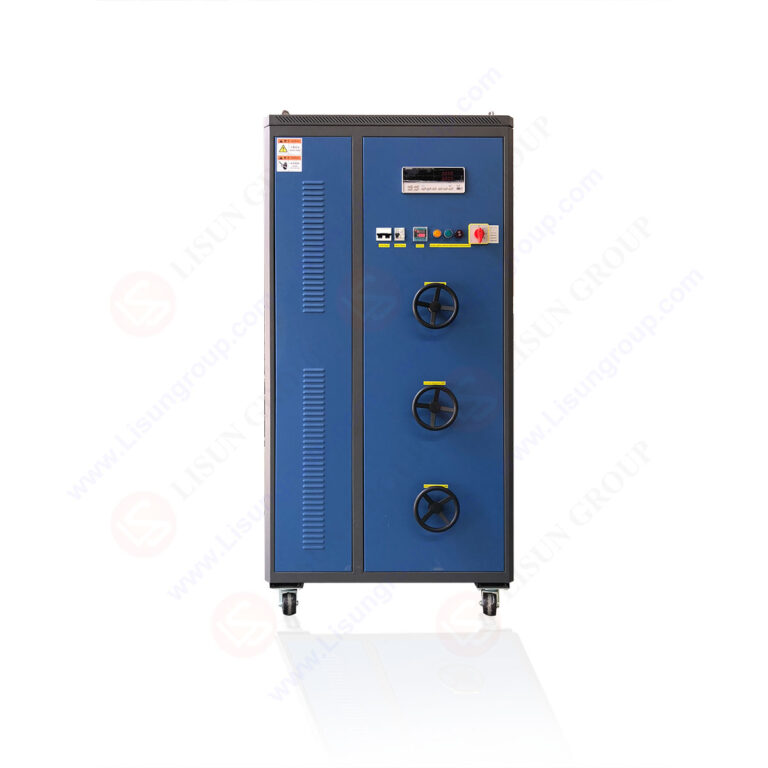
Accurate and repeatable IP5X/IP6X testing necessitates specialized equipment designed to generate, maintain, and uniformly distribute a calibrated dust cloud around the test specimen. A representative and advanced instrument in this category is the LISUN SC-015 Dust Sand Test Chamber. This apparatus embodies the engineering required to comply with IEC 60529, ISO 20653 (road vehicles), and other related standards.
The LISUN SC-015 operates on a closed-loop circulation principle (Method 2 for IP5X, and as a preconditioning or chamber for IP6X suction testing). A controlled mass of standard test dust is introduced into a chamber where a controlled airflow, generated by a centrifugal blower, fluidizes and circulates the dust, creating a homogenous cloud of specified concentration. The sample under test is mounted in the working volume, which is typically constructed of stainless steel for durability and corrosion resistance. Key specifications of such a system include precise control over air velocity, dust concentration monitoring, and a timer for automated test cycles. For IP6X testing, the chamber must interface with a vacuum system to draw a partial vacuum within the test sample, as per the standard’s mandate.
Industry-Specific Applications and Rationale for Dust Protection
The selection between IP5X and IP6X is driven by the operational environment, the nature of the dust, and the consequences of failure.
- Electrical & Electronic Equipment / Industrial Control Systems: Control panels, PLCs, and drives installed in manufacturing plants (e.g., food processing, textiles, cement) require at least IP5X to prevent conductive or combustible dust accumulation. IP6X is specified for critical process control units in explosive atmospheres (ATEX/IECEx zones) where dust ingress could trigger ignition.
- Automotive Electronics: Components like engine control units (ECUs), sensors, and lighting assemblies are tested per ISO 20653. IP5KX (a variant with a 0.3mm probe) is common for under-hood applications, while IP6KX is required for components directly exposed to high-pressure washing or extreme off-road conditions.
- Lighting Fixtures: Industrial, street, and outdoor architectural luminaires are susceptible to lumen depreciation and overheating from dust accumulation on LEDs and drivers. IP6X is increasingly standard for high-bay industrial lighting and fixtures in arid, sandy environments.
- Telecommunications Equipment: Outdoor cabinets, base station antennas, and fiber optic terminal enclosures must be IP6X to ensure signal integrity and prevent corrosion caused by dust-moisture mixtures, particularly in coastal or desert regions.
- Medical Devices: Portable diagnostic equipment, surgical tools, and imaging system components demand IP6X to maintain sterility, prevent microbial harborage, and ensure the reliable operation of sensitive optics and electronics in clinical environments.
- Aerospace and Aviation Components: Avionics bay equipment, external sensors, and in-flight entertainment systems are subject to stringent IP6X (or equivalent RTCA/DO-160 sand and dust tests) to guarantee functionality amidst rapid pressure changes and particulate-laden air.
- Electrical Components: Switches, sockets, and connectors for outdoor or industrial use often carry IP55 or IP65 ratings, where the “5” or “6” directly addresses the risk of dust causing contact resistance or insulation failure.
Implementing a Compliant Testing Protocol: Procedure and Evaluation
A standardized testing protocol is paramount. The sample is prepared in its operational state (e.g., with seals fitted, covers fastened with specified torque). For IP6X, it is connected to a vacuum pump to achieve and maintain the required under-pressure throughout the test. The chamber, such as the LISUN SC-015, is loaded with the precise mass of test dust to achieve the 2kg/m³ concentration. During the test, the dust cloud is continuously circulated.
Post-test, the evaluation differs critically. For IP5X, the sample is carefully extracted and inspected for dust deposition on critical internal surfaces. Electrical and functional tests may be performed to verify no degradation. For IP6X, the inspection is purely visual (with lighting aids if necessary) before any disassembly for internal vacuum release; the presence of any visible dust constitutes a failure. The LISUN SC-015 facilitates this process with features like a large observation window, internal lighting, and a design that minimizes dead zones for consistent dust distribution, ensuring the test’s severity is uniformly applied.
Advanced Considerations and Limitations of the IP Rating
While IP5X/IP6X ratings are indispensable, informed specifiers must understand their boundaries. The test uses a specific, non-abrasive talcum powder. It does not account for the abrasive effects of sand, metallic dust, or fibrous materials. The test duration is fixed and may not correlate directly with years of field exposure. Furthermore, an IP rating applies only to the enclosure as tested; it can be invalidated by improper field installation, gasket degradation over time, or damage to cable glands. Complementary standards, such as IEC 60068-2-68 for dust and sand with abrasion effects, or MIL-STD-810 for climatic environmental testing, may be necessary for a complete reliability assessment in harsher conditions.
Selecting and Specifying Test Equipment: The Role of the LISUN SC-015 Chamber
When qualifying a product or establishing an in-house testing laboratory, the selection of dust test equipment requires careful consideration. The LISUN SC-015 Dust Sand Test Chamber is engineered to meet these rigorous demands. Its competitive advantages lie in its adherence to standardization and user-centric design:
- Standards Compliance: It is explicitly designed to meet IEC 60529, ISO 20653, and GB/T 4208, providing a verifiable path to certification.
- Precision Control: The system incorporates accurate timers, airflow regulators, and concentration management to ensure repeatable test conditions, a cornerstone of reliable quality assurance data.
- Robust Construction: Featuring a stainless steel test chamber and a durable blower system, it is built for long-term reliability in a laboratory environment.
- Operational Safety and Efficiency: Features include an emergency stop, dust filtration in the exhaust, and a clear viewing window, enhancing operator safety and facilitating real-time observation.
For manufacturers of automotive electronics, lighting fixtures, or outdoor telecommunications gear, integrating a chamber like the SC-015 into the design validation and production batch-testing regimen mitigates the risk of field failures and substantiates product claims with empirical data.
Conclusion
The IP5X and IP6X dust ingress protection standards provide a critical, standardized framework for assessing the resilience of electronic enclosures. The distinction between “dust protected” and “dust tight” is significant, governed by stricter testing methods and a zero-tolerance acceptance criterion for IP6X. As technology permeates more demanding environments, from autonomous vehicles to decentralized industrial IoT networks, the role of compliant, rigorous testing becomes ever more central. Utilizing precise and reliable testing apparatus, such as the described dust test chamber, enables engineers to validate designs, ensure quality, and deliver products capable of enduring the challenging conditions that define modern industrial and consumer applications.
FAQ Section
Q1: Can a product rated IP6X be assumed to also meet the requirements for IP5X?
Yes, definitively. The IP Code is hierarchical. A product that passes the more stringent IP6X (Dust Tight) test, which mandates zero ingress under vacuum conditions, inherently satisfies the requirements of IP5X (Dust Protected), which allows for limited, non-hazardous ingress. The higher numeral encompasses the protection levels of all lower numerals for solid object ingress.
Q2: How often should dust ingress protection testing be performed during a product’s lifecycle?
Testing is crucial at multiple stages. It is mandatory during initial type approval and design validation. It should be repeated for production batch sampling as part of quality control, especially after any changes to seals, gaskets, or enclosure tooling. Periodic re-testing is also advised for products with seals subject to aging to inform maintenance schedules or product lifecycle assessments.
Q3: Our product has an IP66 rating. Does the dust test involve water simultaneously with the dust?
No. IP testing is conducted sequentially, not simultaneously. The first numeral (6) is tested independently in a dust chamber like the LISUN SC-015. Only after successful completion and drying/cleaning of the sample would the second numeral (6) be tested using the appropriate water spray equipment (e.g., a nozzle delivering 12.5 mm/min per square meter from all directions). The tests are distinct and separate procedures.
Q4: For IP6X testing using the suction method, what is the required level of vacuum inside the enclosure, and how is it maintained?
The standard (IEC 60529) specifies creating a vacuum sufficient to produce a pressure differential of 20 kPa (0.2 bar) below atmospheric pressure, or to achieve a flow rate of 80 times the enclosure volume per hour, whichever is less severe. This vacuum must be maintained continuously for the full test duration (typically 2-8 hours) using a vacuum pump, simulating conditions like thermal contraction of internal air.
Q5: What is the shelf life or recommended replacement interval for the test dust used in chambers like the LISUN SC-015?
The standard test dust (talcum powder/calcium carbonate) is hygroscopic and can clump if exposed to moisture, altering its particle distribution and fluidization properties. While there is no strict expiration date, it should be stored in a sealed, dry container. It is considered good practice to replace the dust if contamination is suspected or if it fails to produce a uniform, fluidized cloud within the test chamber, as this would invalidate the test concentration.