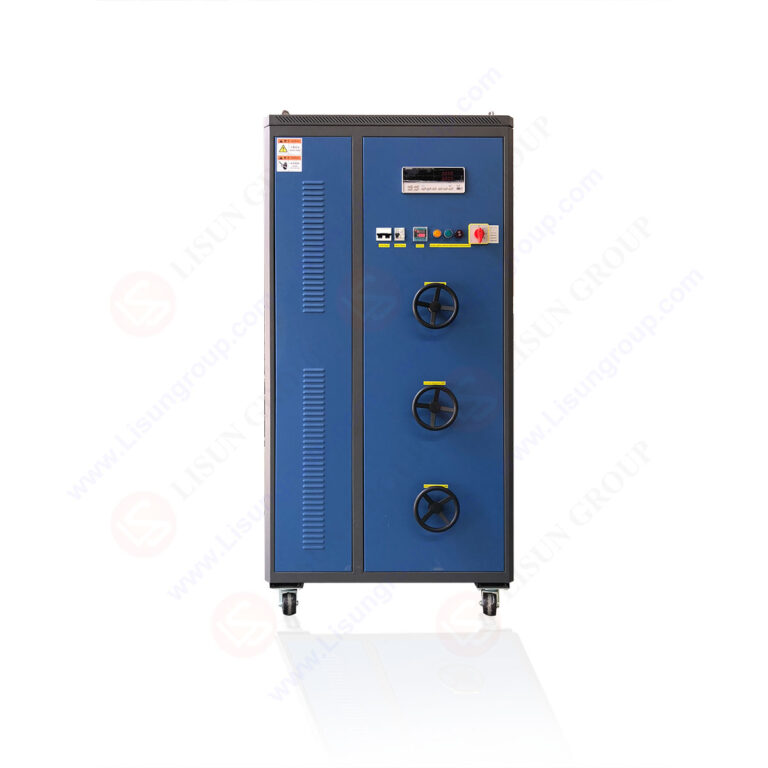



A Technical Examination of Needle-Flame Testing: Principles, Applications, and Compliance with IEC 60695-11-5
Introduction to Fire Hazard Assessment in Electrotechnical Products
The proliferation of electrotechnical equipment across diverse sectors—from domestic environments to critical infrastructure—has necessitated a rigorous, standardized approach to evaluating fire hazards. A primary concern is the potential for small ignition sources, such as overheated components, faulty connections, or electrical arcs, to ignite adjacent materials. These initial, localized fires can propagate, leading to catastrophic failure, property damage, and risk to life. Consequently, international standards have been developed to simulate such conditions and assess the flammability of materials and sub-assemblies. Among these, IEC 60695-11-5, “Fire hazard testing – Part 11-5: Test flames – Needle-flame test method – Apparatus, confirmatory test arrangement and guidance,” provides a critical methodology for evaluating the resistance of products to a small, precisely defined flame.
This standard is not a standalone document but exists within the broader IEC 60695 series concerning fire hazard testing. It specifies the apparatus, calibration procedure, and test method for applying a needle-flame, simulating a small flame that may result from fault conditions within electrical circuits, to a test specimen. The objective is to ascertain whether a simulated fault-induced flame can cause ignition of parts, and if so, to observe the subsequent burning behavior and the ability of the product to contain or extinguish the fire. Compliance with this standard is a fundamental requirement for product safety certification in numerous industries, serving as a key indicator of a manufacturer’s commitment to risk mitigation.
The Technical Foundation of the Needle-Flame Test Method
The needle-flame test is designed to replicate a low-energy ignition source, typically with a nominal power output of approximately 45W. This energy level is representative of many fault conditions found in electrotechnical products. The core of the method lies in its standardized application: a specified flame from a burner fed with a prescribed fuel (typically methane or propane) is applied to the test specimen for a predetermined period (commonly 30 seconds). The flame is produced by a burner tube with a specific orifice diameter, ensuring consistency and repeatability across different testing laboratories and equipment manufacturers.
The test procedure mandates meticulous preparation. The specimen, which can be a complete end-product, a sub-assembly, or a material sample prepared in a representative form, is mounted in a configuration that reflects its intended use. The needle-flame is then applied to the selected area, often the point deemed most vulnerable based on fault condition analysis. Following the application period, the flame is removed, and observations commence. Key parameters recorded include: duration of any sustained flaming or smoldering of the specimen; whether flaming droplets or particles are emitted; and the extent of damage, measured by the spread of flame or charring. Pass/fail criteria, which are typically defined by the relevant product safety standard (e.g., IEC 60950-1 for IT equipment, IEC 60335-1 for household appliances), may set limits on after-flame time, the presence of dripping, or the distance of flame spread.
Apparatus Specification and the Critical Role of Calibration
The integrity of any test according to IEC 60695-11-5 is wholly dependent on the precision and consistency of the apparatus used. The standard provides exacting specifications for the needle-flame burner, including dimensions, material, and orifice size. Equally important is the confirmatory test arrangement used for calibration. This involves applying the flame to a defined copper block calorimeter under strictly controlled conditions. The temperature rise of this block over a 23.5-second application period must fall within a specified range, thereby confirming that the flame delivers a consistent and standardized thermal output. Without this regular calibration, test results are invalid and non-comparable.
Environmental conditions within the test laboratory are also controlled. Testing is generally performed in a draught-free enclosure, with specified ambient temperature and humidity ranges, to prevent external variables from influencing the burning behavior. The use of a prescribed layer of surgical cotton wool positioned beneath the specimen is another critical element, intended to catch any flaming droplets or debris and assess their incendiary potential.
The LISUN ZY-3 Needle Flame Test Apparatus: Engineering for Precision and Compliance
To meet the exacting demands of IEC 60695-11-5, testing laboratories and quality assurance departments require apparatus that combines robust construction with precise control. The LISUN ZY-3 Needle Flame Test Apparatus is engineered specifically for this application, integrating the standard’s requirements into a user-friendly and reliable system.
The ZY-3 apparatus features a microprocessor-based control system that automates the test sequence, including precise timing of flame application and after-flame observation periods. This minimizes operator error and enhances repeatability. Its core specifications align meticulously with the standard:
- Burner: A stainless-steel needle-flame burner with the specified 0.5mm ± 0.1mm orifice diameter.
- Fuel System: Integrated flow control and pressure regulation for methane or propane, ensuring a consistent flame height of 12mm ± 1mm.
- Calibration Kit: Includes a standardized copper block calorimeter, thermocouple, and mounting fixture to perform the mandatory confirmatory tests as per the standard’s annex.
- Test Chamber: A transparent, draught-proof enclosure with an internal volume exceeding 0.5m³, fitted with an exhaust system for fume extraction.
- Timing and Measurement: Digital timers with 0.1-second resolution for controlling flame application and recording flaming/smoldering times.
The competitive advantage of the ZY-3 lies in its integration of safety, precision, and durability. Features such as automatic gas shut-off, ignition confirmation sensors, and a sturdy specimen positioning system reduce operational risks and improve test efficiency. Its design facilitates testing on a wide variety of specimen sizes and shapes, which is crucial for laboratories serving multiple industries.
Cross-Industry Application of Needle-Flame Testing
The universality of the fire hazard posed by small electrical faults makes IEC 60695-11-5 applicable across a vast spectrum of industries. In each case, the test is applied to evaluate the flammability of non-metallic materials (e.g., plastics, insulation, printed circuit boards) and the overall fire containment design of the product.
- Household Appliances & Consumer Electronics: For products like food processors, televisions, and game consoles, the test evaluates internal wiring insulation, PCB substrates, and external casings. A fault in a motor winding or power supply could generate a localized hot spot, making this test vital for consumer safety.
- Information Technology & Telecommunications Equipment: Routers, servers, and power adapters are tested to ensure that a fault in a transformer, connector, or voltage regulator does not ignite surrounding plastic enclosures or internal structural components.
- Lighting Fixtures: Particularly for LED drivers and compact luminaires where electronic control gear is integrated into plastic housings, the needle-flame test assesses the risk associated with component failure in confined spaces.
- Automotive Electronics: As vehicles incorporate more electronic control units (ECUs), sensors, and infotainment systems, testing these components ensures they do not become ignition sources in the event of an electrical short circuit, contributing to overall vehicle safety.
- Medical Devices: For patient-connected equipment like monitors or infusion pumps, fire safety is paramount. Testing internal materials guards against ignition from internal electrical faults, a critical consideration in oxygen-enriched environments.
- Industrial Control Systems & Aerospace Components: In these high-reliability sectors, the test is used on connector blocks, relay housings, and cable conduits to verify material selection and design can withstand potential fault conditions without propagating flame.
Interpreting Test Results and Material Selection Strategies
A passing result in a needle-flame test is not merely a regulatory checkbox; it provides valuable engineering data. It informs material scientists and product designers about the thermal stability and flammability characteristics of chosen polymers and composites. For instance, a material that exhibits rapid flame spread but extinguishes quickly upon removal of the needle-flame may be treated differently in a risk assessment than one that shows prolonged smoldering combustion.
Manufacturers often use the test comparatively to select between material grades. A halogen-free flame-retardant (HF-FR) polyamide might be evaluated against a standard ABS plastic, with the test data on after-flame time and dripping behavior directly influencing the final selection based on the required safety classification (e.g., UL 94 V-0, V-1, V-2, or 5VA/B). The test also validates the effectiveness of design features such as internal barriers, metallized coatings, or strategic venting that can isolate or starve a potential fire.
Integrating Needle-Flame Testing into a Comprehensive Safety Philosophy
It is imperative to recognize that conformity with IEC 60695-11-5 represents one element within a holistic product safety strategy. The needle-flame test is a type test, typically performed on pre-production samples. It must be complemented by other assessments, such as glow-wire tests (IEC 60695-2-10/11/12/13) to simulate overheating components, horizontal/vertical flame tests (UL 94) for material screening, and fault condition testing as required by end-product standards.
Ultimately, the value of rigorous testing using apparatus like the LISUN ZY-3 is its contribution to risk reduction. By identifying and mitigating fire hazards at the design and qualification stages, manufacturers protect end-users, reduce liability, and ensure market access. The data generated feeds back into the design process, fostering innovation in material science and safety engineering, and driving the continuous improvement of electrotechnical products across all sectors.
Frequently Asked Questions (FAQ)
Q1: How often should the LISUN ZY-3 apparatus be calibrated, and what is the process?
A1: Calibration should be performed before a series of tests and at regular intervals as dictated by the laboratory’s quality procedures (e.g., monthly or quarterly). The process involves mounting the standardized copper block calorimeter, applying the needle-flame for 23.5 seconds as per IEC 60695-11-5, and measuring the temperature rise. The apparatus is only deemed calibrated if the rise falls within the range specified by the standard (typically 540°C ± 20°C from a 100°C starting point, depending on the fuel). The ZY-3 includes dedicated fixtures to simplify this procedure.
Q2: Can the ZY-3 test specimens that are not flat, such as connectors or wire harnesses?
A2: Yes. The IEC 60695-11-5 standard requires testing in the most unfavorable orientation representative of actual use. The LISUN ZY-3 is equipped with adjustable specimen holders and a versatile test chamber that can accommodate three-dimensional products like connectors, switches, and small assemblies. The key is to position the specimen so that the needle-flame can be applied to the targeted area as defined by the relevant product safety standard.
Q3: What are the pass/fail criteria for the needle-flame test?
A3: IEC 60695-11-5 specifies the test method but does not define pass/fail limits. These criteria are established by the applicable end-product safety standard. For example, IEC 62368-1 (audio/video and IT equipment) may require that flames self-extinguish within 30 seconds after flame removal and that no flaming droplets ignite the surgical cotton wool below. The specific limits must always be derived from the ultimate compliance standard for the product being evaluated.
Q4: Is training required to operate the ZY-3 needle flame tester safely?
A4: While the ZY-3 incorporates safety features like automatic gas shut-off, comprehensive operator training is essential. Training should cover safe handling of gas cylinders, proper setup and calibration, correct specimen positioning, understanding of the test standard, and emergency procedures. Proper training ensures both the safety of personnel and the technical validity of the test results.
Q5: How does needle-flame testing differ from glow-wire testing?
A5: Both assess fire hazard but simulate different sources. The needle-flame test simulates a small, open flame from a fault. The glow-wire test (IEC 60695-2-10/11) simulates an overheating or glowing element (like a faulty resistor) coming into contact with a material. They are complementary tests; a material may perform differently under a flaming versus a glowing ignition source, and many product standards require both evaluations.